Earth’s surface is divided into massive moving pieces called tectonic plates. Where these plates meet—known as plate boundaries—intense geological activity occurs. These regions are not only responsible for earthquakes, volcanoes, and mountain building, but they also play a major role in the distribution of natural resources.
Understanding plate boundaries helps explain why valuable minerals, energy sources, and geological resources are concentrated in specific parts of the world.
What Are Plate Boundaries?
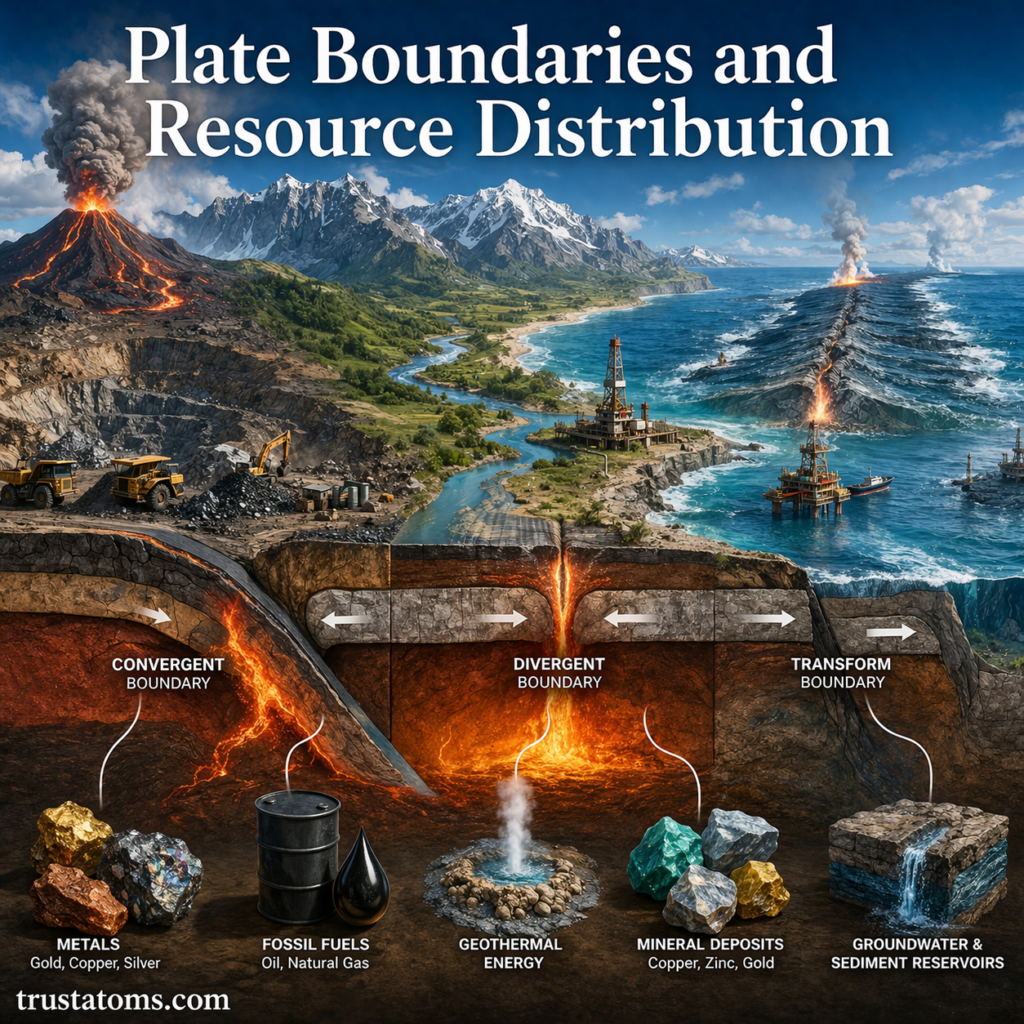
Plate boundaries are the edges where tectonic plates interact. These interactions shape Earth’s surface and influence where resources are formed and stored.
Three Main Types of Plate Boundaries
- Divergent Boundaries – plates move apart
- Convergent Boundaries – plates collide
- Transform Boundaries – plates slide past each other
Each type creates different geological conditions, which directly impact resource formation.
Divergent Boundaries and Resource Formation
At divergent boundaries, plates move away from each other, allowing magma to rise from below.
Key Features
- Mid-ocean ridges
- Volcanic activity
- Formation of new crust
Resource Distribution
- Metallic Minerals
Hydrothermal vents form deposits of copper, zinc, and gold - Geothermal Energy
Heat from Earth’s interior can be harnessed for energy
Example: The Mid-Atlantic Ridge hosts hydrothermal vents rich in mineral deposits.
Convergent Boundaries and Resource Concentration
At convergent boundaries, plates collide. One plate may be forced beneath another in a process called subduction.
Key Features
- Mountain ranges
- Deep ocean trenches
- Volcanic arcs
Resource Distribution
- Precious Metals
Gold, silver, and copper are often found near subduction zones - Fossil Fuels
Oil and natural gas can accumulate in basins formed by plate compression - Volcanic Minerals
Rich deposits from volcanic activity
Example: The Andes Mountains are known for abundant mineral resources formed through subduction-related processes.
Transform Boundaries and Resource Influence
At transform boundaries, plates slide past each other horizontally.
Key Features
- Fault lines
- Earthquakes
- Little to no volcanic activity
Resource Distribution
Transform boundaries are less directly associated with resource formation but still influence:
- Groundwater movement
- Sediment distribution
- Structural traps for oil and gas
Example: The San Andreas Fault is a well-known transform boundary affecting regional geology.
Why Resources Cluster Near Plate Boundaries
Plate boundaries create the conditions needed for resource formation.
Key Reasons
- Heat and Pressure
Promote mineral formation - Fluid Movement
Carries dissolved minerals into cracks and deposits them - Crustal Deformation
Creates traps for oil, gas, and minerals
These factors make plate boundaries some of the richest areas for natural resources on Earth.
Types of Resources Linked to Plate Boundaries
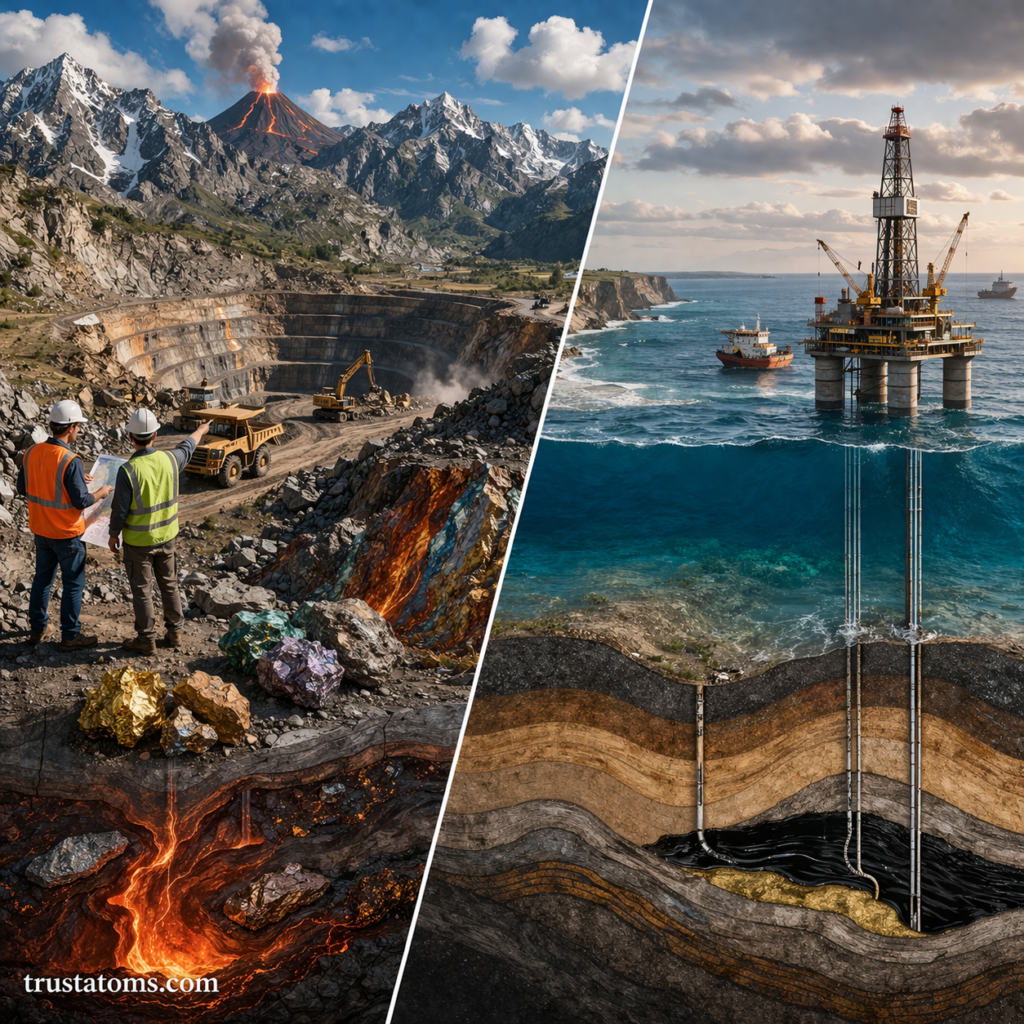
Different boundary types are associated with different resources.
Metallic Resources
- Gold
- Copper
- Zinc
- Iron
Energy Resources
- Oil and natural gas
- Geothermal energy
Industrial Minerals
- Sulfur
- Phosphates
- Rare earth elements
Environmental and Economic Impacts
Resource-rich plate boundary regions are often economically important but also geologically hazardous.
Benefits
- Economic growth through mining and energy production
- Job creation and infrastructure development
Risks
- Earthquakes and volcanic eruptions
- Environmental damage from resource extraction
- Land instability
Balancing resource use with environmental protection is a major global challenge.
Real-World Examples of Resource Distribution
The Pacific Ring of Fire
The Pacific Ring of Fire is one of the most active tectonic zones on Earth.
- Rich in metals like gold and copper
- Frequent earthquakes and volcanic eruptions
Continental Margins
- Often contain large oil and gas reserves
- Formed through sediment accumulation over time
Why This Matters
Understanding plate boundaries and resource distribution is essential for:
- Energy planning
- Sustainable mining practices
- Disaster preparedness
- Environmental conservation
It helps governments, scientists, and industries make informed decisions about resource use and risk management.
Final Thoughts
Plate boundaries are not just zones of geological activity—they are key to understanding where Earth’s resources are found. The same forces that shape mountains and trigger earthquakes also concentrate valuable materials beneath the surface.
By studying these dynamic regions, we gain insight into both Earth’s natural processes and the resources that support modern life.