What Is Human Anatomy?

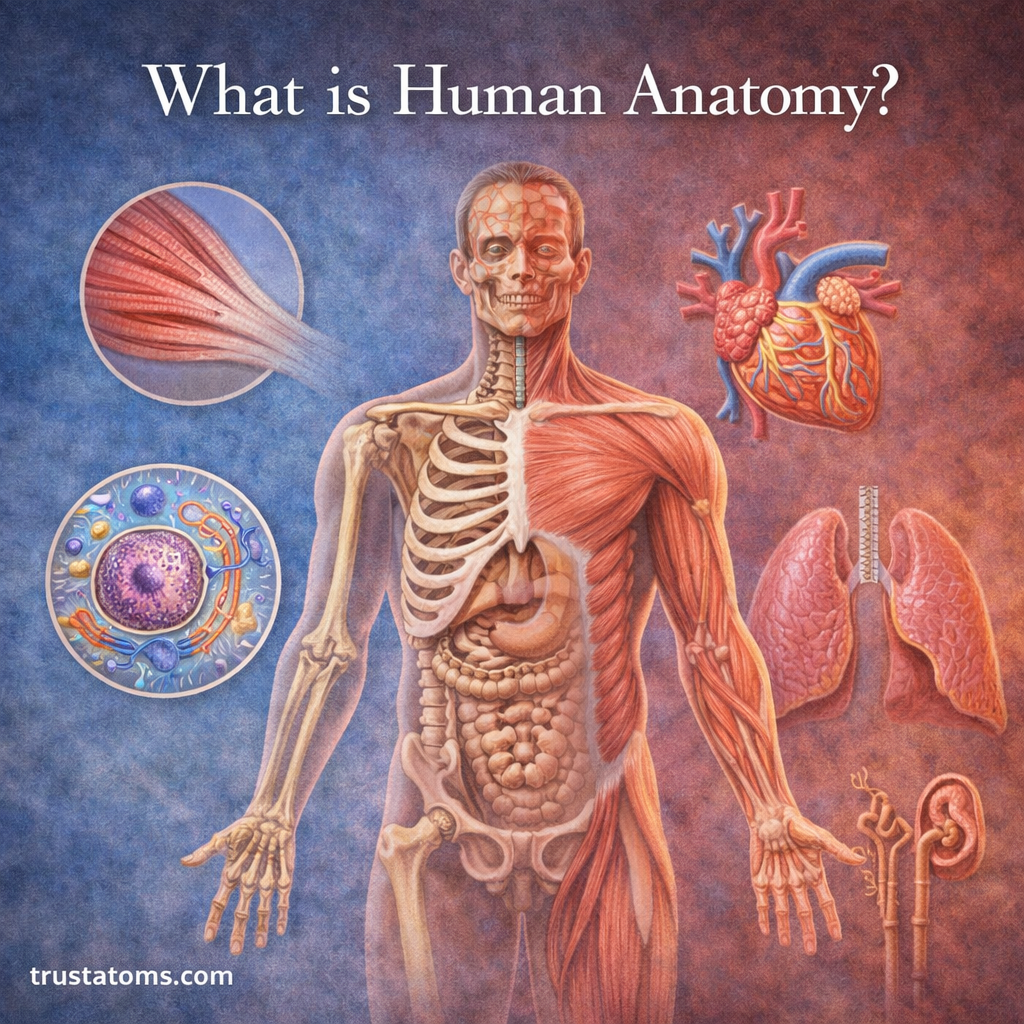
Illustration of human anatomy showing skeletal system, muscles, and major organs in the human body.
Overview of human anatomy highlighting bones, muscles, and internal organs that make up the body. trustatoms.com.

Human anatomy is the scientific study of the structure of the human body. It explores how different body parts are organized, how they relate to one another, and how their structure supports function.

From bones and muscles to organs and tissues, anatomy provides the foundation for understanding how the human body works.

Continue reading “What Is Human Anatomy?”

Sensory Integration in the Central Nervous System

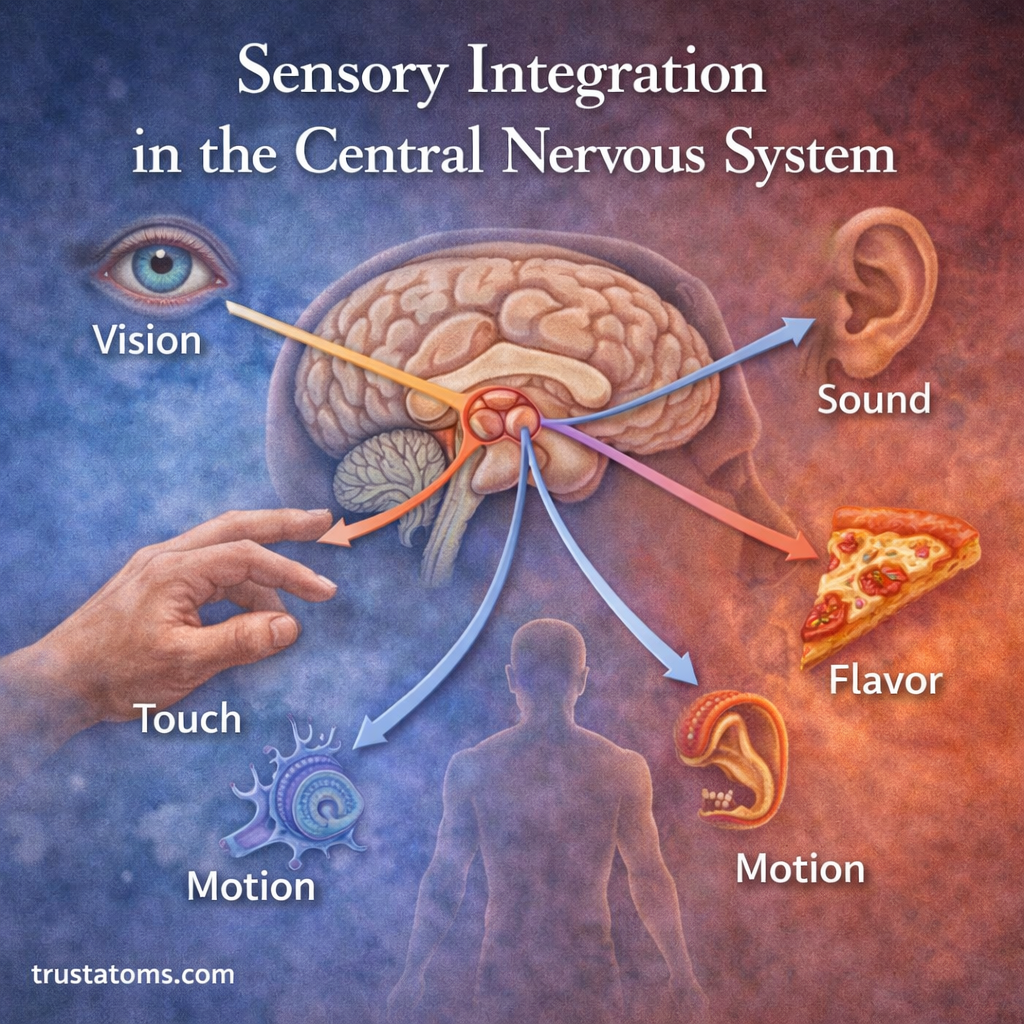
Illustration showing sensory integration in the central nervous system with multiple sensory inputs connecting to the brain.
Diagram of how the brain integrates sensory inputs such as vision, sound, and touch into a unified experience. trustatoms.com.

Every second, your body receives a constant stream of sensory information—touch, sound, sight, temperature, and more. The central nervous system (CNS) is responsible for organizing and interpreting this data so you can respond effectively to your environment.

This process, known as sensory integration, allows the brain to combine multiple sensory inputs into a unified experience.

Continue reading “Sensory Integration in the Central Nervous System”

Temperature Sensing and Thermoreceptors

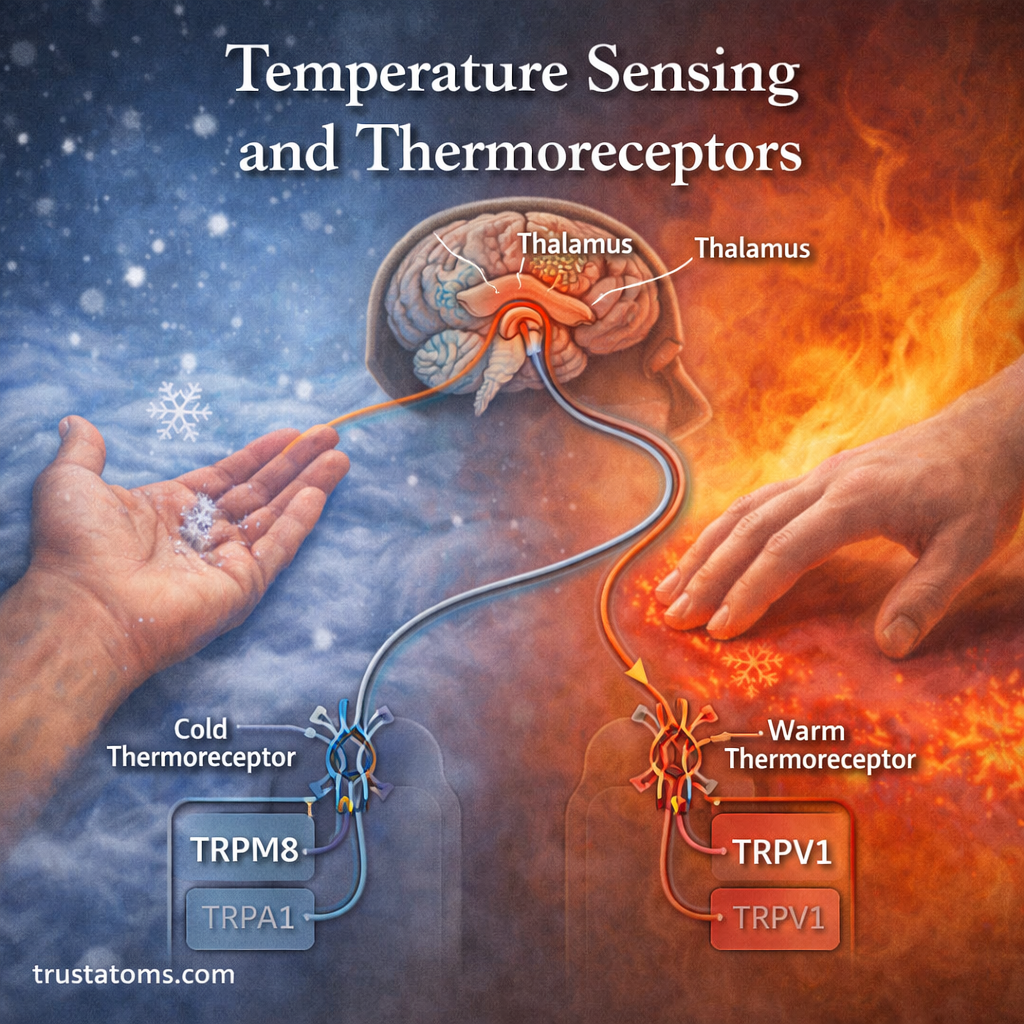
Illustration of temperature sensing showing cold and warm thermoreceptors in the skin with signals traveling to the brain.
Visual representation of thermoreceptors detecting heat and cold and sending signals through the nervous system to the brain. trustatoms.com.

Temperature sensing is a vital function of the human body, helping maintain internal stability and protect against environmental extremes. Whether you’re stepping into cold water or touching a hot surface, specialized receptors in your skin and body instantly detect temperature changes and send signals to the brain.

This guide explains how thermoreceptors work, the pathways involved, and how your body interprets temperature.

Continue reading “Temperature Sensing and Thermoreceptors”

Pain Perception and Nociceptor Pathways

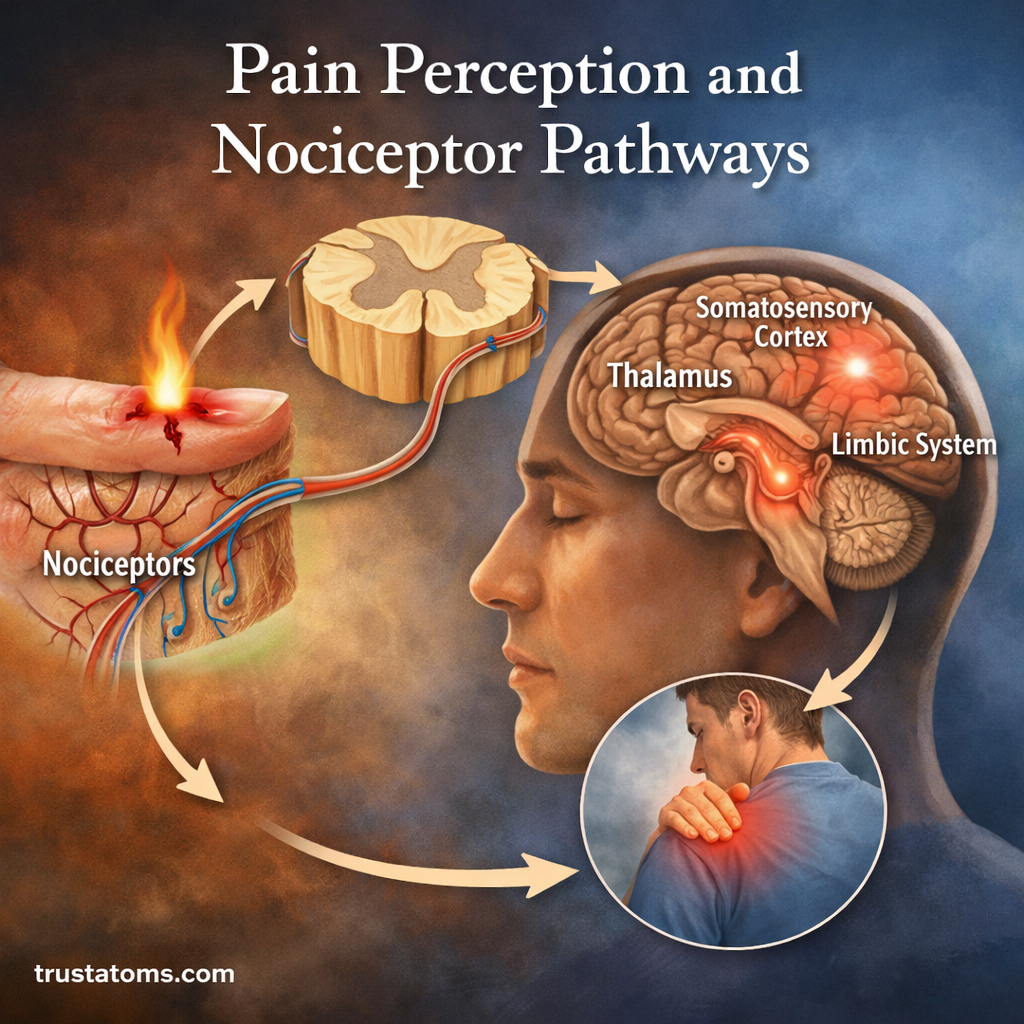
Illustration of pain perception and nociceptor pathways showing injury signals traveling from skin to spinal cord and brain regions involved in pain processing.
Diagram illustrating how nociceptors detect injury and transmit pain signals through the spinal cord to the brain. trustatoms.com.

Pain is one of the body’s most important protective mechanisms. It alerts you to injury, prevents further damage, and drives healing behaviors. But pain is not just a simple sensation—it’s a complex process involving specialized receptors, neural pathways, and brain interpretation.

This guide breaks down how pain works, focusing on nociceptors and the pathways that carry pain signals from the body to the brain.

Continue reading “Pain Perception and Nociceptor Pathways”

Touch Receptors and Somatosensation

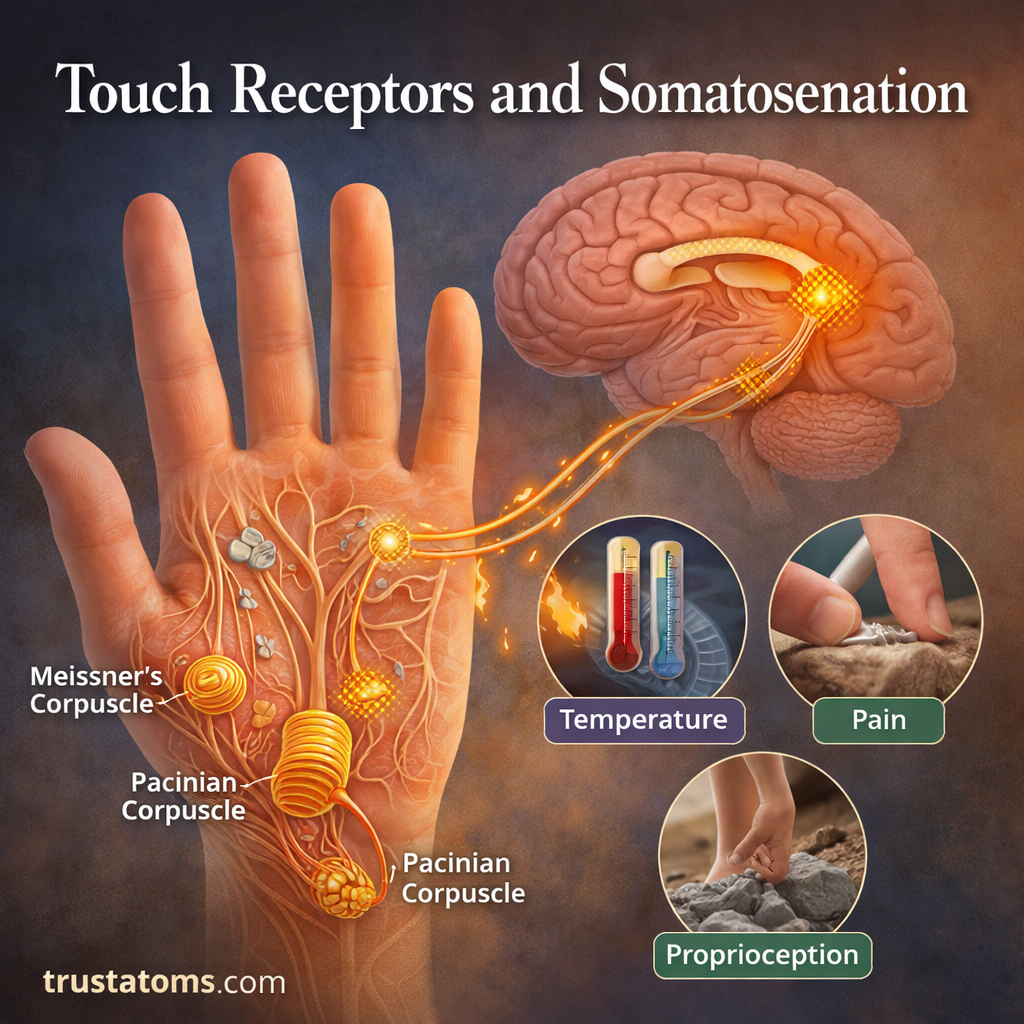
Illustration of touch receptors in the human hand including Meissner’s and Pacinian corpuscles connected to the somatosensory cortex in the brain.
Diagram showing how touch receptors in the skin send signals to the brain for processing sensation and perception. trustatoms.com

Touch is one of the most essential and complex sensory systems in the human body. Known scientifically as somatosensation, it allows us to perceive pressure, temperature, pain, vibration, and body position. From feeling a gentle breeze to reacting to a hot surface, touch receptors constantly gather information that helps us interact safely and effectively with our environment.

Continue reading “Touch Receptors and Somatosensation”

Smell and Olfactory Processing

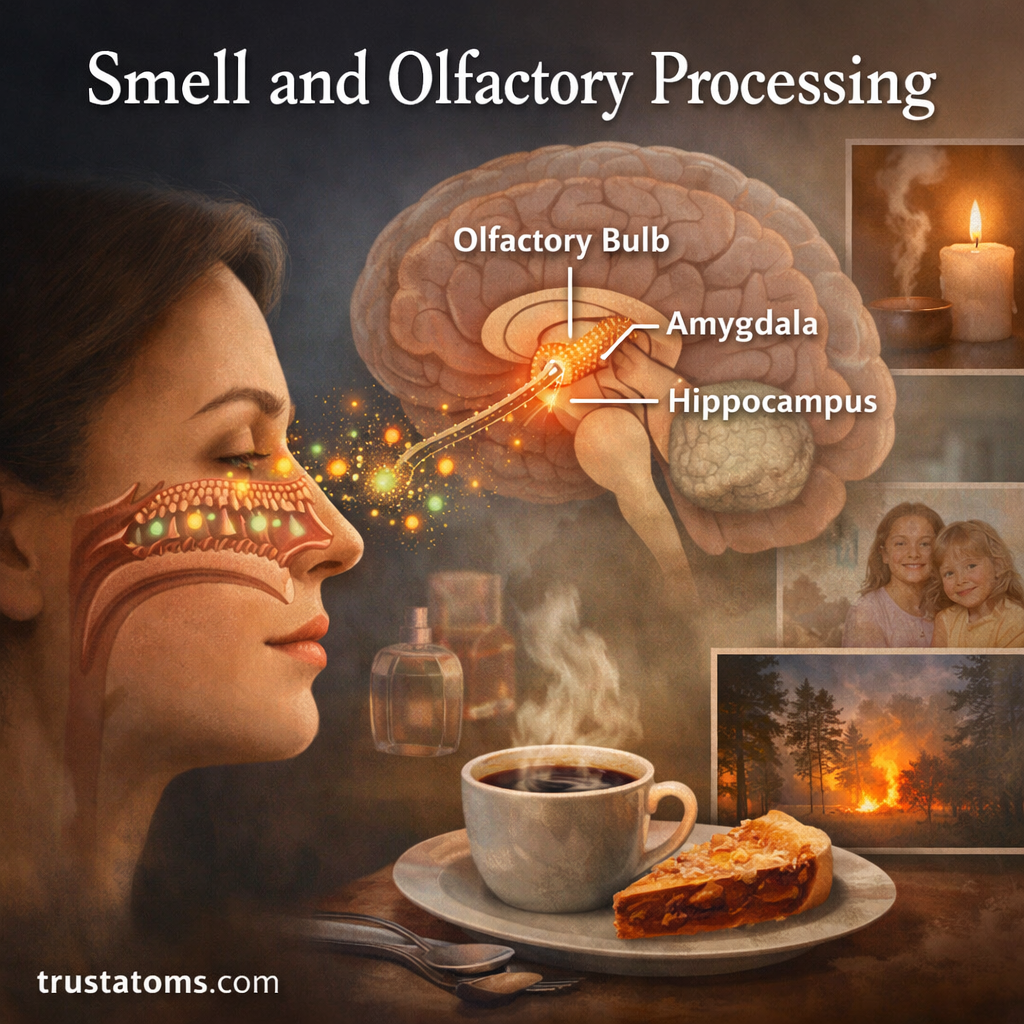
Illustration of smell and olfactory processing showing nasal receptors, olfactory bulb, and brain regions linked to memory and emotion.
Visual diagram of how smell signals travel from the nose to the brain, highlighting key olfactory structures. trustatoms.com

The sense of smell, also known as olfaction, is one of the most direct and powerful sensory systems in the human body. Unlike vision or hearing, smell is closely tied to memory, emotion, and instinctive behavior. From detecting danger (like smoke or spoiled food) to enhancing taste and triggering memories, olfactory processing plays a critical role in daily life.

Continue reading “Smell and Olfactory Processing”

Taste and Chemoreception Mechanisms

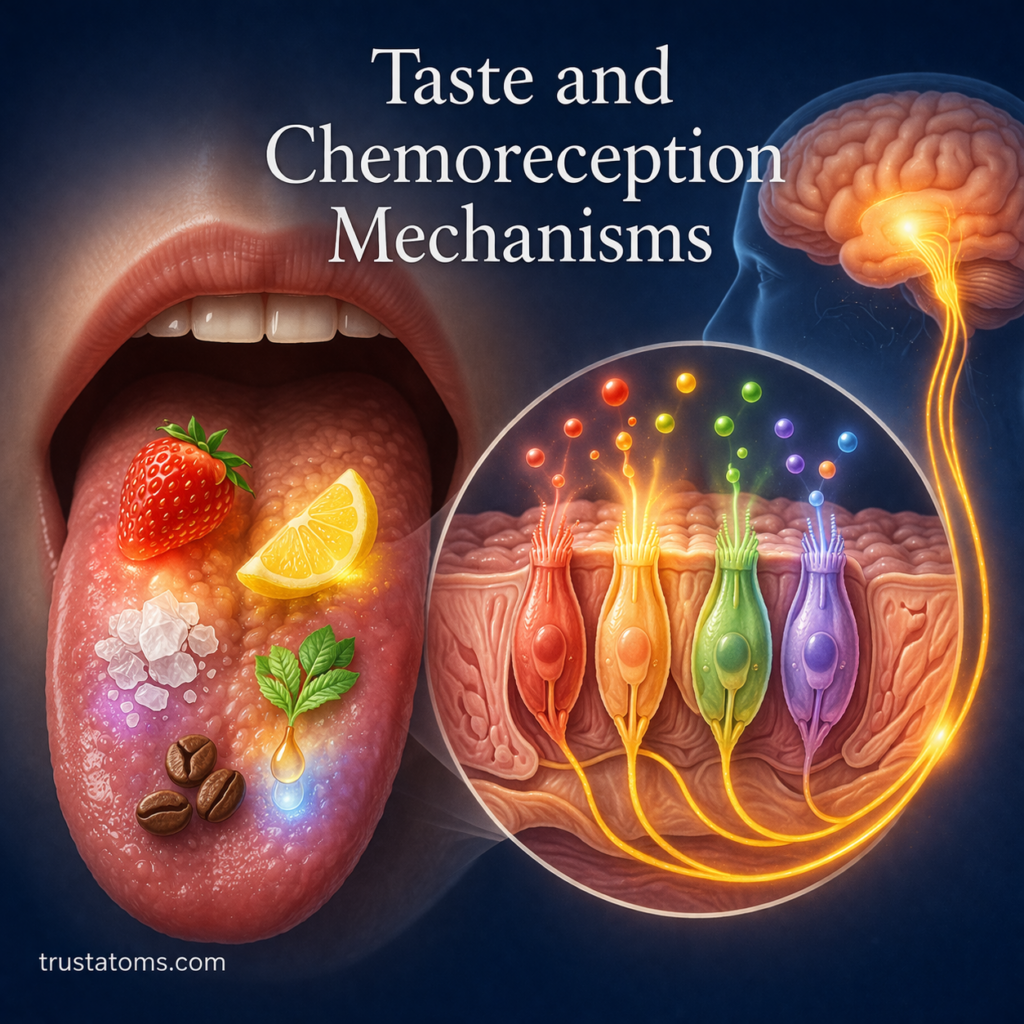
Illustration of the tongue and taste buds showing how chemical signals are sent to the brain during taste perception.
Diagram showing how taste buds detect chemicals and send signals to the brain. trustatoms.com

Taste is one of the body’s key sensory systems, helping us evaluate food, detect nutrients, and avoid harmful substances. While it may seem simple, taste is part of a broader process called chemoreception, where the body detects chemical stimuli from the environment.

From enjoying a sweet dessert to reacting to bitter or spoiled food, taste plays an essential role in survival and daily experience.

Continue reading “Taste and Chemoreception Mechanisms”

Balance and the Vestibular System

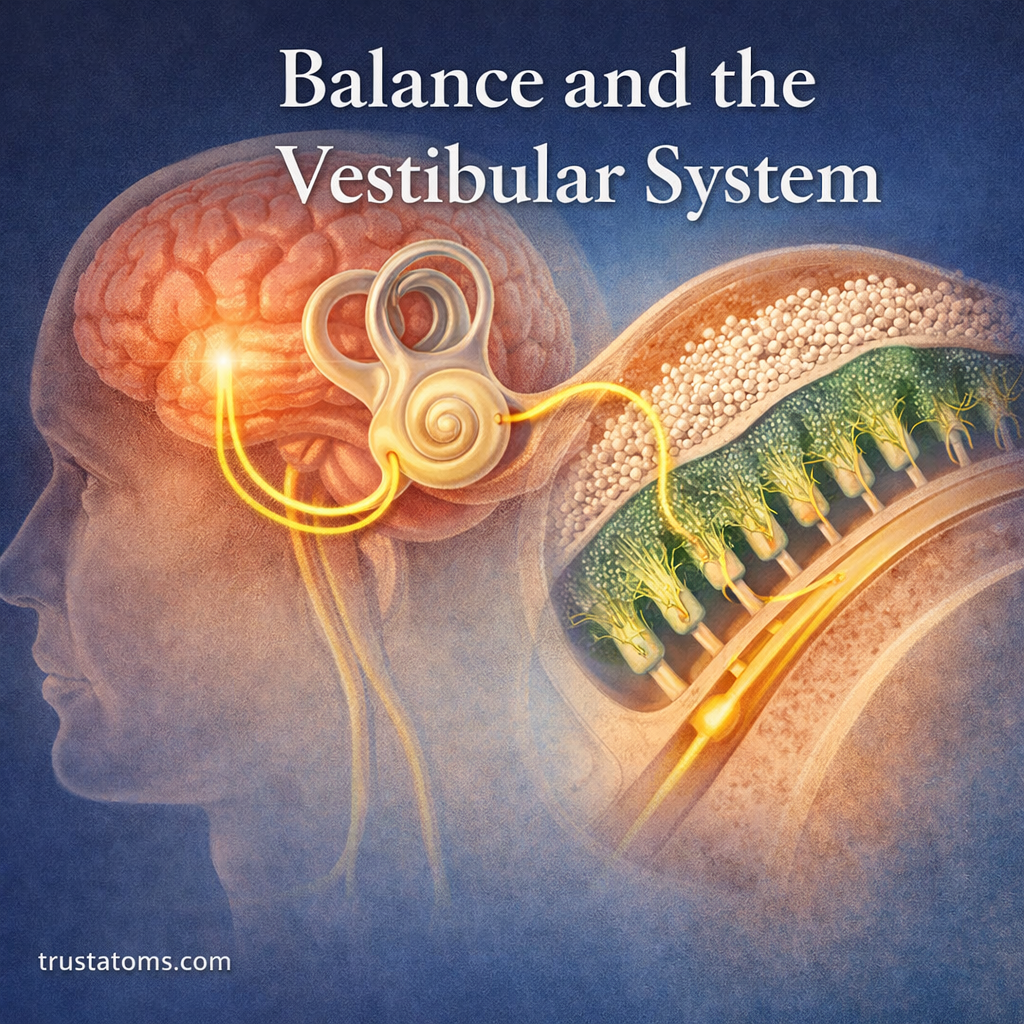
Illustration of the vestibular system showing inner ear structures and signals sent to the brain for balance.
Diagram of the vestibular system showing how the inner ear helps maintain balance and stability. trustatoms.com

Balance is something most people take for granted—until it’s disrupted. Whether you’re walking, turning your head, or simply standing still, your body is constantly making small adjustments to keep you stable.

At the center of this process is the vestibular system, a specialized sensory system located in the inner ear. It works continuously with your brain, eyes, and body to maintain equilibrium, orientation, and coordinated movement.

Continue reading “Balance and the Vestibular System”

Hearing System: Ear Structure and Sound Transduction

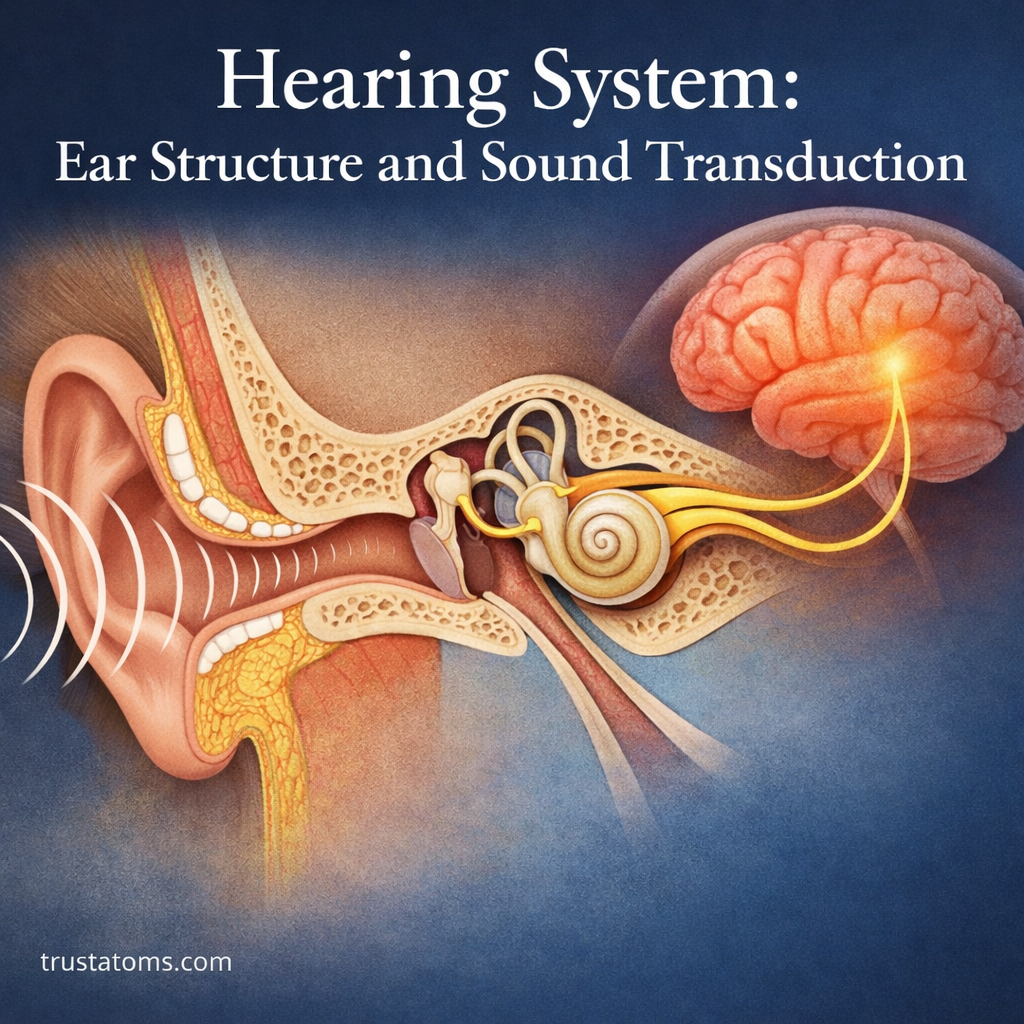
Illustration of the human ear showing ear structure and how sound waves travel through the ear to the brain.
Diagram showing how sound waves move through the ear and are processed into signals for the brain. trustatoms.com

The human hearing system allows us to detect, interpret, and respond to sound. From conversations and music to environmental cues, hearing plays a vital role in communication and awareness.

This process begins when sound waves enter the ear and ends when the brain interprets them as meaningful auditory information. Understanding ear structure and sound transduction reveals how this complex system works seamlessly in everyday life.

Continue reading “Hearing System: Ear Structure and Sound Transduction”

Vision System: Eye Structure and Light Processing

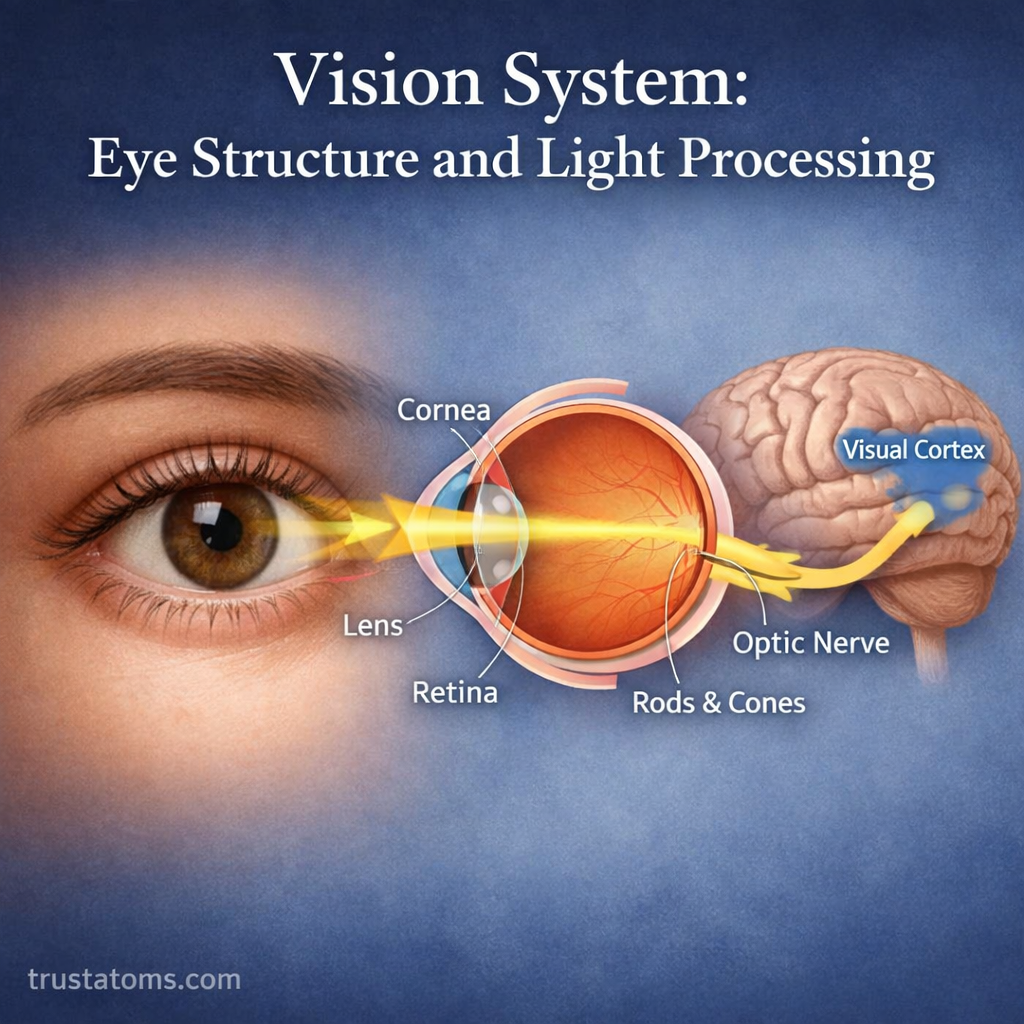
Illustration of the human eye structure showing light entering the eye and being processed through the retina and optic nerve to the brain.
Simple diagram showing how light enters the eye and is processed into visual signals. trustatoms.com

The human eye is a highly specialized organ designed to capture light and convert it into meaningful visual information. From detecting brightness and color to recognizing shapes and motion, the vision system works through a coordinated process involving multiple eye structures and neural pathways.

Understanding how the eye is built—and how it processes light—offers valuable insight into how we perceive the world around us.

Continue reading “Vision System: Eye Structure and Light Processing”