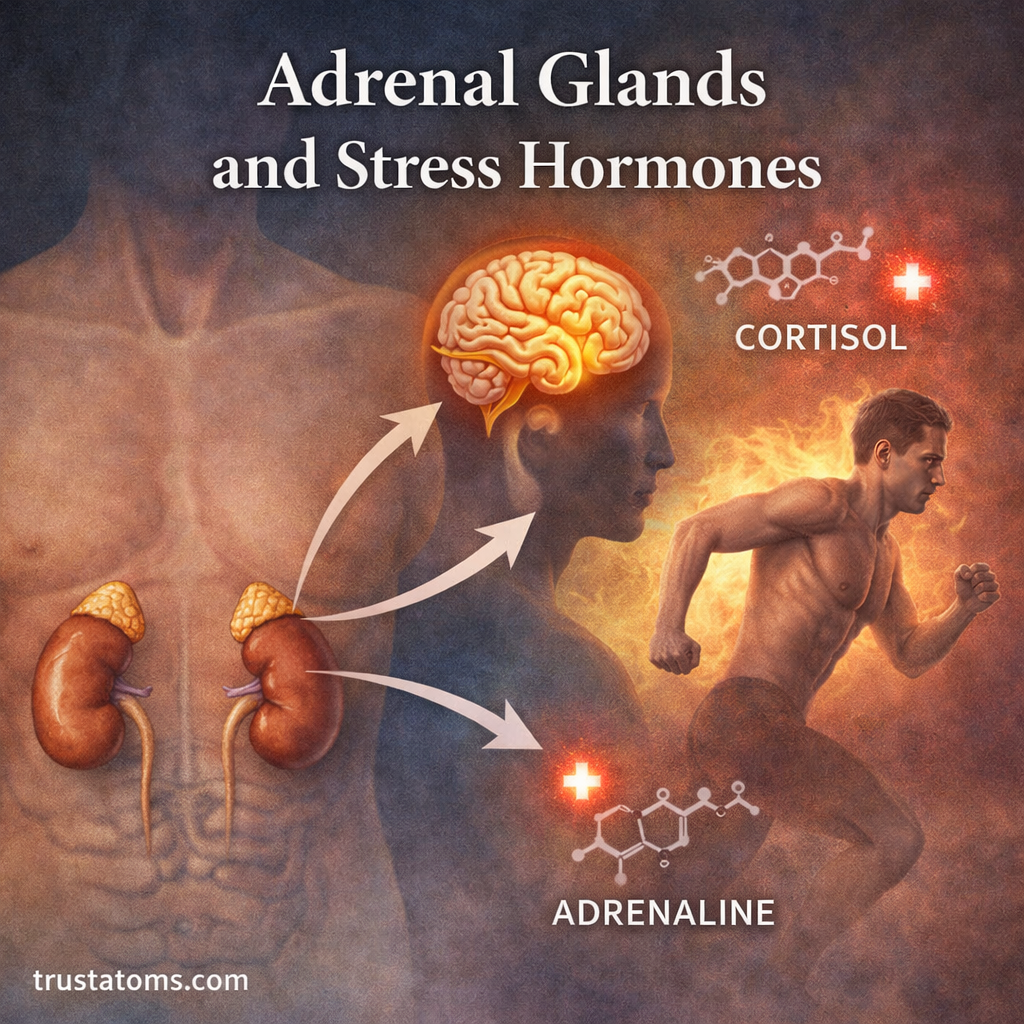
The human body is designed to respond quickly to challenges, whether physical or emotional. At the center of this response are the adrenal glands, small but powerful organs that produce hormones responsible for managing stress, energy, and survival.
Often referred to as the body’s “stress control centers,” the adrenal glands release hormones like cortisol and adrenaline, which help you react to danger, regulate metabolism, and maintain balance during daily life.
What Are the Adrenal Glands?
The adrenal glands are two small, triangular-shaped glands located on top of each kidney.
Structure of the Adrenal Glands
Each adrenal gland has two main parts:
- Adrenal cortex (outer layer)
Produces steroid hormones like cortisol and aldosterone - Adrenal medulla (inner core)
Produces adrenaline (epinephrine) and noradrenaline (norepinephrine)
These two regions work together to regulate how the body responds to stress and maintains internal stability.
What Are Stress Hormones?
Stress hormones are chemical messengers released during challenging situations to help the body respond effectively.
Key Stress Hormones
- Cortisol
The primary long-term stress hormone - Adrenaline (Epinephrine)
Responsible for immediate “fight-or-flight” responses - Norepinephrine
Works with adrenaline to increase alertness and focus
The Fight-or-Flight Response
When you encounter a stressful situation, your body activates the fight-or-flight response, a rapid physiological reaction designed for survival.
What Happens in the Body
- The brain detects a threat
- The hypothalamus signals the adrenal glands
- The adrenal medulla releases adrenaline
- The body prepares for action
Effects of Adrenaline
- Increased heart rate
- Faster breathing
- Dilated pupils
- Increased blood flow to muscles
- Heightened alertness
This response happens within seconds and is crucial for immediate survival.
Cortisol: The Long-Term Stress Hormone
While adrenaline acts quickly, cortisol manages longer-lasting stress.
Functions of Cortisol
- Regulates blood sugar levels
- Controls metabolism
- Reduces inflammation
- Helps maintain blood pressure
- Supports energy production during stress
Cortisol ensures the body has enough energy to handle prolonged challenges.
The HPA Axis: Stress Regulation System
The hypothalamic-pituitary-adrenal (HPA) axis is the system that controls stress hormone release.
How the HPA Axis Works
- The hypothalamus releases CRH (corticotropin-releasing hormone)
- The pituitary gland releases ACTH (adrenocorticotropic hormone)
- The adrenal glands release cortisol
- Cortisol signals the brain to reduce hormone production (negative feedback)
This system ensures that stress hormones are released only when needed and stopped when no longer necessary.
Short-Term vs Long-Term Stress
Not all stress is harmful. The body is designed to handle short bursts of stress effectively.
Short-Term Stress (Acute)
- Helps improve focus and performance
- Increases reaction time
- Boosts energy temporarily
Long-Term Stress (Chronic)
- Leads to consistently high cortisol levels
- Can negatively impact health over time
Effects of Chronic Stress on the Body
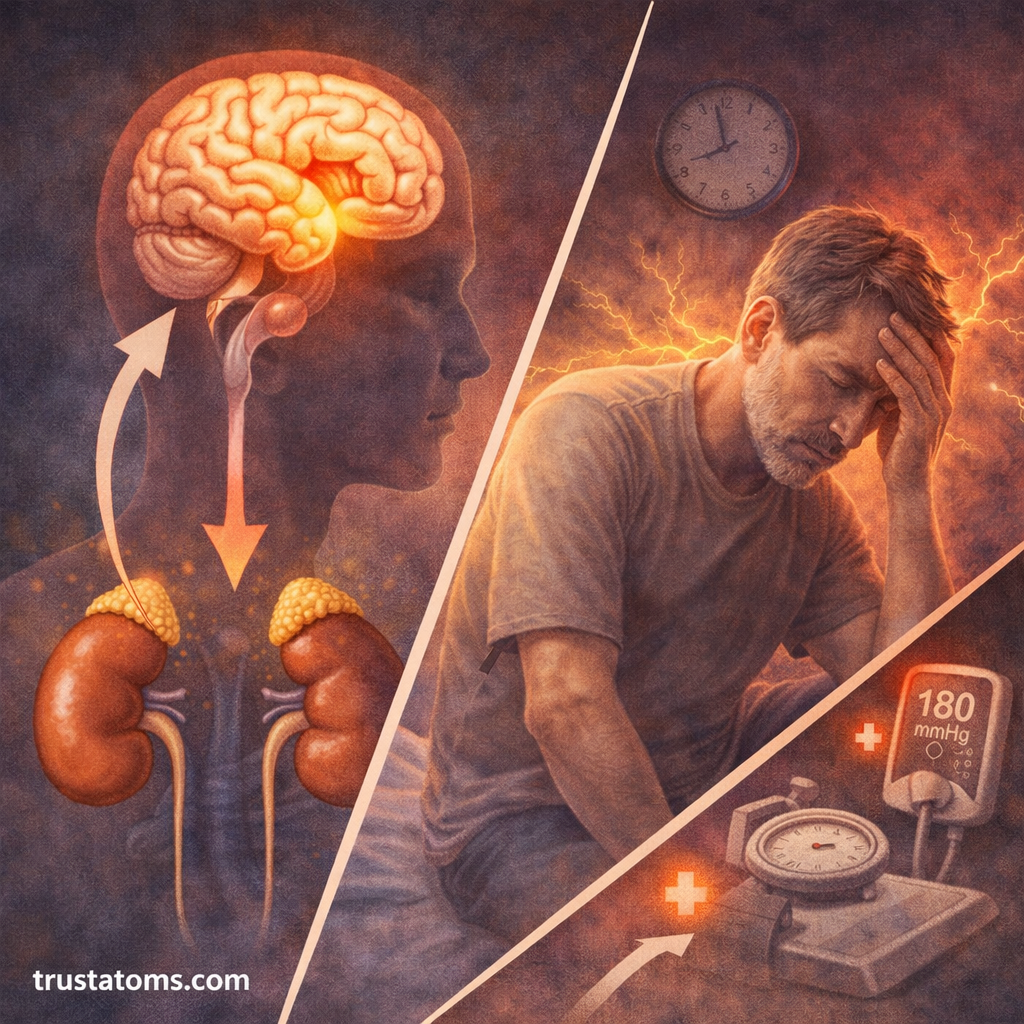
When stress becomes constant, the adrenal glands remain active, which can disrupt normal body functions.
Common Effects
- Fatigue and low energy
- Weakened immune system
- Weight gain (especially abdominal)
- Sleep disturbances
- Anxiety and mood changes
- High blood pressure
Chronic stress can strain multiple systems in the body if not managed properly.
Disorders of the Adrenal Glands
Imbalances in adrenal hormone production can lead to medical conditions.
Addison’s Disease (Adrenal Insufficiency)
- Low cortisol production
- Symptoms: fatigue, weight loss, low blood pressure, weakness
Cushing’s Syndrome
- Excess cortisol levels
- Symptoms: weight gain, round face, high blood pressure, muscle weakness
Pheochromocytoma
- Tumor of the adrenal medulla
- Causes excessive adrenaline production
- Leads to episodes of high blood pressure, sweating, and rapid heart rate
How to Support Healthy Adrenal Function
While stress is unavoidable, healthy habits can support adrenal balance.
Practical Strategies
- Maintain consistent sleep patterns
- Eat a balanced diet with adequate nutrients
- Exercise regularly (without overtraining)
- Practice stress management techniques (e.g., mindfulness, breathing exercises)
- Limit excessive caffeine and sugar intake
These habits help regulate cortisol levels and support overall well-being.
Key Takeaways
- The adrenal glands are essential for producing stress hormones.
- Adrenaline drives immediate responses, while cortisol manages long-term stress.
- The HPA axis regulates hormone release through a feedback system.
- Short-term stress can be beneficial, but chronic stress can harm the body.
- Maintaining healthy lifestyle habits supports proper adrenal function.
Final Thoughts
The adrenal glands may be small, but their impact on the body is enormous. From helping you react in emergencies to managing daily stress, these glands play a vital role in survival and overall health.
Understanding how stress hormones work provides valuable insight into how the body maintains balance—and why managing stress is essential for long-term well-being.