Your immune system doesn’t just fight invaders—it learns to recognize them. A key process that makes this possible is antigen presentation, which allows the body to identify specific pathogens and activate a targeted immune response.
Antigen presentation is central to adaptive immunity, the part of the immune system that provides precision, memory, and long-term protection.
What Is Antigen Presentation?
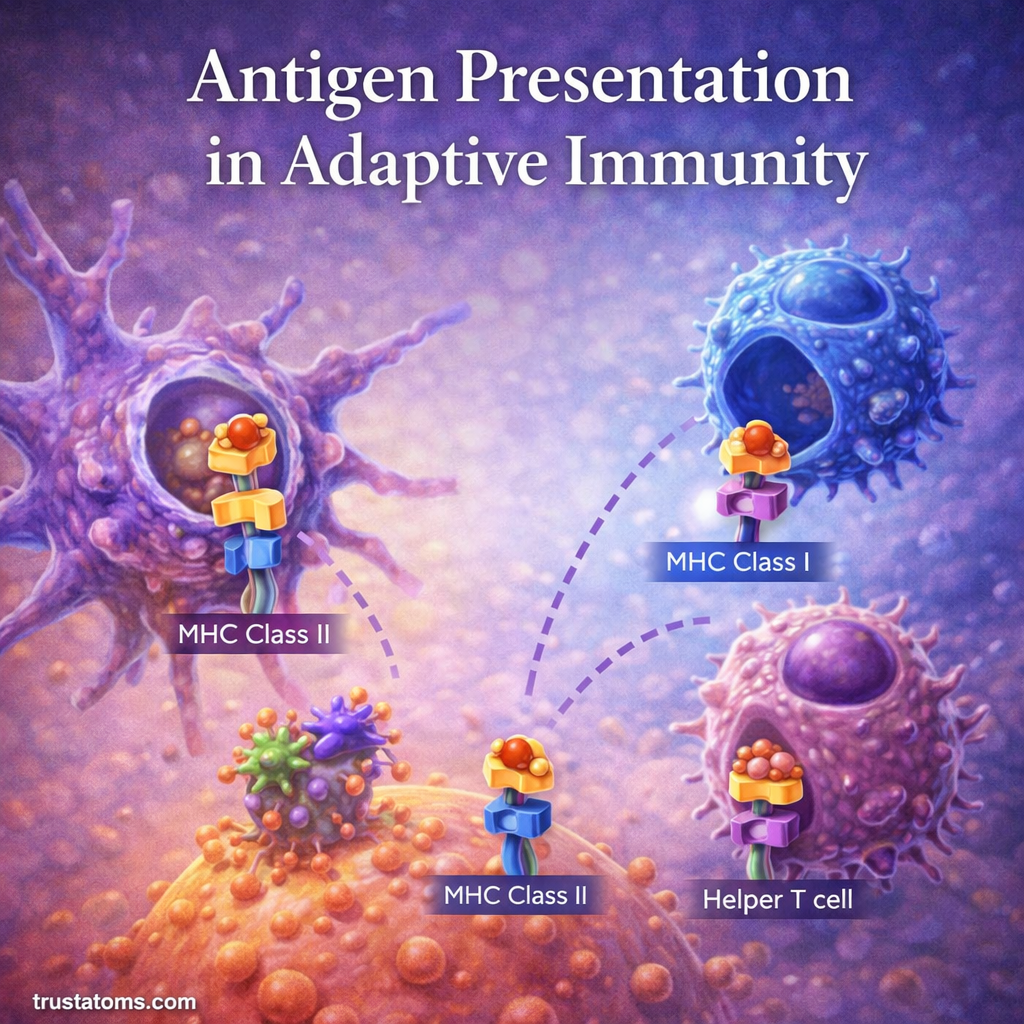
Antigen presentation is the process by which immune cells display fragments of pathogens (called antigens) on their surface. This allows other immune cells—especially T cells—to recognize and respond to specific threats.
Key Purpose
- Identify pathogens with precision
- Activate T cells
- Bridge innate and adaptive immunity
- Enable immune memory
What Is an Antigen?
An antigen is any substance that the immune system recognizes as foreign.
Common Examples
- Proteins from bacteria or viruses
- Toxins
- Fragments of infected or abnormal cells
Antigens are like “ID tags” that help the immune system distinguish harmful invaders from normal body cells.
The Cells Involved in Antigen Presentation
Specialized immune cells are responsible for capturing and presenting antigens.
Antigen-Presenting Cells (APCs)
The main APCs include:
- Dendritic cells – the most effective antigen presenters
- Macrophages – engulf pathogens and present their fragments
- B cells – present antigens to helper T cells
These cells play a crucial role in activating adaptive immunity.
The Role of Major Histocompatibility Complex (MHC)
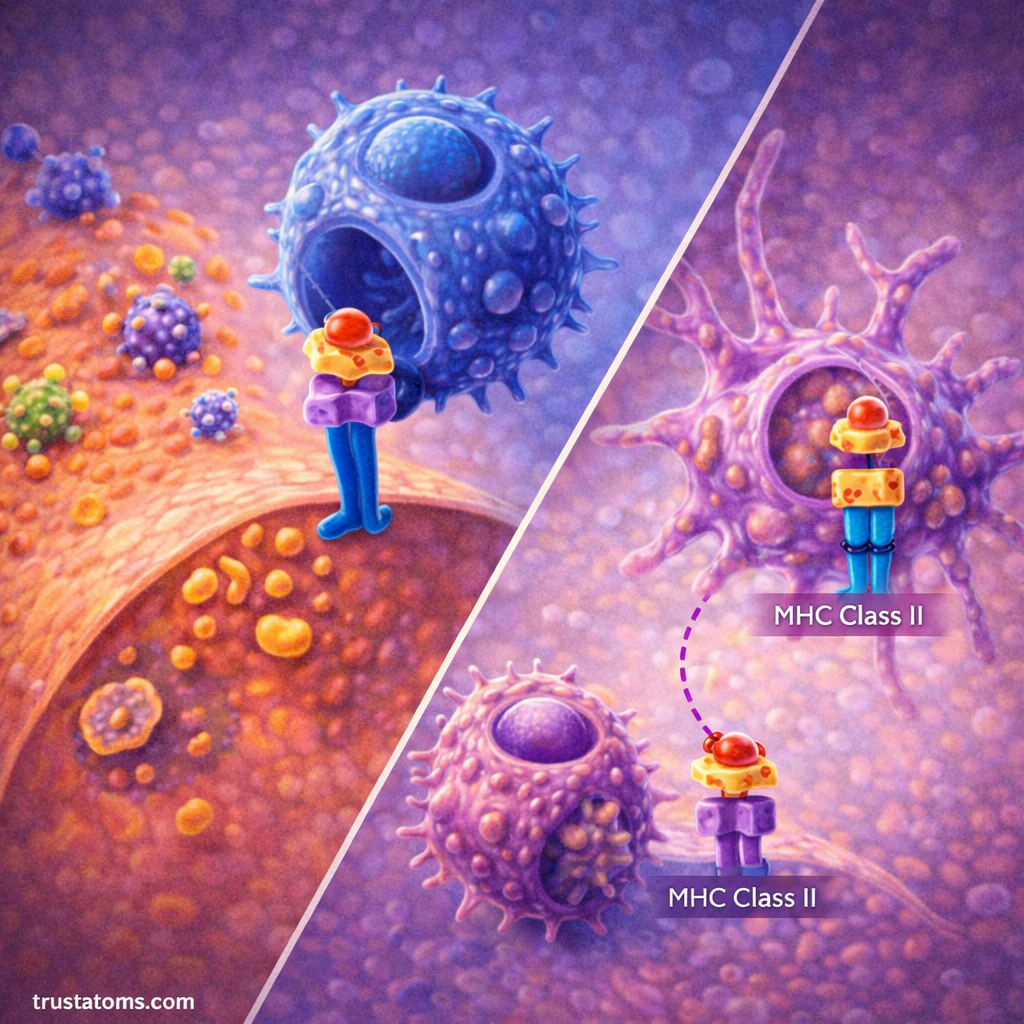
Antigens are displayed on the surface of cells using molecules called Major Histocompatibility Complex (MHC).
Two Main Types of MHC
MHC Class I
- Found on almost all body cells
- Presents antigens from inside the cell
- Alerts cytotoxic T cells to infected or abnormal cells
MHC Class II
- Found on antigen-presenting cells
- Presents antigens from outside the cell
- Activates helper T cells
How Antigen Presentation Works (Step-by-Step)
Antigen presentation follows a structured process that ensures accurate immune activation.
1. Pathogen Capture
APCs detect and engulf pathogens through processes like phagocytosis.
2. Antigen Processing
The pathogen is broken down into smaller fragments (antigens).
3. Antigen Loading
These fragments are loaded onto MHC molecules inside the cell.
4. Surface Display
The MHC-antigen complex moves to the cell surface.
5. T Cell Recognition
T cells recognize the antigen and become activated.
Activation of T Cells
Once antigens are presented, T cells respond in different ways depending on the type of MHC involved.
Helper T Cells (CD4+)
- Recognize antigens on MHC Class II
- Release signaling molecules (cytokines)
- Activate other immune cells
Cytotoxic T Cells (CD8+)
- Recognize antigens on MHC Class I
- Directly kill infected or abnormal cells
Why Antigen Presentation Is Essential
Without antigen presentation, the immune system would not be able to target specific threats.
Key Benefits
- Enables precise immune targeting
- Prevents unnecessary damage to healthy cells
- Supports long-term immune memory
- Coordinates complex immune responses
Antigen Presentation and Immune Memory
Antigen presentation is critical for developing immune memory, which allows the body to respond faster upon re-exposure.
How It Works
- Activated T cells form memory cells
- Memory cells remain in the body long-term
- Future infections are recognized more quickly
This is the foundation of how vaccines work.
Antigen Presentation vs Innate Immunity
Antigen presentation distinguishes adaptive immunity from innate immunity.
Innate Immunity
- Fast but non-specific
- Does not require antigen recognition
- No long-term memory
Adaptive Immunity
- Slower but highly specific
- Relies on antigen presentation
- Provides long-term protection
Factors That Affect Antigen Presentation
Several factors can influence how effectively antigens are presented.
Potential Challenges
- Certain viruses can evade antigen presentation
- Immune system disorders
- Aging-related decline in immune function
Supporting Healthy Immune Function
- Balanced nutrition
- Adequate sleep
- Stress management
- Regular physical activity
Why Antigen Presentation Matters
Antigen presentation is the communication system of the immune response. It ensures that immune cells:
- Recognize the correct target
- Respond appropriately
- Coordinate with other immune defenses
Without it, the immune system would lack precision and memory.
Final Thoughts
Antigen presentation is a critical step that allows your immune system to move from a general defense to a highly targeted response. By displaying fragments of pathogens to T cells, your body can identify, attack, and remember specific threats.
This process is essential not only for fighting infections but also for long-term protection and immune system efficiency.