Atmospheric carbon dioxide (CO₂) plays a central role in Earth’s climate system. Over the past century, its concentration has risen dramatically, influencing global temperatures, weather patterns, and ocean chemistry. Understanding CO₂ trends helps explain both past climate changes and future environmental challenges.
This article breaks down how atmospheric CO₂ levels have changed over time, what’s driving those changes, and why they matter.
What Is Atmospheric Carbon Dioxide?
Carbon dioxide is a naturally occurring gas in Earth’s atmosphere. It is part of the carbon cycle, moving between the air, oceans, soil, and living organisms.
Key roles of CO₂ include:
- Acting as a greenhouse gas that traps heat
- Supporting photosynthesis in plants
- Helping regulate Earth’s temperature over long periods
While CO₂ is essential for life, its concentration must remain balanced.
Historical CO₂ Levels
Pre-Industrial Era
Before the Industrial Revolution (around 1750), atmospheric CO₂ levels were relatively stable:
- Approximately 280 parts per million (ppm)
- Maintained through natural processes like respiration, decomposition, and ocean absorption
These levels fluctuated slightly over thousands of years due to natural climate cycles.
Ice Core Evidence
Scientists study ancient air trapped in ice cores from places like Antarctica to understand past CO₂ levels.
Findings show:
- CO₂ levels remained between 180–300 ppm over the last 800,000 years
- Changes were closely tied to ice ages and warmer interglacial periods
Modern CO₂ Trends
Rapid Increase Since Industrialization
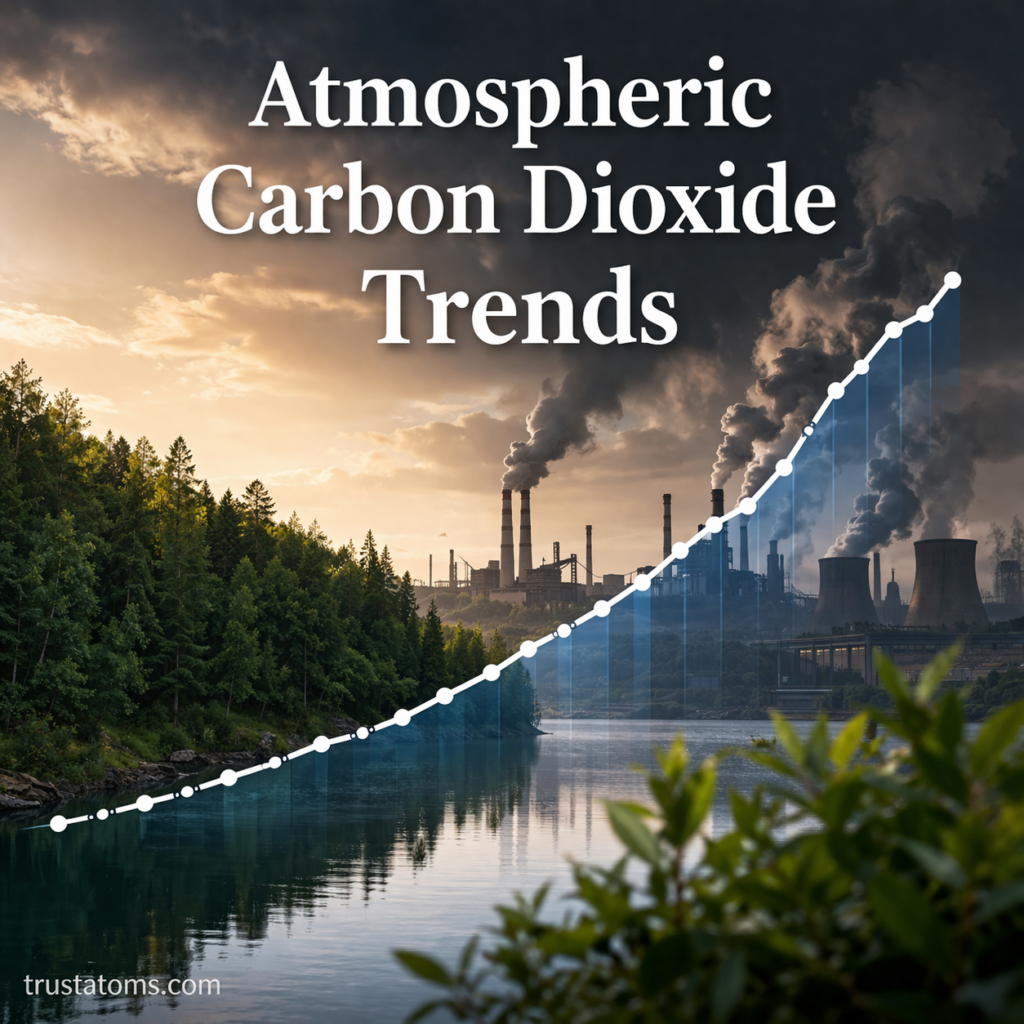
Since the late 18th century, CO₂ levels have risen sharply:
- 1950s: ~315 ppm
- 2000: ~370 ppm
- Today: Over 420 ppm
This increase is unprecedented in both speed and magnitude compared to natural historical changes.
The Keeling Curve
The most famous record of atmospheric CO₂ is the Keeling Curve, which began in 1958.
It shows:
- A steady upward trend in CO₂ levels
- Seasonal fluctuations due to plant growth cycles (especially in the Northern Hemisphere)
Main Causes of Rising CO₂
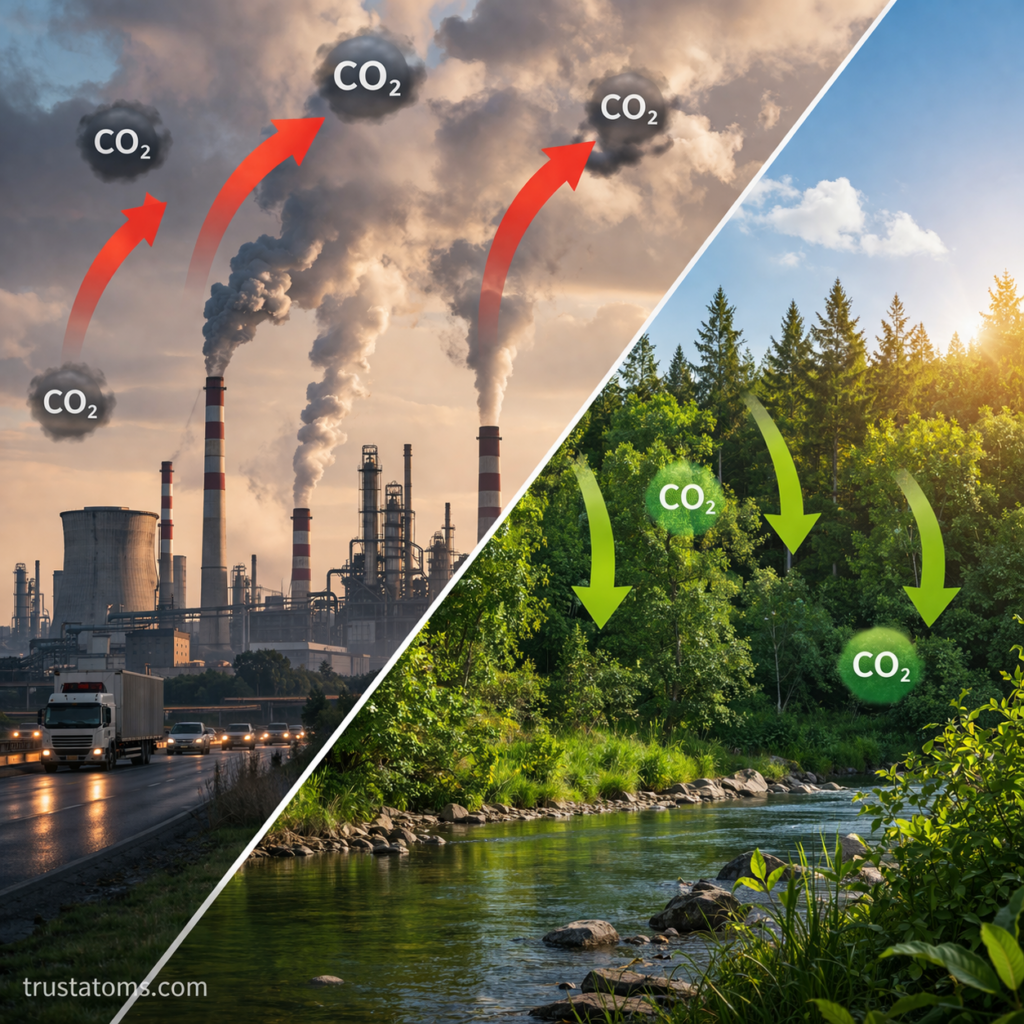
1. Fossil Fuel Combustion
Burning coal, oil, and natural gas releases large amounts of CO₂.
Major sources include:
- Power plants
- Transportation (cars, planes, ships)
- Industrial processes
2. Deforestation
Forests act as carbon sinks, absorbing CO₂ through photosynthesis.
When forests are cleared:
- Stored carbon is released into the atmosphere
- Fewer trees are available to absorb future emissions
3. Cement Production
The process of making cement releases CO₂ as a byproduct, contributing significantly to global emissions.
Seasonal Variations in CO₂
Atmospheric CO₂ doesn’t rise smoothly—it fluctuates throughout the year.
Why This Happens
- Spring/Summer: Plants absorb CO₂ for growth → levels decrease
- Fall/Winter: Plants decay and release CO₂ → levels increase
This creates a repeating annual pattern layered on top of the long-term upward trend.
Why Rising CO₂ Matters
1. Global Warming
CO₂ traps heat in the atmosphere, contributing to the greenhouse effect.
Impacts include:
- Rising global temperatures
- More frequent heatwaves
- Melting ice sheets and glaciers
2. Ocean Acidification
Oceans absorb about 25–30% of CO₂ emissions.
This leads to:
- Lower ocean pH (more acidic conditions)
- Harm to coral reefs and marine life
3. Climate Feedback Loops
Higher CO₂ levels can trigger feedback effects:
- Melting ice reduces reflectivity → more heat absorbed
- Thawing permafrost releases additional greenhouse gases
These feedback loops can accelerate climate change.
Measuring Atmospheric CO₂
Scientists use several methods to monitor CO₂ levels:
Ground-Based Observatories
- Stations like Mauna Loa Observatory provide continuous measurements
- Highly accurate and long-term data
Satellite Observations
- Offer global coverage
- Track CO₂ distribution across regions
Air Sampling and Analysis
- Aircraft and balloons collect atmospheric samples
- Provide data at different altitudes
Future CO₂ Projections
If Emissions Continue
- CO₂ levels could exceed 500 ppm by the end of the century
- Greater warming and more severe climate impacts are expected
If Emissions Are Reduced
- Stabilization or gradual decline in CO₂ levels is possible
- Requires global efforts in energy transition and conservation
How CO₂ Trends Are Being Addressed
Efforts to manage atmospheric CO₂ include:
Transition to Renewable Energy
- Solar, wind, and hydroelectric power reduce reliance on fossil fuels
Carbon Capture Technologies
- Capture CO₂ from industrial sources or directly from the air
- Store it underground or reuse it
Reforestation and Conservation
- Planting trees and protecting forests increases carbon absorption
Key Takeaways
- Atmospheric CO₂ has risen from ~280 ppm (pre-industrial) to over 420 ppm today
- The increase is primarily driven by human activities
- Rising CO₂ contributes to global warming and ocean acidification
- Seasonal fluctuations occur due to plant cycles
- Reducing emissions and enhancing carbon sinks are critical for stabilizing levels
Conclusion
Atmospheric carbon dioxide trends provide clear evidence of how human activity is reshaping Earth’s climate. While CO₂ is a natural and necessary part of the environment, its rapid increase poses significant risks.
By understanding these trends, scientists and policymakers can better plan for the future—working toward solutions that balance human needs with environmental sustainability.