B cells are a vital part of the immune system, responsible for producing antibodies that identify and neutralize harmful invaders like bacteria and viruses. As a key component of adaptive immunity, B cells provide targeted, long-lasting protection that improves with repeated exposure to pathogens.
This article explains how B cells develop, how they produce antibodies, and why they are essential for immune defense.
What Are B Cells?
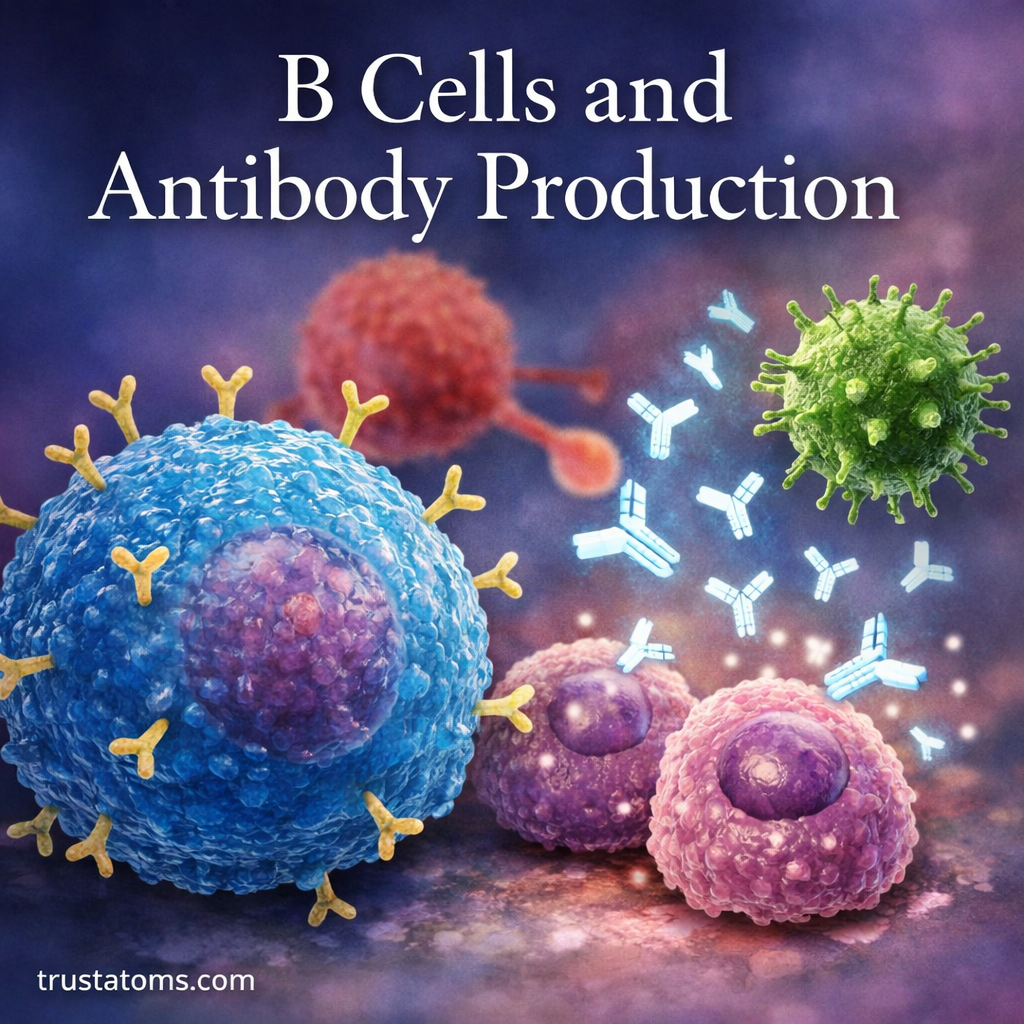
B cells, also known as B lymphocytes, are a type of white blood cell that originate and mature in the bone marrow. Their primary role is to recognize specific antigens (foreign substances) and produce antibodies against them.
Unlike innate immune cells, B cells are highly specific—each B cell is programmed to recognize a unique antigen.
Key Functions of B Cells
- Detect specific pathogens through surface receptors
- Produce antibodies to neutralize threats
- Form memory cells for long-term immunity
- Present antigens to helper T cells
How B Cells Recognize Antigens
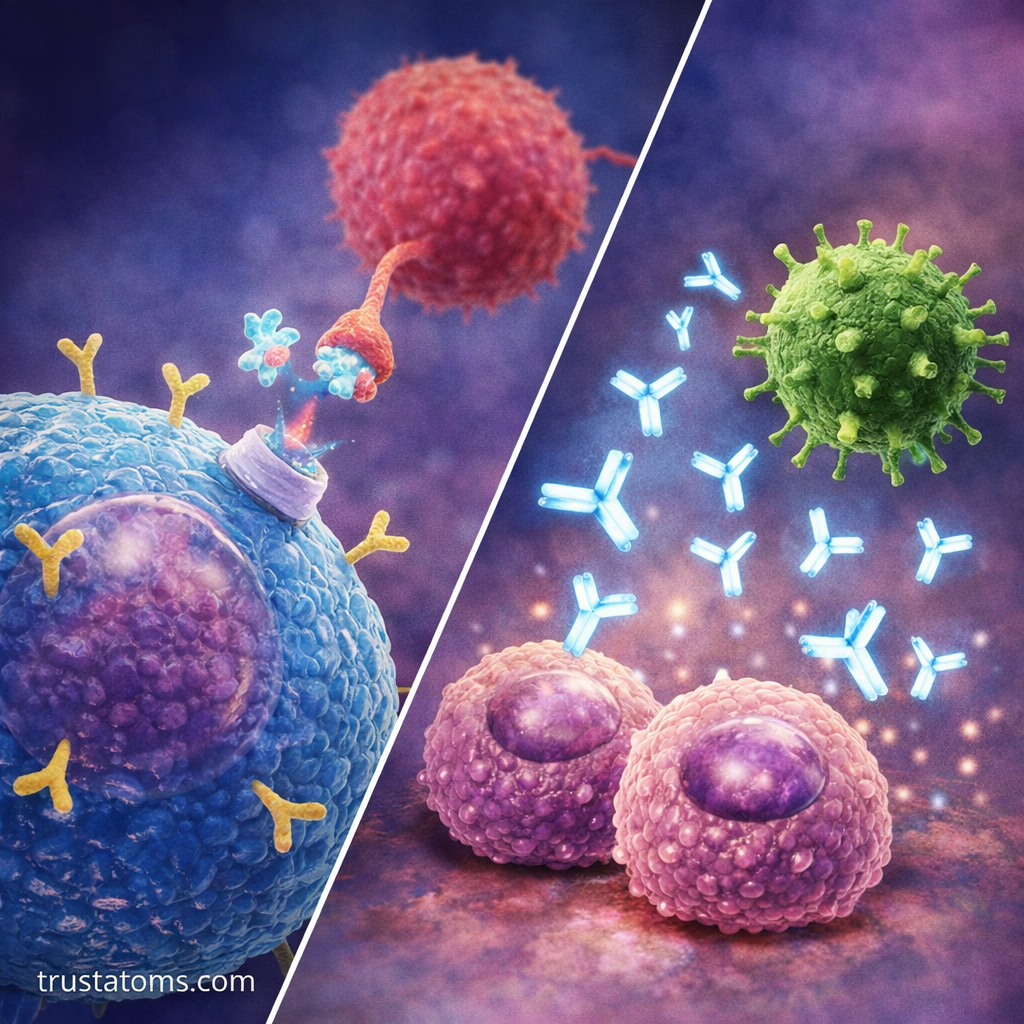
Each B cell has a unique receptor on its surface called the B cell receptor (BCR). This receptor binds to a specific antigen, much like a lock and key.
When a matching antigen enters the body:
- The B cell binds to the antigen
- The antigen is internalized and processed
- The B cell presents fragments of the antigen on its surface
- Helper T cells recognize this presentation and activate the B cell
This activation is crucial for initiating antibody production.
B Cell Activation and Differentiation
Once activated, B cells undergo rapid changes to become specialized cells.
Two Main Outcomes of Activation
1. Plasma Cells
- Short-lived or long-lived cells
- Produce large amounts of antibodies
- Act as antibody “factories”
2. Memory B Cells
- Long-lived cells
- Remain in the body after infection
- Enable faster and stronger responses upon re-exposure
What Are Antibodies?
Antibodies (also called immunoglobulins) are proteins produced by plasma cells. They circulate in the blood and lymph, targeting specific antigens.
Each antibody is highly specific to one antigen.
Structure of Antibodies
Antibodies have a Y-shaped structure with:
- Two antigen-binding sites (at the tips)
- A constant region (tail) that interacts with other immune cells
How Antibodies Work
Antibodies help eliminate pathogens in several ways:
1. Neutralization
Antibodies bind to viruses or toxins and block their ability to infect cells.
2. Opsonization
They coat pathogens, making them easier for immune cells like macrophages to engulf.
3. Complement Activation
Antibodies trigger a cascade of proteins that destroy pathogens.
4. Agglutination
They cause pathogens to clump together, making them easier to eliminate.
Types of Antibodies
There are five major classes of antibodies, each with a specific role:
- IgG – Most abundant; provides long-term protection
- IgA – Found in mucosal areas like saliva and tears
- IgM – First antibody produced during an infection
- IgE – Involved in allergic responses
- IgD – Functions mainly as a B cell receptor
The Role of B Cells in Vaccination
Vaccines work by stimulating B cells without causing disease. When exposed to a harmless form of an antigen:
- B cells become activated
- Plasma cells produce antibodies
- Memory B cells are formed
This prepares the immune system to respond quickly if the real pathogen appears.
B Cells vs. T Cells
While both are lymphocytes, they have different roles:
- B cells focus on antibody production
- T cells (especially helper T cells) assist in activating B cells
- Cytotoxic T cells directly kill infected cells
Together, they form a coordinated immune response.
Why B Cells Are Essential for Immunity
B cells are critical for protecting the body against infections and maintaining long-term immunity.
Key Benefits
- Provide highly specific immune responses
- Enable immunological memory
- Help prevent reinfection
- Support vaccine effectiveness
Without B cells, the body would struggle to recognize and fight off recurring pathogens.
Final Thoughts
B cells and antibody production are central to the adaptive immune system. Their ability to recognize specific antigens, produce targeted antibodies, and remember past infections makes them one of the most powerful defenses in the human body.
Understanding how B cells function not only explains how we fight disease but also highlights the science behind vaccines and long-term immunity.