Understanding how your body processes fats is essential to understanding digestion as a whole. One of the key players in this process is bile—a substance produced by the liver that makes fat digestion possible.
In this guide, we’ll break down how bile is produced, where it’s stored, and how it helps your body absorb fats efficiently.
What Is Bile?
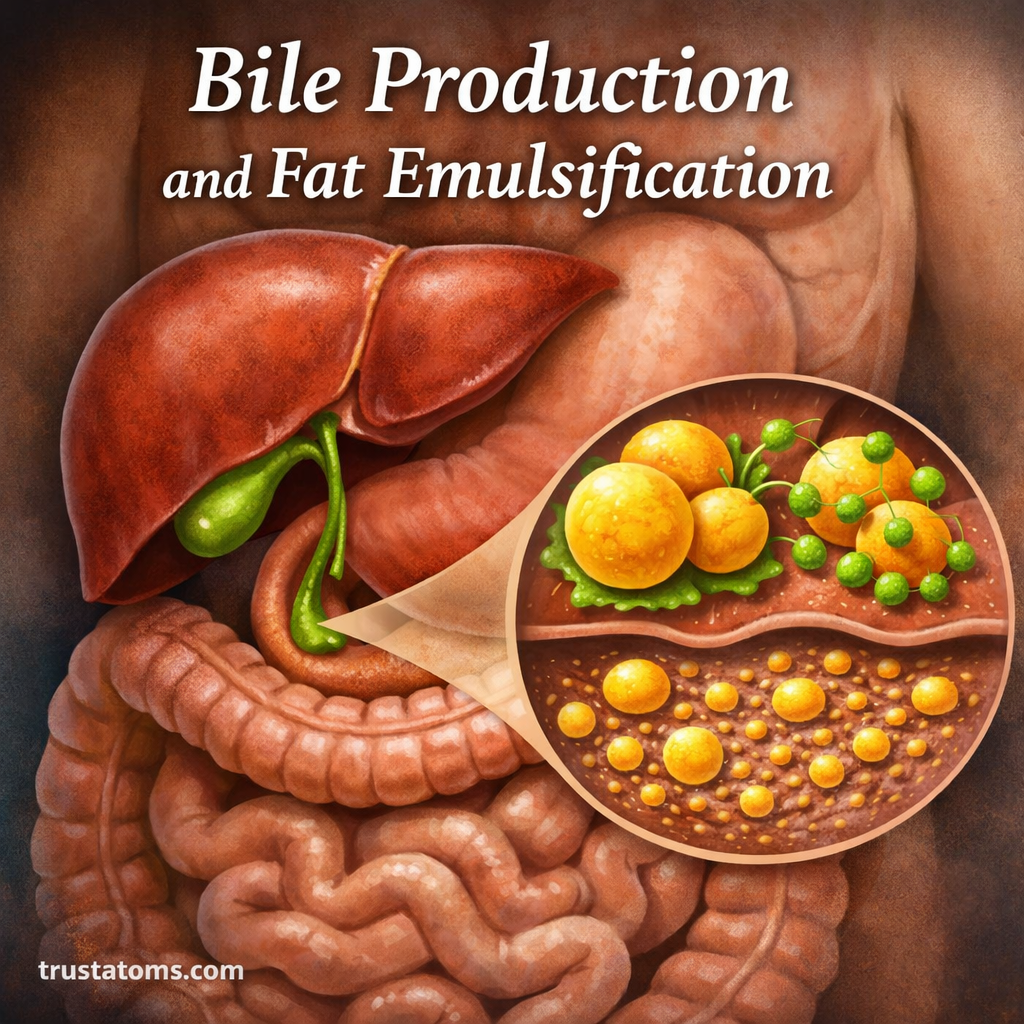
Bile is a digestive fluid that plays a crucial role in breaking down fats. It is not an enzyme, but it works alongside digestive enzymes to make fat digestion more effective.
Key characteristics of bile:
- Produced by the liver
- Stored and concentrated in the gallbladder
- Released into the small intestine
- Contains bile salts, cholesterol, bilirubin, and water
Unlike enzymes that chemically break down nutrients, bile physically transforms fats into a form that enzymes can act on.
Where Is Bile Produced?
Bile is continuously produced in the liver by specialized cells called hepatocytes.
The production process:
- Liver cells create bile using cholesterol and other substances
- Bile flows through small channels called bile canaliculi
- It enters larger bile ducts
- It is transported to the gallbladder for storage
The liver produces bile even when you’re not eating, ensuring your body is always ready for digestion.
The Role of the Gallbladder
The gallbladder acts as a storage and concentration center for bile.
What happens in the gallbladder:
- Bile is stored between meals
- Water is removed to concentrate bile
- Bile becomes more potent and efficient
When is bile released?
Bile is released when you eat foods—especially those high in fat. A hormone called cholecystokinin (CCK) signals the gallbladder to contract and release bile into the small intestine.
What Is Fat Emulsification?
Fat emulsification is the process of breaking large fat globules into smaller droplets.
Why is this necessary?
Fats are hydrophobic, meaning they do not mix well with water-based digestive fluids. Without emulsification, enzymes would have very little surface area to work on.
What bile does:
- Breaks large fat droplets into smaller ones
- Increases the surface area for enzymes
- Allows lipase (a fat-digesting enzyme) to work efficiently
Think of emulsification like breaking a large oil spill into many tiny droplets—making it easier to clean up.
How Bile Aids Fat Digestion
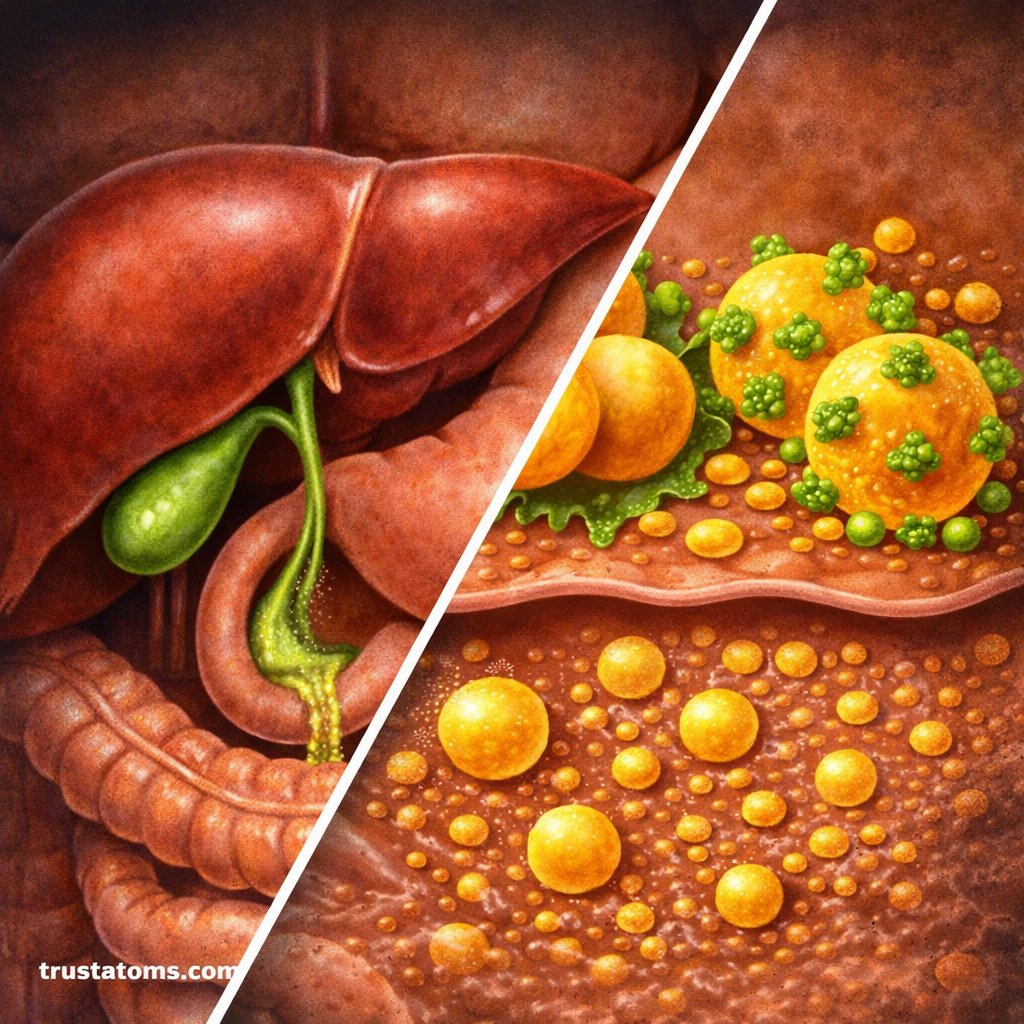
Bile doesn’t digest fat directly—it prepares fats for digestion.
Step-by-step process:
- Fat enters the small intestine (duodenum)
- Bile is released from the gallbladder
- Bile salts surround fat droplets
- Large fat globules are broken into tiny droplets (emulsification)
- Lipase enzymes break fats into fatty acids and monoglycerides
This process dramatically improves the efficiency of fat digestion.
Absorption of Fats After Emulsification
Once fats are broken down, they can be absorbed by the body.
What happens next:
- Fatty acids and monoglycerides form structures called micelles
- Micelles transport fats to the intestinal lining
- Fats are absorbed into intestinal cells
- Reassembled into triglycerides
- Packaged into chylomicrons for transport through the lymphatic system
Without bile, this entire absorption process would be significantly impaired.
What Happens If Bile Production Is Impaired?
Problems with bile production or flow can lead to digestive issues.
Common effects:
- Difficulty digesting fatty foods
- Greasy or pale stools (steatorrhea)
- Fat-soluble vitamin deficiencies (A, D, E, K)
- Bloating and discomfort after meals
Possible causes:
- Liver disease
- Gallstones
- Blocked bile ducts
- Gallbladder removal (in some cases)
Why Bile Is Essential for Overall Health
Bile does more than just help digest fats—it also plays a role in waste removal.
Additional functions:
- Helps eliminate excess cholesterol
- Removes bilirubin (a byproduct of red blood cell breakdown)
- Supports absorption of fat-soluble vitamins
This makes bile a critical component not only of digestion but also of metabolic balance.
Final Thoughts
Bile production and fat emulsification are essential processes that allow your body to properly digest and absorb fats. While often overlooked, bile plays a foundational role in digestive efficiency and overall health.
From the liver’s constant production to the gallbladder’s timely release, this system works seamlessly to ensure fats are broken down and absorbed effectively. Without it, your body would struggle to utilize one of its most important energy sources.