Biomass distribution is a fundamental concept in ecology that helps scientists understand how energy and matter move through ecosystems. Biomass refers to the total mass of living organisms within a given area or ecosystem, usually measured in terms of dry weight or carbon content.
By studying how biomass is distributed among plants, animals, and microorganisms, ecologists can gain insight into ecosystem stability, productivity, and energy flow. Biomass patterns reveal which organisms dominate an ecosystem, how resources are used, and how environmental changes may affect ecological balance.
Understanding biomass distribution is therefore essential for studying ecosystem dynamics, food webs, and long-term environmental sustainability.
What Is Biomass in Ecology?
In ecological terms, biomass represents the total mass of living biological material within a defined space.
Biomass can be measured in several ways:
- Dry mass of organisms
- Carbon content
- Organic matter per unit area
- Energy stored in biological tissues
Ecologists typically express biomass as units such as:
- grams per square meter (g/m²)
- kilograms per hectare (kg/ha)
- tons of carbon per ecosystem
These measurements allow scientists to compare ecosystems and evaluate how biological resources are distributed across different environments.
The Role of Biomass in Ecosystem Dynamics
Biomass plays a central role in how ecosystems function. It reflects how energy captured by producers moves through food webs and supports life at higher trophic levels.
Biomass distribution influences:
- Energy transfer between organisms
- Population sizes of species
- Nutrient cycling
- Ecosystem productivity
- Food web structure
When biomass distribution shifts significantly, it can signal ecological disturbances or environmental change.
For example, a decline in plant biomass may reduce the energy available to herbivores, which can then affect predator populations.
Trophic Levels and Biomass Structure
Biomass within ecosystems is typically organized into trophic levels, which represent different positions in a food chain.
The major trophic levels include:
- Primary producers
- Primary consumers
- Secondary consumers
- Tertiary consumers
- Decomposers
Each level contains organisms that obtain energy in similar ways.
Primary Producers
Primary producers form the foundation of most ecosystems.
These organisms convert sunlight or chemical energy into organic matter through photosynthesis or chemosynthesis.
Examples include:
- Plants
- Algae
- Phytoplankton
- Certain bacteria
Primary producers usually contain the largest share of biomass in terrestrial ecosystems.
Primary Consumers
Primary consumers are herbivores that feed directly on producers.
Examples include:
- Deer
- Grasshoppers
- Zooplankton
- Rabbits
These organisms transfer energy stored in plant biomass into animal biomass.
Secondary and Tertiary Consumers
Predators that feed on herbivores or other predators occupy higher trophic levels.
Examples include:
- Wolves
- Hawks
- Large fish
- Sharks
As energy moves up the food chain, biomass typically decreases due to energy loss at each trophic level.
Decomposers
Decomposers break down dead organisms and organic waste, returning nutrients to the ecosystem.
Common decomposers include:
- Fungi
- Bacteria
- Certain invertebrates
Although decomposers may not always dominate biomass measurements, they play a critical role in maintaining nutrient cycles.
Biomass Pyramids
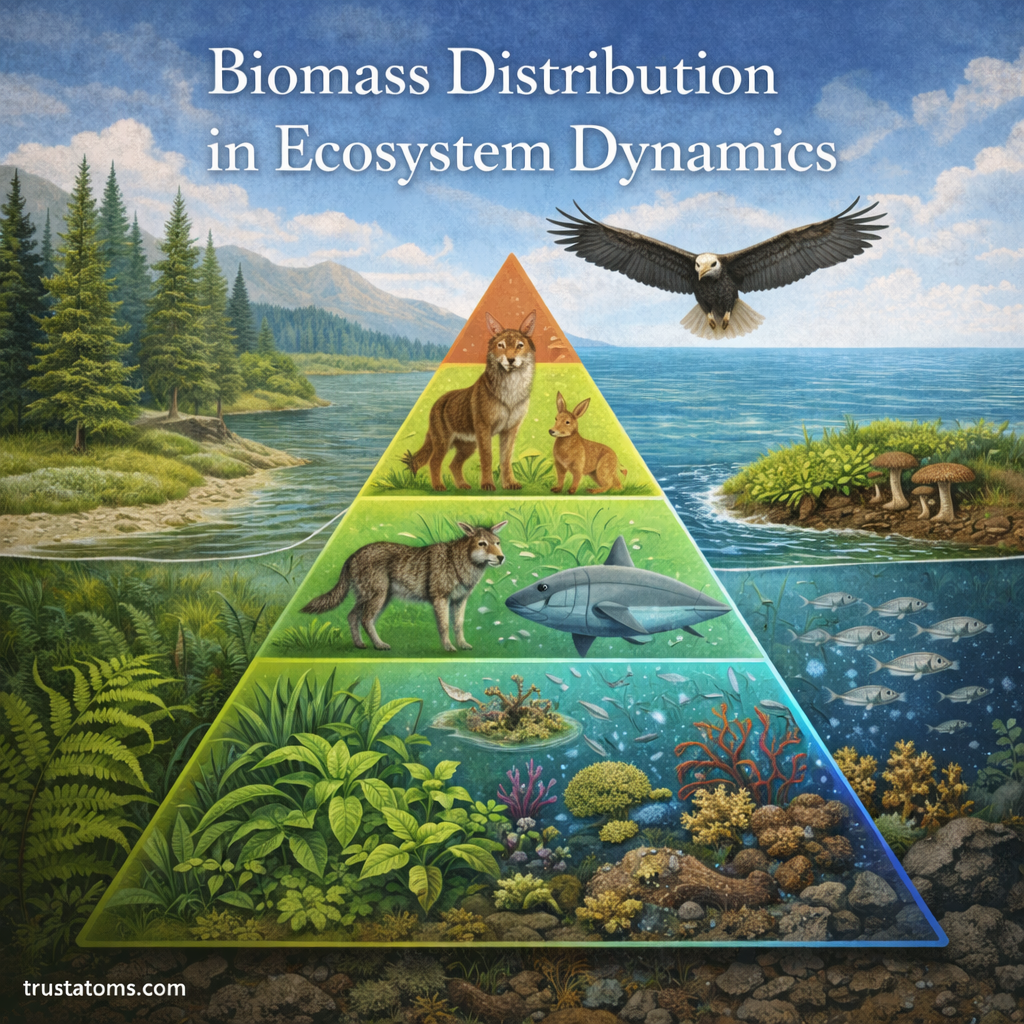
Biomass pyramids are graphical representations of how biomass is distributed among trophic levels in an ecosystem.
These pyramids illustrate the amount of living material at each level of the food chain.
Upright Biomass Pyramids
Most terrestrial ecosystems display upright biomass pyramids.
In these systems:
- Producers contain the largest biomass
- Herbivores contain less biomass
- Predators contain the least biomass
Forests are a classic example where large amounts of plant biomass support smaller populations of animals.
Inverted Biomass Pyramids
In some aquatic ecosystems, biomass pyramids appear inverted.
For example:
- Phytoplankton populations may have low standing biomass
- Zooplankton populations may temporarily exceed producer biomass
This occurs because phytoplankton reproduce rapidly and are quickly consumed by grazers.
Although the standing biomass is small, their high productivity supports larger consumer populations.
Factors Influencing Biomass Distribution
Many environmental and ecological factors determine how biomass is distributed within ecosystems.
Primary Productivity
Primary productivity refers to the rate at which producers convert energy into biomass.
High productivity ecosystems typically support larger food webs.
Examples of highly productive ecosystems include:
- Tropical rainforests
- Coral reefs
- Coastal marine systems
- Wetlands
Low productivity ecosystems include deserts and polar environments.
Nutrient Availability
Nutrients such as nitrogen and phosphorus influence plant growth and primary productivity.
When nutrients are abundant, ecosystems often support greater biomass.
In nutrient-poor environments, limited plant growth restricts biomass accumulation.
Climate and Temperature
Temperature and climate strongly influence biomass production.
Warmer climates with consistent rainfall often support dense vegetation and large biomass.
Conversely, extreme cold or arid conditions limit plant growth and overall ecosystem biomass.
Disturbances
Natural disturbances can significantly alter biomass distribution.
Examples include:
- Wildfires
- Hurricanes
- Droughts
- Disease outbreaks
Disturbances may temporarily reduce biomass but can also create opportunities for ecological succession.
Biomass Distribution Across Different Ecosystems

Different ecosystems display unique patterns of biomass distribution.
Forest Ecosystems
Forests contain some of the largest biomass concentrations on Earth.
Most of this biomass is stored in:
- Tree trunks
- Branches
- Roots
Animal biomass represents only a small portion compared to plant biomass.
Grassland Ecosystems
Grasslands have lower total biomass than forests but support large populations of grazing animals.
Much of the biomass is found underground in root systems.
This helps grasses survive drought and grazing pressure.
Marine Ecosystems
Marine ecosystems often contain less standing biomass than terrestrial ecosystems.
However, rapid reproduction of phytoplankton allows oceans to support large food webs.
Marine biomass is distributed among:
- Phytoplankton
- Zooplankton
- Fish populations
- Marine mammals
Microbial Ecosystems
Microorganisms contribute significantly to global biomass, particularly in soil and ocean environments.
Microbial biomass plays a key role in:
- nutrient cycling
- decomposition
- soil fertility
- carbon storage
Despite their small size, microbes collectively represent a major portion of Earth’s biological mass.
Biomass and the Global Carbon Cycle
Biomass is closely linked to the global carbon cycle.
Living organisms store carbon in organic molecules such as carbohydrates, proteins, and lipids.
Major carbon reservoirs include:
- forests
- soil organic matter
- marine organisms
- microbial communities
When organisms grow, carbon is stored in biomass. When they die or respire, carbon returns to the atmosphere or environment.
Changes in biomass distribution can therefore affect global carbon storage and climate regulation.
Measuring Biomass in Ecological Research
Scientists use several techniques to estimate biomass in ecosystems.
Field Sampling
Field sampling involves directly collecting plant or organism samples from an area.
Researchers may:
- measure plant mass
- count individuals
- estimate vegetation density
Samples are often dried to determine dry biomass weight.
Remote Sensing
Satellite imagery and aerial surveys allow scientists to estimate vegetation biomass across large regions.
Remote sensing is commonly used to study:
- forest canopy density
- vegetation health
- land use changes
These technologies help track global biomass patterns.
Carbon-Based Measurements
Because carbon makes up a large portion of biological material, scientists often estimate biomass using carbon content.
Carbon-based measurements help researchers evaluate:
- carbon storage
- ecosystem productivity
- climate change impacts
Biomass Shifts and Ecological Change
Changes in biomass distribution can reveal important ecological trends.
Examples include:
- deforestation reducing forest biomass
- overfishing decreasing marine predator biomass
- invasive species altering food web structures
- climate change shifting vegetation patterns
Monitoring biomass helps scientists detect these changes early and understand their ecological consequences.
The Importance of Biomass Studies for Environmental Management
Understanding biomass distribution is essential for managing natural resources and protecting ecosystems.
Biomass research supports:
- wildlife conservation
- sustainable agriculture
- climate change mitigation
- forest management
- fisheries regulation
By analyzing biomass patterns, scientists can design strategies that maintain ecological balance and biodiversity.
Conclusion
Biomass distribution is a key indicator of ecosystem structure and function. It reflects how energy flows through food webs, how nutrients cycle through environments, and how ecosystems respond to environmental changes.
From forests and grasslands to oceans and microbial communities, biomass patterns reveal the underlying dynamics that sustain life on Earth. Studying these patterns helps scientists understand ecosystem health, predict environmental change, and develop strategies for protecting biodiversity.
As ecological challenges such as climate change and habitat loss intensify, understanding biomass distribution will remain a vital tool for managing and preserving the planet’s ecosystems.