The brain is one of the most sensitive and vital organs in the human body. To function properly, it requires a stable and carefully controlled environment. The blood–brain barrier (BBB) plays a crucial role in maintaining this environment by regulating what substances can enter the brain from the bloodstream.
This specialized protective system acts as a selective filter, allowing essential nutrients to pass through while blocking harmful substances such as toxins and pathogens. Without the blood–brain barrier, the brain would be highly vulnerable to damage.
What Is the Blood–Brain Barrier?
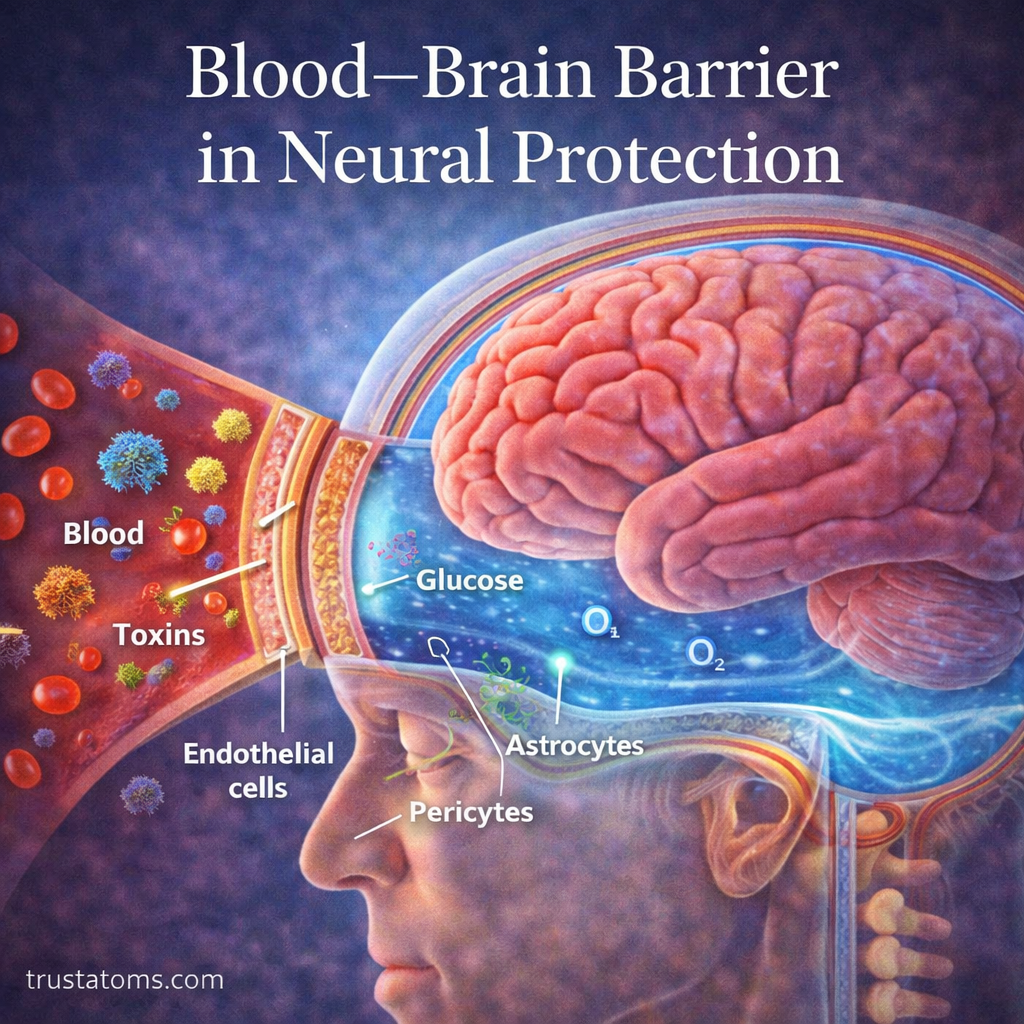
The blood–brain barrier is a highly selective boundary that separates the circulating blood from the brain’s extracellular fluid.
It is formed by:
- Specialized endothelial cells lining brain capillaries
- Tight junctions between these cells
- Supporting cells such as astrocytes and pericytes
Together, these components create a barrier that strictly controls the movement of substances into and out of the brain.
Structure of the Blood–Brain Barrier
The effectiveness of the BBB comes from its unique structure.
Endothelial Cells
The endothelial cells in brain capillaries are tightly packed together.
Key features include:
- Minimal gaps between cells
- Reduced permeability compared to other blood vessels
- Specialized transport mechanisms
These cells form the primary physical barrier.
Tight Junctions
Tight junctions seal the spaces between endothelial cells.
They prevent:
- Uncontrolled leakage of substances
- Passage of large or harmful molecules
This ensures that only specific substances can cross the barrier.
Astrocytes
Astrocytes are star-shaped glial cells that support the BBB.
They help:
- Maintain the integrity of the barrier
- Regulate nutrient exchange
- Provide structural support
Astrocytes play a key role in keeping the barrier stable.
Pericytes
Pericytes are cells that wrap around capillaries.
Their functions include:
- Regulating blood flow
- Supporting vessel stability
- Assisting in barrier maintenance
They contribute to the overall strength and function of the BBB.
How the Blood–Brain Barrier Works
The BBB uses several mechanisms to control what enters the brain.
Passive Diffusion
Small, lipid-soluble molecules can pass directly through the barrier.
Examples include:
- Oxygen
- Carbon dioxide
- Certain small molecules
Facilitated Transport
Some essential substances require specialized transport proteins.
These include:
- Glucose
- Amino acids
- Vitamins
Transport proteins allow these molecules to cross safely and efficiently.
Active Transport
Active transport uses energy to move substances across the barrier.
This process is used for:
- Removing waste products
- Transporting important molecules against concentration gradients
Efflux Pumps
Efflux pumps actively remove unwanted substances from the brain.
They help:
- Prevent toxin buildup
- Protect against harmful chemicals
- Maintain a stable internal environment
Functions of the Blood–Brain Barrier
The BBB serves several essential functions in neural protection.
Protection from Harmful Substances
The barrier blocks:
- Toxins
- Bacteria and viruses
- Many drugs and chemicals
This protects delicate neural tissue from damage.
Maintaining Chemical Stability
The BBB helps regulate:
- Ion balance
- pH levels
- Neurotransmitter concentrations
Stable conditions are necessary for proper nerve signaling.
Nutrient Supply
The barrier ensures that essential nutrients reach the brain while filtering out unnecessary or harmful substances.
Waste Removal
The BBB helps remove metabolic waste products from brain tissue, maintaining a clean and efficient environment.
Why the Blood–Brain Barrier Is Important
The brain relies on precise chemical conditions to function correctly.
The BBB helps:
- Prevent harmful fluctuations in the brain’s environment
- Protect against infections
- Support normal neural activity
- Maintain long-term brain health
Without this barrier, the brain would be exposed to constant changes in blood composition, which could disrupt neural function.
Challenges of the Blood–Brain Barrier
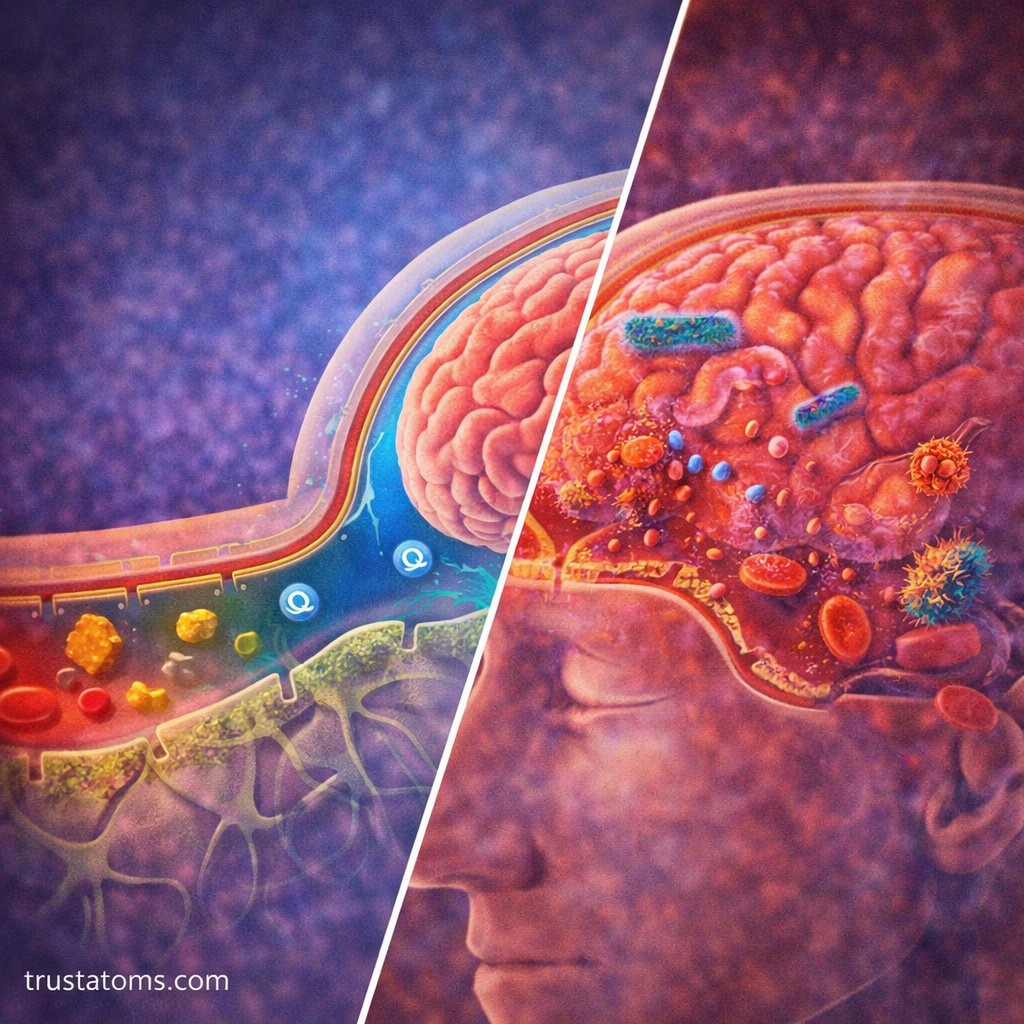
While the BBB is essential for protection, it can also present challenges.
Drug Delivery
Many medications cannot easily cross the BBB.
This makes it difficult to treat certain conditions, including:
- Brain tumors
- Neurodegenerative diseases
- Infections of the central nervous system
Researchers are developing ways to safely deliver drugs across the barrier.
Barrier Disruption
In some cases, the BBB can become damaged or more permeable.
This may occur due to:
- Injury
- Infection
- Inflammation
- Chronic disease
When the barrier is compromised, harmful substances may enter the brain more easily.
Conditions Associated with BBB Dysfunction
Disruption of the blood–brain barrier has been linked to several neurological conditions.
Examples include:
- Alzheimer’s disease
- Multiple sclerosis
- Stroke
- Traumatic brain injury
- Brain infections
In these cases, changes in BBB function can contribute to disease progression.
How the BBB Works with Other Protective Systems
The blood–brain barrier works alongside other protective mechanisms, including:
- The skull (physical protection)
- The meninges (protective membranes)
- Cerebrospinal fluid (shock absorption and support)
Together, these systems create multiple layers of defense that protect the brain from both physical and chemical threats.
Final Thoughts
The blood–brain barrier is a vital protective system that helps maintain a stable and secure environment for the brain. By carefully regulating the movement of substances between the bloodstream and neural tissue, it protects against harmful agents while ensuring that essential nutrients are delivered.
Although it presents challenges for medical treatment, the BBB remains essential for preserving brain function and overall neurological health. Understanding how this barrier works provides valuable insight into how the body protects its most complex and sensitive organ.