Blood flow is a fundamental part of human physiology, delivering oxygen, nutrients, and hormones while removing waste products. The way blood moves through vessels—known as blood flow dynamics—plays a critical role in overall cardiovascular health.
One of the most important concepts in this system is laminar flow, a smooth and orderly type of blood movement that allows the body to function efficiently.
What Are Blood Flow Dynamics?
Blood flow dynamics refers to how blood moves through the circulatory system, including:
- The speed of blood flow (velocity)
- The pressure within vessels
- The resistance encountered along the way
- The pattern of flow (laminar vs. turbulent)
These factors work together to ensure that tissues receive adequate oxygen and nutrients.
Key Components That Influence Blood Flow
Several factors determine how blood flows through the body:
1. Blood Pressure
Blood pressure is the force exerted by circulating blood on vessel walls.
- Higher pressure increases flow
- Lower pressure reduces flow
- Pressure gradients drive blood movement from arteries to veins
2. Vessel Diameter
The width of blood vessels has a major impact on flow.
- Vasodilation (widening) increases flow
- Vasoconstriction (narrowing) decreases flow
- Small changes in diameter can significantly affect resistance
3. Blood Viscosity
Viscosity refers to how thick or sticky blood is.
- Higher viscosity slows flow
- Lower viscosity allows easier movement
- Influenced by red blood cell count and plasma composition
4. Vessel Length
Longer vessels create more resistance, slightly reducing flow.
What Is Laminar Flow?
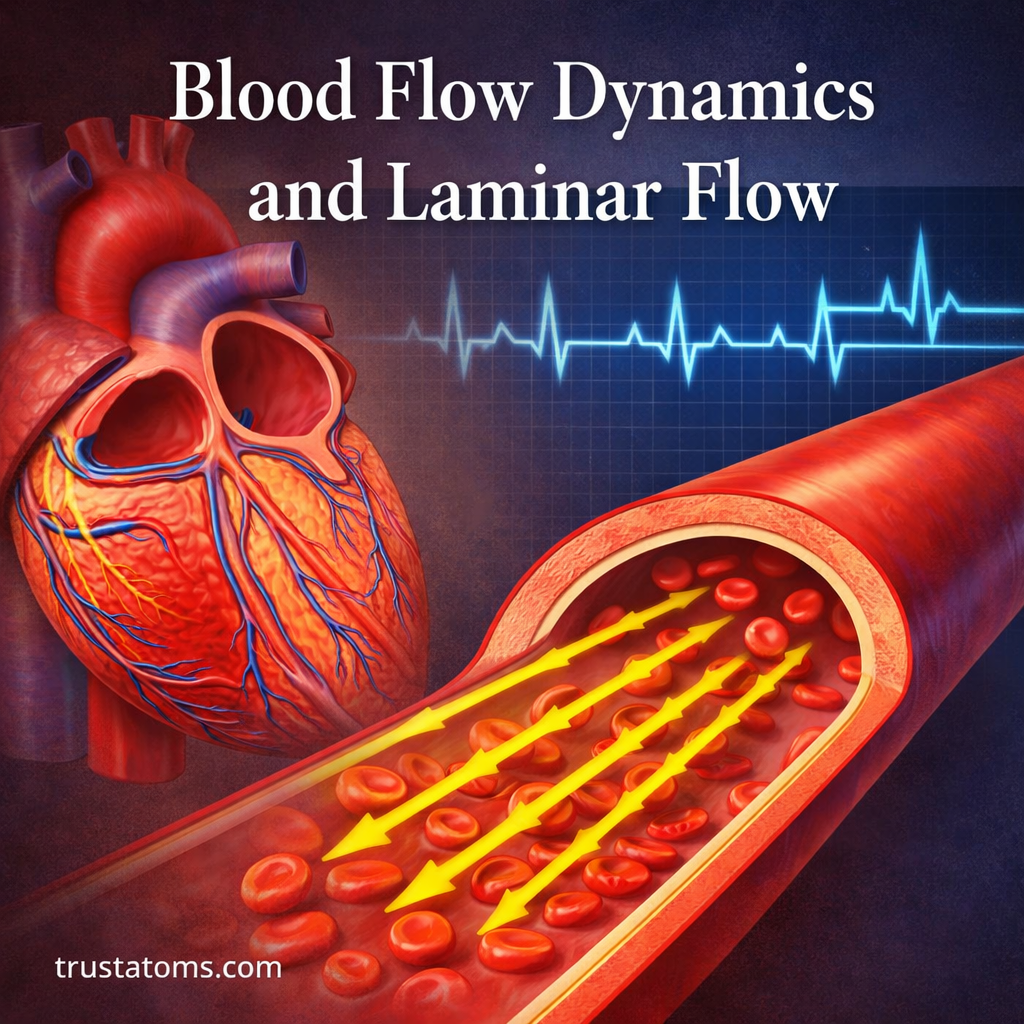
Laminar flow is the normal, healthy pattern of blood movement in most vessels. In this type of flow:
- Blood moves in parallel layers
- The fastest flow occurs in the center of the vessel
- The slowest flow occurs near vessel walls
Why Laminar Flow Matters
Laminar flow allows for:
- Efficient oxygen and nutrient delivery
- Minimal energy loss
- Reduced stress on vessel walls
This smooth movement helps maintain stable circulation throughout the body.
How Laminar Flow Works
In laminar flow, blood behaves in a highly organized way.
Key Characteristics
- Layers of blood slide past one another without mixing
- Red blood cells tend to move toward the center
- Plasma forms a thin layer near vessel walls
Velocity Profile
Blood flow velocity follows a specific pattern:
- Highest velocity at the center
- Gradual decrease toward the edges
- Near-zero velocity at the vessel wall due to friction
This pattern is often described as a parabolic flow profile.
Turbulent Flow: When Things Become Disrupted
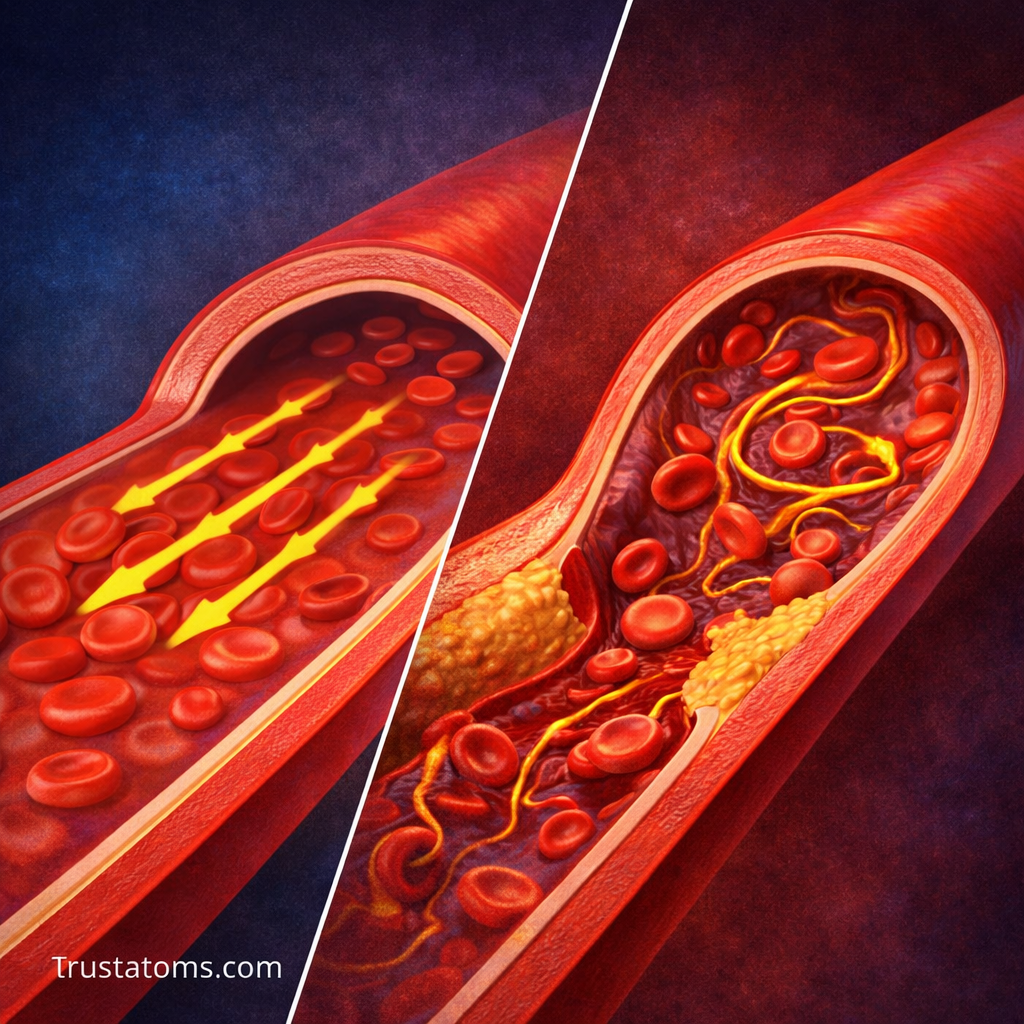
Not all blood flow is smooth. Under certain conditions, laminar flow can become turbulent.
What Is Turbulent Flow?
Turbulent flow is chaotic and disorganized, with:
- Irregular movement
- Mixing of blood layers
- Fluctuating velocities
Common Causes
- High blood velocity
- Narrowed arteries (e.g., atherosclerosis)
- Sharp bends in blood vessels
- Obstructions or plaques
Why It Matters
Turbulent flow can:
- Increase stress on vessel walls
- Reduce efficiency of circulation
- Contribute to cardiovascular disease
The Role of Reynolds Number in Blood Flow
The transition between laminar and turbulent flow is often described using a concept called the Reynolds number.
What It Indicates
- Low Reynolds number → laminar flow
- High Reynolds number → turbulent flow
Factors That Increase Reynolds Number
- Increased velocity
- Larger vessel diameter
- Lower viscosity
In healthy conditions, most blood flow remains laminar, especially in smaller vessels.
Resistance and Its Effect on Blood Flow
Resistance is the force that opposes blood flow through vessels.
Major Influences on Resistance
- Vessel diameter (most important factor)
- Blood viscosity
- Vessel length
Why Resistance Matters
- Higher resistance reduces blood flow
- Lower resistance allows easier circulation
- The body constantly adjusts resistance to regulate blood distribution
How the Body Maintains Efficient Flow
The body uses several mechanisms to keep blood flow optimal:
Automatic Regulation
- Blood vessels constrict or dilate as needed
- The heart adjusts pumping strength and rate
Hormonal Control
- Hormones like adrenaline increase flow during activity
- Other signals promote relaxation during rest
Local Tissue Control
- Active tissues receive more blood
- Oxygen demand influences local vessel behavior
Clinical Significance of Blood Flow Dynamics
Understanding blood flow patterns is essential in medicine.
Conditions Related to Abnormal Flow
- Atherosclerosis (plaque buildup)
- Hypertension (high blood pressure)
- Aneurysms (weakened vessel walls)
- Thrombosis (blood clots)
Diagnostic Relevance
Doctors use blood flow principles in:
- Doppler ultrasound imaging
- Blood pressure monitoring
- Cardiovascular risk assessment
Abnormal flow patterns can often be detected early and used to guide treatment.
Everyday Factors That Affect Blood Flow
Lifestyle plays a major role in maintaining healthy circulation.
Positive Influences
- Regular exercise
- Proper hydration
- Balanced diet
- Maintaining healthy blood pressure
Negative Influences
- Smoking
- Sedentary lifestyle
- High cholesterol
- Chronic stress
Improving these factors helps maintain laminar flow and overall cardiovascular health.
Final Thoughts
Blood flow dynamics and laminar flow are essential to the body’s ability to function efficiently. Smooth, organized blood movement ensures that every organ receives the oxygen and nutrients it needs.
When this balance is disrupted, it can lead to serious health issues. By understanding how blood flows—and what affects it—you gain valuable insight into maintaining long-term cardiovascular health.