Blood pressure is the force of blood pushing against the walls of your blood vessels. It plays a critical role in ensuring that oxygen and nutrients reach every part of your body.
However, blood pressure must be carefully regulated. If it’s too high or too low, it can lead to serious health problems. The body uses a combination of organs, hormones, and feedback systems to keep blood pressure within a healthy range.
What Is Blood Pressure?
Blood pressure is measured using two values:
- Systolic pressure – the force when the heart contracts
- Diastolic pressure – the force when the heart relaxes
It is typically written as systolic over diastolic (e.g., 120/80 mmHg).
Why it matters:
- Ensures blood flows efficiently
- Supports organ function
- Maintains stable circulation
Key Factors That Influence Blood Pressure
Several factors determine how high or low your blood pressure is at any moment.
1. Cardiac Output
Cardiac output is the amount of blood the heart pumps per minute.
- Higher output → higher blood pressure
- Lower output → lower blood pressure
2. Blood Vessel Resistance
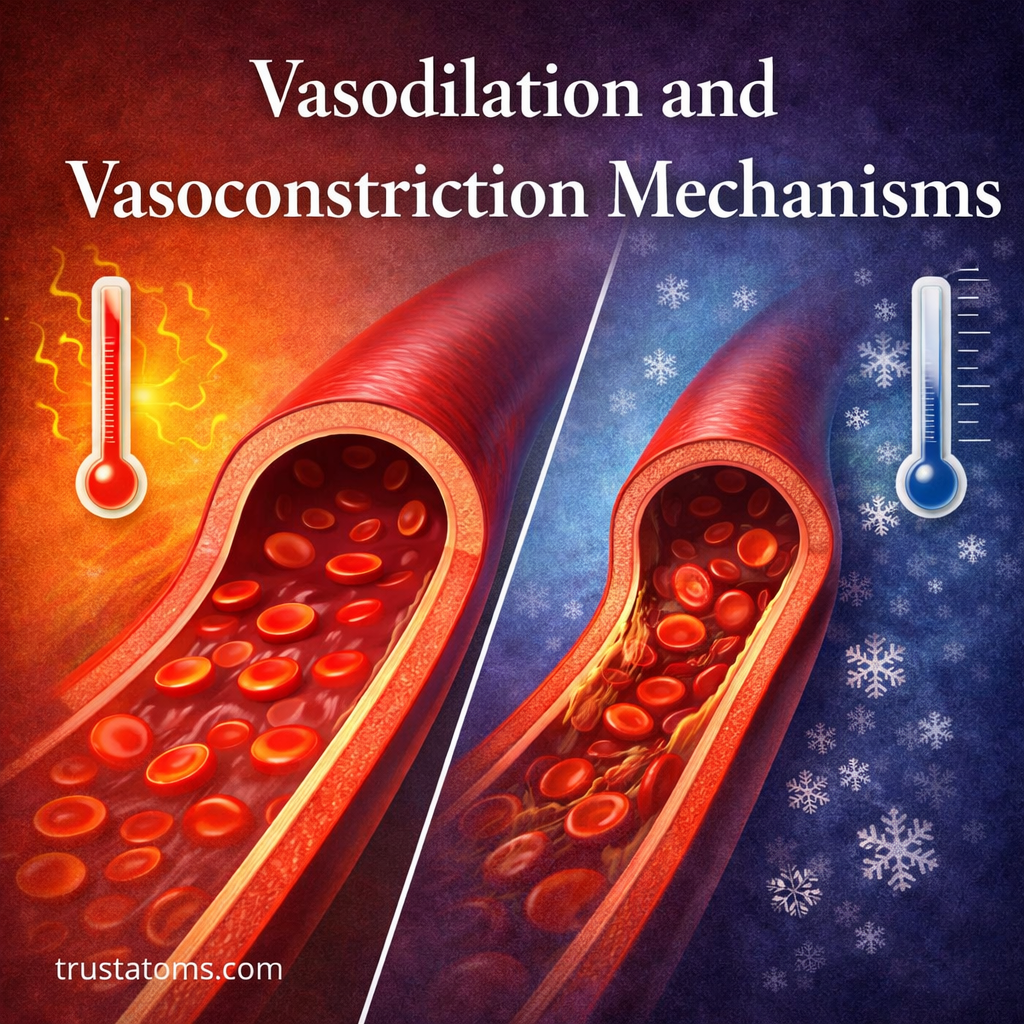
Resistance refers to how narrow or wide blood vessels are.
- Narrow vessels (vasoconstriction) increase pressure
- Wide vessels (vasodilation) decrease pressure
3. Blood Volume
The total amount of blood in the body also affects pressure.
- More blood volume → increased pressure
- Less blood volume → decreased pressure
4. Blood Viscosity
Viscosity is the thickness of blood.
- Thicker blood increases resistance
- Thinner blood flows more easily
The Role of the Nervous System
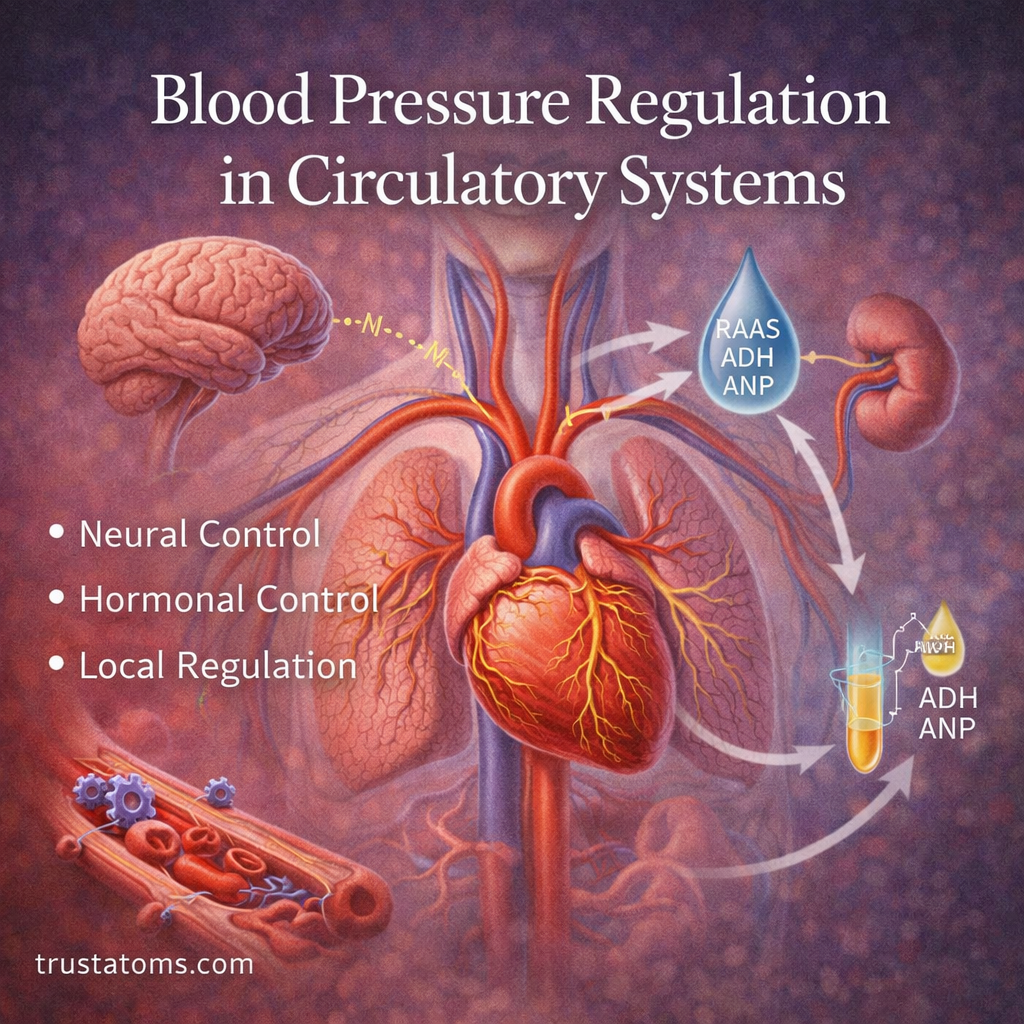
The nervous system provides rapid, short-term control of blood pressure.
Key components:
- Baroreceptors (pressure sensors in arteries)
- Brain centers (medulla oblongata)
- Autonomic nervous system
How it works:
- Baroreceptors detect changes in pressure
- Signals are sent to the brain
- The brain adjusts heart rate and vessel diameter
This allows the body to respond instantly to changes like standing up or exercising.
Hormonal Regulation of Blood Pressure
Hormones provide longer-lasting control of blood pressure.
Major hormonal systems include:
Renin-Angiotensin-Aldosterone System (RAAS)
- Activated when blood pressure drops
- Causes vasoconstriction
- Increases blood volume
Antidiuretic Hormone (ADH)
- Reduces water loss in kidneys
- Increases blood volume
Atrial Natriuretic Peptide (ANP)
- Released when blood pressure is too high
- Promotes salt and water loss
- Lowers blood volume
Kidney Function in Blood Pressure Regulation
The kidneys play a major role in maintaining long-term blood pressure balance.
Their functions include:
- Regulating fluid levels
- Controlling sodium balance
- Adjusting blood volume
By increasing or decreasing urine output, the kidneys help stabilize blood pressure over time.
Local Regulation Within Blood Vessels
Blood vessels can regulate their own diameter based on local conditions.
This includes:
- Responding to oxygen levels
- Reacting to carbon dioxide buildup
- Adjusting to tissue activity
For example, active muscles receive more blood due to local vasodilation.
Short-Term vs Long-Term Regulation
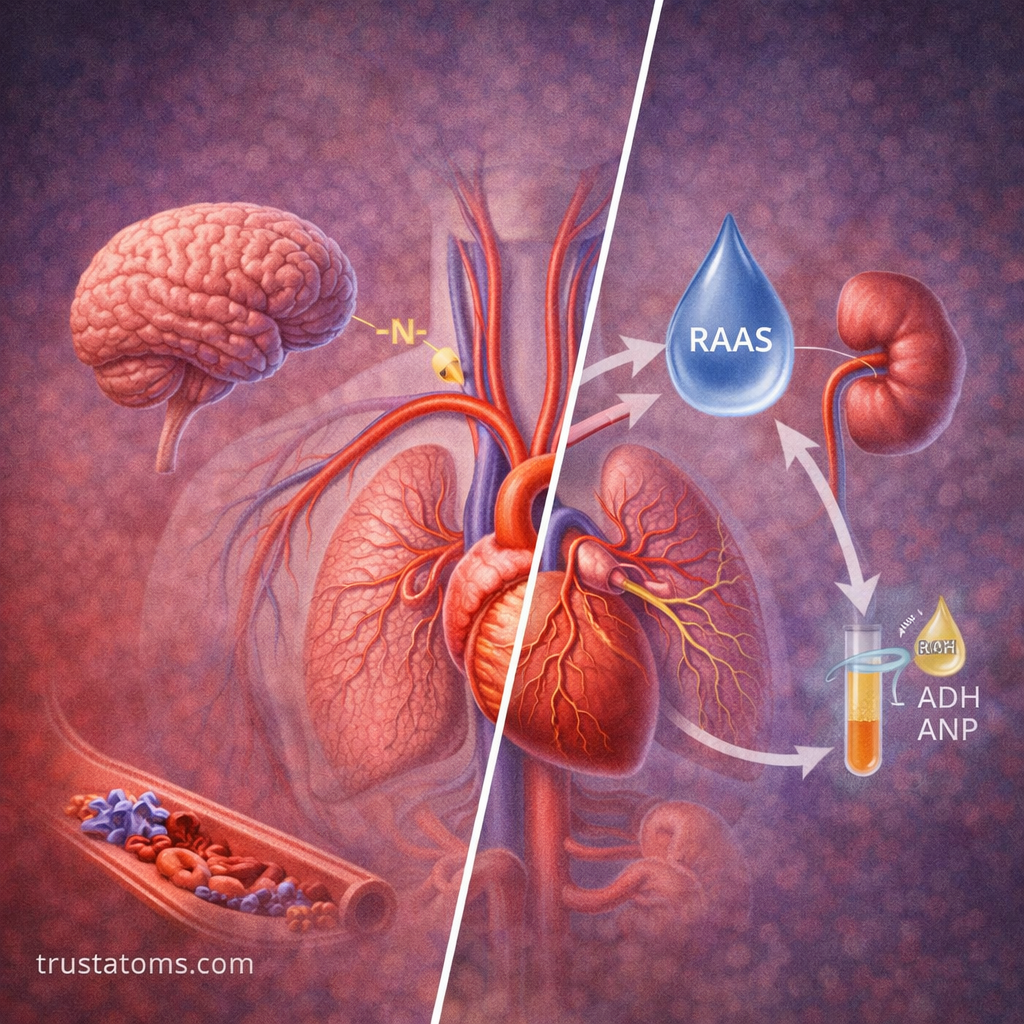
Blood pressure control occurs on different timescales.
Short-term regulation:
- Controlled by the nervous system
- Happens within seconds to minutes
- Adjusts heart rate and vessel tone
Long-term regulation:
- Controlled by hormones and kidneys
- Takes hours to days
- Adjusts blood volume and fluid balance
What Happens When Regulation Fails?
When blood pressure regulation is disrupted, it can lead to serious conditions.
High blood pressure (hypertension):
- Damages blood vessels
- Increases risk of heart disease and stroke
- Often develops gradually
Low blood pressure (hypotension):
- Causes dizziness or fainting
- Reduces blood flow to organs
- Can be dangerous if severe
Maintaining balance is essential for overall health.
How the Body Maintains Balance
The body uses feedback systems to keep blood pressure stable.
Key mechanisms:
- Negative feedback loops
- Continuous monitoring by receptors
- Coordination between organs
These systems ensure that blood pressure remains within a safe range, even during changes in activity or environment.
Final Thoughts
Blood pressure regulation is a complex but essential process that keeps your circulatory system functioning properly. Through the combined efforts of the heart, blood vessels, nervous system, hormones, and kidneys, your body maintains a delicate balance that supports life.
Understanding how these systems work together provides valuable insight into how your body adapts and protects itself every day.