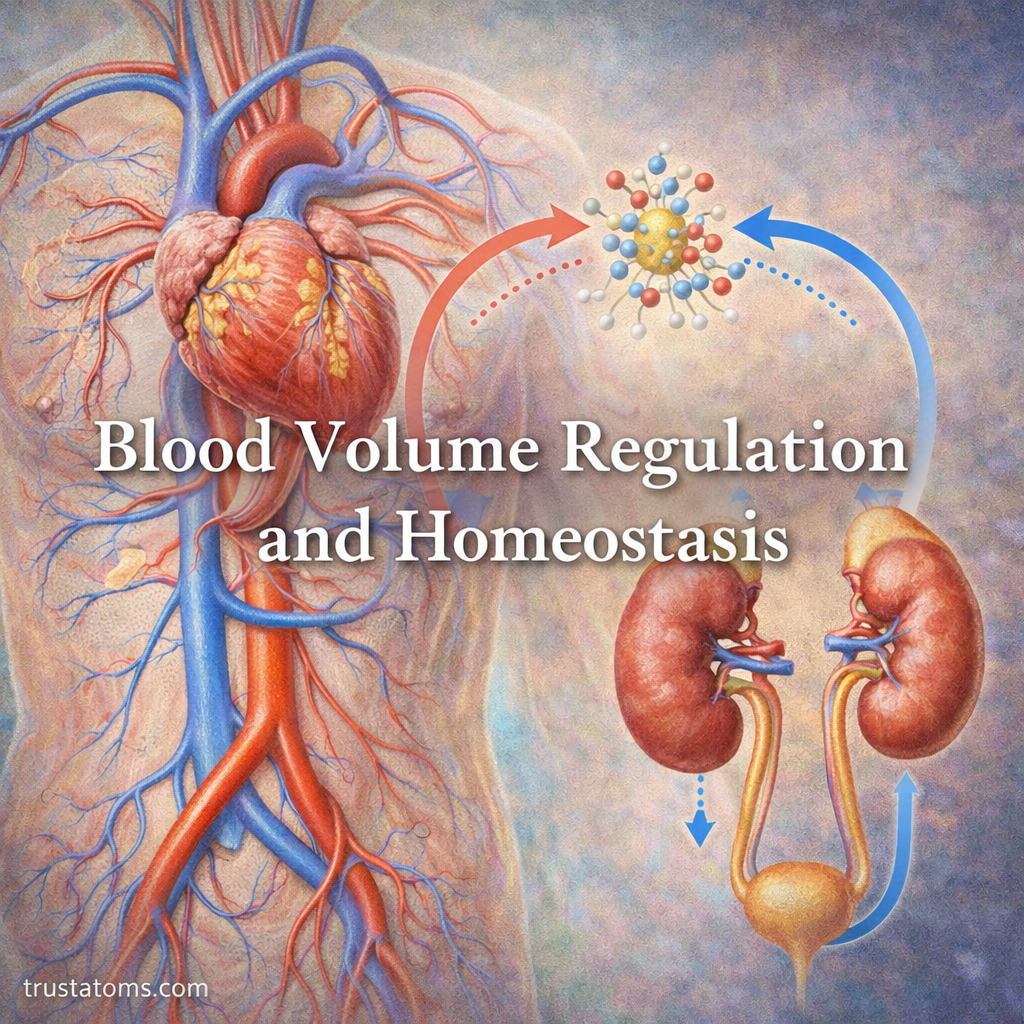
Blood volume regulation is essential for maintaining stable internal conditions in the human body. It ensures that tissues receive adequate oxygen and nutrients while keeping blood pressure within a healthy range.
This process is part of homeostasis—the body’s ability to maintain balance despite internal and external changes. When blood volume is properly regulated, organs function efficiently, and overall health is preserved.
What Is Blood Volume?
Blood volume refers to the total amount of blood circulating within the body. In an average adult, this is typically around:
- 4.5 to 6 liters, depending on body size and composition
Blood volume is made up of:
- Plasma (liquid component)
- Red blood cells
- White blood cells
- Platelets
Maintaining the right balance between these components is critical for proper circulation and cellular function.
What Is Homeostasis?
Homeostasis is the body’s ability to maintain stable internal conditions such as:
- Temperature
- pH levels
- Fluid balance
- Blood pressure
Blood volume regulation is a key part of this system because it directly influences circulation and organ perfusion.
Why Blood Volume Regulation Matters
Proper blood volume ensures that:
- Oxygen is delivered efficiently to tissues
- Nutrients reach cells
- Waste products are removed
- Blood pressure remains stable
If blood volume becomes too low or too high, it can disrupt these processes and lead to serious health issues.
Key Systems Involved in Blood Volume Regulation
Multiple body systems work together to regulate blood volume.
Cardiovascular System
The heart and blood vessels:
- Adjust blood pressure and flow
- Respond to changes in volume
- Maintain circulation throughout the body
Renal System (Kidneys)
The kidneys play the most important role by controlling:
- Fluid excretion (urine production)
- Electrolyte balance (sodium, potassium)
They adjust how much water is retained or eliminated to maintain proper volume.
Endocrine System
Hormones regulate fluid balance and blood volume.
Important hormones include:
- Antidiuretic hormone (ADH) – reduces water loss
- Aldosterone – increases sodium and water retention
- Atrial natriuretic peptide (ANP) – promotes fluid excretion
Mechanisms of Blood Volume Regulation
The body uses several mechanisms to keep blood volume stable.
Fluid Intake and Output
Balance is maintained through:
- Drinking fluids (intake)
- Urine, sweat, and respiration (output)
When fluid loss increases, the body compensates by conserving water.
Renal Regulation
The kidneys adjust urine production based on the body’s needs.
- Low blood volume → reduced urine output
- High blood volume → increased urine output
This helps restore balance efficiently.
Hormonal Control
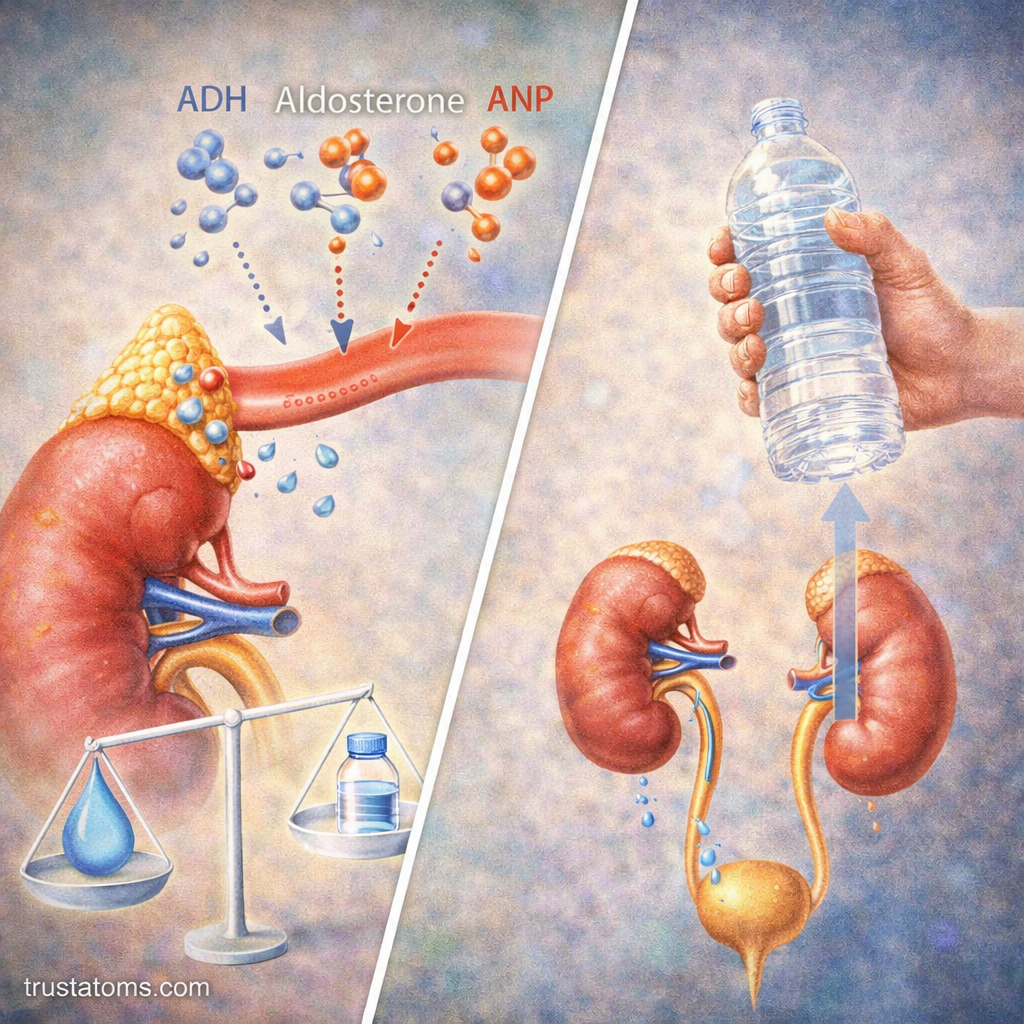
Hormones act as signals to regulate fluid levels.
Antidiuretic Hormone (ADH)
- Released when the body is dehydrated
- Causes kidneys to reabsorb more water
Aldosterone
- Increases sodium retention
- Water follows sodium, increasing blood volume
Atrial Natriuretic Peptide (ANP)
- Released when blood volume is too high
- Promotes sodium and water excretion
The Role of Osmoregulation
Osmoregulation refers to the control of fluid concentration in the body.
How It Works
- Sensors detect changes in blood concentration
- The brain (hypothalamus) responds
- Hormones adjust water retention or loss
This ensures that fluids remain balanced at the cellular level.
Response to Low Blood Volume
Low blood volume (hypovolemia) can occur due to:
- Dehydration
- Blood loss
- Excessive sweating
Body’s Response
To compensate, the body:
- Increases heart rate
- Constricts blood vessels
- Releases ADH and aldosterone
- Reduces urine output
These actions help restore blood pressure and circulation.
Response to High Blood Volume
High blood volume (hypervolemia) may result from:
- Excess fluid intake
- Kidney dysfunction
- Hormonal imbalances
Body’s Response
The body reacts by:
- Releasing ANP
- Increasing urine production
- Reducing fluid retention
This helps lower blood volume and maintain balance.
Blood Pressure and Volume Relationship
Blood volume and blood pressure are closely linked.
- Increased volume → higher blood pressure
- Decreased volume → lower blood pressure
The body continuously adjusts both to ensure adequate circulation.
Factors That Affect Blood Volume
Several internal and external factors influence blood volume.
Lifestyle Factors
- Hydration levels
- Physical activity
- Diet (especially salt intake)
Environmental Factors
- Heat (increases fluid loss through sweating)
- Altitude (affects oxygen and fluid balance)
Medical Conditions
- Kidney disease
- Heart failure
- Hormonal disorders
Disorders Related to Blood Volume Imbalance
Disruptions in blood volume regulation can lead to health problems.
Hypovolemia
- Low blood volume
- Symptoms: dizziness, low blood pressure, fatigue
Hypervolemia
- Excess blood volume
- Symptoms: swelling, high blood pressure, fluid retention
Dehydration
- Loss of body fluids
- Affects blood volume and electrolyte balance
How to Maintain Healthy Blood Volume
Supporting blood volume regulation is essential for overall health.
Practical Tips
- Stay properly hydrated
- Maintain a balanced diet
- Monitor salt intake
- Stay physically active
- Manage underlying health conditions
These habits help the body maintain stable fluid levels and proper circulation.
Final Thoughts
Blood volume regulation is a vital component of homeostasis, ensuring that the body maintains stable internal conditions. Through the coordinated efforts of the kidneys, hormones, and cardiovascular system, the body continuously adjusts fluid levels to meet changing needs.
Understanding how this system works highlights the importance of hydration, balance, and overall health in maintaining proper circulation and organ function.