Bone is not a static tissue. It is constantly being broken down and rebuilt through a process called bone remodeling. This ongoing cycle helps maintain bone strength, repair damage, and regulate essential minerals like calcium and phosphorus in the body.
Understanding bone remodeling and mineral balance is key to maintaining healthy bones throughout life.
What Is Bone Remodeling?
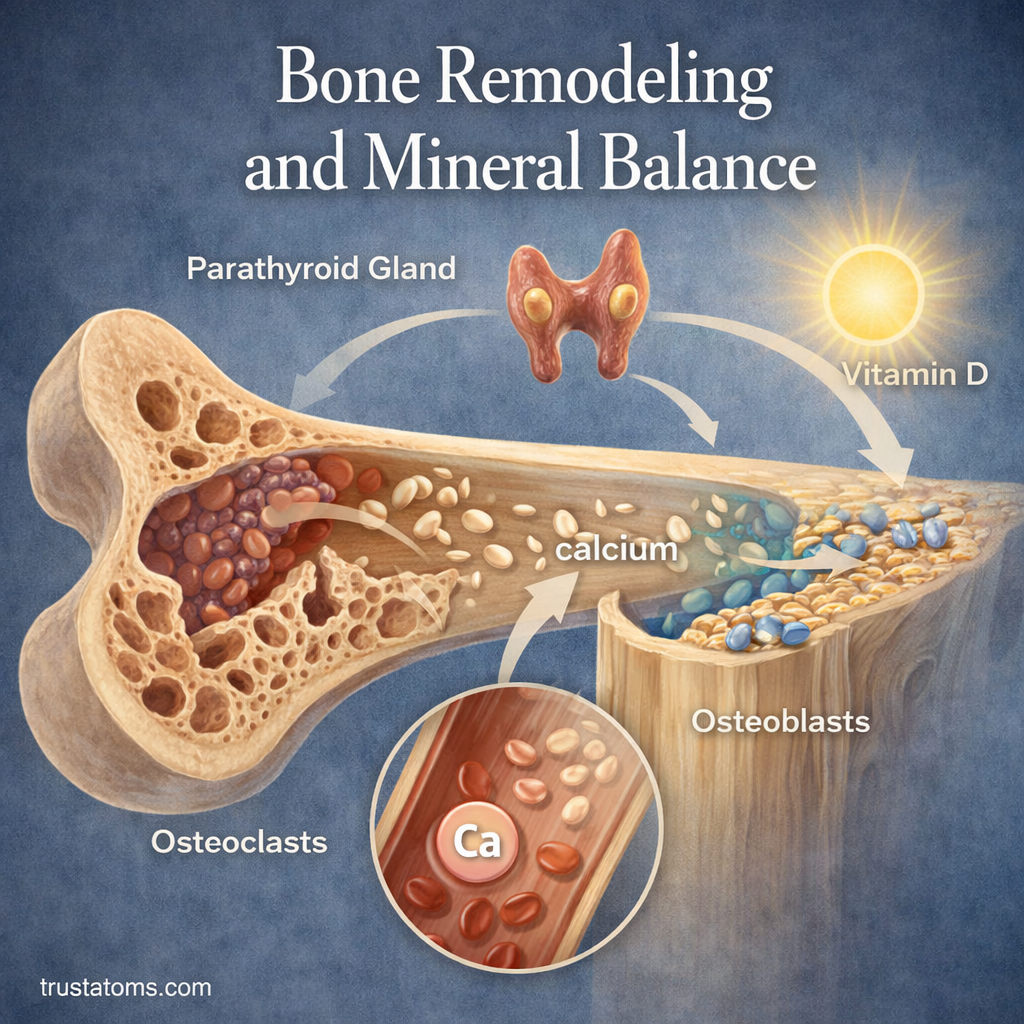
Bone remodeling is a continuous process where old bone tissue is removed and new bone tissue is formed. This process occurs throughout your lifetime.
It involves two main types of cells:
- Osteoclasts: Break down old or damaged bone
- Osteoblasts: Build new bone
A third type of cell, osteocytes, helps regulate this process and maintain bone tissue.
The Bone Remodeling Cycle
Bone remodeling happens in a cycle that includes several stages:
1. Activation
Signals (often hormonal or mechanical stress) trigger the remodeling process.
2. Resorption
Osteoclasts break down old bone tissue, releasing minerals like calcium into the bloodstream.
3. Formation
Osteoblasts build new bone by producing collagen and mineral deposits.
4. Mineralization
The new bone hardens as minerals, especially calcium and phosphorus, are added.
This cycle ensures bones remain strong, adaptable, and capable of repairing micro-damage.
Why Bone Remodeling Is Important
Bone remodeling serves several critical functions:
Maintaining Bone Strength
It replaces old or weakened bone with new, stronger tissue.
Repairing Damage
Small cracks or stress injuries are repaired before they become serious fractures.
Adapting to Stress
Bones become stronger in response to physical activity and weaker with inactivity.
Regulating Minerals
It helps control levels of calcium and phosphorus in the blood.
What Is Mineral Balance in Bones?
Mineral balance refers to how the body stores and uses minerals—primarily calcium and phosphorus—within bones.
Bones act as a mineral reservoir, releasing or storing minerals depending on the body’s needs.
Key Minerals Involved
- Calcium: Essential for bone strength and muscle function
- Phosphorus: Works with calcium to form bone structure
- Magnesium: Supports bone formation and density
How the Body Regulates Mineral Balance
Several hormones help maintain proper mineral levels:
Parathyroid Hormone (PTH)
- Increases blood calcium levels
- Stimulates osteoclast activity
- Promotes calcium release from bones
Calcitonin
- Lowers blood calcium levels
- Inhibits bone breakdown
- Encourages calcium storage in bones
Vitamin D
- Enhances calcium absorption from the diet
- Supports bone mineralization
These hormones work together to keep mineral levels stable and support healthy bone remodeling.
Factors That Affect Bone Remodeling
Bone remodeling is influenced by several internal and external factors.
Age
- Faster bone formation during youth
- Bone loss may exceed formation with aging
Physical Activity
- Weight-bearing exercise stimulates bone formation
- Sedentary lifestyle weakens bones
Nutrition
- Adequate calcium and vitamin D are essential
- Poor diet can lead to weak bones
Hormones
- Estrogen and testosterone support bone density
- Hormonal imbalances can accelerate bone loss
Bone Remodeling Imbalances
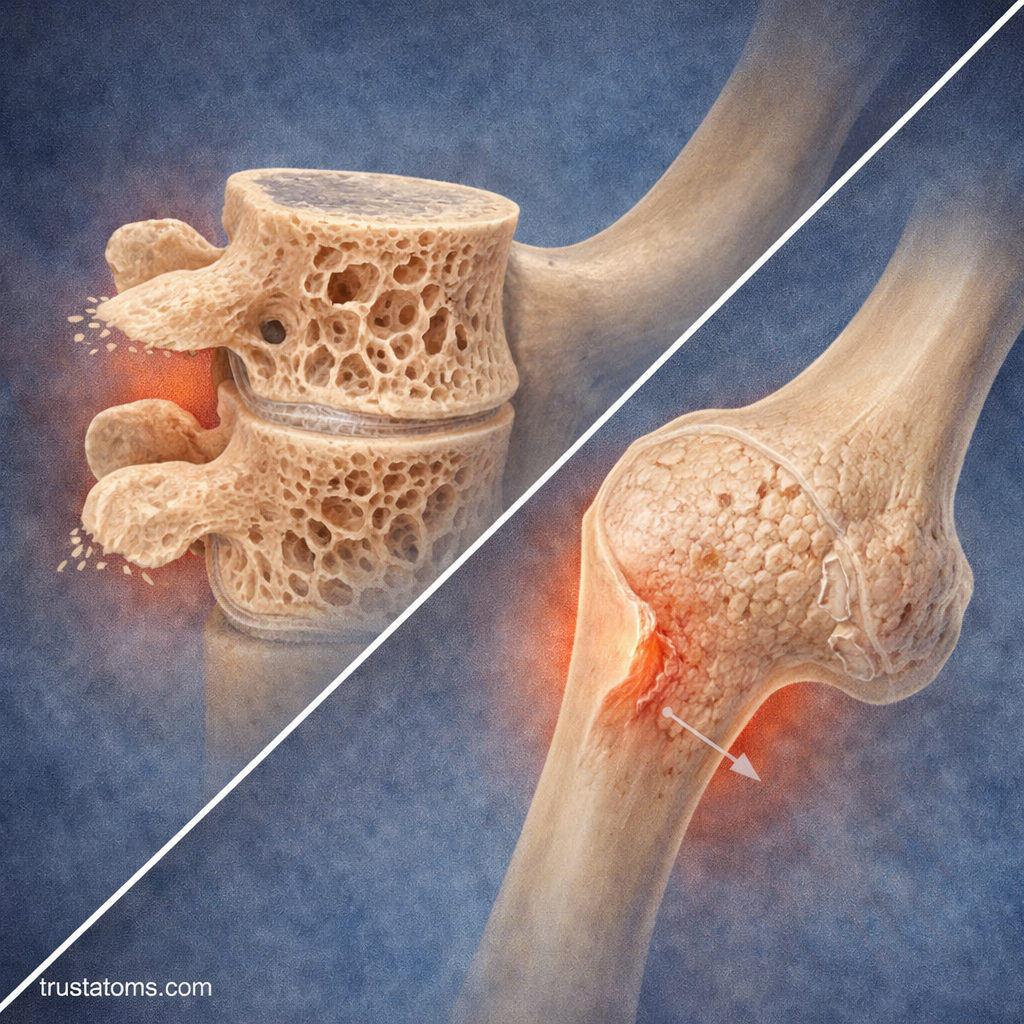
When the balance between bone breakdown and formation is disrupted, health issues can occur.
Common Conditions
- Osteoporosis: Bone loss exceeds bone formation, leading to fragile bones
- Osteomalacia: Soft bones due to poor mineralization
- Paget’s disease: Abnormal bone remodeling
Maintaining proper balance is essential to prevent these conditions.
How to Support Healthy Bone Remodeling
Healthy habits can promote balanced bone remodeling and mineral levels.
Nutrition Tips
- Consume calcium-rich foods (dairy, leafy greens)
- Ensure adequate vitamin D (sunlight, supplements if needed)
- Include magnesium and phosphorus in your diet
Lifestyle Habits
- Engage in regular weight-bearing exercise
- Avoid smoking
- Limit excessive alcohol consumption
Preventive Care
- Monitor bone density as you age
- Maintain a balanced diet
- Stay physically active
Why Bone Remodeling Matters
Bone remodeling ensures that your skeleton stays strong, functional, and responsive to your body’s needs. It allows bones to repair themselves, adapt to stress, and maintain the proper balance of essential minerals.
Without this process, bones would become brittle, weak, and unable to support daily activities.
Final Thoughts
Bone remodeling and mineral balance are vital processes that keep your bones healthy and strong throughout life. By understanding how your body rebuilds bone and regulates minerals, you can take steps to support long-term skeletal health.
Simple habits like proper nutrition, regular exercise, and maintaining hormonal balance can make a significant difference in preserving bone strength and preventing disease.