Bones may look solid from the outside, but internally they have a complex structure that balances strength, flexibility, and lightness. Two main types of bone tissue—compact bone and spongy bone—work together to give bones their unique properties.
Understanding how these two types differ helps explain how bones support the body, protect organs, and produce blood cells.
What Is Bone Tissue?
Bone tissue is a specialized connective tissue that makes up the skeleton. It is living, constantly remodeling, and rich in minerals like calcium and phosphorus.
There are two primary types:
- Compact bone (dense and strong)
- Spongy bone (lightweight and porous)
Each type plays a distinct role in overall bone function.
What Is Compact Bone?
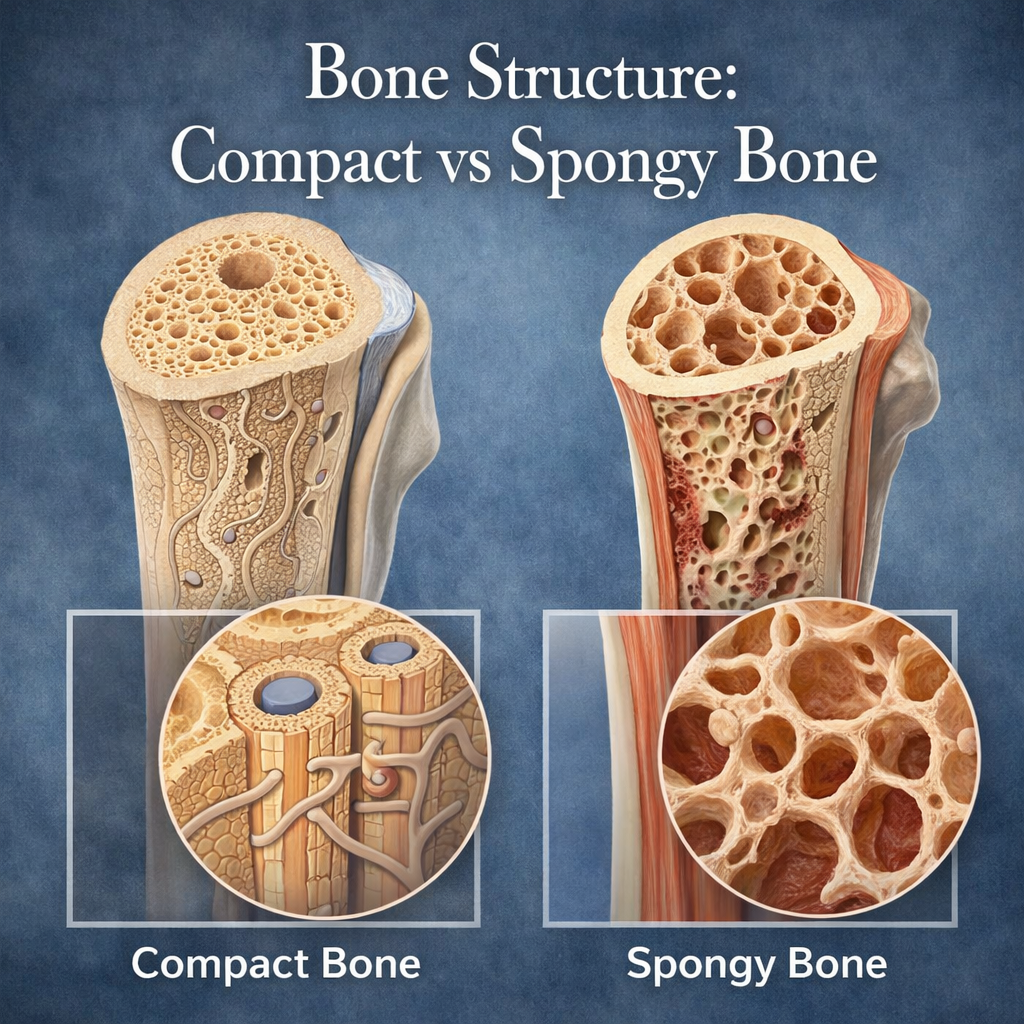
Compact bone, also called cortical bone, is the dense outer layer of bone. It forms the hard exterior that provides strength and protection.
Key Characteristics of Compact Bone
- Dense and solid appearance
- Makes up about 80% of total bone mass
- Forms the outer shell of all bones
- Highly organized structure
Structure of Compact Bone
Compact bone is made up of repeating units called osteons (or Haversian systems). These structures contain:
- Central canals (for blood vessels and nerves)
- Layers called lamellae
- Small spaces (lacunae) that house bone cells
This tightly packed arrangement allows compact bone to withstand pressure and resist fractures.
Functions of Compact Bone
- Provides strength and rigidity
- Supports body weight
- Protects internal organs
- Enables leverage for movement
What Is Spongy Bone?
Spongy bone, also known as cancellous bone, is found inside bones and has a porous, honeycomb-like structure.
Key Characteristics of Spongy Bone
- Lightweight and less dense
- Found inside bones, especially at the ends
- Contains many open spaces
- Highly vascular (rich in blood supply)
Structure of Spongy Bone
Spongy bone is made of thin, branching structures called trabeculae. These form a network that:
- Provides structural support
- Reduces bone weight
- Houses bone marrow
Unlike compact bone, it does not contain osteons.
Functions of Spongy Bone
- Reduces overall bone weight
- Absorbs shock and stress
- Houses red bone marrow for blood cell production
- Supports multidirectional forces
Key Differences Between Compact and Spongy Bone
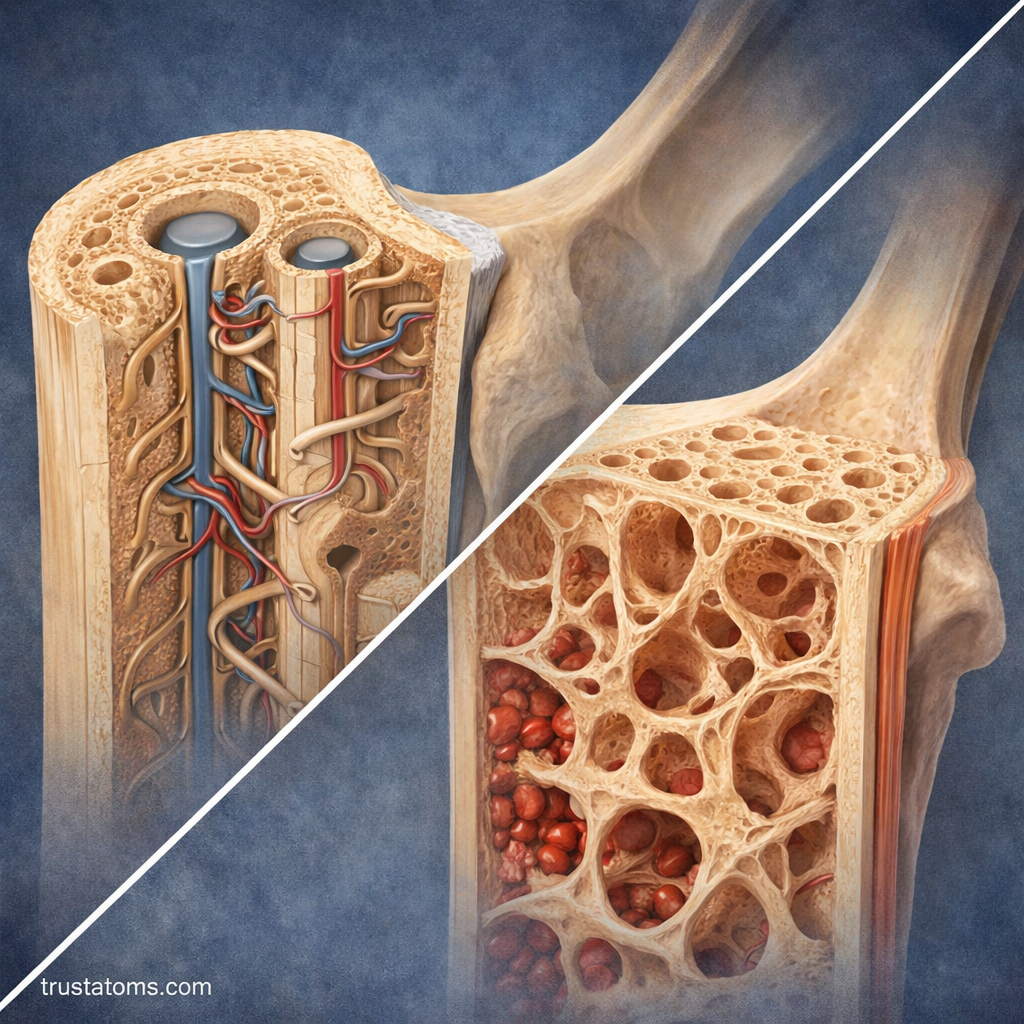
Understanding how these two types differ helps clarify their roles in the body.
Structure
- Compact bone: Dense and tightly packed
- Spongy bone: Porous and lattice-like
Location
- Compact bone: Outer layer of bones
- Spongy bone: Inner regions, especially in long bones and flat bones
Function
- Compact bone: Strength, protection, and support
- Spongy bone: Shock absorption and blood cell production
Weight
- Compact bone: Heavier and more rigid
- Spongy bone: Lightweight and flexible
Where Are These Bone Types Found?
Both compact and spongy bone are found in most bones, but their distribution varies depending on function.
Long Bones (e.g., femur, humerus)
- Outer shaft (diaphysis): Mostly compact bone
- Ends (epiphyses): Mostly spongy bone
Flat Bones (e.g., skull, ribs)
- Outer layers: Compact bone
- Inner layer: Spongy bone (often called diploë)
Irregular Bones (e.g., vertebrae)
- Combination of compact exterior and spongy interior
How Compact and Spongy Bone Work Together
These two types of bone tissue complement each other to create a structure that is both strong and efficient.
Here’s how they work together:
- Compact bone provides a durable outer shell
- Spongy bone reduces weight and absorbs stress
- Bone marrow within spongy bone produces blood cells
- Together, they maintain balance between strength and flexibility
This combination allows bones to support heavy loads without becoming too heavy or brittle.
Why This Structure Matters
The balance between compact and spongy bone is essential for:
- Preventing fractures
- Supporting movement
- Maintaining healthy blood cell production
- Adapting to physical stress over time
Disruptions to this balance can lead to conditions like osteoporosis, where bones become weak and fragile.
How to Support Healthy Bone Structure
Maintaining both compact and spongy bone health is important throughout life.
Nutrition
- Calcium-rich foods (dairy, leafy greens)
- Vitamin D for calcium absorption
- Protein for tissue repair
Physical Activity
- Weight-bearing exercises (walking, lifting)
- Resistance training to strengthen bones
- Regular movement to maintain density
Lifestyle Habits
- Avoid smoking
- Limit excessive alcohol intake
- Maintain a balanced diet
Final Thoughts
Compact and spongy bone are two essential components of bone structure, each serving unique but complementary roles. Compact bone provides strength and protection, while spongy bone keeps bones lightweight and supports vital processes like blood cell production.
Together, they form a dynamic system that allows the skeleton to function efficiently, adapt to stress, and support overall health.