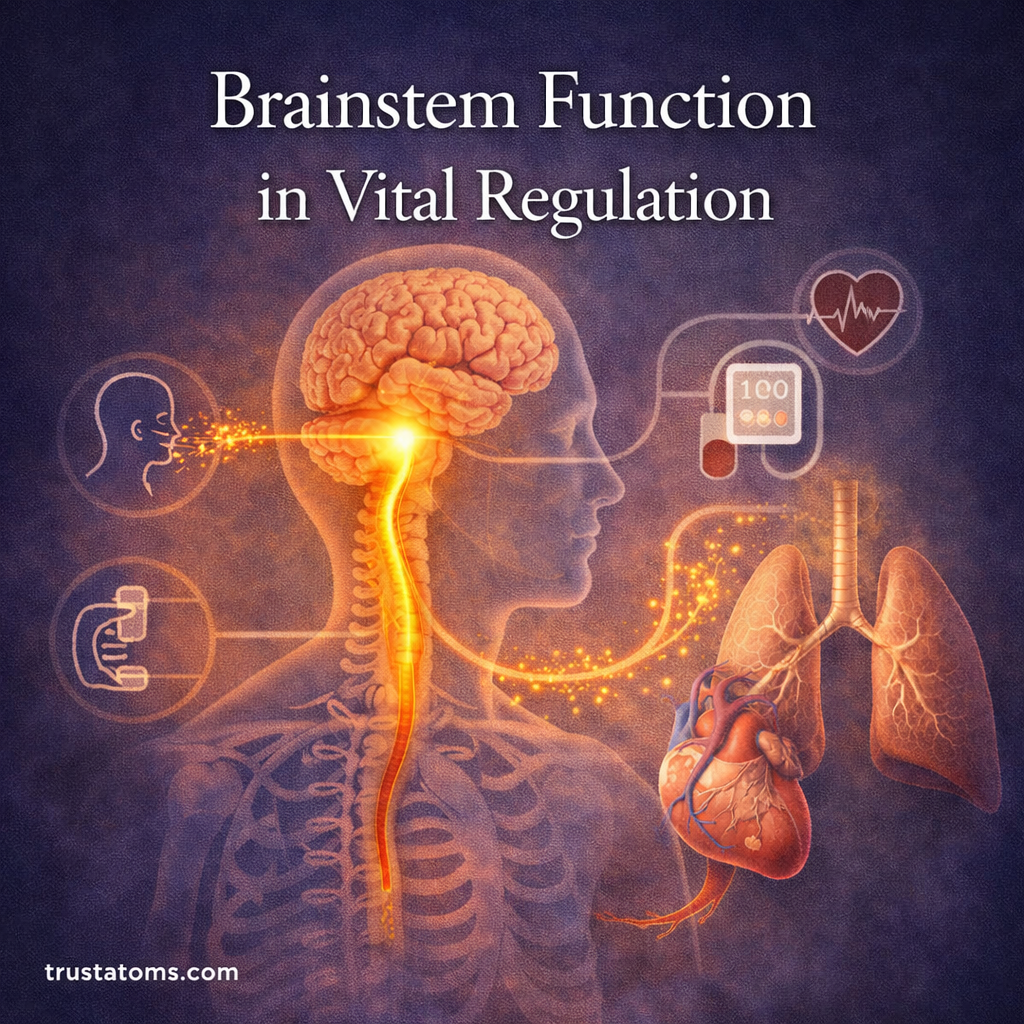
The brainstem is one of the most essential structures in the human nervous system. It connects the brain to the spinal cord and controls many of the body’s most critical life-sustaining functions. Activities such as breathing, heart rate, blood pressure, and basic reflexes are regulated by this small but powerful region.
Located at the base of the brain, the brainstem acts as a control center that keeps the body functioning automatically. Many of the processes it manages occur without conscious effort, allowing humans to breathe, swallow, and maintain circulation even while sleeping.
Understanding how the brainstem works helps explain how the nervous system regulates vital functions and maintains stability throughout the body.
What Is the Brainstem?
The brainstem is the lower portion of the brain that connects the brain to the spinal cord. It forms part of the central nervous system and serves as a major communication pathway between the brain and the rest of the body.
Despite its relatively small size, the brainstem performs several critical roles:
- Regulating vital life functions
- Relaying signals between the brain and spinal cord
- Controlling basic reflexes
- Coordinating certain automatic body movements
Because of these responsibilities, the brainstem is essential for survival.
Location and Structure of the Brainstem
The brainstem sits at the base of the brain, just above the spinal cord and below the cerebrum.
It is composed of three main regions:
- Midbrain
- Pons
- Medulla oblongata
Each section performs specialized functions that contribute to overall body regulation.
The Three Main Parts of the Brainstem
Midbrain
The midbrain is the upper portion of the brainstem. It plays a role in visual and auditory processing as well as motor control.
Key functions of the midbrain include:
- Controlling eye movements
- Processing visual and auditory information
- Coordinating certain motor responses
- Regulating alertness and attention
The midbrain helps integrate sensory input with movement, allowing the body to respond quickly to changes in the environment.
Pons
The pons lies between the midbrain and the medulla oblongata. It acts as a bridge that connects different parts of the brain.
Functions of the pons include:
- Relaying signals between the brain and cerebellum
- Regulating breathing patterns
- Supporting sleep and wake cycles
- Assisting with facial movement and sensation
The pons also contributes to coordination of facial muscles involved in expressions and chewing.
Medulla Oblongata
The medulla oblongata is the lowest part of the brainstem and plays the most direct role in regulating vital functions.
Important processes controlled by the medulla include:
- Heart rate
- Blood pressure
- Breathing rhythm
- Swallowing and vomiting reflexes
Because these functions are essential for life, damage to the medulla can have severe consequences.
Brainstem and Autonomic Regulation
Many of the brainstem’s responsibilities involve the autonomic nervous system, which regulates automatic bodily functions.
The autonomic system controls processes that occur without conscious thought, such as:
- Breathing
- Heartbeat
- Digestion
- Blood vessel regulation
The brainstem constantly monitors signals from the body and adjusts these processes to maintain balance.
For example:
- If oxygen levels drop, breathing rate increases.
- If blood pressure falls, the brainstem triggers responses to raise it.
These adjustments help maintain homeostasis, the stable internal environment necessary for survival.
Brainstem Control of Breathing
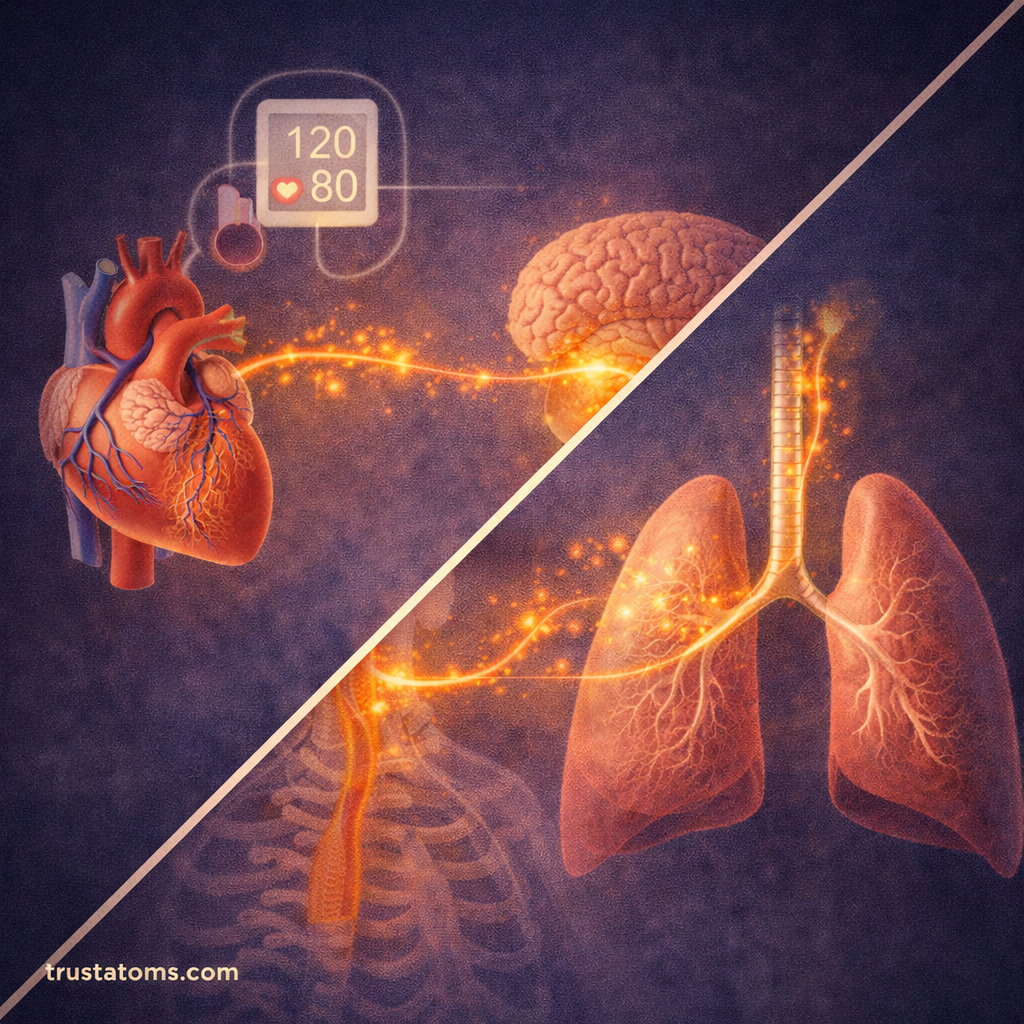
Breathing is one of the most critical functions regulated by the brainstem.
Specialized respiratory centers located in the medulla and pons control the rhythm and depth of breathing.
These centers monitor signals related to:
- Carbon dioxide levels in the blood
- Oxygen levels
- Blood pH
When carbon dioxide rises, the brainstem signals respiratory muscles to increase breathing rate. This automatic regulation ensures the body maintains proper gas exchange.
Brainstem and Cardiovascular Control
The brainstem also regulates the cardiovascular system.
The medulla contains centers that monitor and control:
- Heart rate
- Blood pressure
- Blood vessel constriction
Sensory receptors in blood vessels send information to the brainstem about changes in blood pressure and oxygen levels.
In response, the brainstem can:
- Speed up or slow down the heart
- Constrict or relax blood vessels
- Adjust circulation to maintain proper blood flow
Reflexes Controlled by the Brainstem
The brainstem is responsible for many protective and survival-related reflexes.
Examples include:
- Swallowing reflex
- Cough reflex
- Sneezing reflex
- Gag reflex
- Blink reflex
These reflexes protect the body from choking, airway obstruction, and irritation.
Because these responses occur automatically, they do not require conscious thought.
Brainstem and Consciousness
The brainstem also contributes to maintaining alertness and consciousness.
A network of neurons called the reticular activating system (RAS) runs through the brainstem and helps regulate:
- Wakefulness
- Attention
- Sleep cycles
Damage to this system can disrupt consciousness and may lead to conditions such as coma.
Communication Between the Brain and Body
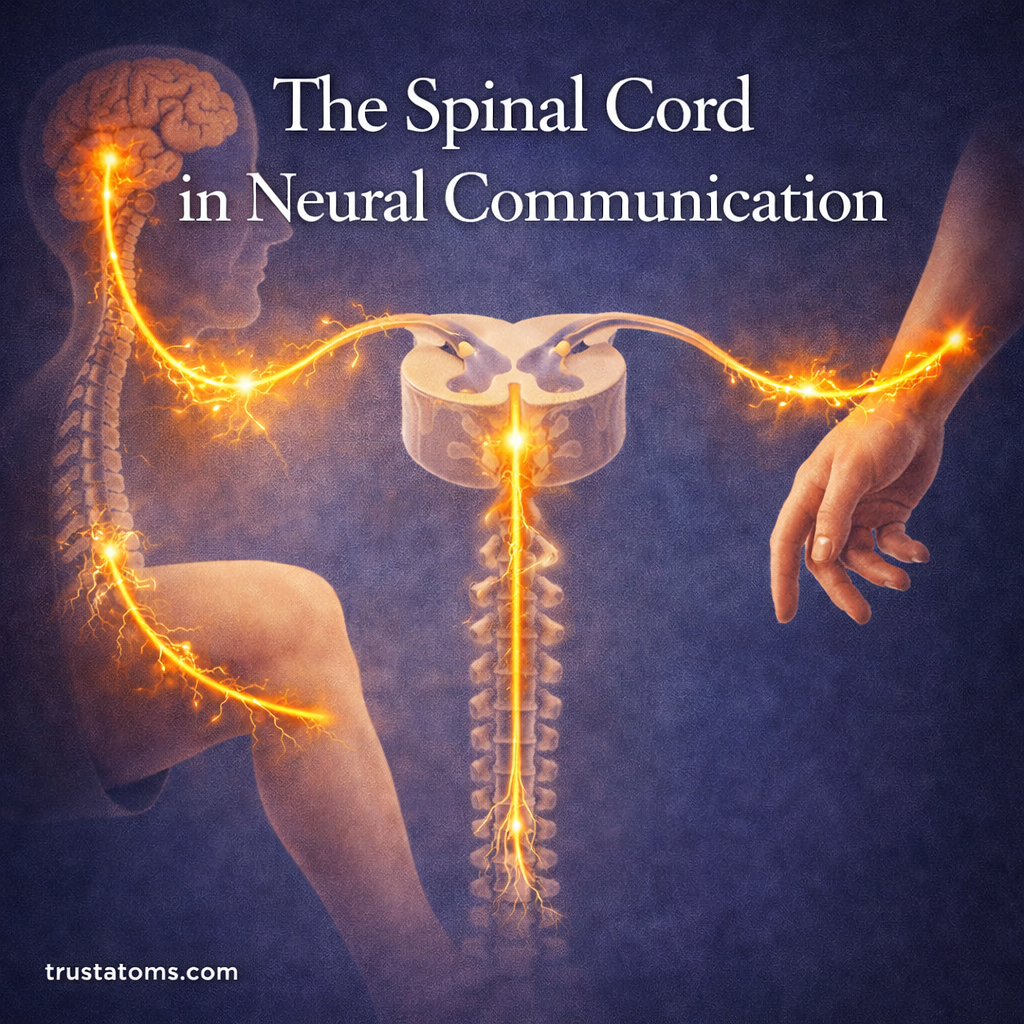
One of the brainstem’s most important roles is serving as a communication pathway.
Neural signals travel through the brainstem as they move between:
- The cerebrum
- The cerebellum
- The spinal cord
- Peripheral nerves
Through this pathway, the brainstem ensures smooth coordination between sensory input and motor output.
For example:
- Sensory signals from the body travel up through the brainstem to the brain.
- Motor commands from the brain travel down through the brainstem to the spinal cord.
This two-way communication allows the nervous system to function efficiently.
Effects of Brainstem Injury
Because the brainstem controls vital functions, injuries in this region can be extremely serious.
Potential effects of brainstem damage include:
- Difficulty breathing
- Loss of heart rate regulation
- Problems swallowing or speaking
- Loss of consciousness
The severity of symptoms often depends on the location and extent of the injury.
Medical conditions affecting the brainstem may include:
- Stroke
- Tumors
- Traumatic brain injury
- Neurodegenerative diseases
Treatment often focuses on stabilizing vital functions and supporting recovery.
Why the Brainstem Is Essential for Survival
The brainstem plays a central role in maintaining the body’s most fundamental processes.
It regulates functions that must continue constantly, including:
- Breathing
- Circulation
- Reflex protection of airways
- Sleep-wake regulation
- Communication between brain regions
Without the brainstem, the body would not be able to sustain life.
Final Thoughts
The brainstem is a vital control center responsible for regulating many of the body’s most important automatic functions. By managing breathing, heart rate, reflexes, and communication between the brain and spinal cord, it ensures that essential physiological processes operate continuously.
Although small compared to other parts of the brain, the brainstem plays a crucial role in maintaining stability and survival. Its ability to regulate vital functions demonstrates the remarkable coordination and efficiency of the human nervous system.