Introduction
Every cell in your body depends on a constant supply of oxygen, nutrients, and waste removal. This essential exchange happens in tiny blood vessels called capillaries, where the circulatory system directly interacts with body tissues.
Capillary exchange and tissue perfusion are fundamental processes that ensure cells stay alive and function properly. Understanding how they work helps explain everything from exercise performance to healing and overall health.
What Are Capillaries?
Capillaries are the smallest blood vessels in the body, connecting arteries and veins.
Key characteristics:
- Extremely thin walls (one cell thick)
- Allow direct exchange between blood and tissues
- Form dense networks throughout the body
Because of their structure, capillaries are perfectly designed for efficient material exchange.
What Is Capillary Exchange?
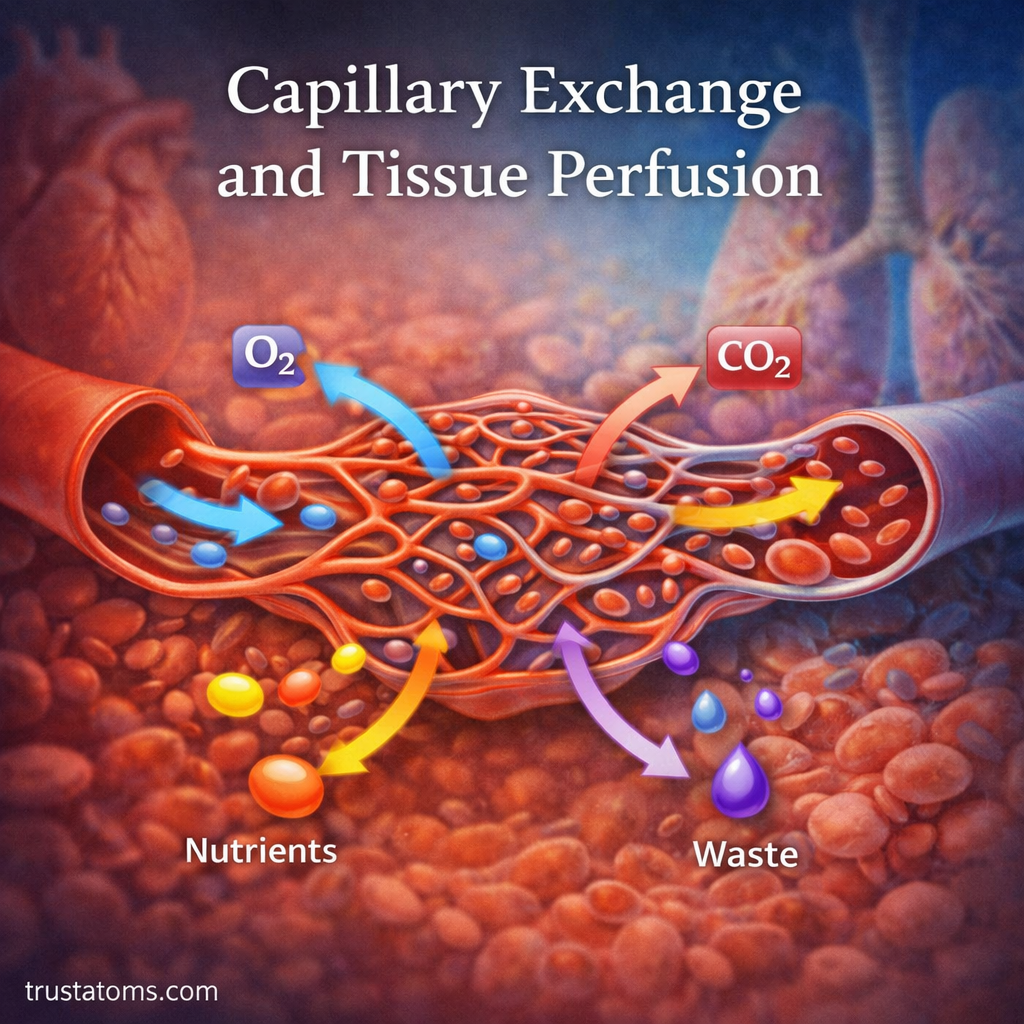
Capillary exchange refers to the movement of substances between the blood and surrounding tissues.
Substances That Move Across Capillaries
- Oxygen → from blood to tissues
- Carbon dioxide → from tissues to blood
- Nutrients (glucose, amino acids)
- Hormones
- Waste products
This exchange is essential for maintaining cellular function and balance.
Mechanisms of Capillary Exchange
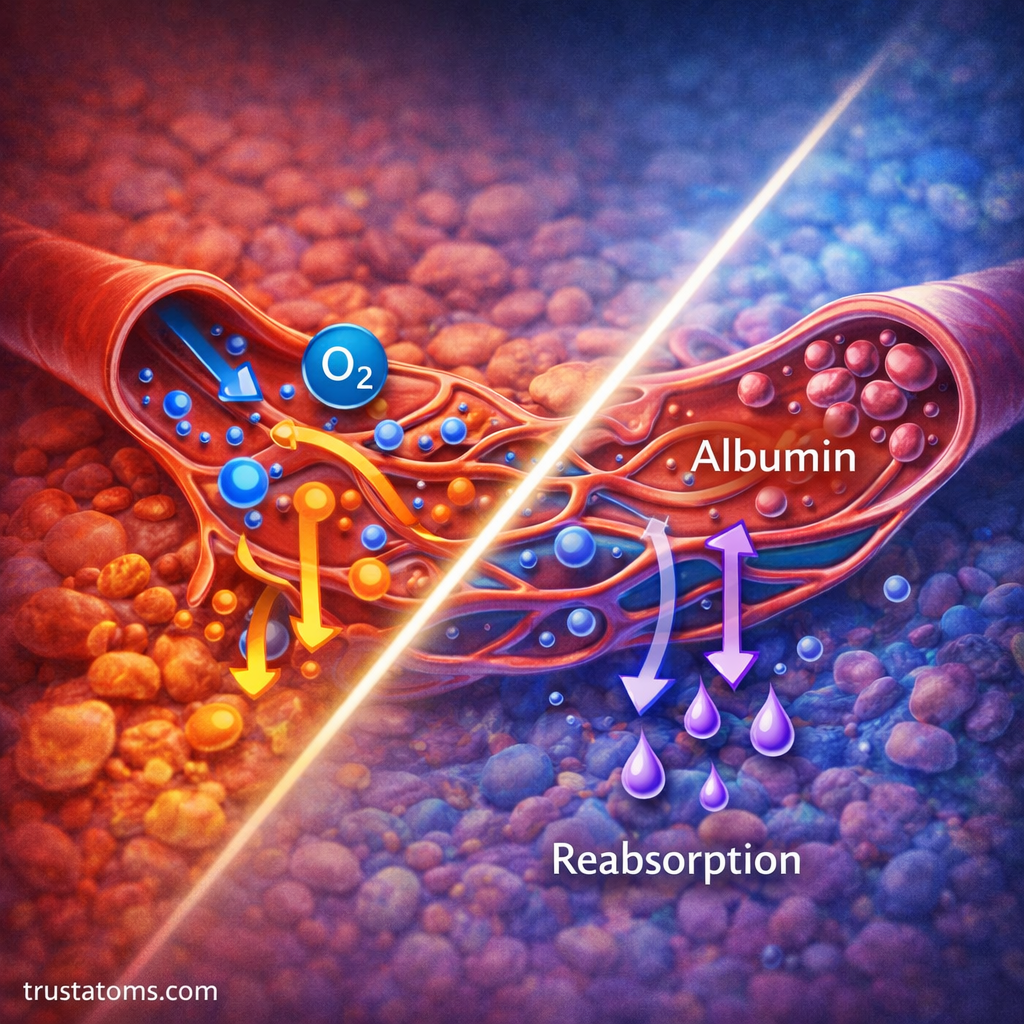
Capillary exchange occurs through several key processes:
Diffusion
The most important mechanism.
- Movement from high concentration to low concentration
- Oxygen diffuses into tissues
- Carbon dioxide diffuses into blood
Filtration
- Fluid is pushed out of capillaries due to blood pressure
- Delivers nutrients to surrounding cells
Reabsorption
- Fluid moves back into capillaries
- Occurs due to osmotic pressure (mainly from proteins in blood)
Vesicular Transport (Transcytosis)
- Larger molecules are transported across capillary walls in vesicles
What Is Tissue Perfusion?
Tissue perfusion refers to the flow of blood through capillary networks in tissues.
It determines how well tissues receive:
- Oxygen
- Nutrients
- Hormonal signals
And how efficiently they remove:
- Carbon dioxide
- Metabolic waste
Good perfusion is essential for healthy tissue function.
Factors That Influence Tissue Perfusion
Several factors determine how effectively blood flows through tissues:
Blood Pressure
- Higher pressure → increased perfusion
- Low pressure → reduced delivery to tissues
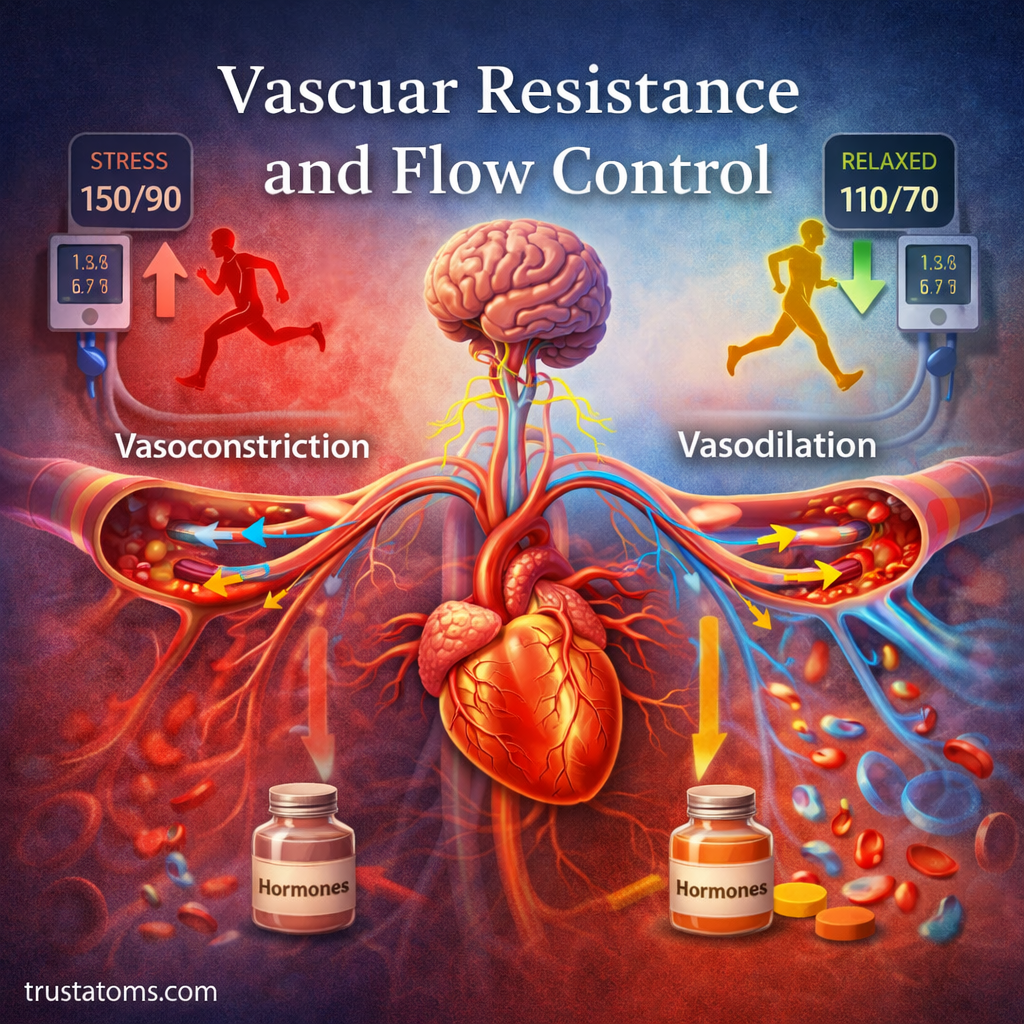
Vascular Resistance
- Narrow vessels reduce flow
- Dilated vessels improve perfusion
Capillary Density
- More capillaries → better exchange
- Active tissues (like muscles) have higher density
Cardiac Output
- The amount of blood the heart pumps
- Higher output increases overall perfusion
Regulation of Capillary Blood Flow
The body carefully controls which capillaries receive blood at any given time.
Precapillary Sphincters
These are small muscle rings at the entrance of capillaries.
Functions:
- Open to allow blood flow
- Close to reduce or stop flow
Why This Matters
- Directs blood to active tissues
- Conserves energy when demand is low
- Adjusts quickly during exercise or stress
Capillary Exchange During Exercise
During physical activity, tissue demand increases significantly.
What Happens:
- More capillaries open (recruitment)
- Blood flow to muscles increases
- Oxygen delivery rises
- Waste removal accelerates
This improves performance and delays fatigue.
Fluid Balance and Edema
Capillary exchange also plays a role in fluid balance.
Edema (Swelling)
Occurs when excess fluid accumulates in tissues.
Causes:
- Increased capillary pressure
- Reduced plasma proteins
- Poor lymphatic drainage
When filtration exceeds reabsorption, fluid builds up in surrounding tissues.
Why Capillary Exchange and Perfusion Matter
These processes are essential for:
- Sustaining cellular life
- Supporting organ function
- Promoting healing and recovery
- Maintaining overall homeostasis
Without proper exchange and perfusion, tissues can become damaged or fail.
Common Issues Affecting Perfusion
Problems with capillary function can lead to serious health conditions:
Poor Perfusion
- Reduced oxygen delivery
- Tissue damage or organ failure
Shock
- Severe drop in blood flow
- Life-threatening condition
Chronic Conditions
- Diabetes (damages capillaries)
- Atherosclerosis (reduces flow)
Final Thoughts
Capillary exchange and tissue perfusion are at the core of how your body sustains life at the cellular level. Through processes like diffusion, filtration, and reabsorption, your body ensures that every cell gets what it needs—and removes what it doesn’t.
These systems operate continuously and adapt instantly to your body’s demands, whether you’re resting or pushing your limits.
Understanding these mechanisms highlights the incredible efficiency of the human body and the importance of maintaining cardiovascular health.