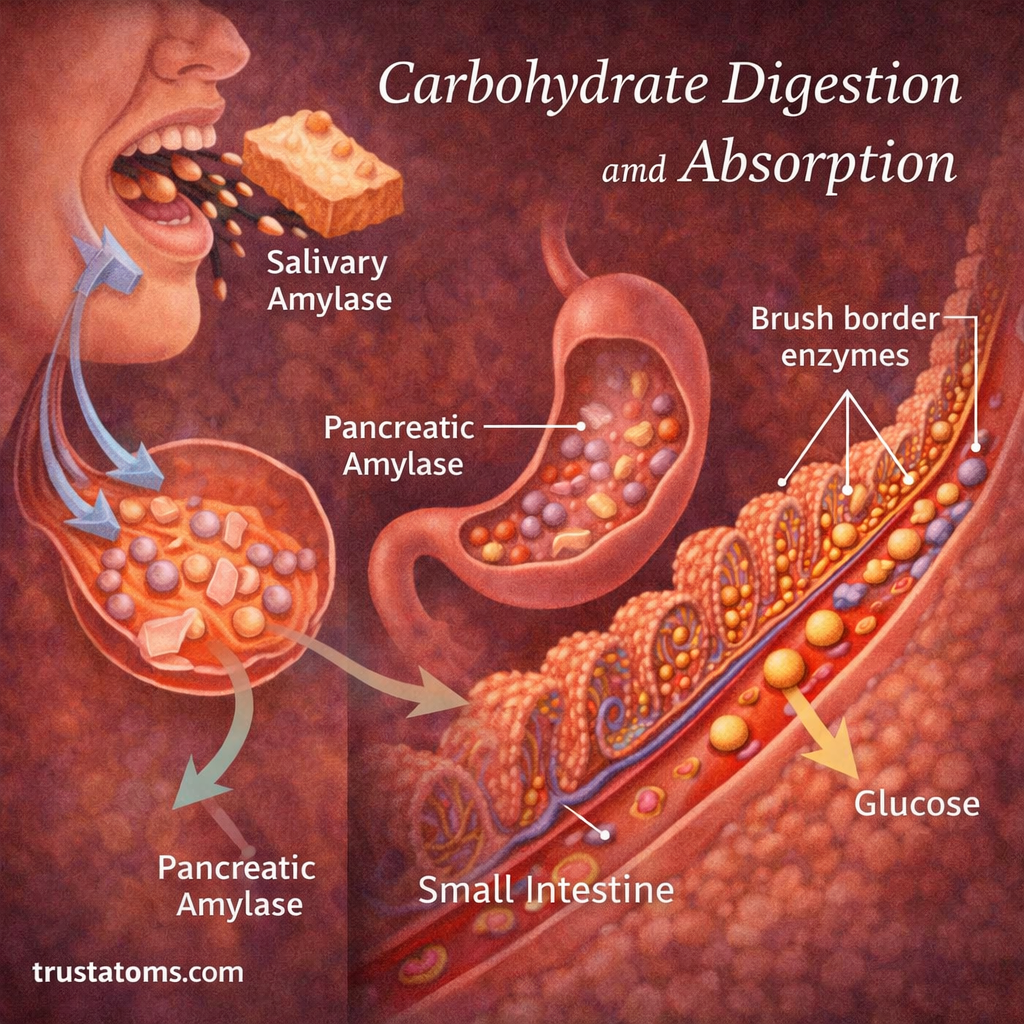
Carbohydrates are one of the body’s primary sources of energy. From a slice of bread to a piece of fruit, the carbohydrates you eat must be broken down and absorbed before your body can use them.
In this guide, you’ll learn how carbohydrate digestion works, where it happens, and how glucose ultimately enters your bloodstream to fuel your cells.
What Are Carbohydrates?
Carbohydrates are macronutrients found in many foods, including grains, fruits, vegetables, and sugars.
Main types of carbohydrates:
- Simple carbohydrates: Sugars like glucose and fructose
- Complex carbohydrates: Starches found in foods like rice and potatoes
- Fiber: Indigestible carbohydrates that support gut health
All digestible carbohydrates are eventually broken down into simple sugars, mainly glucose.
Where Does Carbohydrate Digestion Begin?
Carbohydrate digestion starts in the mouth.
What happens in the mouth:
- Salivary glands release an enzyme called amylase
- Amylase begins breaking down starch into smaller sugar molecules
- Chewing increases surface area for digestion
Although this stage is brief, it marks the beginning of carbohydrate breakdown.
What Happens in the Stomach?
Carbohydrate digestion slows in the stomach.
Why this happens:
- The acidic environment inactivates salivary amylase
- Little carbohydrate digestion occurs here
- Food is mixed and prepared for the small intestine
The stomach mainly acts as a holding and mixing chamber for carbohydrates.
Carbohydrate Digestion in the Small Intestine
Most carbohydrate digestion takes place in the small intestine.
Key steps:
- The pancreas releases pancreatic amylase
- Starches are broken into smaller sugars (like maltose)
- Enzymes on the intestinal lining (brush border enzymes) break sugars into monosaccharides
Important enzymes:
- Maltase
- Lactase
- Sucrase
These enzymes convert carbohydrates into absorbable forms like glucose, galactose, and fructose.
How Carbohydrates Are Absorbed
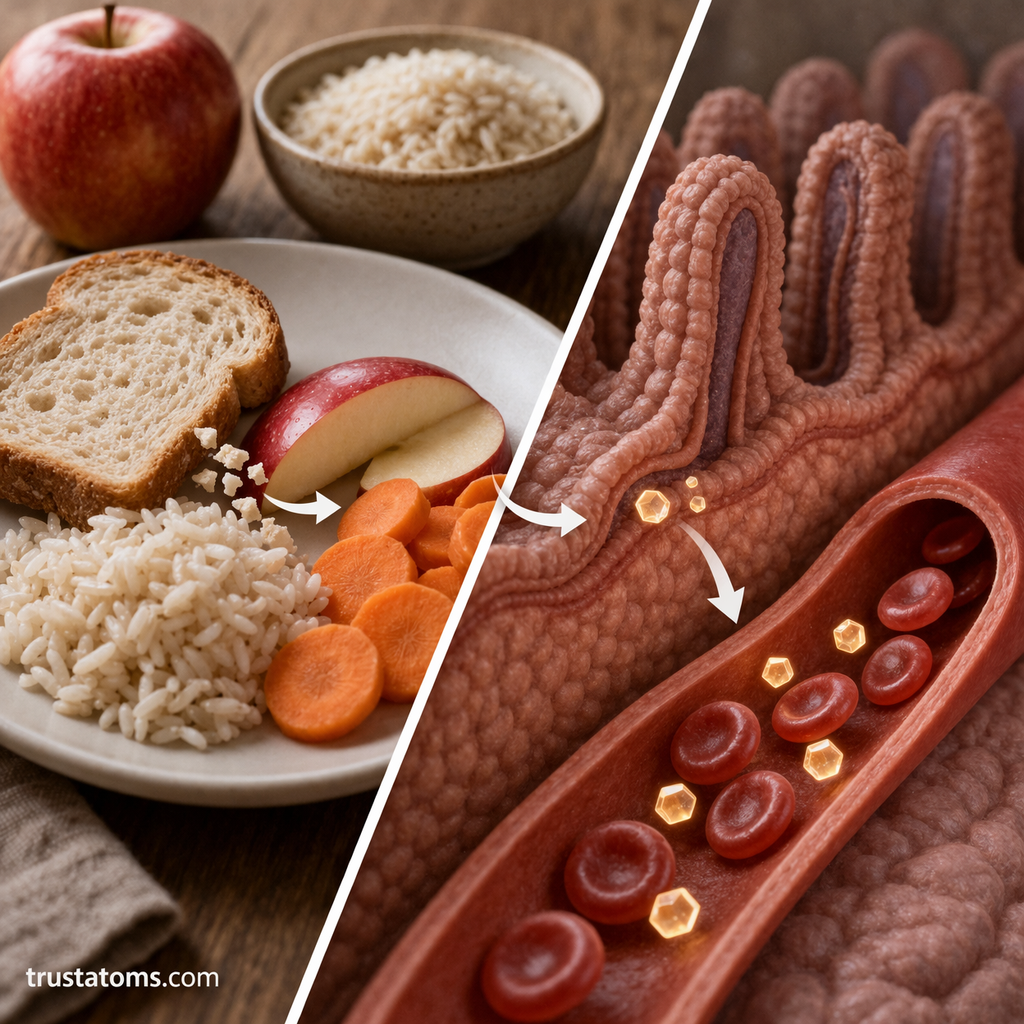
Once broken down, carbohydrates are absorbed through the intestinal wall.
Absorption process:
- Monosaccharides enter intestinal cells
- Glucose and galactose use active transport
- Fructose uses facilitated diffusion
- Sugars enter capillaries in the villi
- Transported to the liver via the hepatic portal vein
This pathway allows sugars to quickly enter circulation.
The Role of the Liver in Carbohydrate Metabolism
The liver plays a central role after absorption.
What the liver does:
- Regulates blood glucose levels
- Stores excess glucose as glycogen
- Releases glucose when energy is needed
- Converts excess sugar into fat if necessary
This ensures a steady supply of energy for the body.
What Happens to Fiber?
Not all carbohydrates are digested.
Role of fiber:
- Passes undigested into the large intestine
- Feeds beneficial gut bacteria
- Helps regulate bowel movements
- Supports digestive health
Fiber plays an indirect but important role in digestion.
What Affects Carbohydrate Digestion?
Several factors influence how efficiently carbohydrates are digested and absorbed.
Key factors:
- Enzyme availability (e.g., lactase deficiency)
- Gut health and intestinal lining condition
- Type of carbohydrate consumed
- Rate of digestion and motility
Disruptions can lead to symptoms like bloating, gas, or intolerance.
Why Carbohydrate Digestion Matters
Carbohydrates are a primary energy source for the body, especially for the brain and muscles.
Key benefits:
- Provides quick and efficient energy
- Supports brain function
- Fuels physical activity
- Helps maintain metabolic balance
Efficient digestion ensures your body can access this energy when needed.
Final Thoughts
Carbohydrate digestion and absorption are essential processes that convert food into usable energy. From the mouth to the small intestine, your body carefully breaks down carbohydrates into simple sugars and delivers them to the bloodstream.
Understanding this process highlights how your body fuels itself every day—and why balanced nutrition is so important.