Cartilage is a specialized connective tissue that plays a critical role in joint function, flexibility, and shock absorption. Unlike bone, cartilage is smooth, flexible, and designed to reduce friction between moving parts of the body.
Understanding the different types of cartilage and how they support joints helps explain how your body maintains mobility while minimizing wear and tear.
What Is Cartilage?
Cartilage is a firm yet flexible tissue found in various parts of the body, especially in joints.
Key Functions of Cartilage
- Reduces friction between bones
- Absorbs shock during movement
- Provides structural support
- Maintains joint stability
Unlike many other tissues, cartilage does not have its own blood supply. Instead, it relies on surrounding fluids for nutrients.
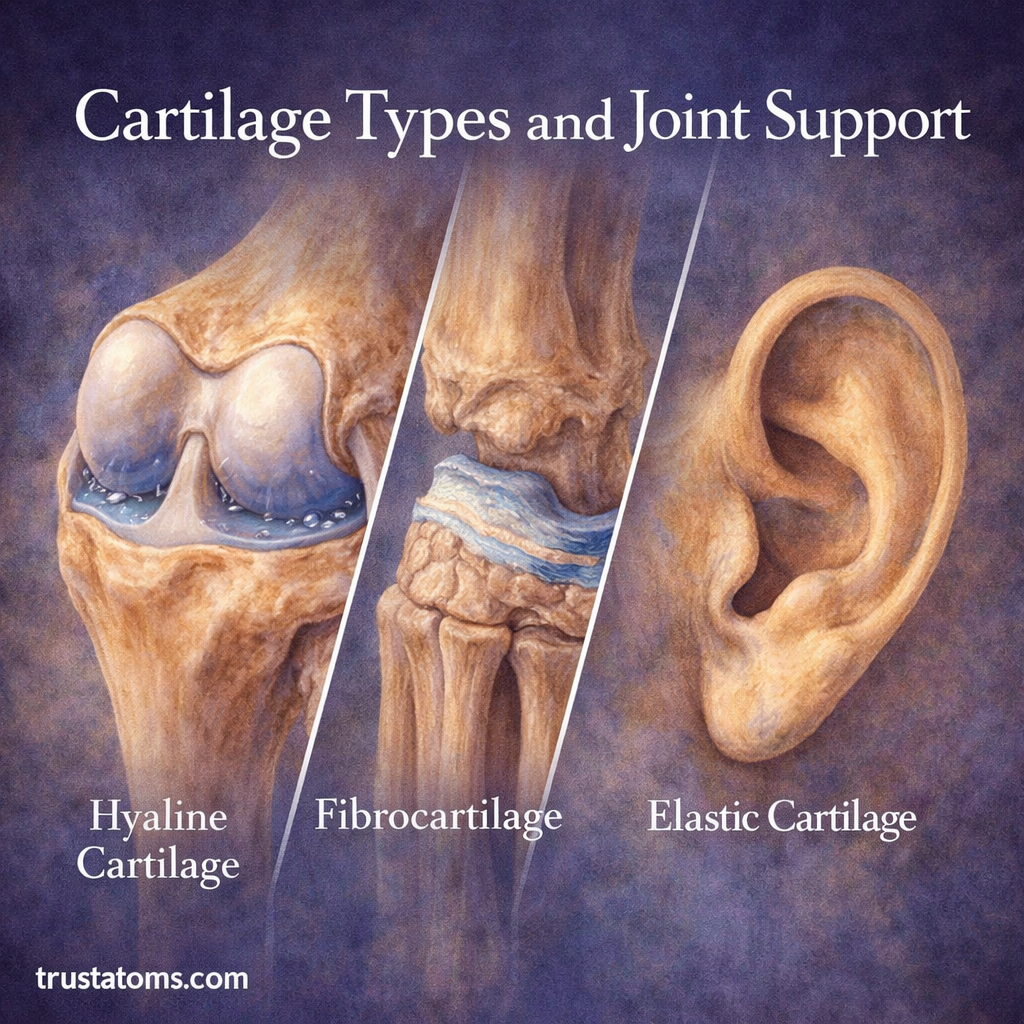
The Three Main Types of Cartilage
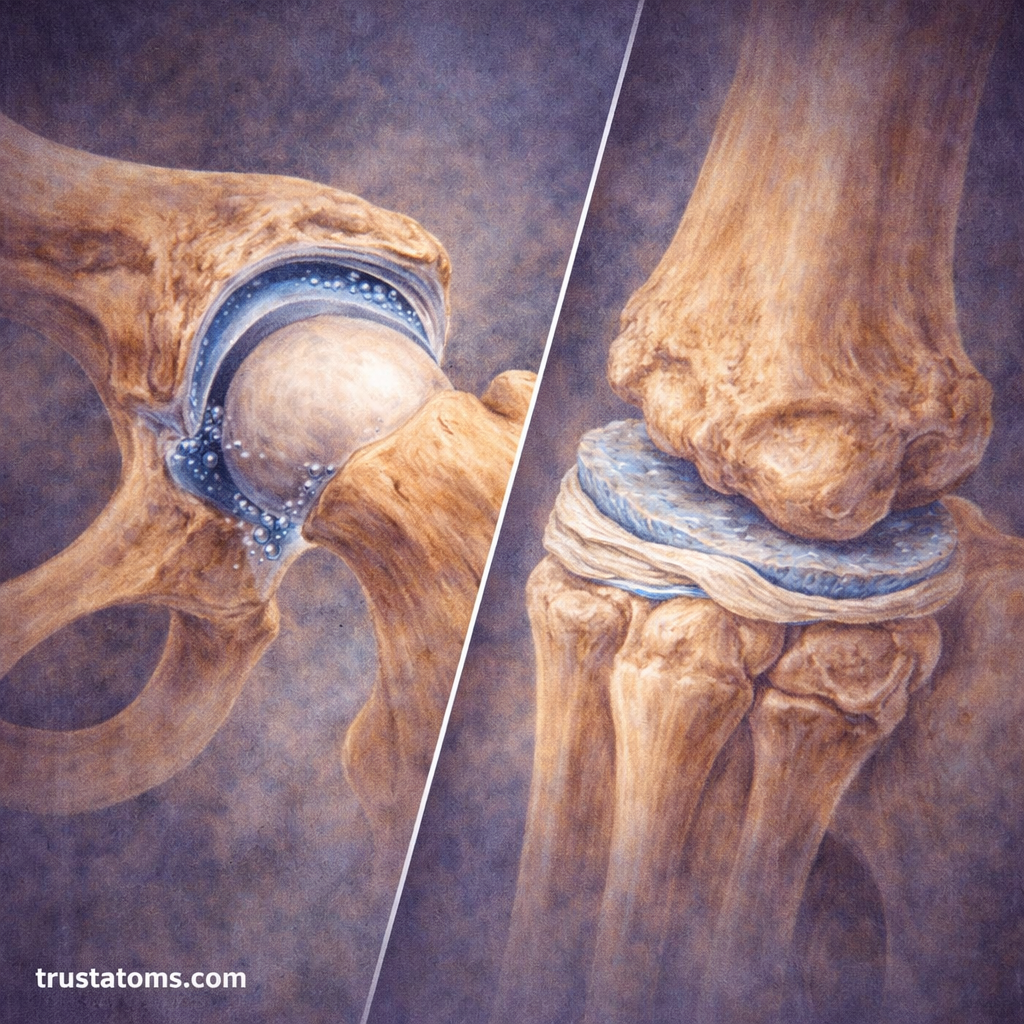
There are three primary types of cartilage in the human body, each with unique properties and functions.
Hyaline Cartilage
Hyaline cartilage is the most common type and is found in many joints.
Where It’s Found
- Ends of long bones (articular cartilage)
- Nose
- Trachea
- Rib connections
Key Characteristics
- Smooth and glass-like appearance
- Low friction surface
- Moderate flexibility
Role in Joint Support
Hyaline cartilage covers the ends of bones in synovial joints, allowing them to glide smoothly over each other. It is essential for reducing friction and enabling fluid movement.
Fibrocartilage
Fibrocartilage is the strongest and most durable type of cartilage.
Where It’s Found
- Intervertebral discs (spine)
- Meniscus of the knee
- Pubic symphysis
Key Characteristics
- Dense collagen fibers
- High resistance to pressure
- Less flexible than other types
Role in Joint Support
Fibrocartilage acts as a shock absorber, helping distribute forces across joints and preventing damage during high-impact activities.
Elastic Cartilage
Elastic cartilage is the most flexible type of cartilage.
Where It’s Found
- External ear
- Epiglottis (in the throat)
Key Characteristics
- High elasticity
- Flexible and resilient
- Maintains shape after bending
Role in Joint Support
While not heavily involved in weight-bearing joints, elastic cartilage provides flexible structural support in areas that require movement and shape retention.
How Cartilage Supports Joint Function
Cartilage is essential for maintaining healthy, functional joints.
Key Roles in Joints
- Creates a smooth surface for movement
- Reduces direct bone-to-bone contact
- Distributes mechanical load
- Absorbs impact during activity
Without cartilage, joints would experience increased friction, leading to pain and damage over time.
Cartilage and Shock Absorption
One of cartilage’s most important functions is handling pressure and impact.
How It Works
- Compresses under load
- Distributes force evenly
- Returns to original shape
This makes cartilage especially important in:
- Knees
- Hips
- Spine
Why Cartilage Heals Slowly
Cartilage has a limited ability to repair itself.
Reasons for Slow Healing
- No direct blood supply
- Limited cell regeneration
- Dependence on surrounding fluids for nutrients
As a result, cartilage injuries often take longer to heal compared to other tissues.
Common Cartilage-Related Conditions
Damage to cartilage can significantly affect joint function.
Osteoarthritis
- Breakdown of hyaline cartilage
- Leads to joint pain and stiffness
Meniscus Tears
- Damage to fibrocartilage in the knee
- Often caused by twisting movements
Degenerative Disc Disease
- Wear and tear of spinal fibrocartilage
- Can lead to back pain
Factors That Affect Cartilage Health
Maintaining cartilage health is essential for long-term mobility.
Key Factors
- Age (natural wear over time)
- Physical activity level
- Body weight
- Joint alignment
- Injury history
How to Support Healthy Cartilage
While cartilage cannot regenerate easily, you can help protect it.
Practical Tips
- Stay active with low-impact exercises
- Maintain a healthy weight
- Strengthen surrounding muscles
- Avoid repetitive joint stress
- Stay hydrated
Common Misconceptions About Cartilage
- Cartilage is the same as bone (it is softer and more flexible)
- Cartilage heals quickly (it heals slowly due to lack of blood supply)
- Only athletes experience cartilage damage (it can affect anyone)
Final Thoughts
Cartilage is a vital component of joint health, providing smooth movement, shock absorption, and structural support. Each type—hyaline, fibrocartilage, and elastic—serves a unique purpose in the body.
Understanding how cartilage works and how it supports joints can help you better protect your mobility and reduce the risk of long-term joint issues.