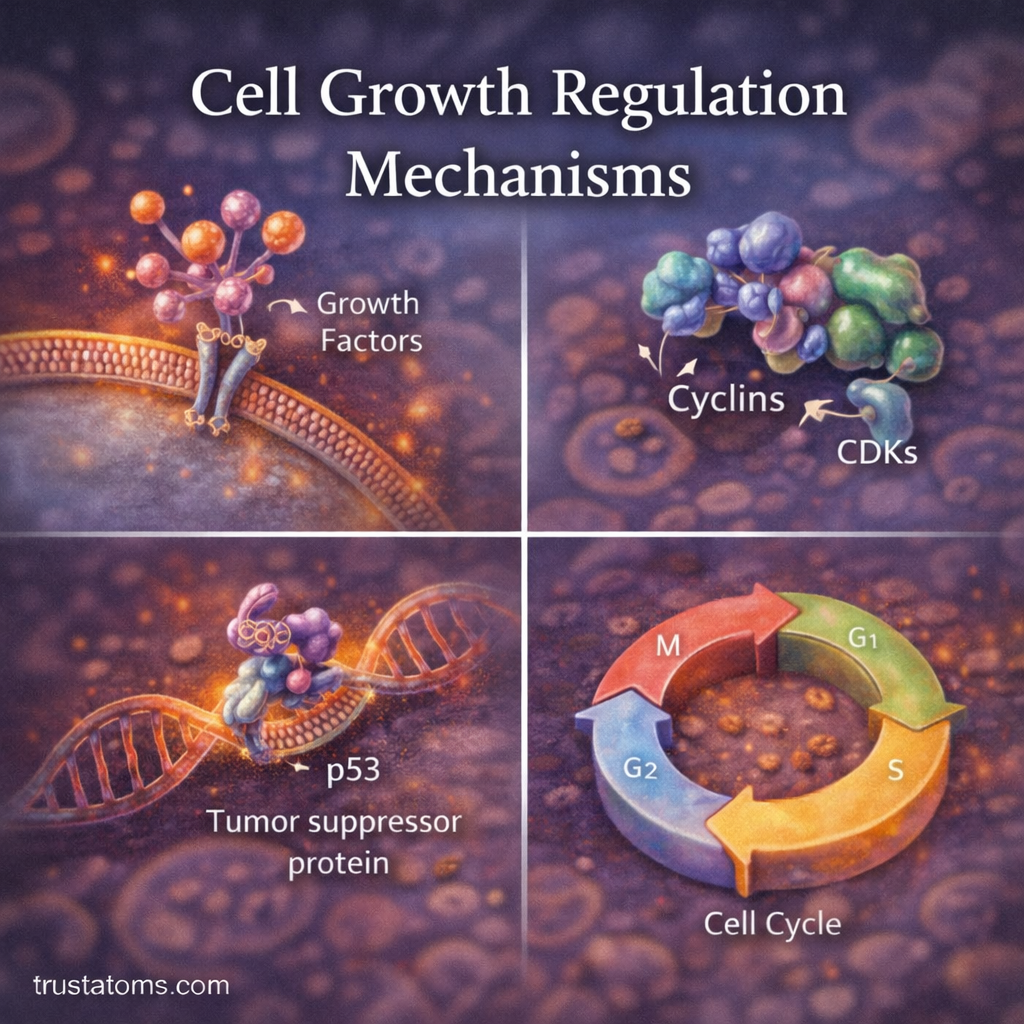
Cell Growth Regulation Mechanisms

Scientific illustration showing mechanisms of cell growth regulation including growth factors, cyclins and CDKs, tumor suppressor proteins, and the cell cycle.
Educational diagram illustrating how cells regulate growth through growth factor signaling, cyclin–CDK control, tumor suppressor activity, and the cell cycle. trustatoms.com.

Cells must grow and divide in a controlled and coordinated way. In multicellular organisms, billions of cells work together to maintain tissues, repair damage, and support development. To keep this system balanced, cells rely on complex regulatory mechanisms that control when growth occurs and when it stops.

Cell growth regulation ensures that cells divide only when necessary. These biological systems monitor internal signals, environmental conditions, and genetic instructions to determine whether growth should continue or pause. When these mechanisms function correctly, tissues maintain stability and healthy cellular turnover.

Understanding how cell growth is regulated helps scientists study development, tissue repair, and diseases that involve abnormal cell division.

Continue reading “Cell Growth Regulation Mechanisms”
Cellular Quality Control Systems

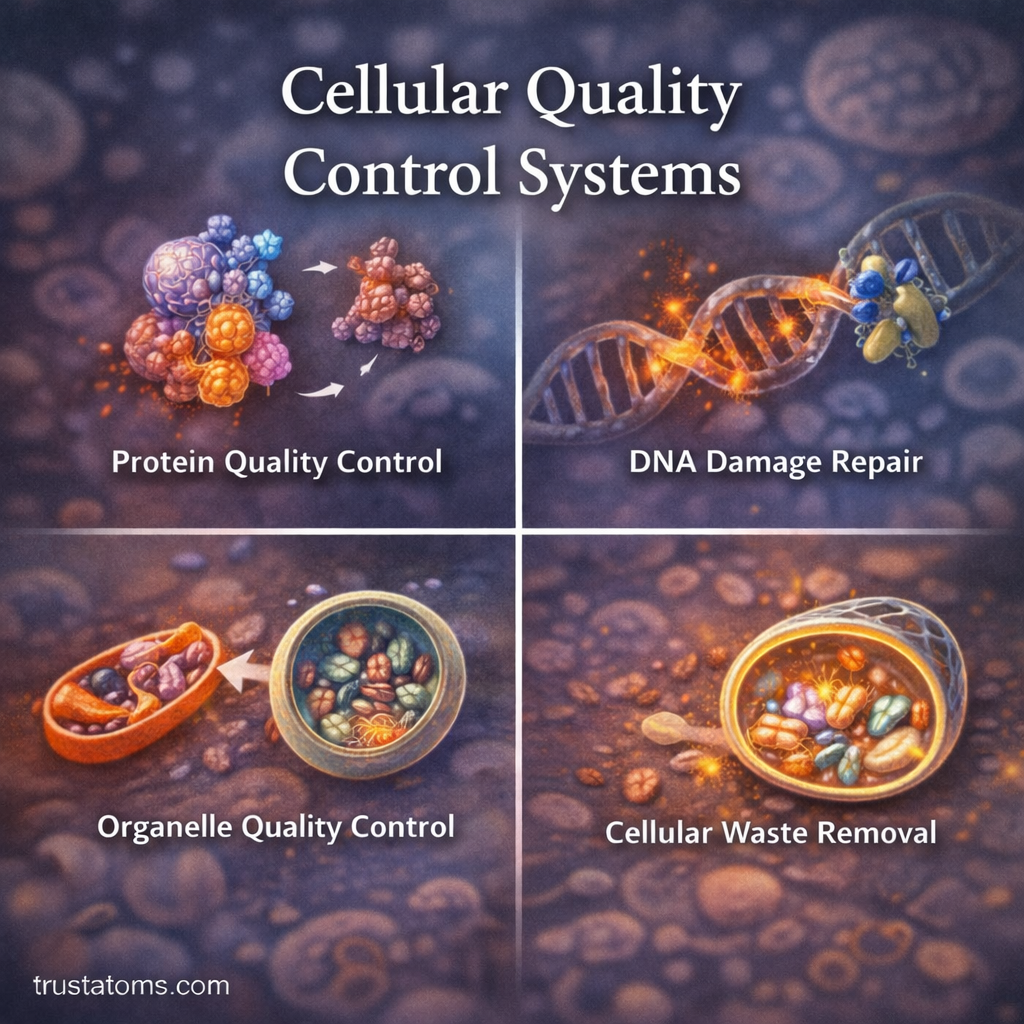
Illustration showing cellular quality control systems including protein monitoring, DNA repair, organelle maintenance, and cellular waste removal.
Conceptual diagram illustrating major cellular quality control systems such as protein surveillance, DNA repair, organelle maintenance, and waste recycling inside cells. trustatoms.com.

Cells operate through complex biochemical processes that require precision and stability. Proteins must fold correctly, DNA must remain intact, and organelles must function efficiently. To maintain this internal balance, cells rely on several built-in monitoring and repair mechanisms known as cellular quality control systems.

These systems continuously detect errors, remove damaged components, and repair molecular structures. Without these safeguards, cells would quickly accumulate defective proteins, malfunctioning organelles, and genetic damage. Over time, this buildup could disrupt normal biological processes and threaten cell survival.

Cellular quality control systems therefore play a central role in maintaining healthy biological function across tissues and organisms.

Continue reading “Cellular Quality Control Systems”

Autophagy in Cellular Maintenance

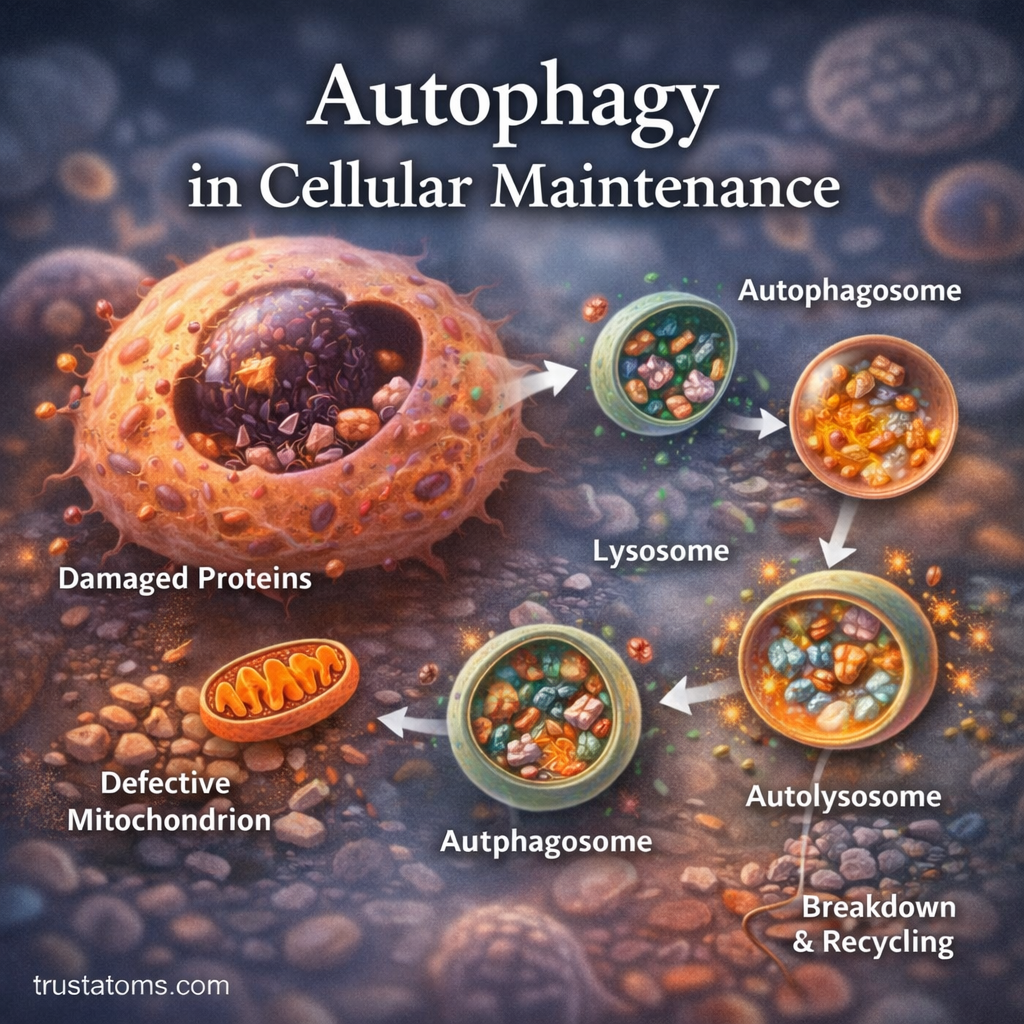
Illustration showing the autophagy process in cells including damaged proteins, autophagosomes, lysosomes, and cellular recycling.
Diagram illustrating the autophagy process where damaged cellular components are enclosed in autophagosomes and broken down by lysosomes for recycling. trustatoms.com.

Cells constantly face internal wear and tear. Proteins become damaged, organelles lose efficiency, and metabolic waste accumulates during normal biological activity. To stay healthy, cells must continually clean, recycle, and repair their internal components. One of the most important systems responsible for this process is autophagy.

Autophagy is a cellular recycling mechanism that helps remove damaged structures and repurpose useful materials. This process allows cells to maintain stability, adapt to stress, and preserve energy efficiency. Without autophagy, damaged components would accumulate inside cells, eventually interfering with normal biological function.

Scientists consider autophagy one of the key maintenance systems that helps cells remain functional over time.

Continue reading “Autophagy in Cellular Maintenance”

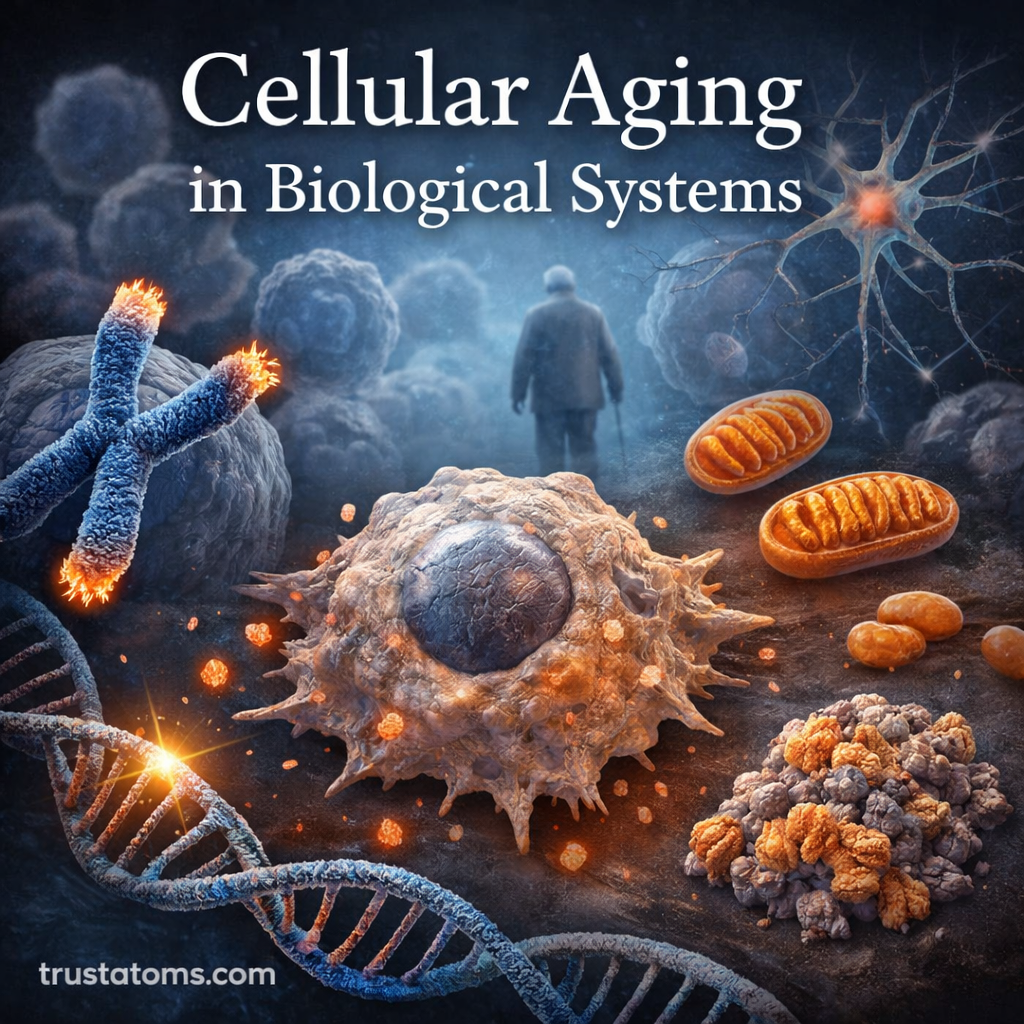
Cellular Aging in Biological Systems

Illustration showing cellular aging in biological systems including DNA damage, mitochondria decline, and senescent cells.
Conceptual illustration of cellular aging processes such as telomere shortening, mitochondrial decline, and DNA damage in biological systems. trustatoms.com.

Cells are the fundamental units of life, constantly dividing, repairing, and maintaining the tissues that make up living organisms. However, cells do not function indefinitely. Over time, biological systems experience gradual changes that reduce cellular efficiency, repair capacity, and structural stability. This process is known as cellular aging.

Cellular aging plays a central role in the aging of entire organisms. From declining tissue regeneration to increased vulnerability to disease, many age-related biological changes originate at the cellular level. Understanding how and why cells age helps scientists study longevity, disease prevention, and potential therapies that may slow or modify aspects of aging.

Continue reading “Cellular Aging in Biological Systems”

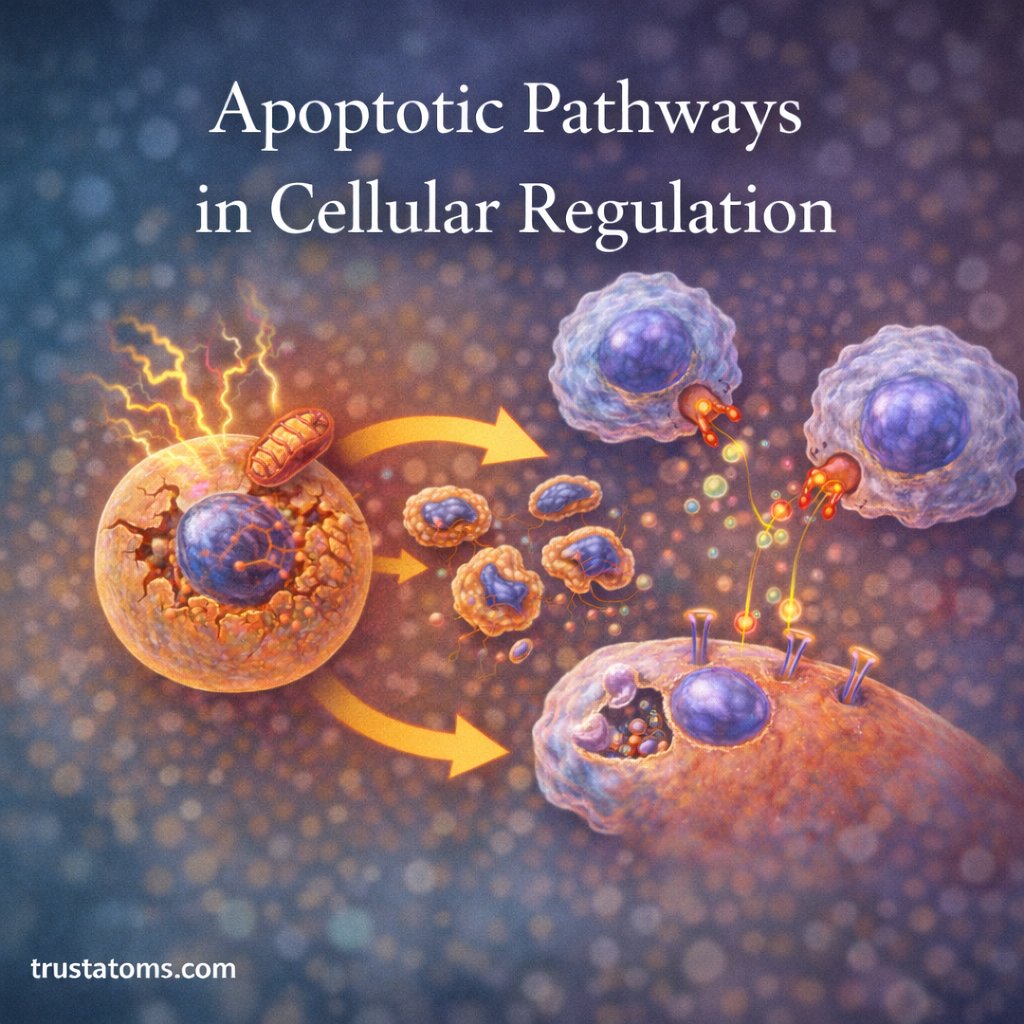
Apoptotic Pathways in Cellular Regulation

Illustration showing apoptotic pathways where damaged cells trigger programmed cell death through intrinsic and extrinsic signaling.
Illustration of apoptotic pathways in cellular regulation showing how damaged cells initiate programmed cell death and are removed by immune cells. trustatoms.com

Cells in living organisms must constantly balance growth, repair, and removal. One of the most important mechanisms for maintaining this balance is apoptosis, or programmed cell death. Through apoptosis, cells can safely dismantle themselves when they become damaged, unnecessary, or potentially harmful.

Apoptotic pathways are the molecular signaling routes that trigger and control this process. These pathways allow cells to respond to internal stress or external signals and activate a controlled sequence of events that leads to cell death.

Understanding apoptotic pathways is essential for explaining how tissues remain healthy, how development occurs properly, and how diseases such as cancer emerge when these pathways fail.

Continue reading “Apoptotic Pathways in Cellular Regulation”

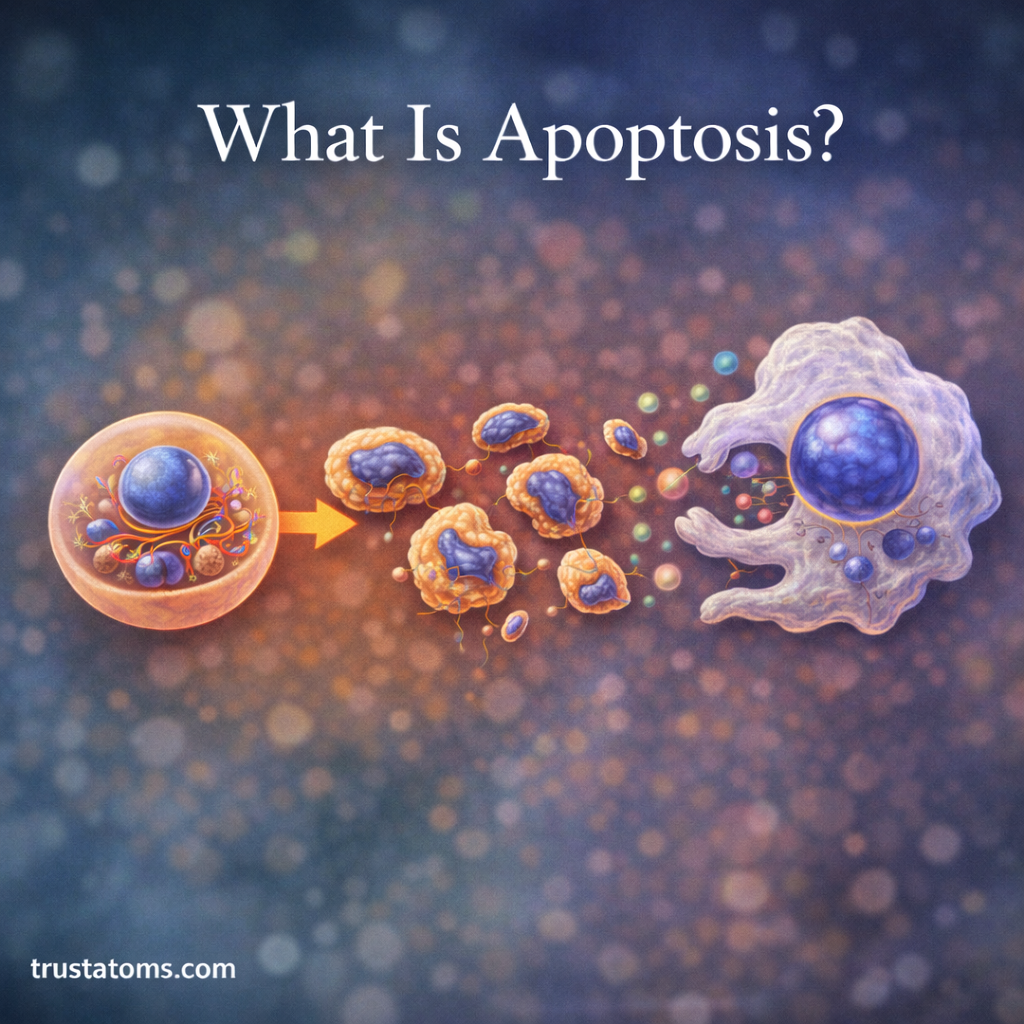
What Is Apoptosis?

Illustration showing apoptosis where a cell breaks into apoptotic bodies and is removed by an immune cell.
Illustration of apoptosis showing programmed cell death where a damaged cell breaks into apoptotic bodies and is cleared by immune cells. trustatoms.com

Apoptosis is a natural biological process in which cells deliberately and safely destroy themselves when they are no longer needed or become damaged. Often called programmed cell death, apoptosis is an essential mechanism that helps maintain balance and health in living organisms.

Unlike accidental cell death caused by injury or disease, apoptosis is a controlled and highly organized process. It allows the body to remove old, damaged, or potentially harmful cells without harming surrounding tissues.

Apoptosis plays a vital role in development, immune system function, and disease prevention. By eliminating unnecessary or defective cells, organisms can maintain proper tissue structure and function.

Continue reading “What Is Apoptosis?”

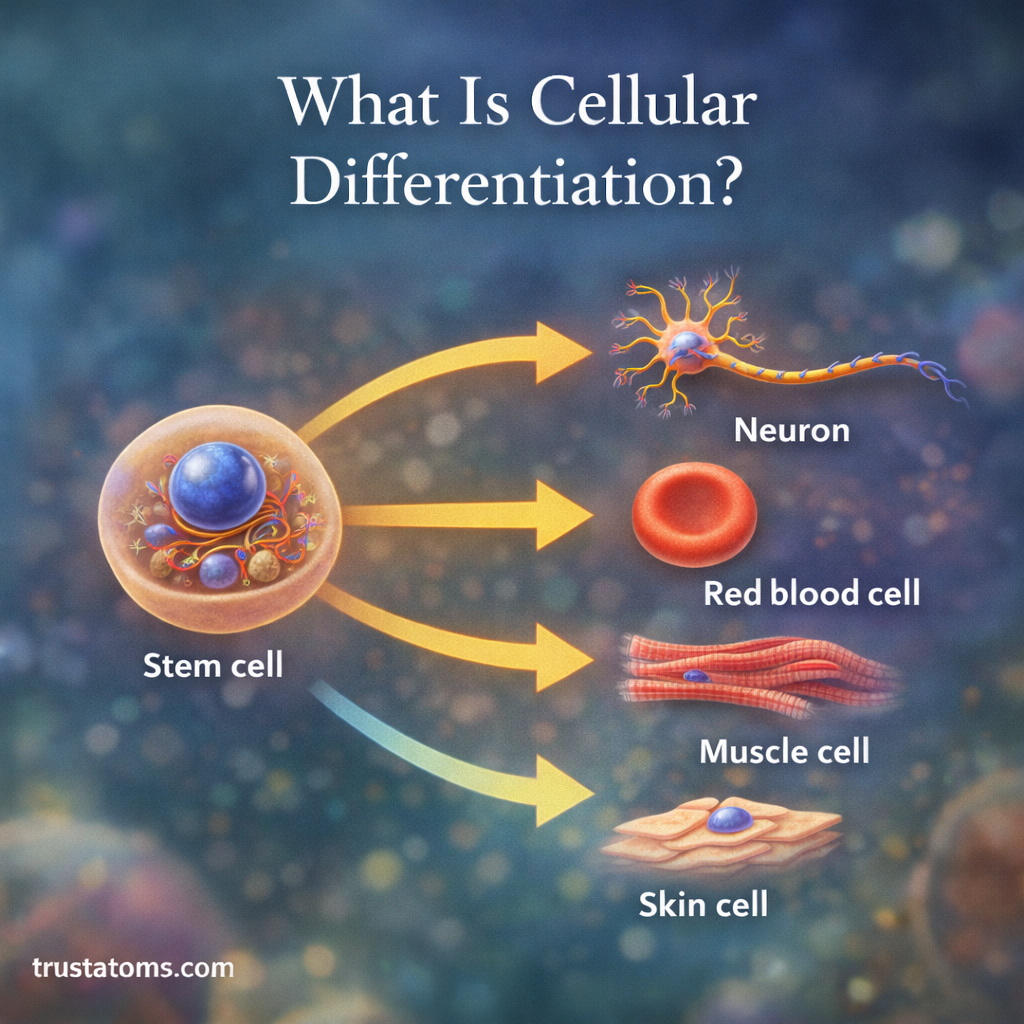
What Is Cellular Differentiation?

Illustration showing a stem cell differentiating into specialized cells such as a neuron, red blood cell, muscle cell, and skin cell.
Illustration showing how a stem cell differentiates into specialized cells including neurons, muscle cells, red blood cells, and skin cells. trustatoms.com

Cellular differentiation is the biological process through which unspecialized cells develop into specialized cells with specific structures and functions. This process allows a single fertilized egg to eventually form the many different types of cells that make up tissues and organs in living organisms.

In humans and other multicellular organisms, cells become specialized for tasks such as carrying oxygen, transmitting nerve signals, or contracting muscles. Cellular differentiation is essential for development, growth, and maintaining healthy body systems.

Understanding how cells differentiate helps scientists explain how organisms form during development and how certain diseases occur when these processes go wrong.

Continue reading “What Is Cellular Differentiation?”

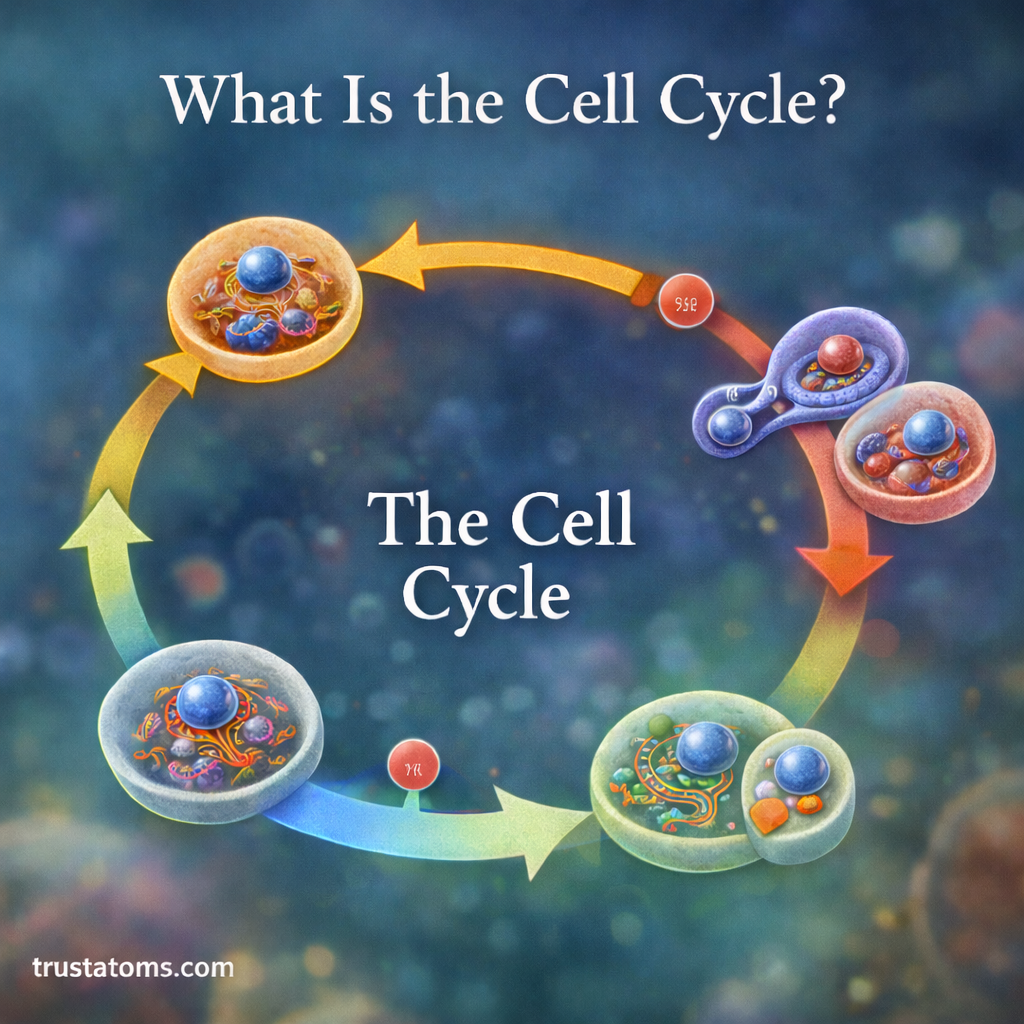
What Is the Cell Cycle?

Simple diagram illustrating the cell cycle as a circular process showing stages of cell growth and division.
Simplified illustration of the cell cycle showing the repeating stages of cell growth, DNA replication, and cell division. trustatoms.com

The cell cycle is the series of stages a cell goes through as it grows, prepares to divide, and ultimately produces two new daughter cells. This process is essential for life because it allows organisms to grow, repair damaged tissues, and reproduce.

In multicellular organisms like humans, billions of cells divide every day. The cell cycle ensures that each new cell receives a complete and accurate copy of genetic information. Because of this, the cycle is tightly regulated and carefully controlled.

Understanding the cell cycle helps explain how organisms develop, how tissues regenerate, and why disruptions in this process can lead to diseases such as cancer.

Continue reading “What Is the Cell Cycle?”

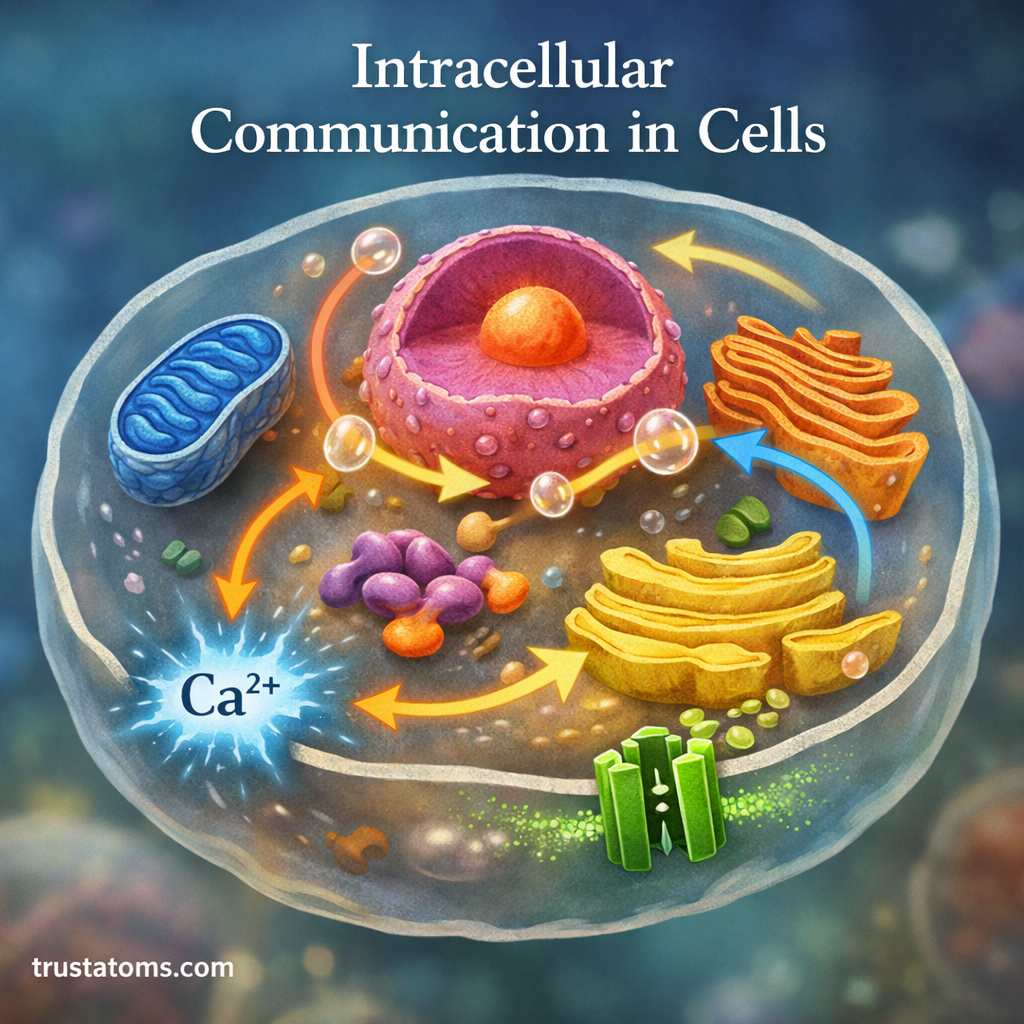
Intracellular Communication in Cells

Illustration showing intracellular communication in a cell with organelles sending signals between the nucleus, mitochondria, and Golgi apparatus.
Illustration of intracellular communication in cells showing signaling pathways and interactions between organelles. trustatoms.com

Cells constantly process information to survive, adapt, and function properly. Even though a cell may appear simple under a microscope, it is actually an incredibly organized system where molecules continuously send and receive signals.

Intracellular communication refers to the processes that allow different parts of a cell to exchange information. Through chemical signals, proteins, and molecular pathways, cells coordinate activities such as metabolism, growth, division, and responses to environmental changes.

Understanding intracellular communication helps explain how cells maintain balance, respond to stress, and perform specialized tasks within tissues and organs.

Continue reading “Intracellular Communication in Cells”

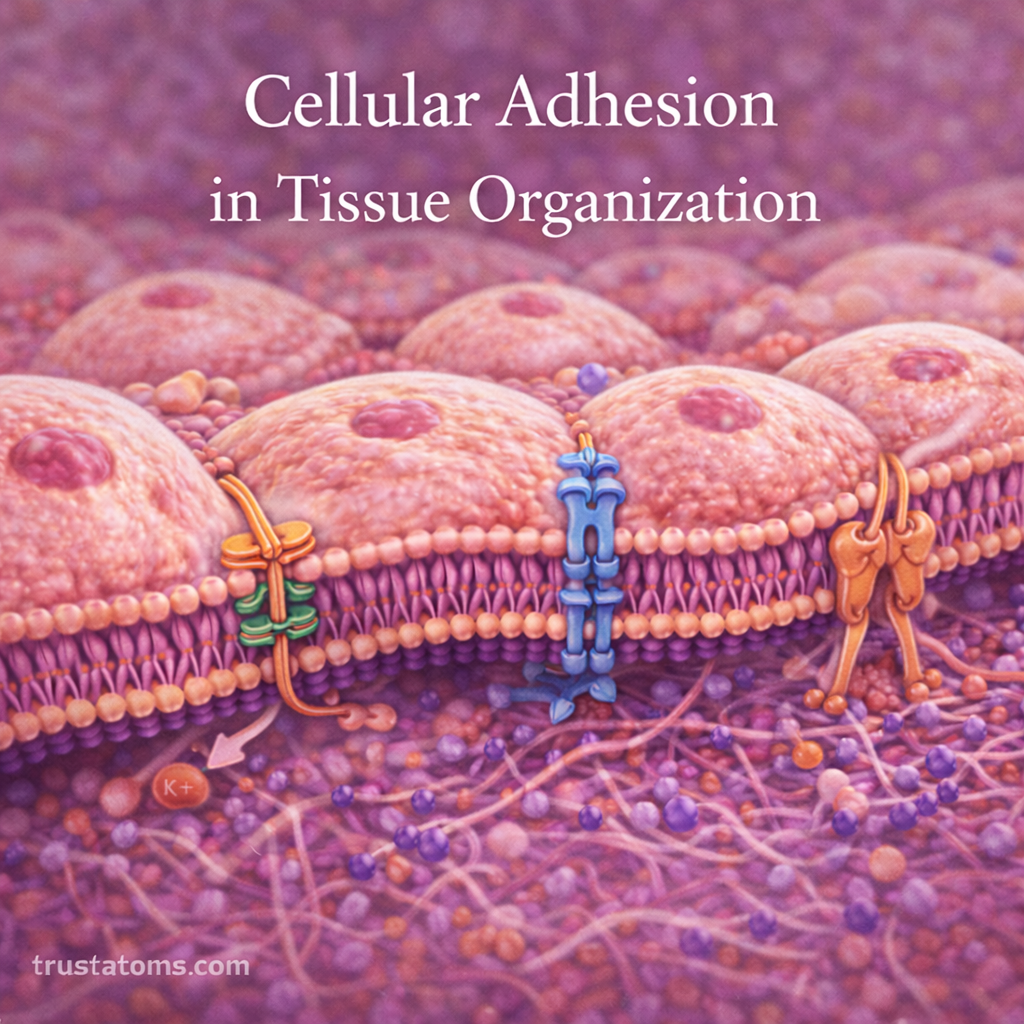
Cellular Adhesion in Tissue Organization

Illustrated diagram of cellular adhesion in tissue organization showing cells connected through adhesion proteins and junction structures.
Scientific illustration showing cells connected through adhesion molecules and junctions that help maintain tissue organization and structural stability. trustatoms.com.

Cells rarely function in isolation. In multicellular organisms, cells must attach to one another and to surrounding structures in order to form tissues and organs. This attachment process is known as cellular adhesion.

Cellular adhesion allows cells to maintain stable physical connections while also coordinating communication, growth, and repair. These interactions help tissues maintain structure and function properly throughout the body.

Without cellular adhesion, tissues would lose their organization, and many biological processes—such as wound healing and immune defense—would not occur efficiently.

Continue reading “Cellular Adhesion in Tissue Organization”