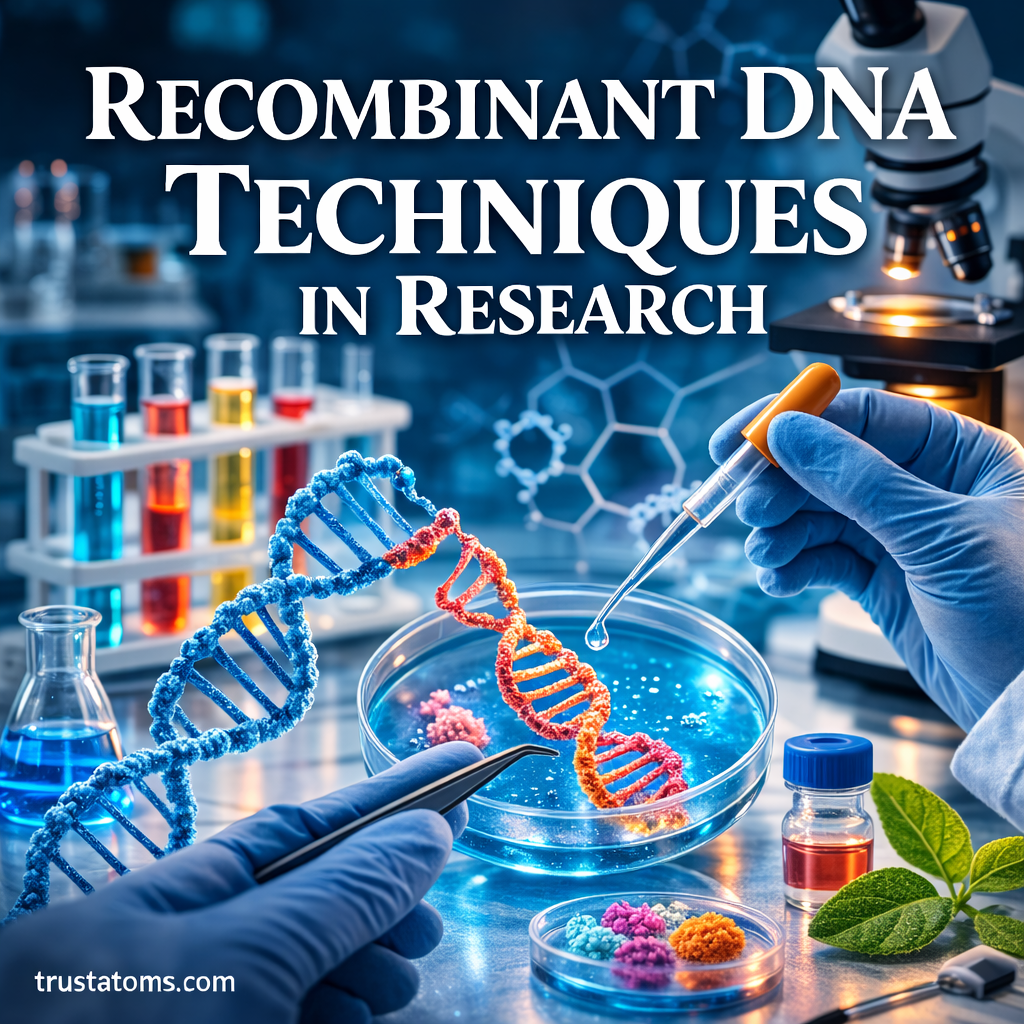
Recombinant DNA Techniques in Research

Illustration showing recombinant DNA techniques in research with DNA splicing, laboratory tools, plasmids, and molecular biology experiments.
Illustration of recombinant DNA techniques used in molecular biology research including DNA splicing and gene cloning. trustatoms.com.

Recombinant DNA technology is a powerful scientific method used to combine DNA from different sources into a single molecule. By creating new combinations of genetic material, scientists can study gene function, develop medicines, improve crops, and advance biotechnology research.

Since its development in the 1970s, recombinant DNA techniques have transformed biology and medicine. These methods allow researchers to isolate genes, insert them into organisms, and analyze how those genes affect biological processes.

Today, recombinant DNA technology is a foundation of modern molecular biology and biotechnology.

Continue reading “Recombinant DNA Techniques in Research”
Biotechnology Applications in Medicine

Illustration showing biotechnology applications in medicine including DNA research, vaccines, gene therapy, and laboratory biotechnology tools.
Illustration of biotechnology used in modern medicine including genetic research, vaccines, and advanced laboratory treatments. trustatoms.com.

Biotechnology has transformed modern medicine by allowing scientists to use living cells, biological molecules, and genetic technologies to diagnose, treat, and prevent diseases. From life-saving vaccines to advanced gene therapies, biotechnology plays a central role in many of the medical innovations used today.

Medical biotechnology combines biology, genetics, molecular science, and technology to create treatments that improve human health. These technologies allow scientists to better understand diseases and develop targeted therapies that were not possible in the past.

Today, biotechnology is used in areas such as drug development, genetic testing, vaccine production, and personalized medicine.

Continue reading “Biotechnology Applications in Medicine”

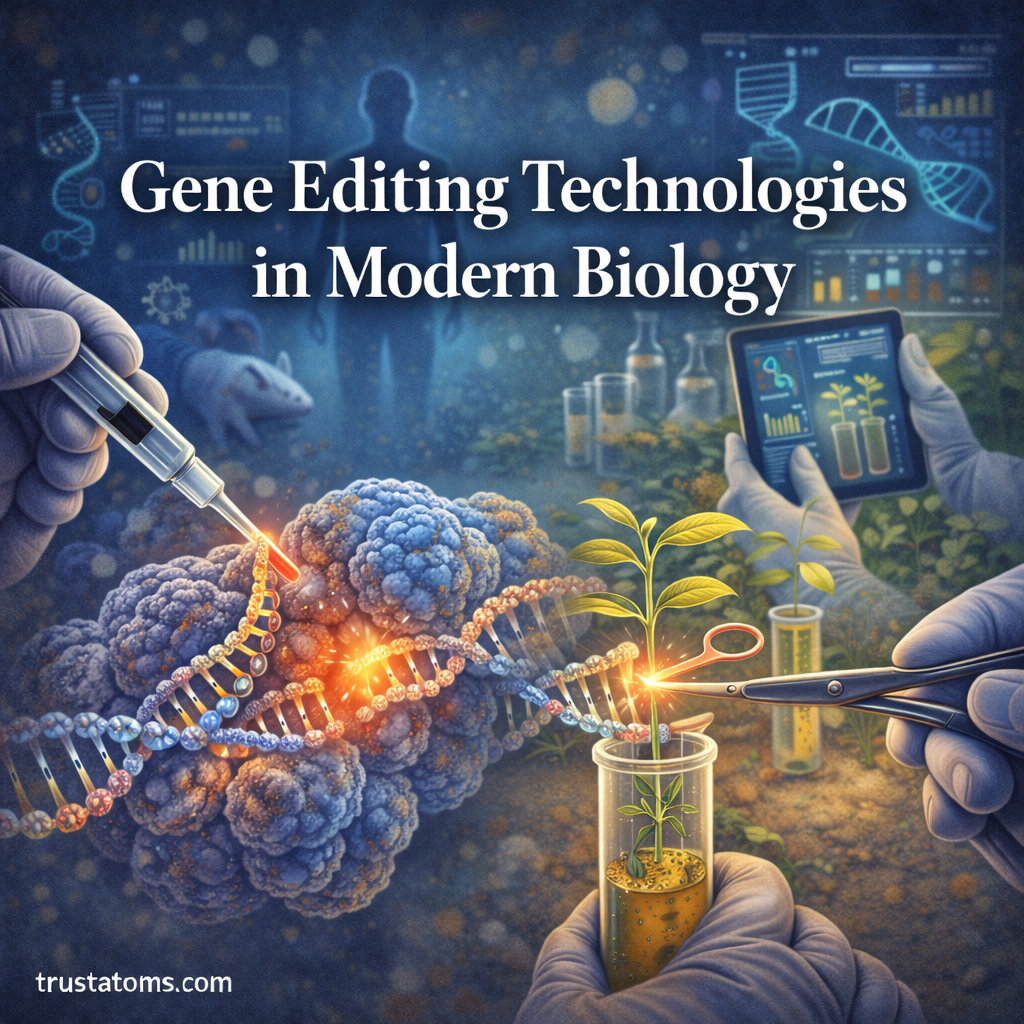
Gene Editing Technologies in Modern Biology

Illustration showing gene editing technologies in modern biology with CRISPR DNA cutting, laboratory gene modification, and plant biotechnology.
Illustration of modern gene editing technologies used in biology, including DNA editing, CRISPR research, and plant biotechnology. trustatoms.com.

Gene editing technologies allow scientists to precisely modify the DNA of living organisms. By changing genetic sequences, researchers can study how genes work, develop treatments for diseases, improve crops, and explore new biological discoveries.

In the past, altering genes was extremely difficult and time-consuming. Today, powerful gene editing tools allow scientists to cut, replace, or deactivate specific genes with remarkable accuracy.

These technologies have transformed modern biology, medicine, agriculture, and biotechnology.

Continue reading “Gene Editing Technologies in Modern Biology”

What Is CRISPR?

Illustration explaining CRISPR gene editing with Cas9 protein cutting DNA and laboratory gene editing tools.
Conceptual illustration of CRISPR gene editing showing DNA modification and Cas9 molecular scissors used in modern biotechnology. trustatoms.com.

CRISPR is a powerful gene-editing technology that allows scientists to precisely modify DNA within living organisms. The name CRISPR stands for Clustered Regularly Interspaced Short Palindromic Repeats, which refers to a natural genetic system found in bacteria.

Scientists discovered that bacteria use CRISPR as a defense mechanism against viruses. By studying this natural system, researchers developed a way to edit genes quickly, accurately, and relatively cheaply.

Today, CRISPR is one of the most important tools in modern biotechnology. It has major applications in medicine, agriculture, genetic research, and disease treatment.

Continue reading “What Is CRISPR?”

What Is Genetic Engineering?

Illustration explaining genetic engineering with DNA editing, laboratory tools, modified crops, and biotechnology research.
Conceptual illustration of genetic engineering showing DNA modification, laboratory research, and biotechnology applications. trustatoms.com.

Genetic engineering is a branch of biotechnology that involves directly modifying the DNA of living organisms. By altering genetic material, scientists can change specific traits, improve biological functions, or develop new capabilities in plants, animals, and microorganisms.

Unlike traditional breeding, which combines traits over multiple generations, genetic engineering allows scientists to precisely modify genes at the molecular level. This technology plays a major role in modern medicine, agriculture, and scientific research.

Genetic engineering is responsible for many breakthroughs, including life-saving medicines, disease-resistant crops, and new methods of studying genetic diseases.

Continue reading “What Is Genetic Engineering?”

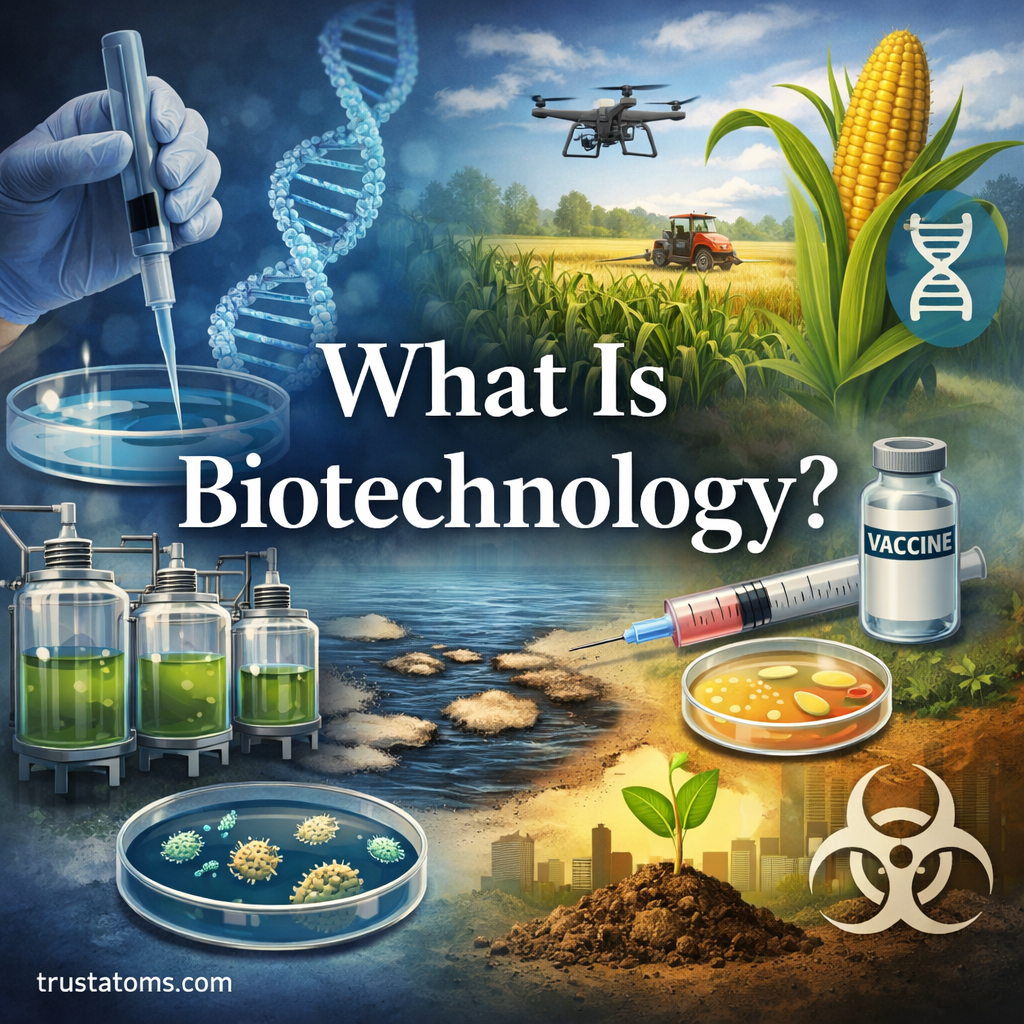
What Is Biotechnology?

Illustration diagram explaining biotechnology showing DNA, laboratory equipment, crops, microbes, and medical biotechnology.
Illustration showing key biotechnology applications including genetics, agriculture, medicine, and environmental science. trustatoms.com.

Biotechnology is a broad field of science that uses living organisms, biological systems, or biological processes to develop technologies and products that improve human life. From creating life-saving medicines to improving crops and cleaning the environment, biotechnology connects biology with technology to solve real-world problems.

Although the term may sound modern, humans have used basic forms of biotechnology for thousands of years. Early examples include fermentation for making bread, beer, and cheese. Today, biotechnology has expanded into advanced fields such as genetic engineering, pharmaceutical development, and synthetic biology.

Understanding biotechnology helps explain how modern science improves agriculture, medicine, environmental protection, and industrial production.

Continue reading “What Is Biotechnology?”

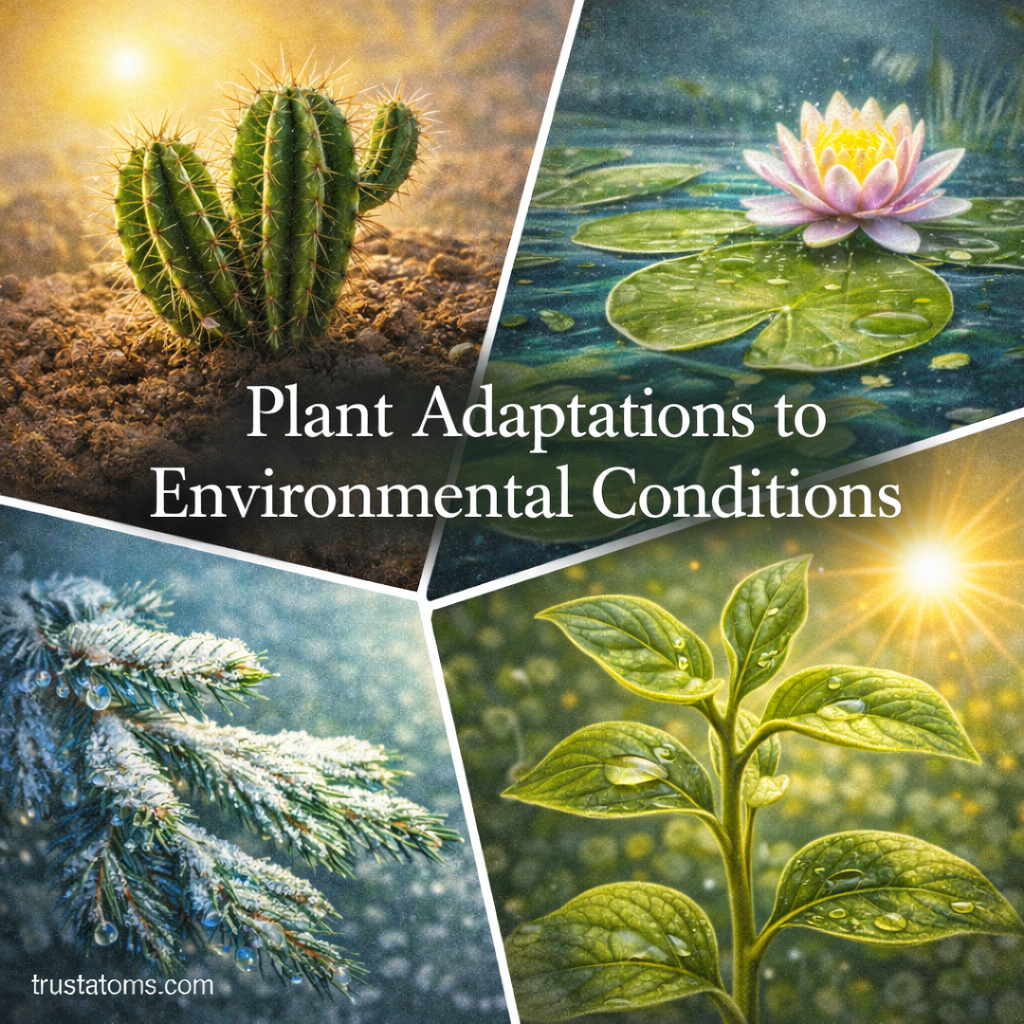
Plant Adaptations to Environmental Conditions

Educational illustration showing plant adaptations to environmental conditions, including a cactus adapted to desert drought, a water lily adapted to aquatic habitats, a frost-covered evergreen branch adapted to cold climates, and a sunlit leafy plant adapted to bright environments.
Illustration showing different plant adaptations across environments, including desert cacti, aquatic water lilies, cold-climate conifers, and sun-adapted leafy plants. trustatoms.com.

Plants grow in an enormous variety of environments, from deserts and rainforests to alpine mountains and aquatic ecosystems. Because plants cannot move to escape harsh conditions, they rely on adaptations—specialized structural, physiological, and behavioral traits—that allow them to survive and reproduce in their environments.

These adaptations help plants respond to challenges such as limited water, intense sunlight, poor soil nutrients, temperature extremes, and herbivory. By evolving features suited to their habitats, plants are able to thrive across nearly every ecosystem on Earth.

Understanding plant adaptations to environmental conditions is a central topic in plant biology and ecology.

Continue reading “Plant Adaptations to Environmental Conditions”

Water Transport in Plants

Educational illustration showing water transport in plants, including roots absorbing water from soil, water moving upward through xylem vessels in the stem, and water vapor exiting leaf stomata during transpiration.
Illustration demonstrating water transport in plants, showing root absorption, upward movement through xylem vessels, and water loss through stomata in leaves. trustatoms.com.

Water is essential for plant survival. It supports photosynthesis, maintains cell structure, transports nutrients, and helps regulate temperature. To move water efficiently from roots to leaves, plants rely on specialized tissues and physical processes that form a highly organized transport system.

This process, known as water transport in plants, primarily occurs through vascular tissues and involves mechanisms such as root absorption, capillary action, and transpiration. Together, these systems allow plants to move water upward against gravity.

Understanding how plants transport water is a key concept in plant biology and helps explain how plants grow and survive in diverse environments.

Continue reading “Water Transport in Plants”

Plant Hormones in Growth Regulation

Educational illustration showing plant hormones regulating growth, including stem elongation, seedling root development, fruit ripening, and hormone signaling within leaf tissues.
Illustration depicting how plant hormones regulate growth processes such as stem elongation, seedling development, fruit ripening, and cellular signaling in leaves. trustatoms.com.

Plants grow and develop through carefully coordinated biological processes. One of the most important systems controlling these processes is plant hormone signaling. Plant hormones, also called phytohormones, are chemical messengers that regulate growth, development, and responses to environmental conditions.

Even though they are produced in very small amounts, plant hormones influence many essential activities, including seed germination, stem elongation, leaf formation, flowering, fruit development, and responses to stress.

Understanding plant hormones in growth regulation is essential for plant biology, agriculture, and crop science.

Continue reading “Plant Hormones in Growth Regulation”

Chemical Signaling in Plant Systems

Educational illustration showing chemical signaling in plants, including signaling molecules moving through plant tissues, vascular transport in stems, defensive interactions with insects, and stomata responses on leaves.
Illustration depicting chemical signaling processes in plants, including hormone movement through vascular tissues, plant defense interactions with insects, and cellular signaling in leaf structures. trustatoms.com.

Plants may appear passive, but they constantly sense and respond to their environment. One of the primary ways they coordinate growth, defense, and development is through chemical signaling. Chemical signals allow plants to communicate internally between tissues and sometimes even externally with nearby organisms.

Through specialized molecules such as plant hormones and signaling compounds, plants can regulate processes like growth direction, flowering, stress responses, and defense against pests. These signaling systems help plants survive changing environmental conditions and maintain healthy development.

Understanding chemical signaling in plant systems is a central topic in plant biology and helps scientists improve agriculture, crop resilience, and ecosystem management.

Continue reading “Chemical Signaling in Plant Systems”