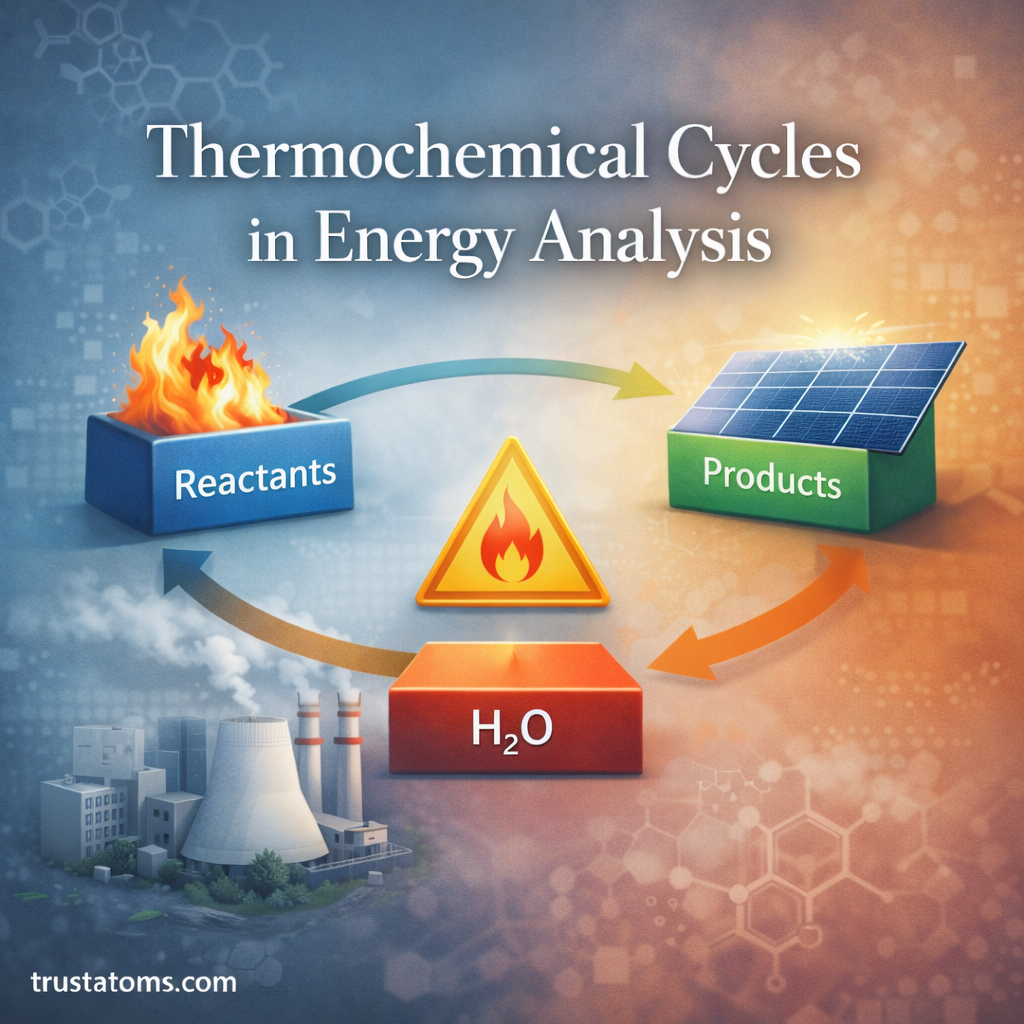
Thermochemical Cycles in Energy Analysis

Illustration showing thermochemical cycles in energy analysis with energy flow between reactants and products in a circular chemical process.
Illustration demonstrating thermochemical cycles and energy flow between chemical reactions used in energy analysis. trustatoms.com.

Thermochemical cycles are an important concept in chemistry and energy science. They help scientists understand how energy moves through chemical reactions and how different reactions can be combined to measure or calculate energy changes.

In energy analysis, thermochemical cycles allow researchers to determine values that may be difficult or impossible to measure directly in experiments. By applying principles of thermodynamics, chemists can analyze energy transformations in fuels, industrial reactions, and environmental processes.

Understanding thermochemical cycles helps scientists design more efficient chemical processes, evaluate energy systems, and study how reactions store or release energy.

Continue reading “Thermochemical Cycles in Energy Analysis”

Chemical Informatics in Molecular Research

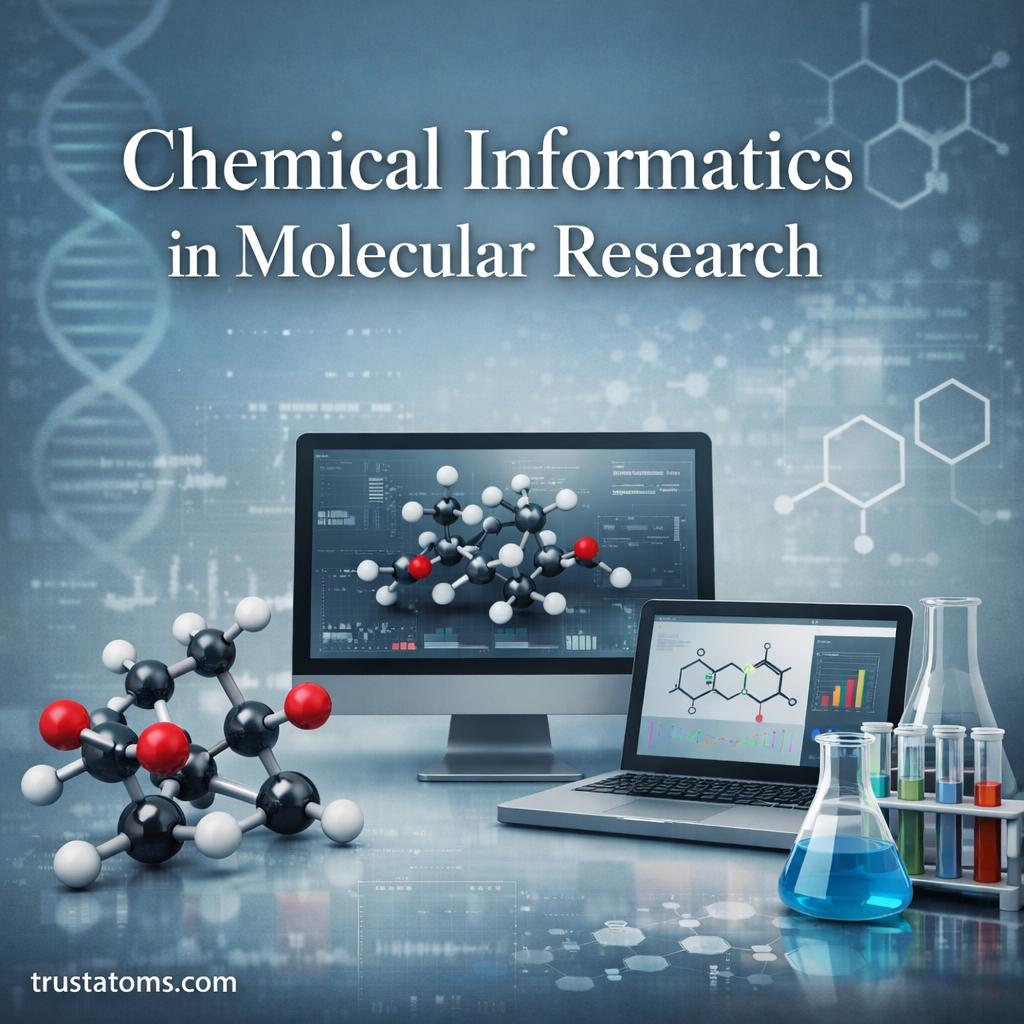
Illustration showing chemical informatics in molecular research with molecular models, computer data analysis, and laboratory equipment.
Illustration representing chemical informatics in molecular research with digital molecular modeling and laboratory analysis. trustatoms.com.

Chemical informatics—often called cheminformatics—is a field that combines chemistry, computer science, mathematics, and data science to analyze and understand chemical information. In modern molecular research, it plays a crucial role in accelerating discovery, predicting molecular behavior, and organizing large chemical datasets.

From drug discovery to materials science, researchers increasingly rely on computational tools to explore molecular structures, chemical reactions, and biological interactions before conducting costly laboratory experiments.

This article explains what chemical informatics is, how it works, and why it has become a central part of modern molecular research.

Continue reading “Chemical Informatics in Molecular Research”

Computational Reaction Modeling in Chemistry

Illustration of computational reaction modeling in chemistry showing molecular structures and computer simulations used to study reaction pathways.
Illustration representing computational reaction modeling in chemistry with simulated molecular interactions and digital analysis tools. trustatoms.com.

Computational reaction modeling is an important field within modern chemistry that uses computer simulations to study chemical reactions. By applying mathematical models and quantum mechanics, scientists can predict how molecules interact, how reactions proceed, and what products may form.

These computational tools allow chemists to examine reactions at the atomic and molecular level without performing physical experiments. This capability has transformed research in areas such as drug discovery, materials science, catalysis, and environmental chemistry.

With increasing computing power and improved algorithms, computational reaction modeling has become an essential complement to experimental chemistry.

Continue reading “Computational Reaction Modeling in Chemistry”

Advanced Analytical Techniques in Chemistry

Illustration showing advanced analytical chemistry instruments including a microscope, spectroscopy equipment, and laboratory analysis tools.
Scientific illustration of advanced analytical techniques in chemistry featuring spectroscopy instruments, microscopes, and laboratory analysis equipment. trustatoms.com.

Modern chemistry depends heavily on analytical techniques that allow scientists to identify substances, determine chemical structures, and measure concentrations with high precision. Advanced analytical techniques have transformed how chemists study materials, biological systems, environmental samples, and industrial products.

These methods use sophisticated instruments and technologies to analyze matter at molecular and atomic levels. From pharmaceutical development to environmental monitoring, advanced chemical analysis helps researchers understand complex chemical systems and ensure quality and safety in many industries.

Continue reading “Advanced Analytical Techniques in Chemistry”

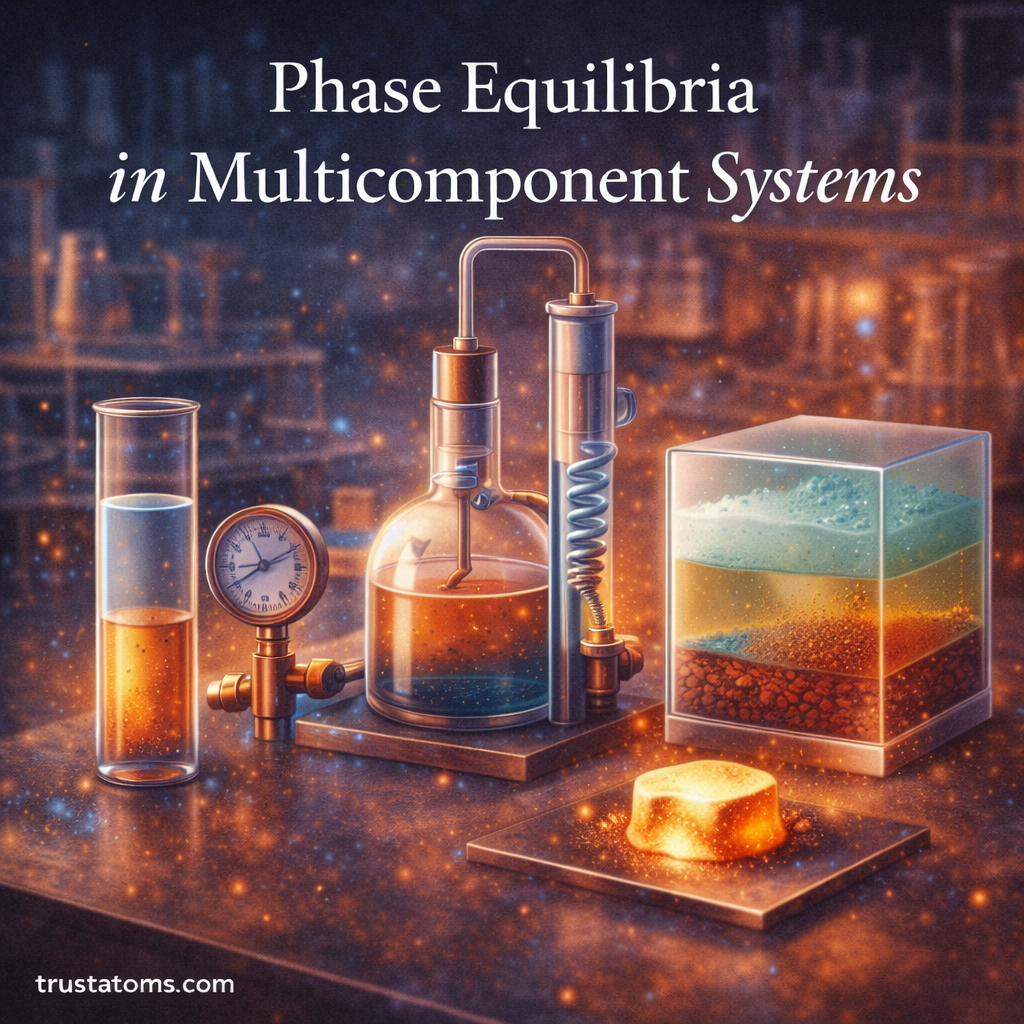
Phase Equilibria in Multicomponent Systems

Illustration showing phase equilibria in multicomponent systems with layered phases, laboratory equipment, and a distillation setup.
Scientific illustration of phase equilibria in multicomponent systems, showing layered phases and laboratory equipment used to study chemical mixtures. trustatoms.com.

Phase equilibria describes the balance between different physical states—such as solid, liquid, and gas—within a chemical system. When multiple substances are present, the behavior of these phases becomes more complex. This situation is known as a multicomponent system.

Understanding phase equilibria in multicomponent systems is essential in chemistry, chemical engineering, materials science, and environmental science. It helps scientists predict how mixtures behave under different temperatures, pressures, and compositions.

These principles are widely used in industries such as petroleum refining, pharmaceuticals, metallurgy, and food processing.

Continue reading “Phase Equilibria in Multicomponent Systems”

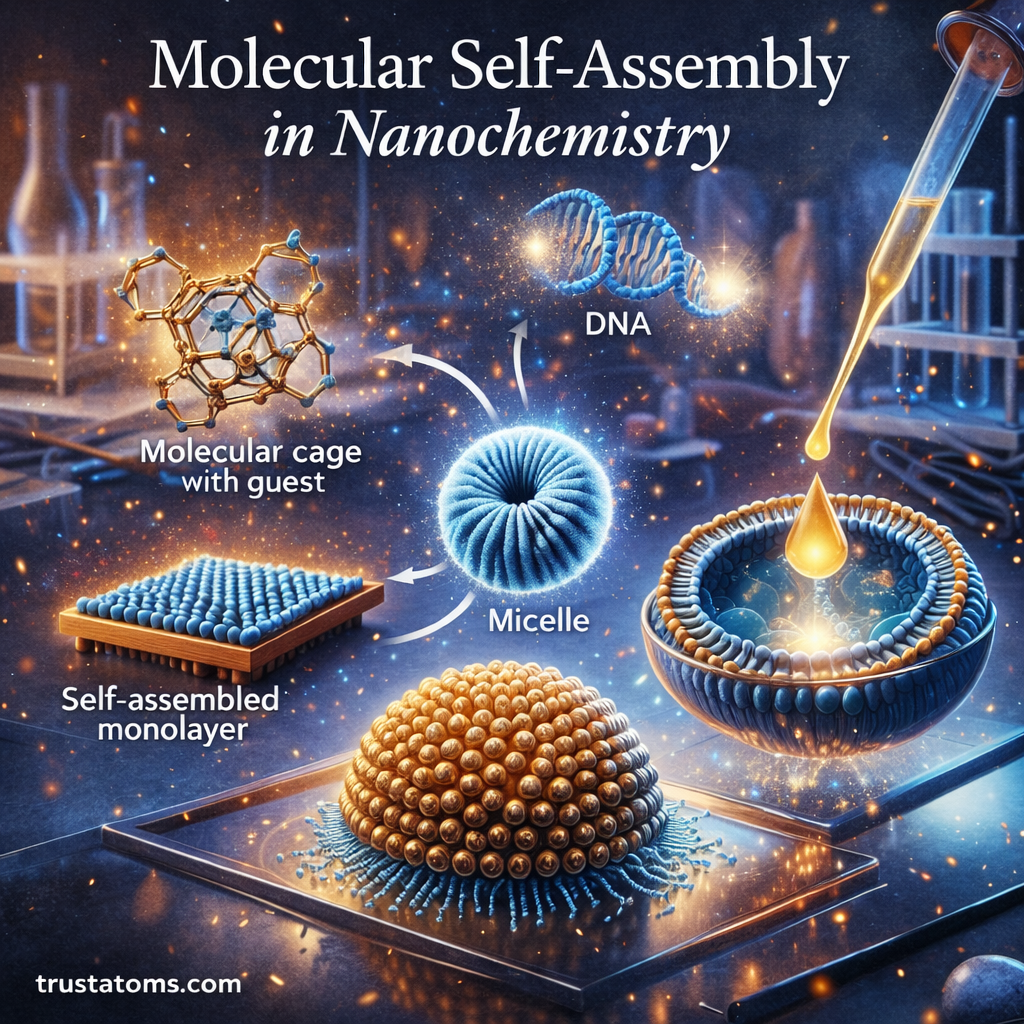
Molecular Self-Assembly in Nanochemistry

Illustration showing molecular self-assembly forming nanostructures such as micelles, molecular cages, and monolayers in nanochemistry.
Scientific illustration of molecular self-assembly processes forming organized nanostructures such as micelles, liposomes, and molecular frameworks. trustatoms.com.

Molecular self-assembly is a fundamental concept in nanochemistry where molecules organize themselves into structured arrangements without external direction. Through natural chemical interactions, individual molecules can spontaneously form ordered patterns, layers, and complex nanostructures.

This phenomenon plays a critical role in the creation of advanced materials, nanotechnology devices, drug delivery systems, and biological structures. By understanding and controlling self-assembly processes, scientists can design materials at the molecular scale with precise functions and properties.

In many ways, molecular self-assembly allows chemistry to mimic nature’s ability to build complex structures efficiently and reliably.

Continue reading “Molecular Self-Assembly in Nanochemistry”

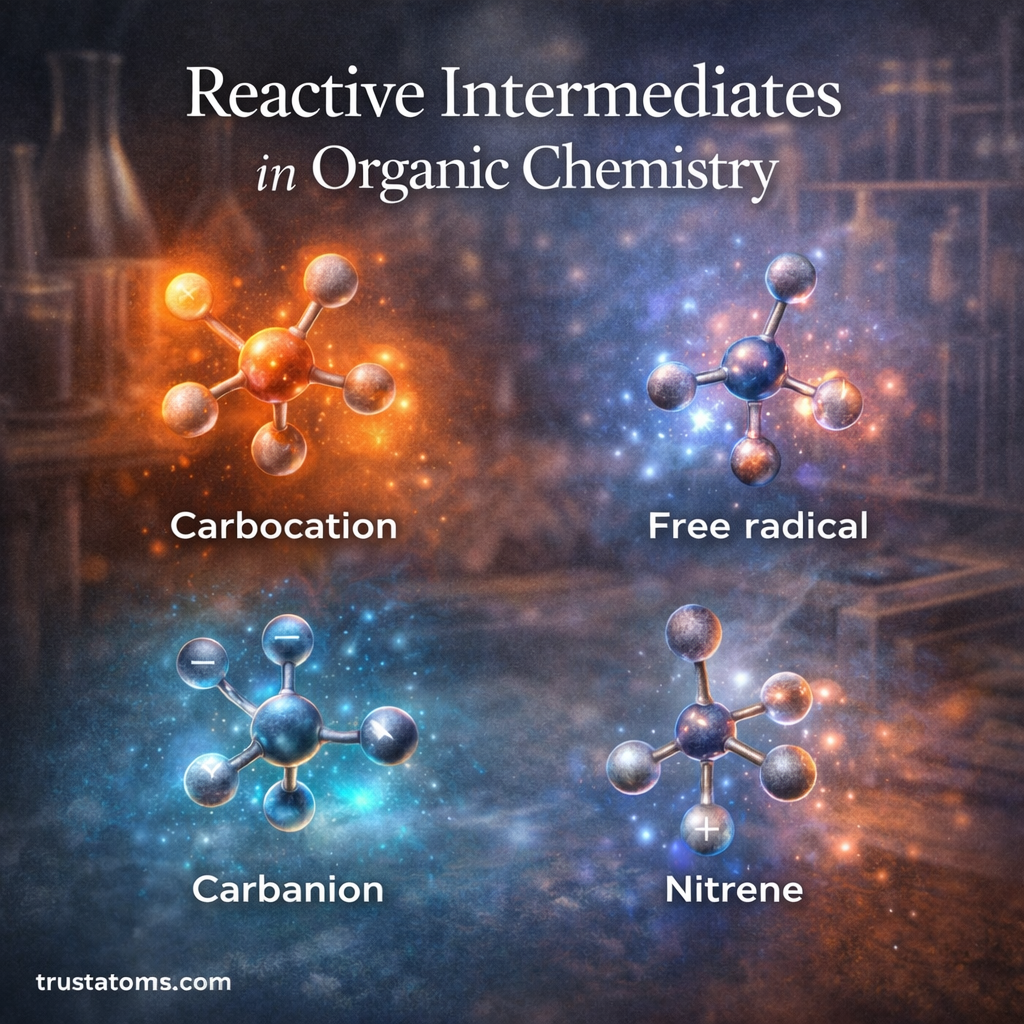
Reactive Intermediates in Organic Chemistry

Illustration showing common reactive intermediates in organic chemistry including carbocation, free radical, carbanion, and nitrene.
Scientific illustration highlighting common reactive intermediates in organic chemistry such as carbocations, radicals, carbanions, and nitrenes. trustatoms.com.

Reactive intermediates are short-lived chemical species that appear during the transformation of molecules in organic reactions. Although they usually exist only for fractions of a second, they play a crucial role in determining how reactions proceed and what products are formed.

Understanding reactive intermediates helps chemists explain reaction mechanisms, design new synthetic pathways, and develop pharmaceuticals, materials, and industrial chemicals. These transient species reveal what happens between the starting materials and the final products during complex chemical transformations.

Because intermediates are often highly unstable and reactive, they are difficult to observe directly. However, modern experimental techniques and computational chemistry have made it possible to study them in increasing detail.

Continue reading “Reactive Intermediates in Organic Chemistry”

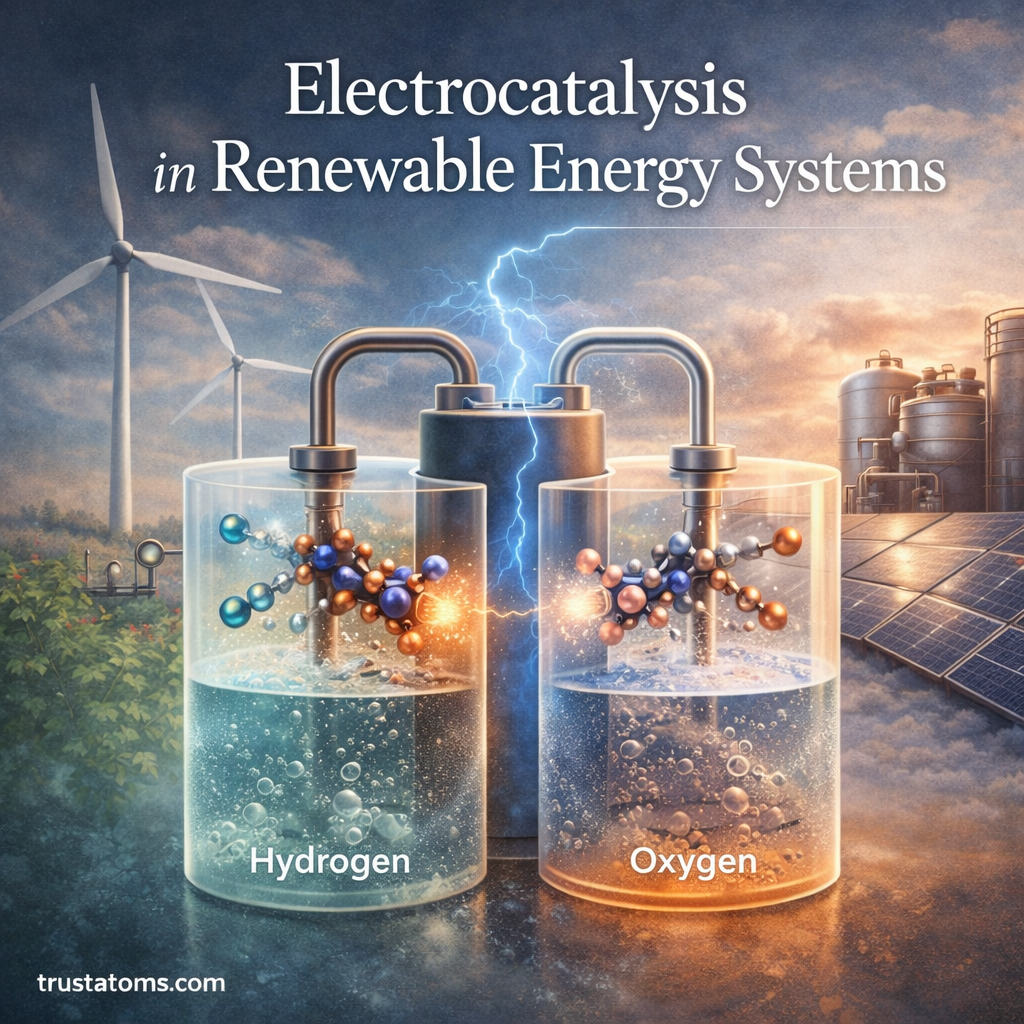
Electrocatalysis in Renewable Energy Systems

Illustration of electrocatalysis in renewable energy showing an electrolysis system splitting water into hydrogen and oxygen with wind turbines and solar panels in the background.
Illustration of electrocatalysis powering water electrolysis to produce hydrogen and oxygen using renewable energy sources. trustatoms.com.

Electrocatalysis plays a critical role in many modern renewable energy technologies. It involves the use of catalysts to accelerate chemical reactions that occur at electrodes during electrochemical processes.

These reactions are fundamental to technologies such as hydrogen fuel production, fuel cells, carbon dioxide conversion, and advanced battery systems. By improving reaction efficiency, electrocatalysts help renewable energy systems operate more effectively, reducing energy losses and enabling cleaner energy solutions.

As the global demand for sustainable energy grows, electrocatalysis has become a key area of research in chemistry, materials science, and energy engineering.

Continue reading “Electrocatalysis in Renewable Energy Systems”

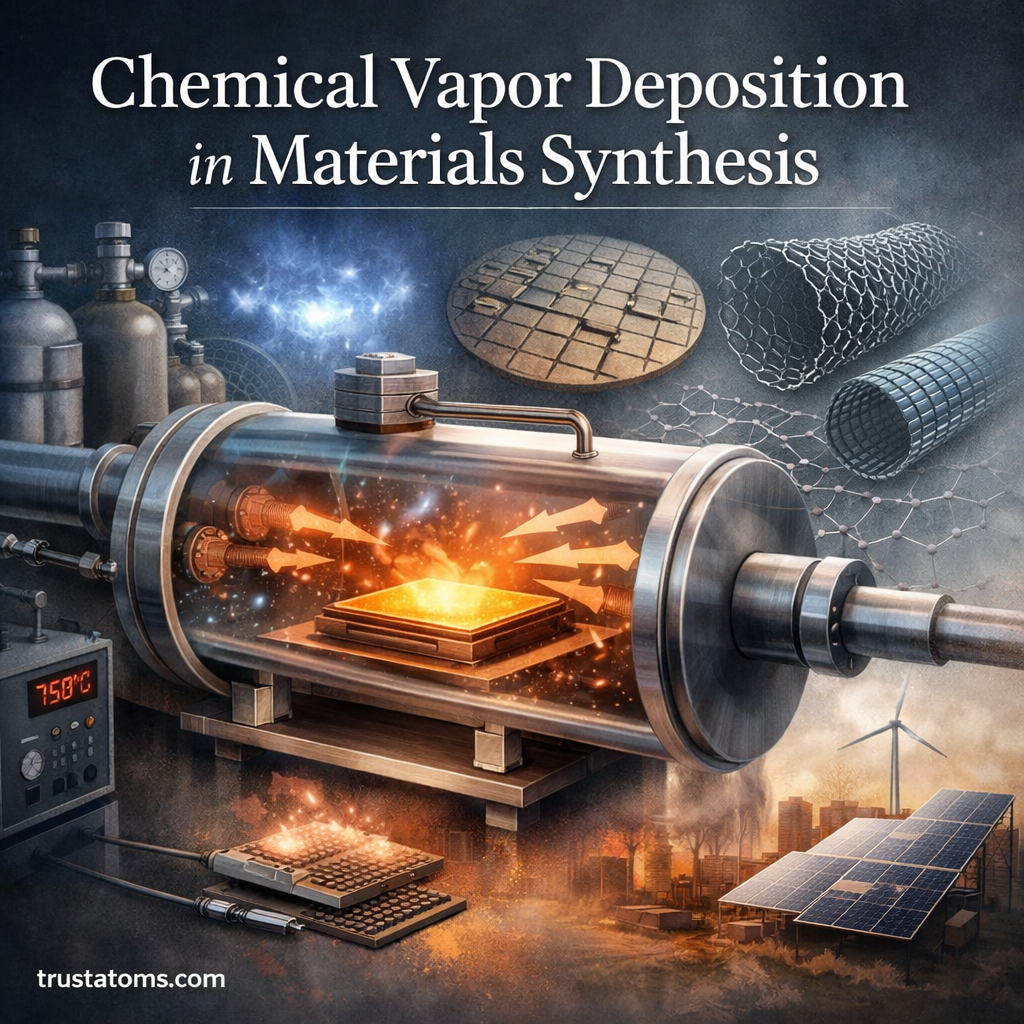
Chemical Vapor Deposition in Materials Synthesis

Illustration of chemical vapor deposition process showing gases depositing a thin film on a heated substrate inside a reaction chamber.
Illustration showing the chemical vapor deposition process used to synthesize thin material layers on a substrate in materials science. trustatoms.com.

Chemical Vapor Deposition (CVD) is one of the most important techniques used in modern materials science. It enables scientists and engineers to create extremely thin, high-quality material layers on a surface by using chemical reactions in the vapor phase.

This process plays a crucial role in industries such as semiconductor manufacturing, nanotechnology, coatings, and advanced materials engineering. From computer chips to protective coatings and graphene production, CVD allows precise control over how materials form at the microscopic level.

Understanding how Chemical Vapor Deposition works helps explain how many of the high-performance materials in electronics, aerospace, and energy technologies are created.

Continue reading “Chemical Vapor Deposition in Materials Synthesis”

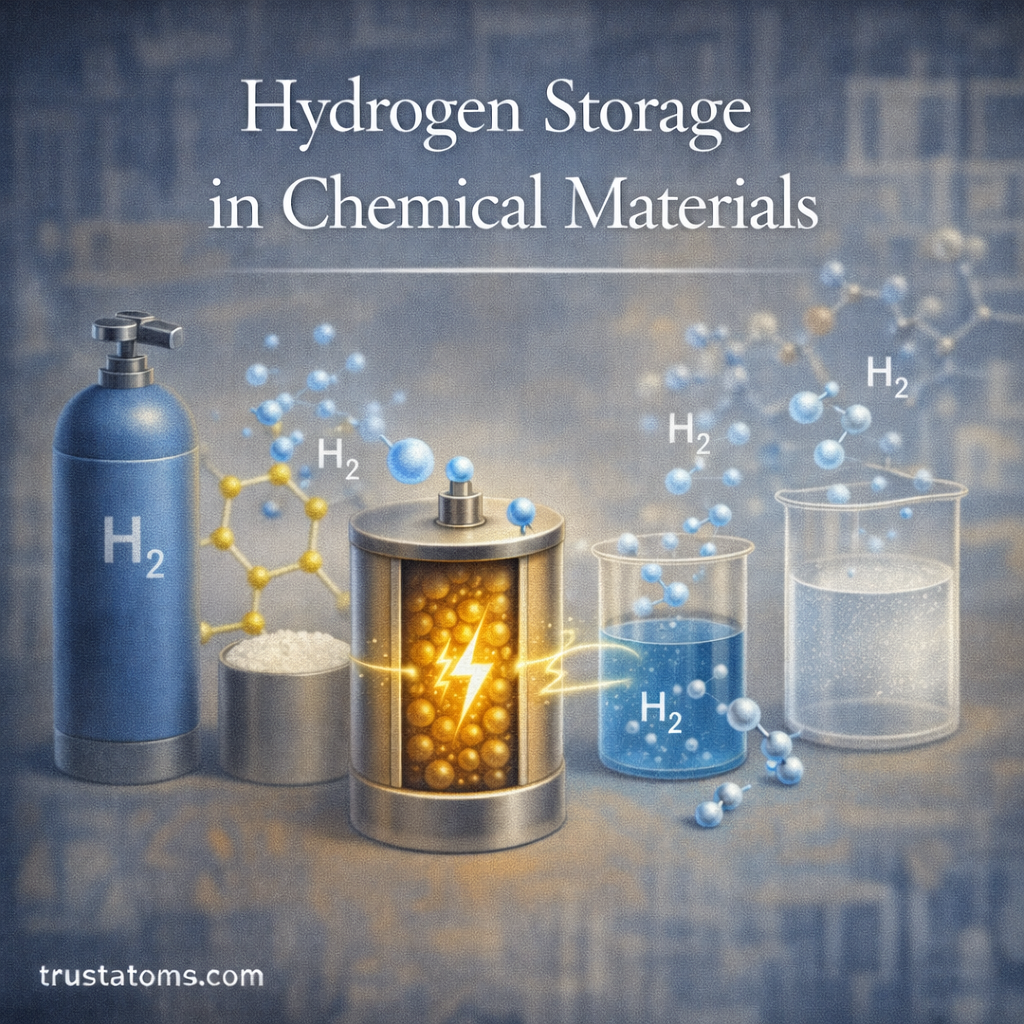
Hydrogen Storage in Chemical Materials

Illustration showing hydrogen molecules being stored in chemical materials and storage systems used for hydrogen energy technologies.
Illustration depicting hydrogen storage using chemical materials and advanced energy storage systems. trustatoms.com.

Hydrogen is widely considered one of the most promising clean energy carriers of the future. It can be used in fuel cells, industrial processes, and transportation systems while producing minimal emissions when used properly. However, storing hydrogen efficiently and safely remains one of the biggest challenges in building a hydrogen-based energy economy.

Hydrogen storage in chemical materials offers an innovative solution. Instead of storing hydrogen as compressed gas or cryogenic liquid, scientists are developing materials that absorb, bind, or chemically store hydrogen atoms within their structure.

This article explores how chemical materials store hydrogen, the technologies involved, and the role these systems may play in future energy systems.

Continue reading “Hydrogen Storage in Chemical Materials”