What Is Electrolysis?

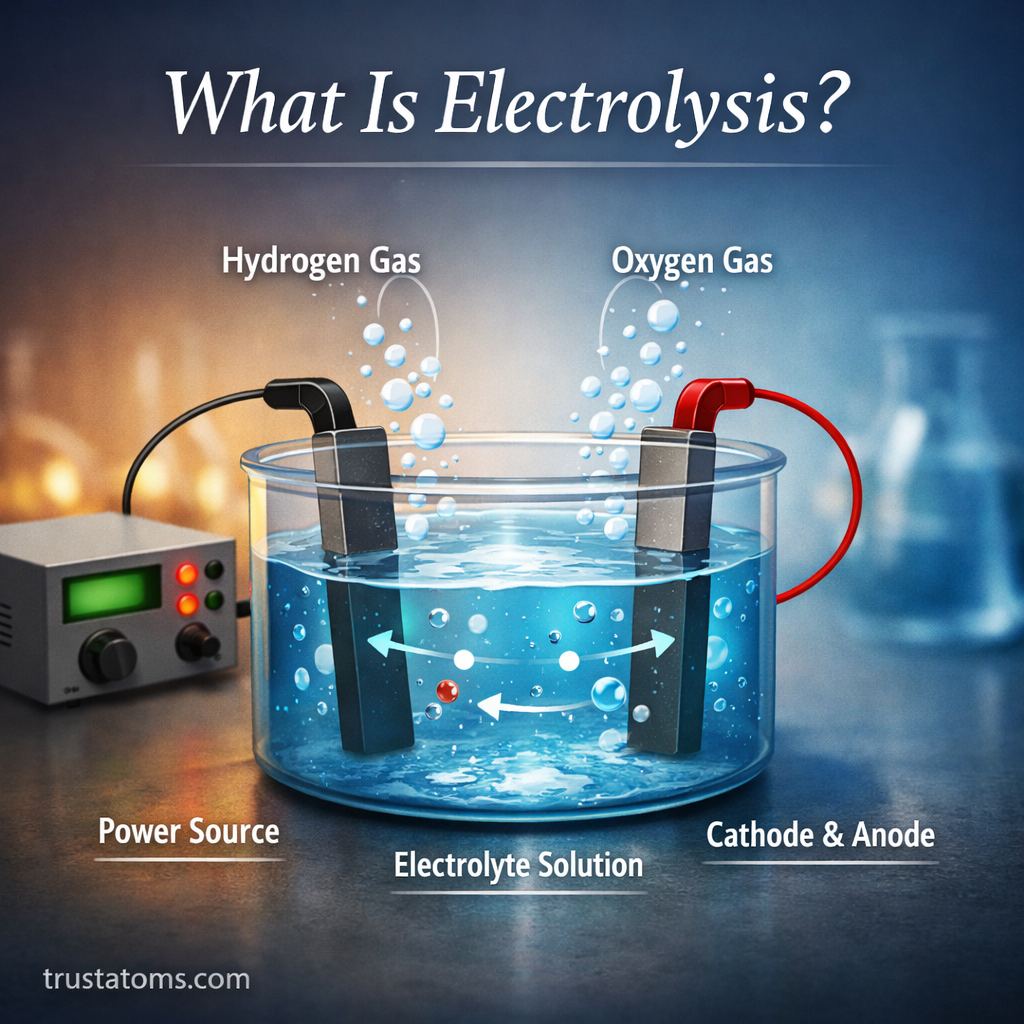
Illustrated electrolysis setup showing two electrodes in an electrolyte solution connected to a power source with hydrogen and oxygen gas bubbles forming.
Simple diagram illustrating electrolysis with electrodes placed in an electrolyte solution connected to a power source, producing gas bubbles at each electrode. trustatoms.com.

Electrolysis is a chemical process that uses electric current to drive a non-spontaneous chemical reaction. In simple terms, electricity is used to force compounds to break apart or to form new substances.

This process is widely used in chemistry, industry, and manufacturing, including producing pure metals, manufacturing chemicals, and electroplating objects with protective metal coatings.

Understanding electrolysis helps explain how electricity and chemistry interact to transform materials at the molecular level.

Continue reading “What Is Electrolysis?”
What Is Water Hardness?

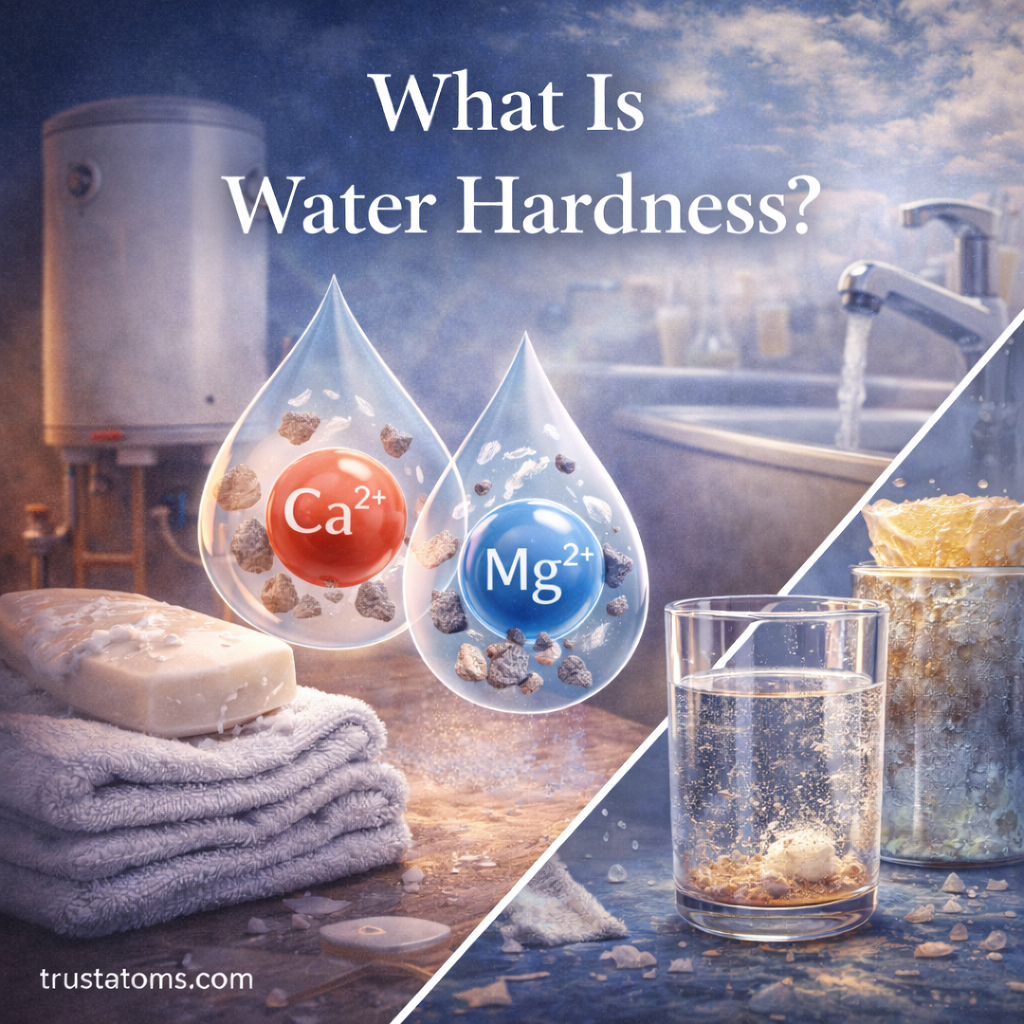
Educational illustration showing calcium and magnesium minerals in water droplets alongside soap, towels, and scale buildup representing the concept of water hardness.
Conceptual illustration showing calcium and magnesium minerals in water and their effects such as soap residue and mineral scale in household water systems. trustatoms.com.

Water hardness refers to the concentration of dissolved minerals in water, mainly calcium and magnesium ions. These minerals enter water naturally as it moves through soil and rock formations, dissolving small amounts of minerals along the way.

Hard water is common in many parts of the world and is not harmful to human health. However, it can affect cleaning efficiency, plumbing systems, appliances, and industrial processes.

Understanding water hardness is important in chemistry, environmental science, and water treatment because it influences how water behaves in both household and industrial settings.

Continue reading “What Is Water Hardness?”

What Is Atmospheric Chemistry?

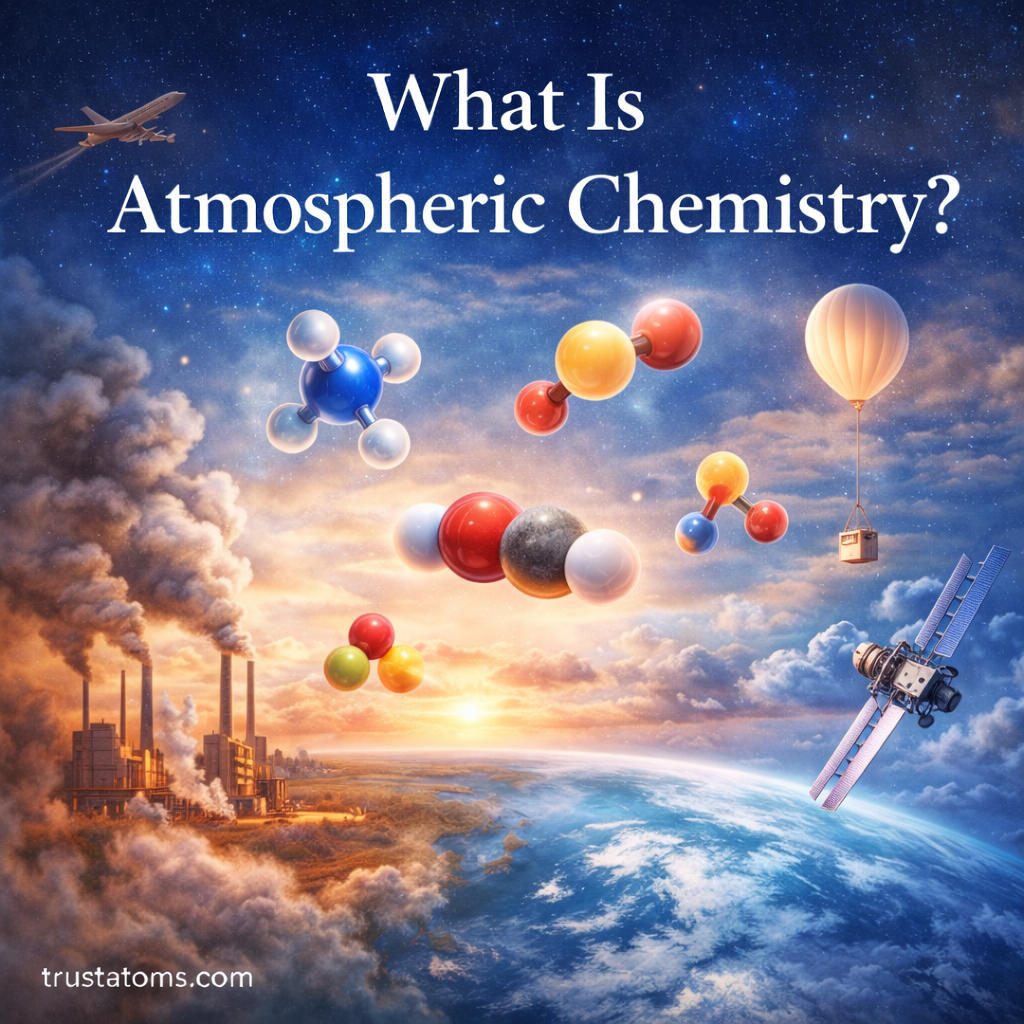
Educational illustration showing Earth’s atmosphere with molecules, industrial emissions, a weather balloon, and satellite representing atmospheric chemistry and air processes.
Conceptual illustration showing atmospheric molecules, industrial emissions, and scientific instruments used to study Earth’s atmosphere and chemical reactions in the air. trustatoms.com.

Atmospheric chemistry is the scientific study of the chemical composition of Earth’s atmosphere and the reactions that occur within it. This field examines how gases, particles, sunlight, and natural processes interact to shape the air surrounding our planet.

The atmosphere is not just a mixture of gases—it is a dynamic chemical system where countless reactions occur every second. These reactions influence weather, air quality, climate change, and the protection of life on Earth.

By studying atmospheric chemistry, scientists can better understand issues such as air pollution, ozone depletion, greenhouse gases, and climate processes.

Continue reading “What Is Atmospheric Chemistry?”

What Is an Aldehyde?

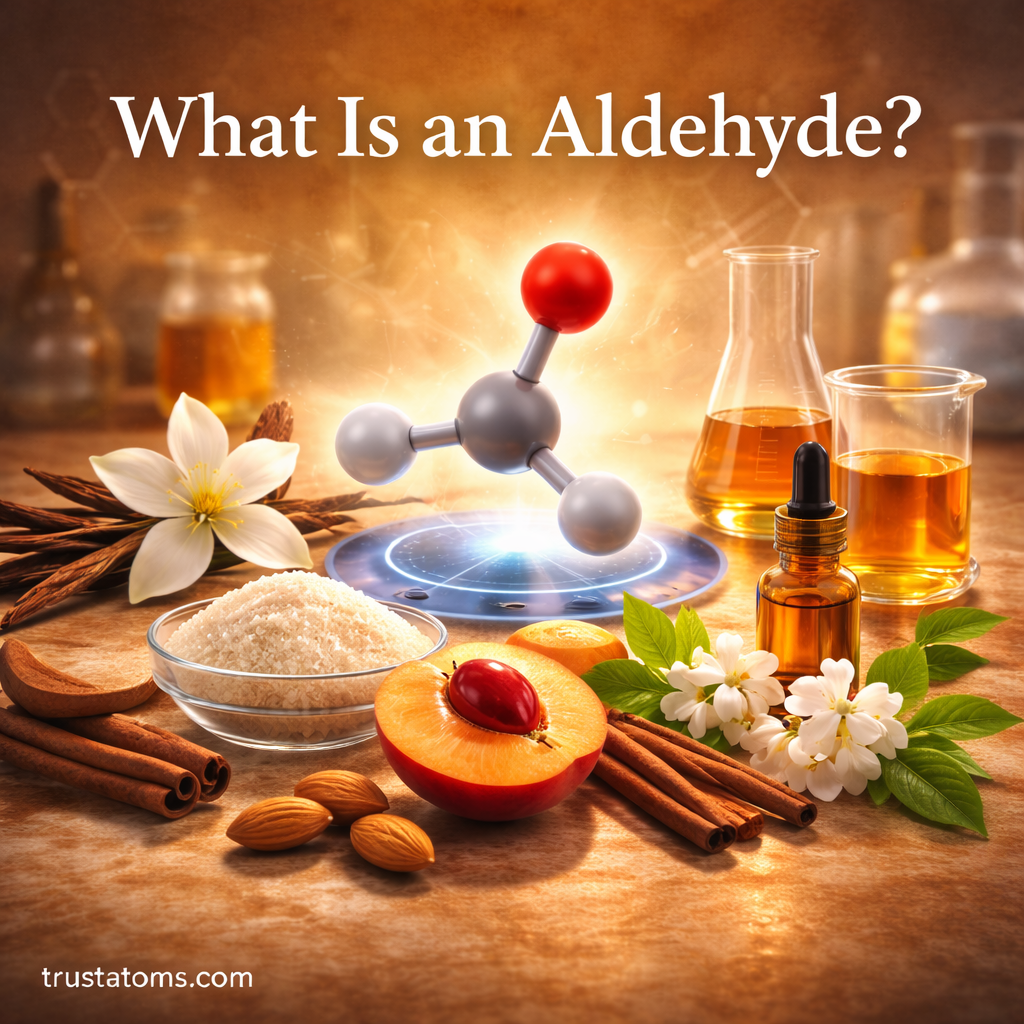
Educational chemistry illustration showing an aldehyde molecular model surrounded by vanilla, almonds, fruit, spices, and laboratory glassware representing natural aromas and chemical uses of aldehydes.
Conceptual illustration showing an aldehyde molecular model with vanilla, almonds, spices, and laboratory glassware representing the role of aldehydes in flavors, fragrances, and chemistry. trustatoms.com.

An aldehyde is a type of organic compound that contains a carbonyl functional group located at the end of a carbon chain. This group consists of a carbon atom double-bonded to an oxygen atom and single-bonded to a hydrogen atom.

Aldehydes are widely found in nature and play important roles in biology, food chemistry, fragrances, and industrial manufacturing. Many natural aromas—such as the smell of almonds, vanilla, and cinnamon—are produced by aldehyde compounds.

Because of their chemical reactivity, aldehydes are also important building blocks in organic chemistry and are frequently used in the production of plastics, pharmaceuticals, and other chemical products.

Continue reading “What Is an Aldehyde?”

What Is an Amine?

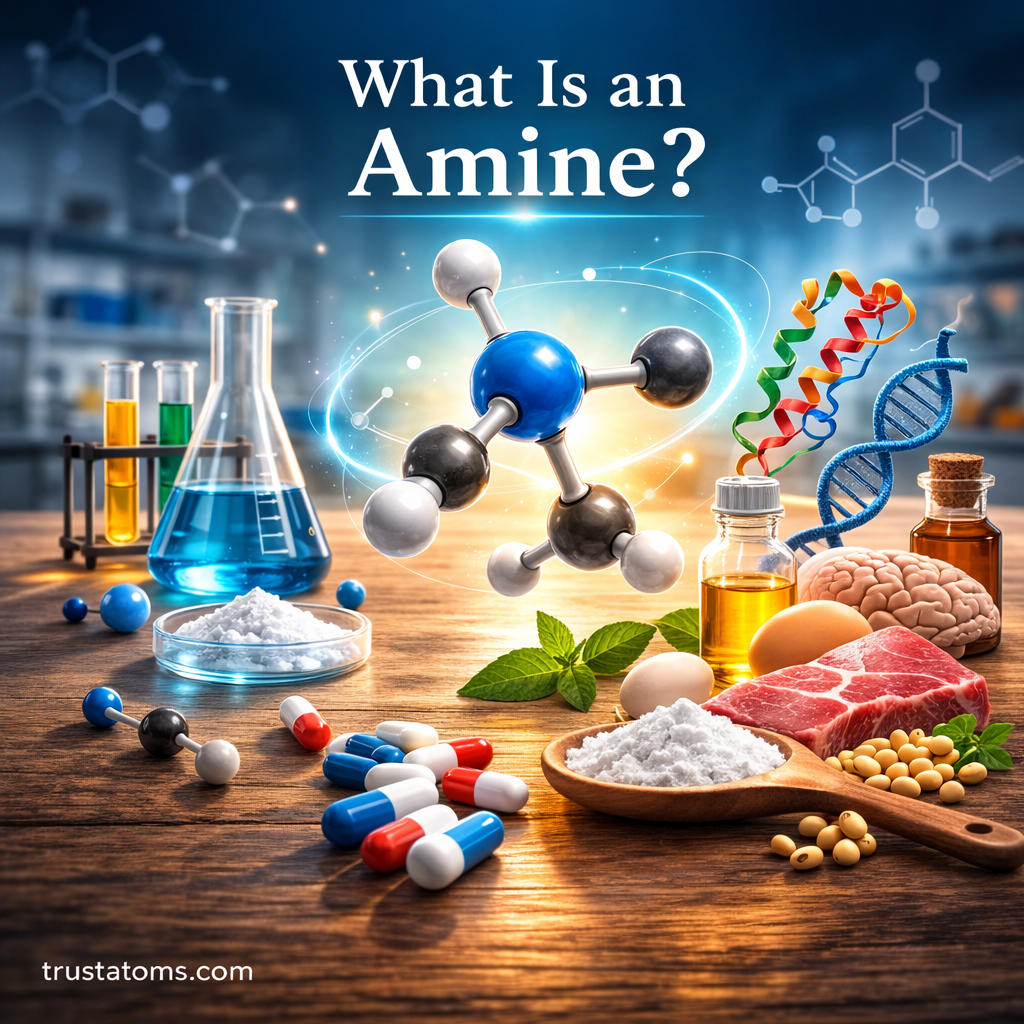
Educational chemistry illustration showing a nitrogen-centered molecular model with laboratory glassware, pills, herbs, and food items representing the biological and industrial roles of amines.
Conceptual illustration showing an amine molecular model surrounded by laboratory equipment, medicines, and natural sources representing the importance of amines in biology and chemistry. trustatoms.com.

Amines are a class of organic compounds derived from ammonia. They are characterized by the presence of a nitrogen atom bonded to carbon-containing groups, which gives them distinctive chemical properties.

These compounds play essential roles in biology, pharmaceuticals, agriculture, and industrial chemistry. Amines are found in many important biological molecules, including amino acids, neurotransmitters, and vitamins. They are also widely used in manufacturing processes and chemical synthesis.

Understanding amines helps explain how nitrogen-containing compounds behave and why they are important in both natural systems and industrial applications.

Continue reading “What Is an Amine?”

What Is a Carboxylic Acid?

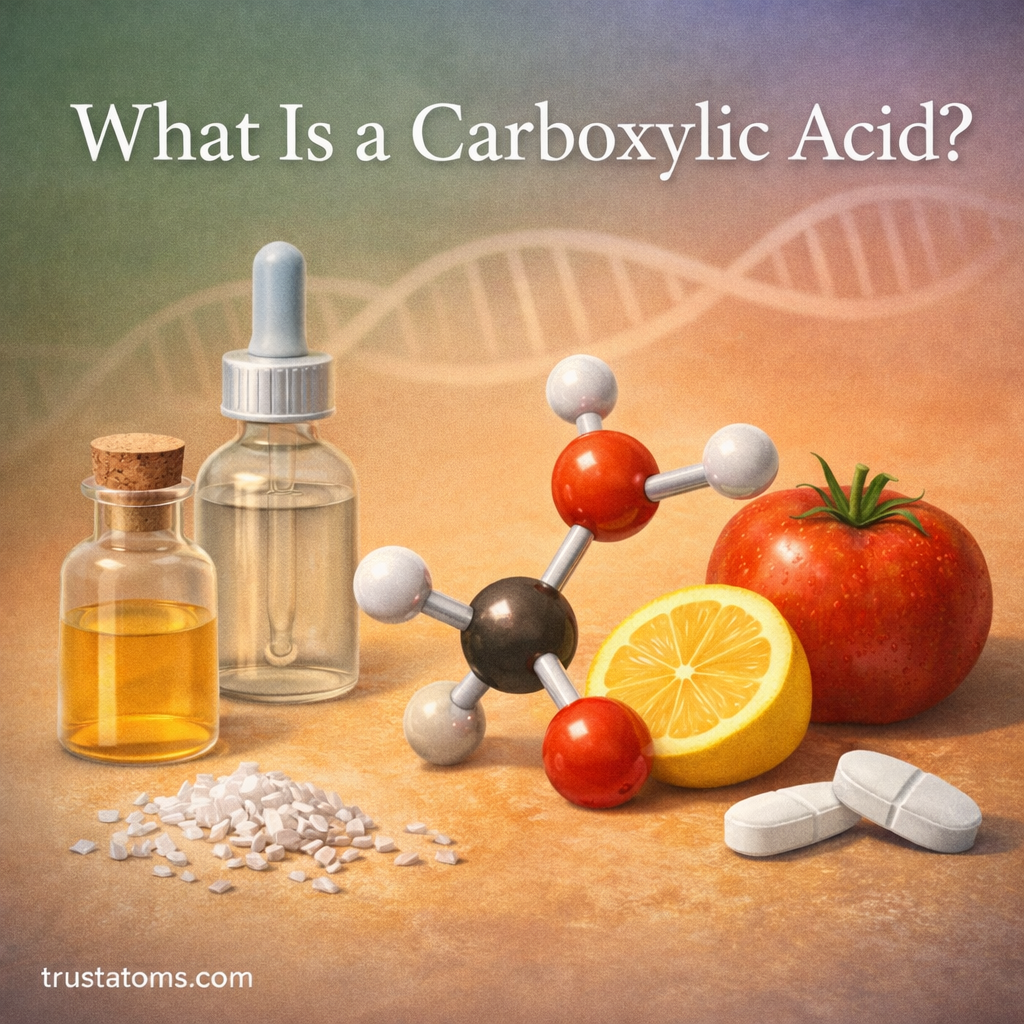
Educational chemistry illustration showing a simple molecular model with lemon, tomato, and laboratory bottles representing natural sources and examples of carboxylic acids.
Conceptual illustration showing a molecular model with citrus, tomato, and laboratory materials representing common examples of carboxylic acids in food, chemistry, and industry. trustatoms.com.

Carboxylic acids are an important class of organic compounds widely found in nature, food, biology, and industrial chemistry. These molecules are defined by the presence of a carboxyl group, a functional group consisting of a carbon atom double-bonded to oxygen and single-bonded to a hydroxyl group.

Carboxylic acids play key roles in many biological and chemical processes. They appear in substances such as vinegar, fatty acids in food, metabolic molecules inside cells, and numerous industrial products.

Understanding carboxylic acids helps explain how acids behave in organic chemistry and why these compounds are so important in both natural systems and chemical manufacturing.

Continue reading “What Is a Carboxylic Acid?”

What Is an Ester?

Educational illustration showing an ester molecular model surrounded by fruit, perfume, and laboratory glassware representing ester compounds and their role in flavors and fragrances.
Conceptual illustration showing an ester molecule with fruit, perfume, and lab equipment representing how esters contribute to scents, flavors, and chemistry applications. trustatoms.com.

Esters are a class of organic compounds widely found in nature and commonly used in everyday products such as perfumes, flavorings, and solvents. Chemically, an ester forms when an alcohol reacts with a carboxylic acid in a process known as esterification.

These compounds are known for their pleasant, often fruity aromas, which is why they are frequently used in artificial flavorings and fragrances. Beyond their smells, esters also play important roles in biology, chemistry, and industrial manufacturing.

Understanding esters helps explain how many natural scents and flavors are produced, as well as how certain plastics, solvents, and biological molecules function.

Continue reading “What Is an Ester?”

What Is a Hydrocarbon?

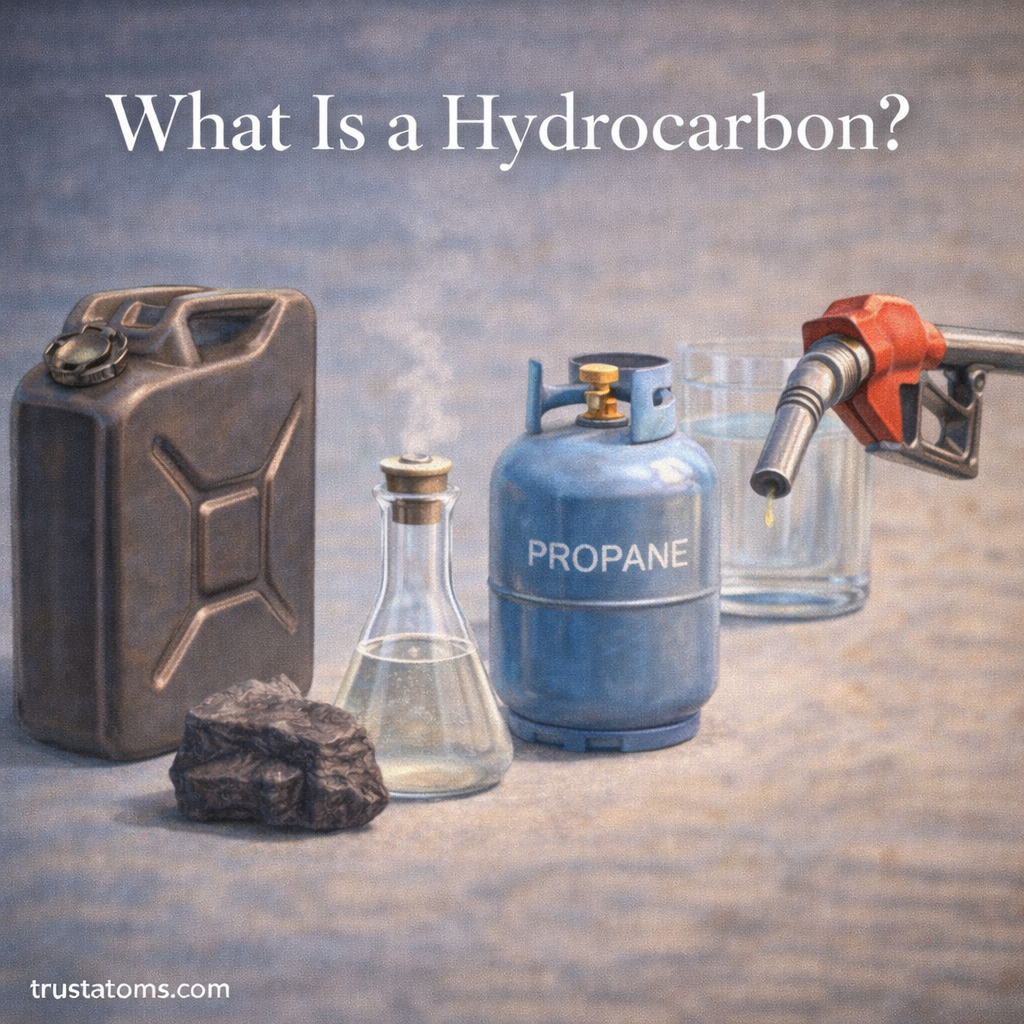
Educational illustration showing hydrocarbon-related materials including coal, gasoline container, propane tank, and fuel pump nozzle.
Illustration showing common hydrocarbon sources such as coal, gasoline, and propane used as fuels and energy resources. trustatoms.com.

Hydrocarbons are some of the most important compounds in chemistry and modern industry. They form the foundation of many fuels, plastics, and organic chemicals used in everyday life.

At their core, hydrocarbons are simple molecules made entirely of hydrogen and carbon atoms. Despite this simplicity, hydrocarbons can form a wide variety of structures and play a central role in energy production and organic chemistry.

This guide explains what hydrocarbons are, how they are classified, and why they are important in science and industry.

Continue reading “What Is a Hydrocarbon?”

What Is a Solute?

Educational illustration showing examples of solutes such as sugar dissolving in tea, minerals dissolving in water, and carbon dioxide bubbles in soda.
Illustration showing examples of solutes dissolving in liquids, including sugar in tea, minerals in water, and carbon dioxide in soda. trustatoms.com.

In chemistry, many substances dissolve into others to form solutions. When this happens, one substance spreads throughout another at the molecular level. The substance that gets dissolved is called the solute.

Solutes play a fundamental role in chemistry, biology, and everyday life. From sugar dissolving in coffee to oxygen dissolving in water for aquatic life, solutes help explain how substances mix and interact.

This guide explains what a solute is, how it works in solutions, common examples, and how solutes differ from solvents.

Continue reading “What Is a Solute?”

What Is a Solvent?

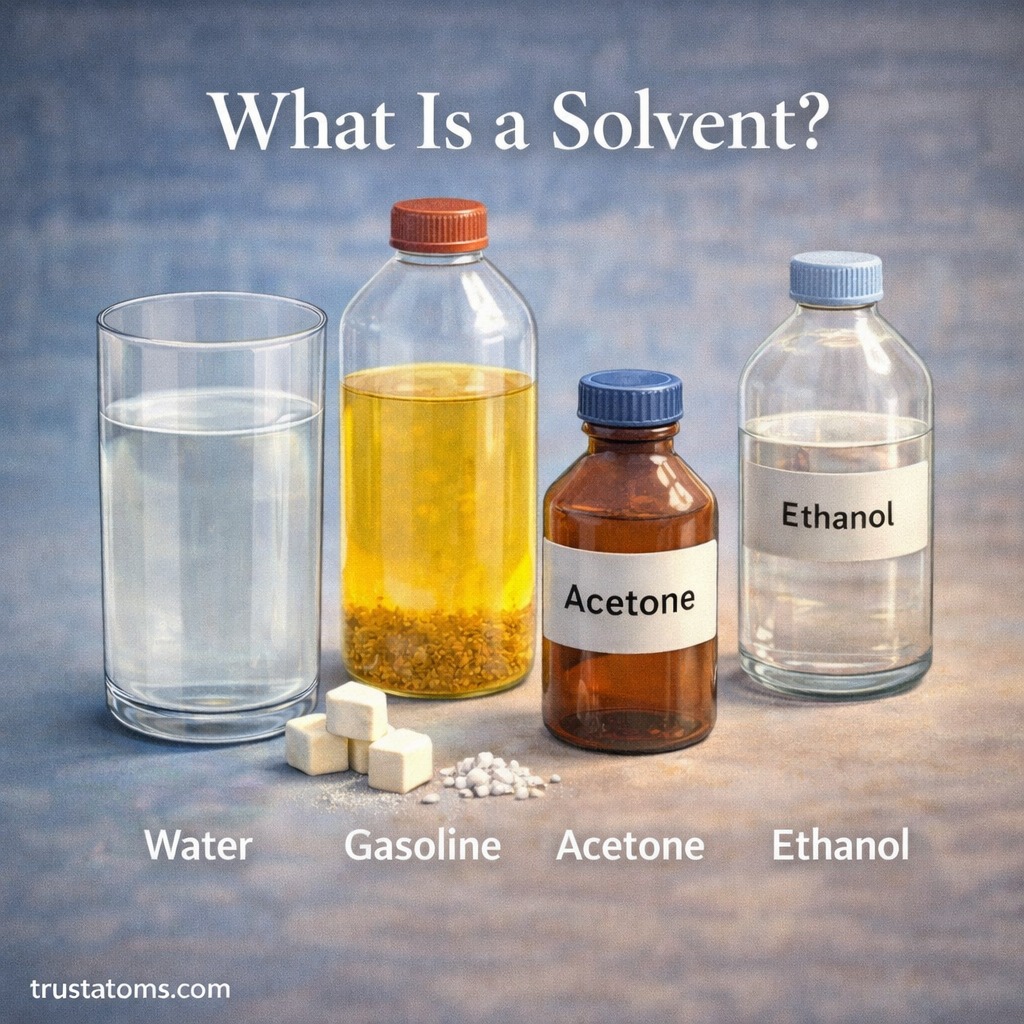
Educational illustration showing examples of solvents including water, gasoline, acetone, and ethanol used to dissolve substances.
Illustration showing common chemical solvents such as water, gasoline, acetone, and ethanol that dissolve other substances to form solutions. trustatoms.com.

In chemistry, many substances mix together to form solutions. In every solution, one substance dissolves another. The substance that performs the dissolving is called the solvent.

Solvents play a major role in chemistry, biology, medicine, and industry. From salt dissolving in water to chemicals used in manufacturing, solvents help substances mix, react, and move through systems.

This guide explains what a solvent is, how it works, common examples, and why solvents are important in chemistry.

Continue reading “What Is a Solvent?”