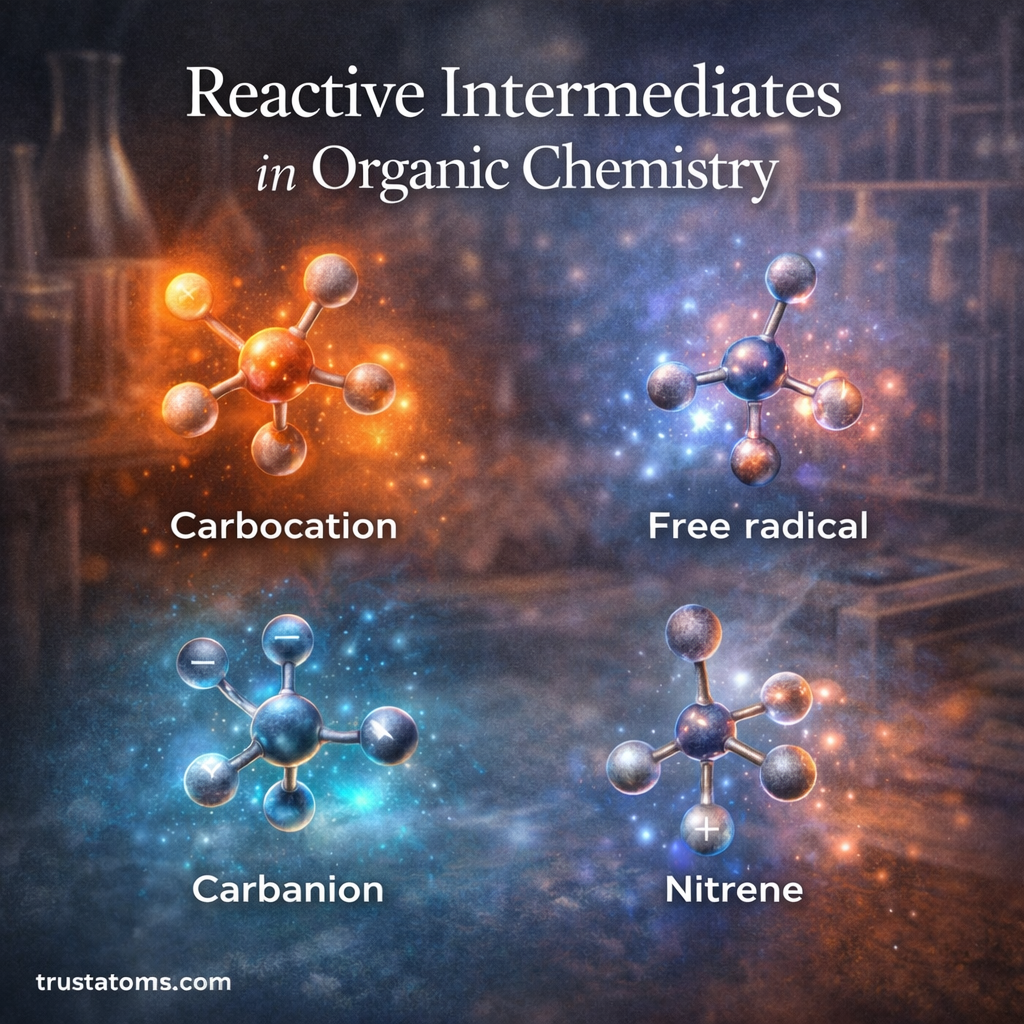
Reactive intermediates are short-lived chemical species that appear during the transformation of molecules in organic reactions. Although they usually exist only for fractions of a second, they play a crucial role in determining how reactions proceed and what products are formed.
Understanding reactive intermediates helps chemists explain reaction mechanisms, design new synthetic pathways, and develop pharmaceuticals, materials, and industrial chemicals. These transient species reveal what happens between the starting materials and the final products during complex chemical transformations.
Because intermediates are often highly unstable and reactive, they are difficult to observe directly. However, modern experimental techniques and computational chemistry have made it possible to study them in increasing detail.
Continue reading “Reactive Intermediates in Organic Chemistry”