Inductive Reactance in AC Circuits

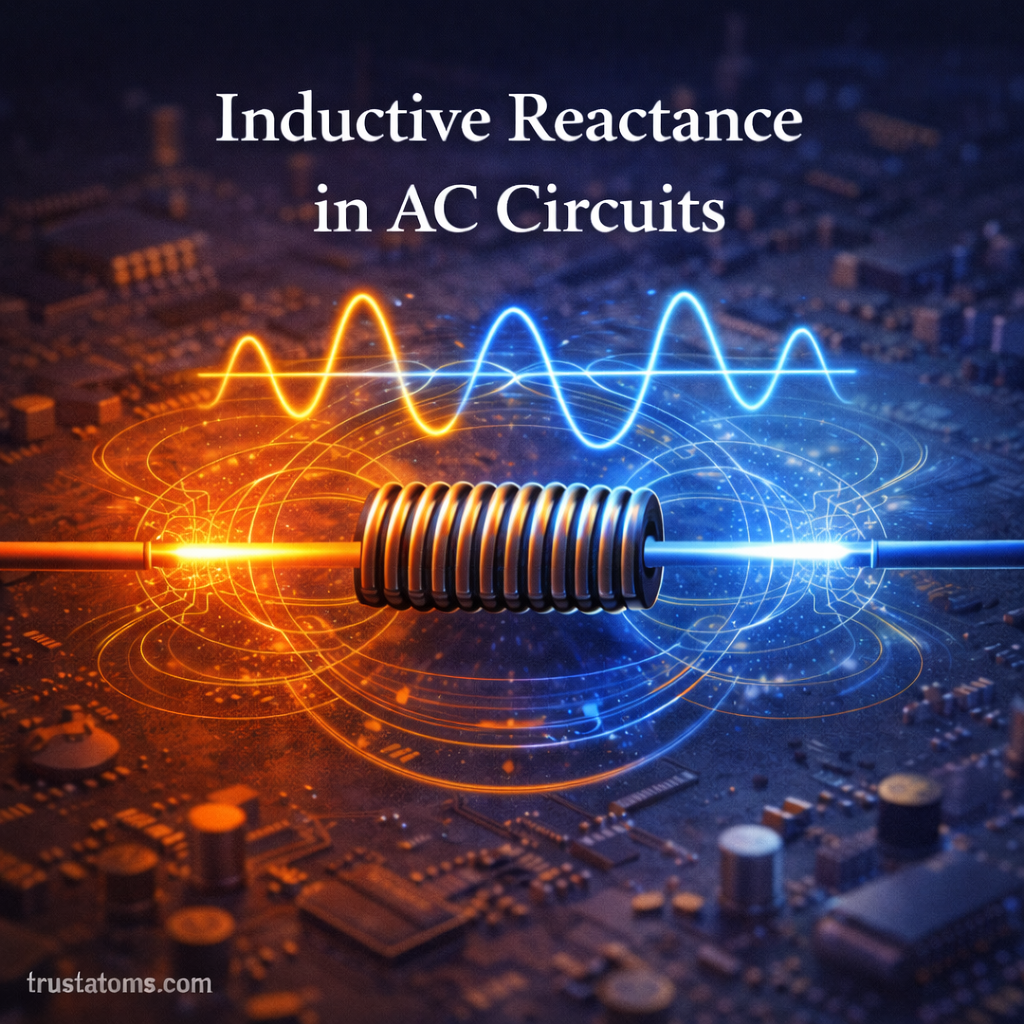
Inductive reactance in AC circuits illustration showing a coil inductor with alternating current waveform and surrounding magnetic field.
Illustration of an inductor opposing alternating current through magnetic field interaction. trustatoms.com

When alternating current (AC) flows through a circuit, components behave differently than they do with direct current (DC). One of the most important AC concepts in physics and electrical engineering is inductive reactance.

Inductive reactance explains how inductors resist changes in current — not through resistance, but through electromagnetic effects. In this guide, we’ll break down what inductive reactance is, why it happens, how it depends on frequency, and why it matters in real-world AC circuits.

Continue reading “Inductive Reactance in AC Circuits”
Energy Storage in Capacitive Systems

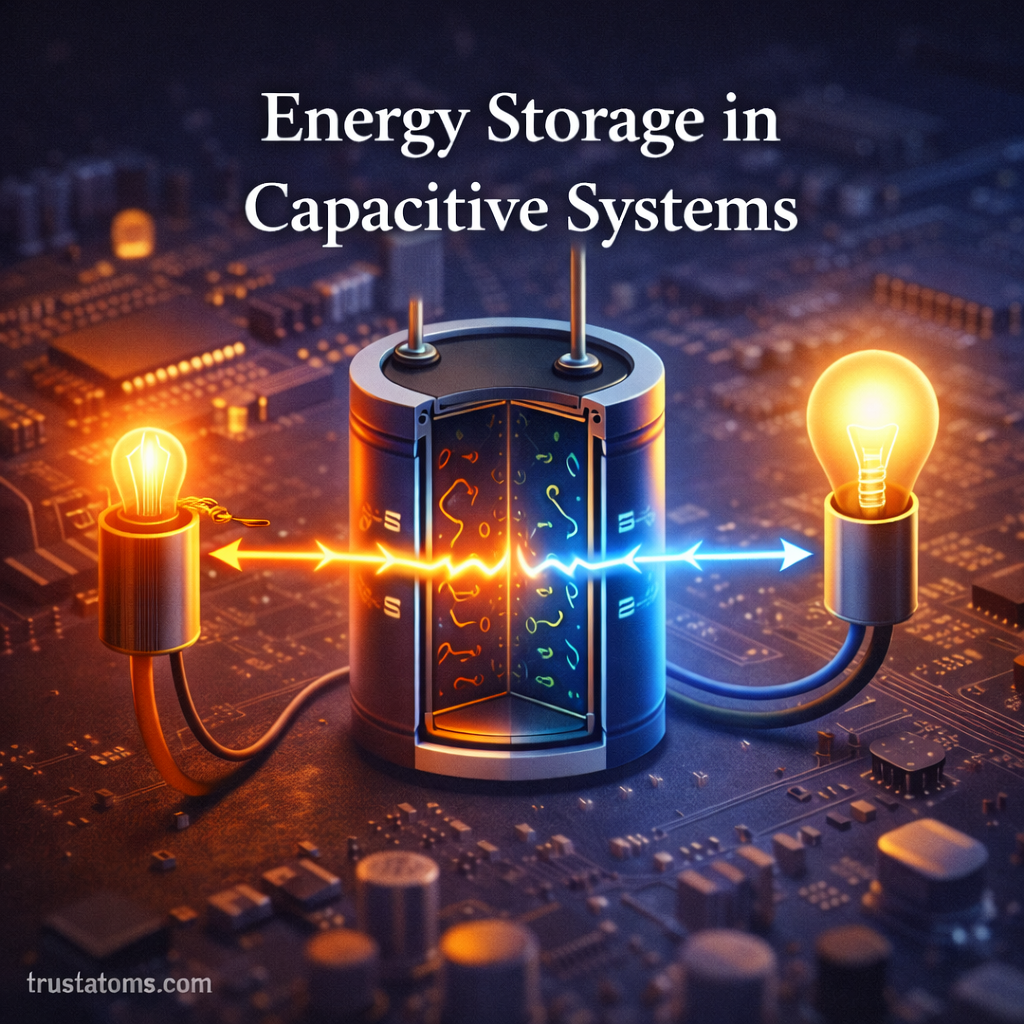
Energy storage in capacitive systems illustration showing a capacitor storing and releasing electrical energy within an electronic circuit.
Illustration of a capacitor storing and releasing electrical energy in a simple circuit environment. trustatoms.com

Capacitors are one of the most important components in electrical and electronic systems. From smartphones and power supplies to electric vehicles and industrial circuits, capacitive systems play a crucial role in storing and delivering energy quickly.

In this guide, we’ll explore how energy storage in capacitive systems works, the physics behind capacitance, and how capacitors are used in real-world applications.

Continue reading “Energy Storage in Capacitive Systems”

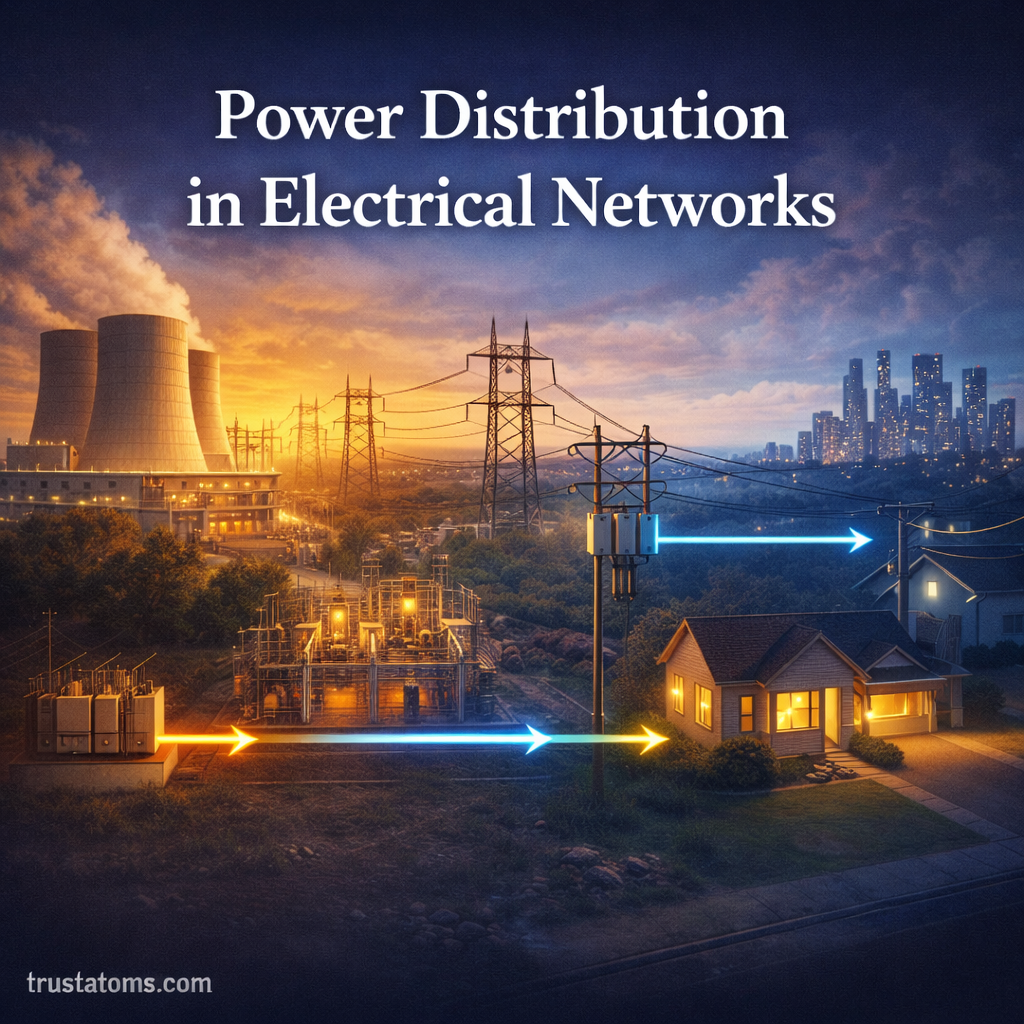
Power Distribution in Electrical Networks

Power distribution in electrical networks illustration showing power plant, substation, transmission lines, and residential electricity delivery.
Illustration showing how electricity moves from power plants through substations and distribution lines into homes and cities. trustatoms.com

Electricity doesn’t just appear when you flip a switch. It travels through a carefully designed system called an electrical network. One of the most important parts of that system is power distribution.

Power distribution ensures that electricity generated at power plants is safely delivered to homes, businesses, schools, and industries at usable voltage levels. In this guide, we’ll explore how electrical networks distribute power, the physics principles involved, and why this system is essential for modern life.

Continue reading “Power Distribution in Electrical Networks”

Alternating Current in Electrical Systems

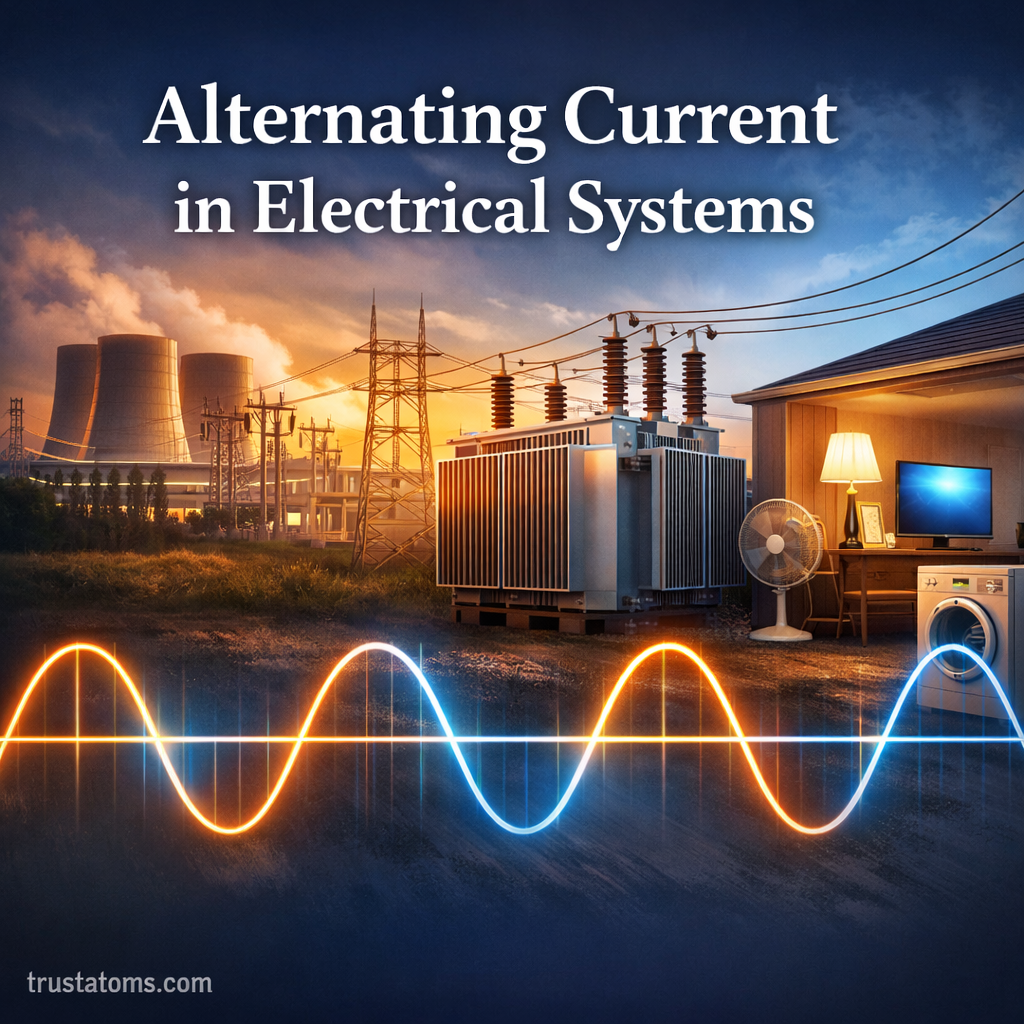
Alternating Current in Electrical Systems illustration showing power plant, transmission lines, transformer, home appliances, and sine wave representation.
Illustration showing how alternating current flows from power plants through transformers and transmission lines into homes and appliances. trustatoms.com

Electricity is the backbone of modern civilization. From lighting homes to running factories and powering digital devices, electrical systems keep society functioning. One of the most important concepts behind this infrastructure is alternating current (AC).

In this guide, we’ll break down what alternating current is, how it works, why it’s used in power grids, and how it compares to direct current (DC). Whether you’re a student, an electronics enthusiast, or simply curious, this physics-based explanation will make AC easy to understand.

Continue reading “Alternating Current in Electrical Systems”

Maxwell’s Equations in Electromagnetic Theory

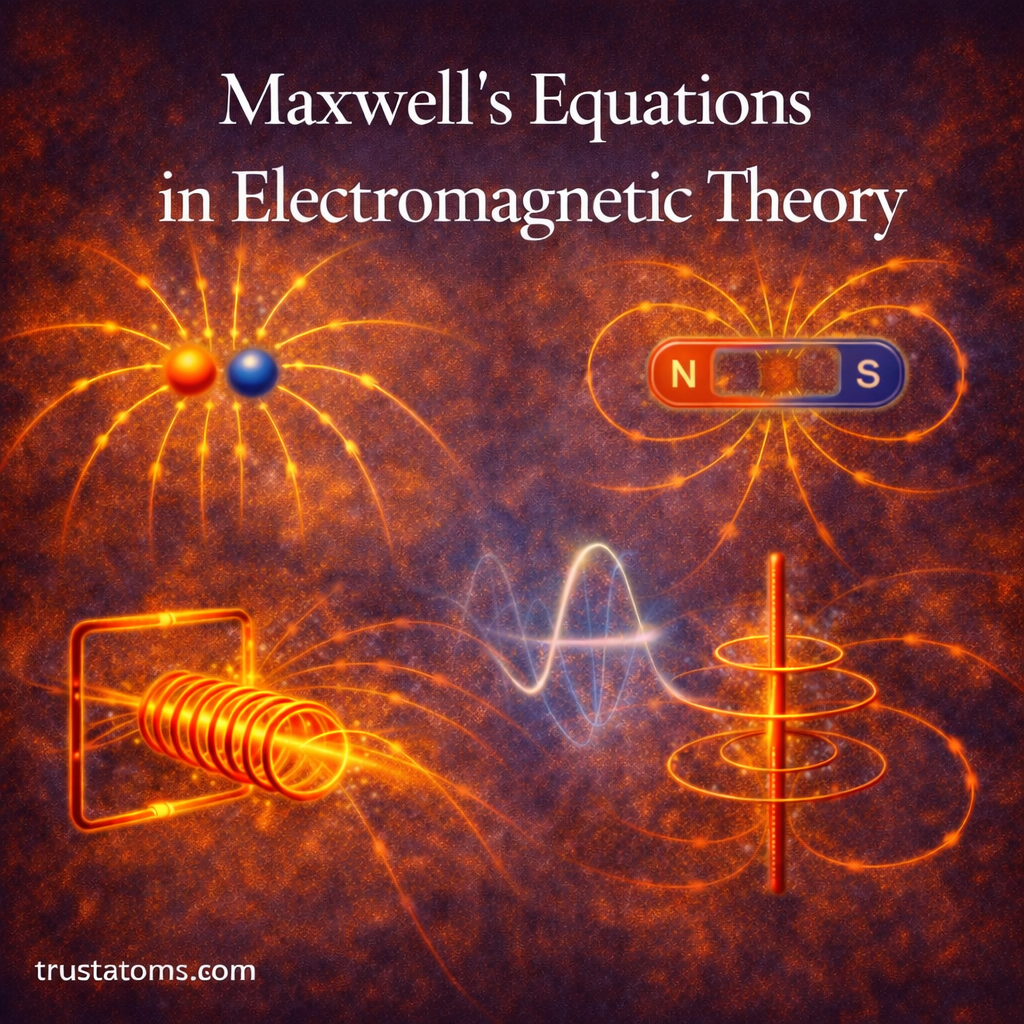
Diagonal split illustration showing electric field lines between positive and negative charges and a horseshoe magnet with a single N and S pole inducing a current in a coil, trustatoms.com.
Conceptual illustration of electric and magnetic fields unified in Maxwell’s electromagnetic theory. trustatoms.com

Maxwell’s Equations are the foundation of classical electromagnetism. They unify electricity, magnetism, and light into one coherent mathematical framework.

Before James Clerk Maxwell, electricity and magnetism were studied as separate phenomena. Maxwell’s work revealed that they are deeply connected — and that light itself is an electromagnetic wave.

In this guide, we’ll explore Maxwell’s Equations conceptually, understand what each equation describes, and see why they are among the most important discoveries in physics.

Continue reading “Maxwell’s Equations in Electromagnetic Theory”

Magnetic Flux and Faraday’s Law

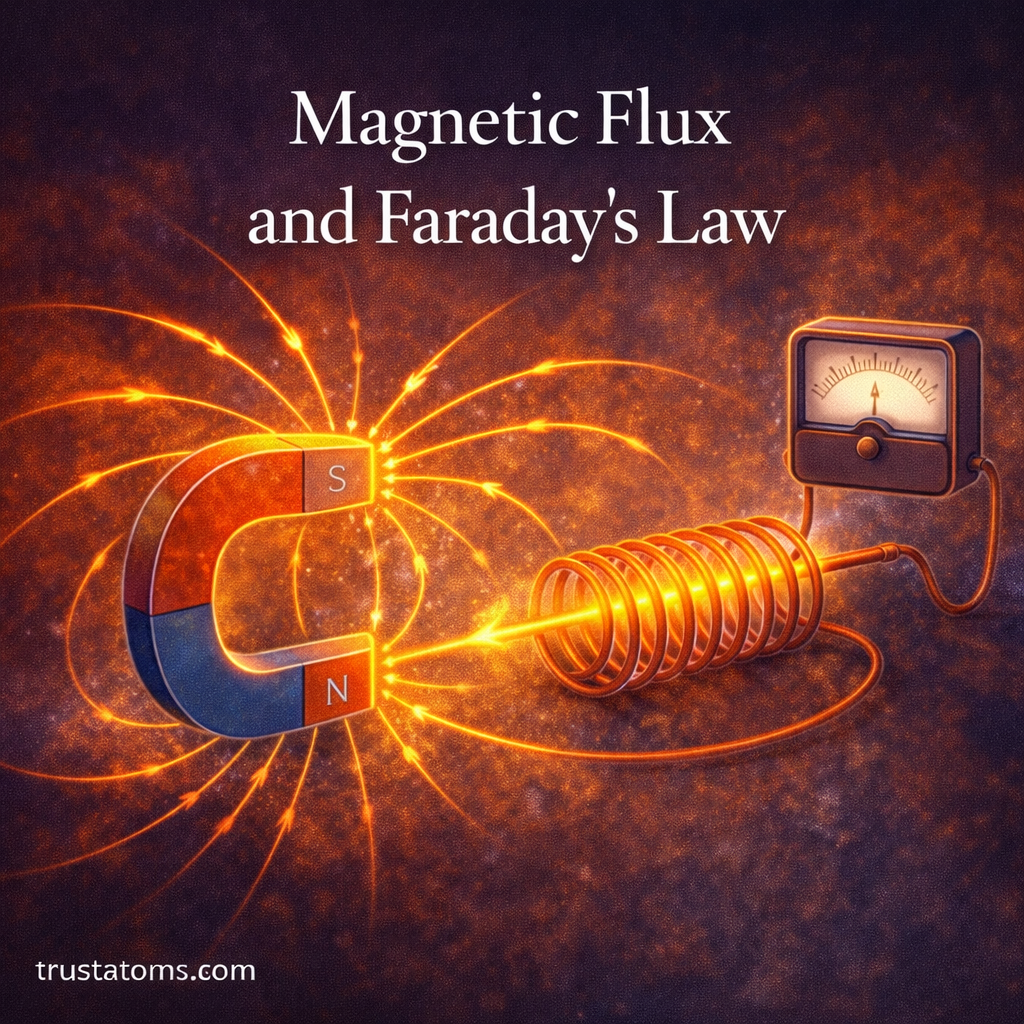
Illustration showing a horseshoe magnet, magnetic field lines, and a copper coil connected to a meter to represent magnetic flux and Faraday’s Law, trustatoms.com.
Conceptual diagram illustrating electromagnetic induction with a magnet and coil. trustatoms.com

Magnetic flux and Faraday’s Law explain one of the most important discoveries in physics: changing magnetic fields can produce electric currents.

This principle is the foundation of electric generators, transformers, induction cooktops, wireless charging, and modern power grids.

In this guide, we’ll explore what magnetic flux is, how Faraday’s Law works, and why electromagnetic induction changed the world.

Continue reading “Magnetic Flux and Faraday’s Law”

Electric Flux and Gauss’s Law

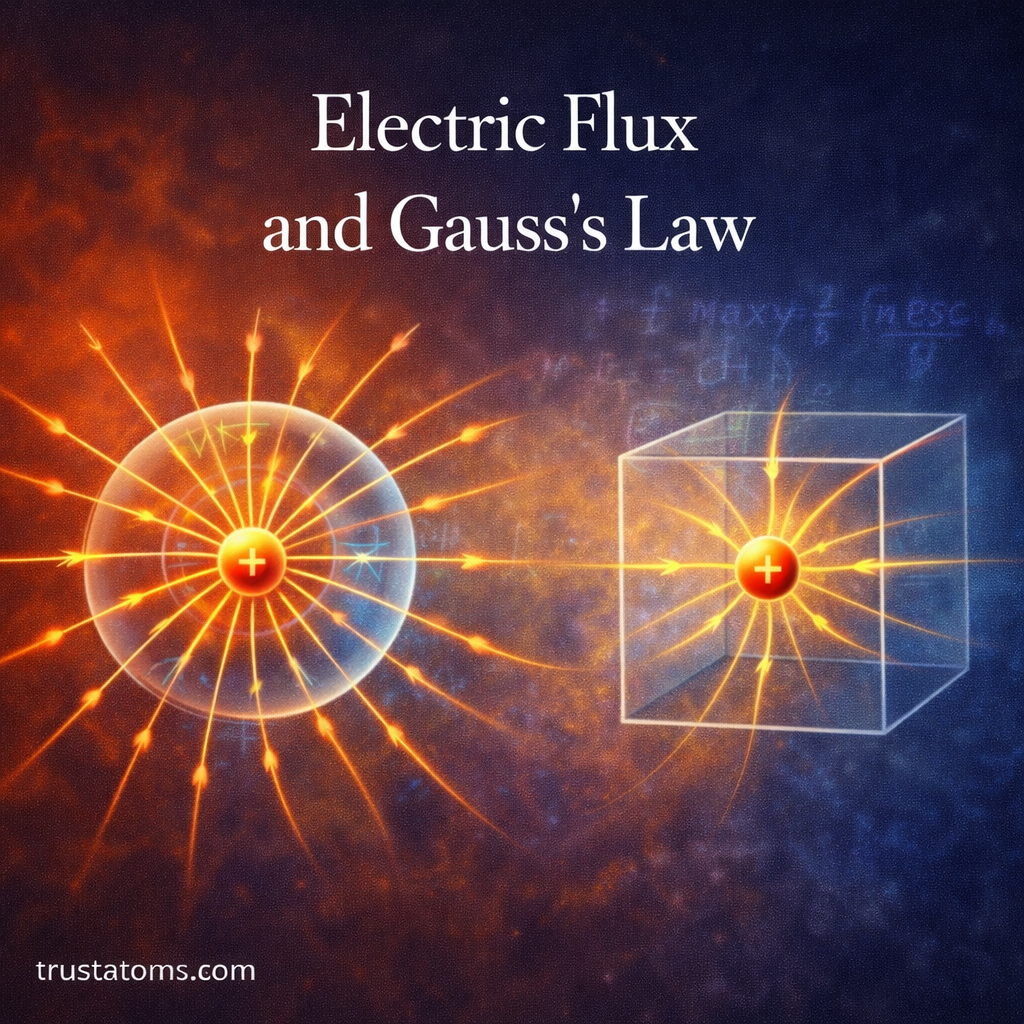
Illustration showing electric field lines radiating from a positive charge inside spherical and cubic Gaussian surfaces to represent electric flux and Gauss’s Law, trustatoms.com.
Conceptual diagram illustrating electric flux through spherical and cubic Gaussian surfaces. trustatoms.com

Electric flux and Gauss’s Law are foundational concepts in electromagnetism. They help us understand how electric fields behave around charges and how symmetry simplifies complex problems.

Instead of calculating electric fields point by point, Gauss’s Law allows us to analyze entire charge distributions using geometry and symmetry. It’s one of the most powerful tools in classical physics.

In this guide, we’ll break down electric flux, explain Gauss’s Law, and show how it applies to real physical systems.

Continue reading “Electric Flux and Gauss’s Law”

Phase Transitions in Molecular Systems

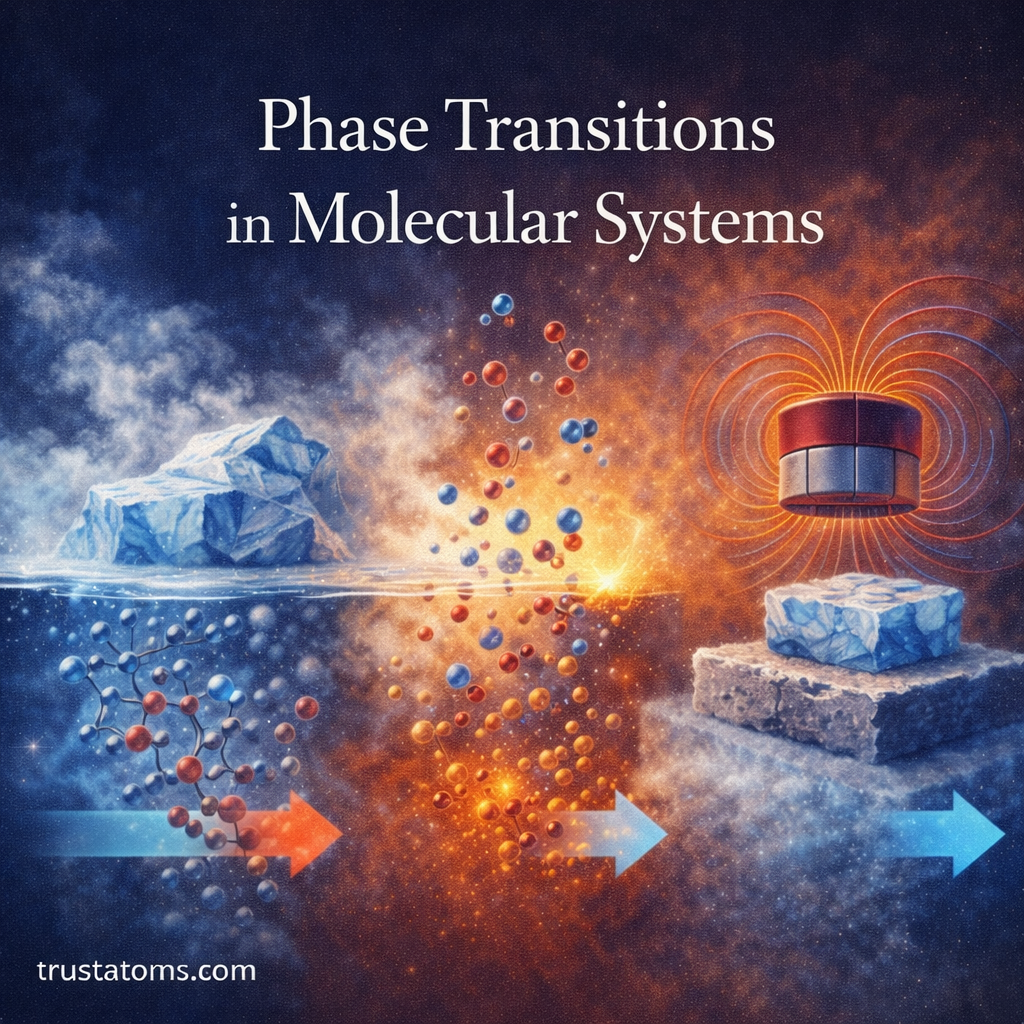
Illustration showing ice melting, molecular motion increasing, and magnetic phase transition representing phase transitions in molecular systems, trustatoms.com.
Conceptual illustration of molecular changes during solid, liquid, and advanced phase transitions. trustatoms.com

Phase transitions are among the most fascinating phenomena in physics. They explain how ice melts, how water boils, how magnets lose magnetism, and how exotic materials become superconductors.

At the heart of all these transformations are molecular interactions and collective behavior. Phase transitions in molecular systems reveal how microscopic forces give rise to dramatic macroscopic changes.

In this guide, we’ll explore what phase transitions are, the physics behind them, and why they matter in science and technology.

Continue reading “Phase Transitions in Molecular Systems”

Heat Engines and Energy Conversion Efficiency

Illustration showing internal combustion engine, power plant, and jet engine demonstrating heat engines and energy conversion efficiency concepts, trustatoms.com.
Conceptual illustration of heat engines converting thermal energy into mechanical work. trustatoms.com

Heat engines are devices that convert thermal energy into mechanical work. They power automobiles, generate electricity in power plants, and even describe how living organisms use energy.

Understanding heat engines and energy conversion efficiency is essential for grasping how energy flows through physical systems — and why no engine can ever be 100% efficient.

This guide explores how heat engines work, the laws governing them, and the limits imposed by thermodynamics.

Continue reading “Heat Engines and Energy Conversion Efficiency”

Statistical Foundations of Thermodynamics

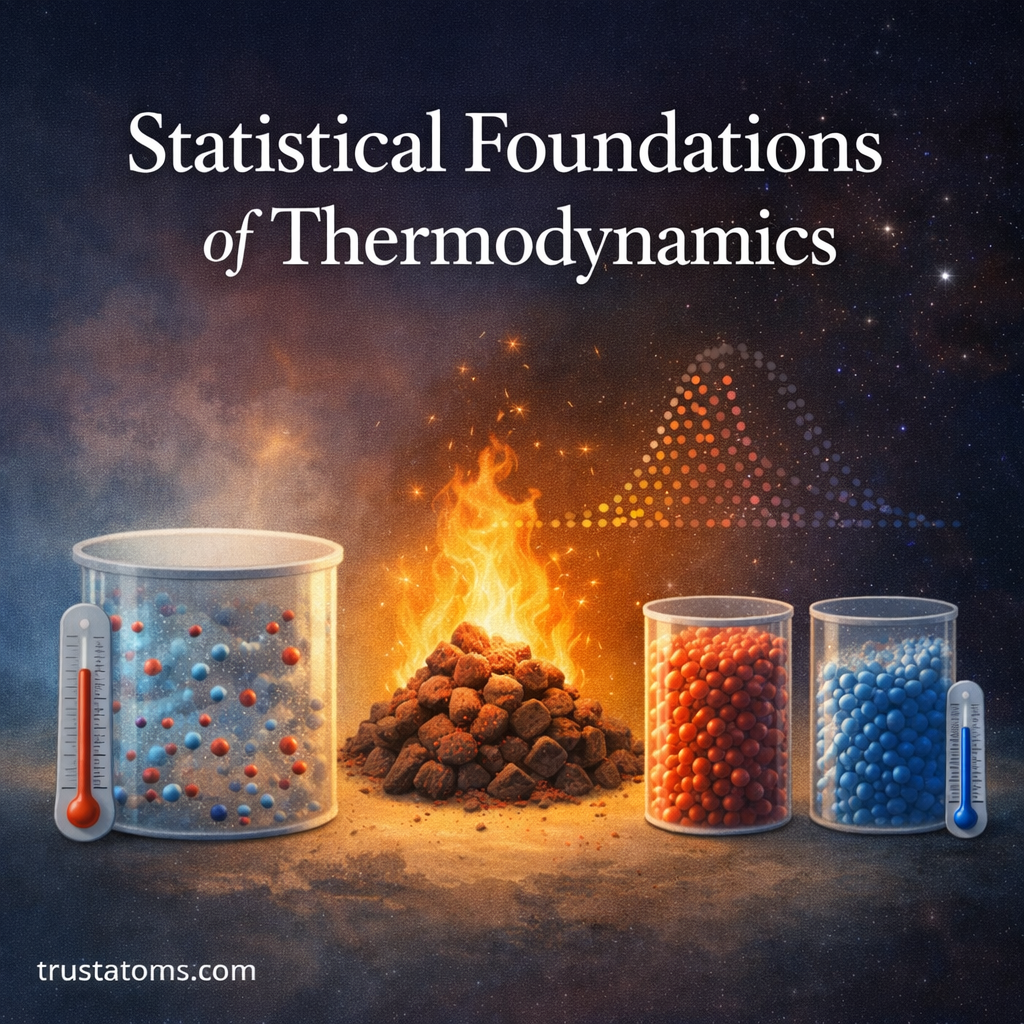
Illustration showing gas particles in containers, heat source, and energy distribution concept representing statistical foundations of thermodynamics, trustatoms.com.
Conceptual illustration of particle motion and energy distribution in statistical thermodynamics. trustatoms.com

Thermodynamics describes heat, work, temperature, and energy at the macroscopic level. But what gives rise to these laws?

The answer lies in the statistical foundations of thermodynamics — the idea that macroscopic properties emerge from the collective behavior of microscopic particles.

Instead of tracking every atom individually (which would be impossible for systems with ~10²³ particles), statistical mechanics uses probability and averages to explain why thermodynamic laws work so reliably.

This article explores the core ideas that connect microscopic motion to macroscopic physics.

Continue reading “Statistical Foundations of Thermodynamics”