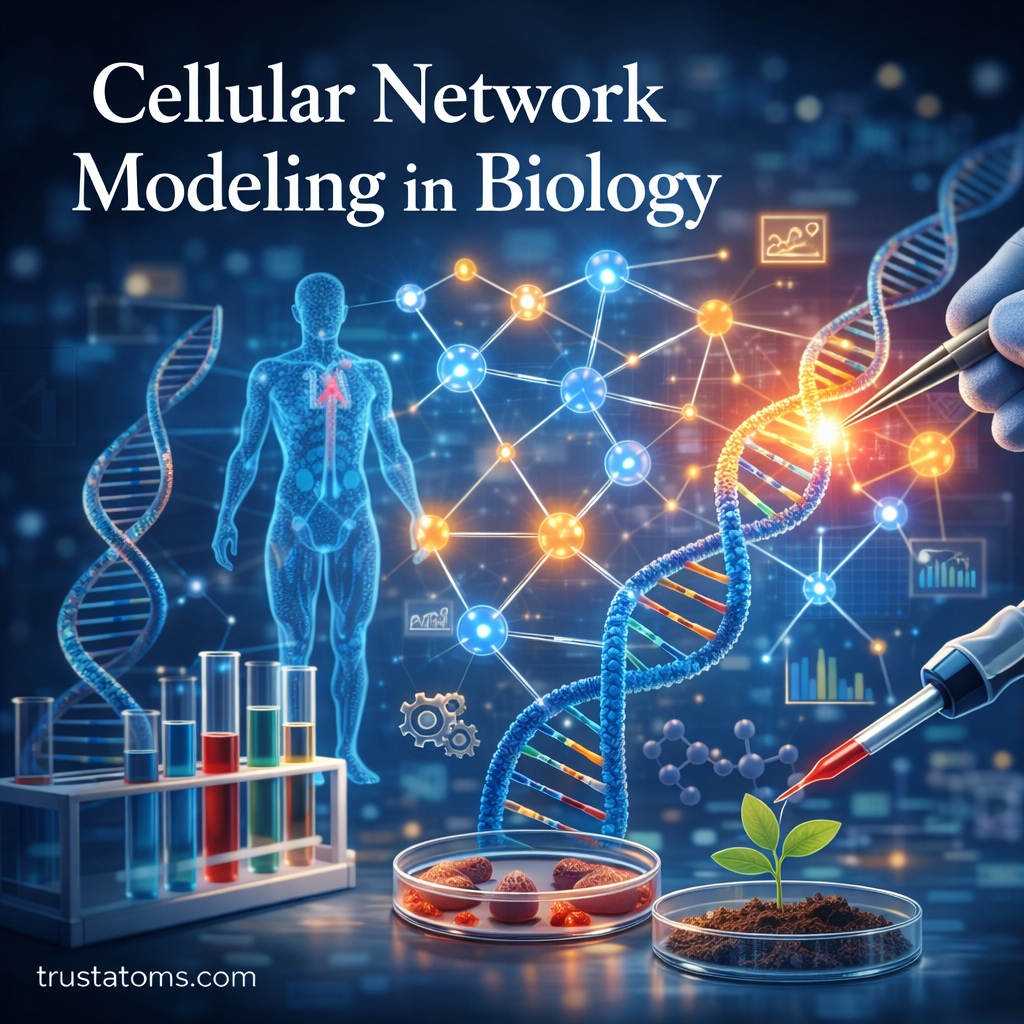
Cells are incredibly complex systems made up of thousands of interacting molecules. Proteins, genes, signaling molecules, and metabolic pathways constantly communicate with one another to maintain life. To understand these intricate interactions, scientists use cellular network modeling.
Cellular network modeling is a computational and systems biology approach that represents biological processes as networks of interacting components. By modeling these networks, researchers can better understand how cells function, how diseases develop, and how biological systems respond to environmental changes.
What Is Cellular Network Modeling?
Cellular network modeling is the process of representing biological interactions as interconnected networks.
In these models:
- Nodes represent biological components such as genes, proteins, or metabolites
- Edges represent interactions between those components
These networks allow scientists to visualize and simulate how biological processes operate inside cells.
Instead of studying individual molecules in isolation, network modeling examines how many components interact together as a system.
Why Cellular Networks Matter in Biology
Cells rely on complex communication systems to regulate growth, metabolism, immune responses, and development. These systems involve large networks of molecular interactions.
Cellular network modeling helps scientists:
- Understand how genes regulate each other
- Map signaling pathways inside cells
- Identify key molecules controlling biological processes
- Predict how cells respond to drugs or mutations
- Study complex diseases such as cancer
By analyzing biological networks, researchers can uncover patterns that are difficult to observe using traditional experimental methods.
Types of Cellular Networks
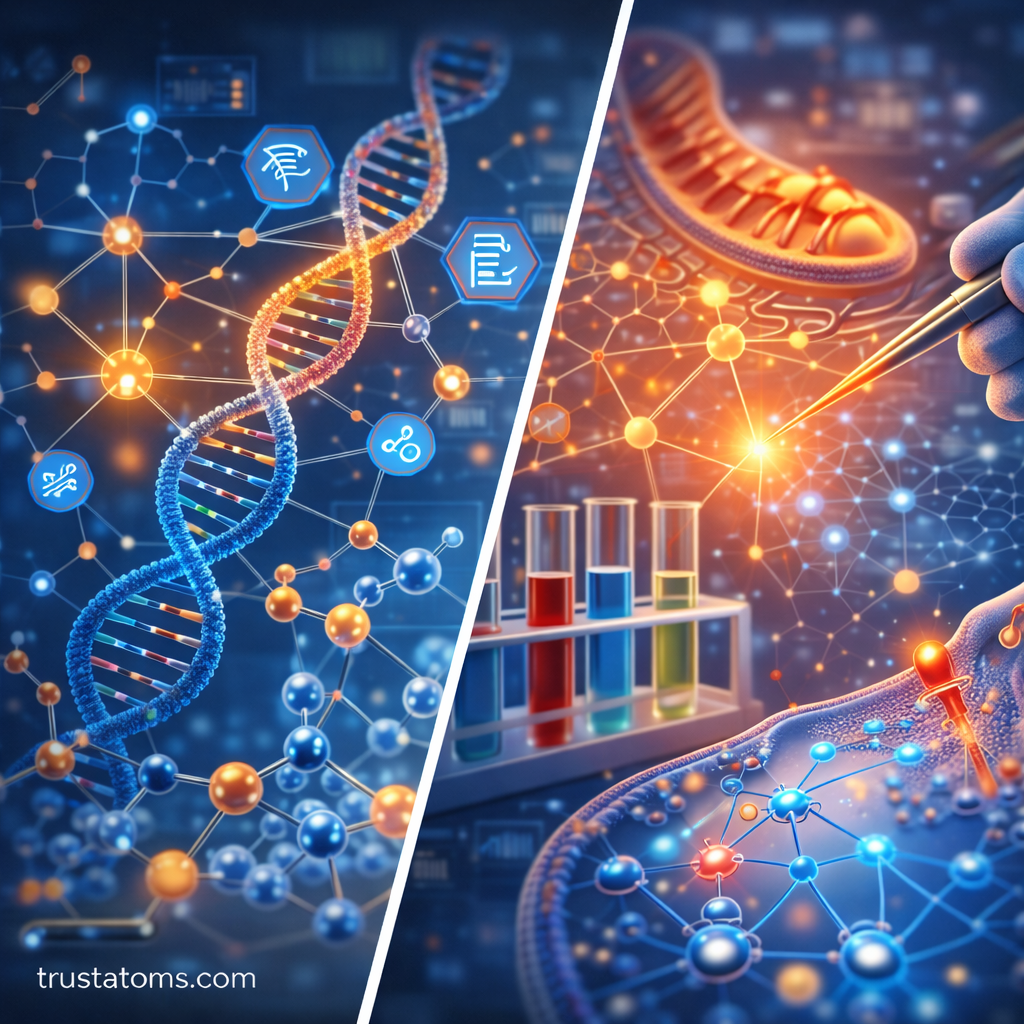
Biological systems contain many different types of networks that control cellular behavior.
Gene Regulatory Networks
Gene regulatory networks describe how genes control the activity of other genes.
In these networks:
- Transcription factors regulate gene expression
- DNA sequences control when genes are turned on or off
- Feedback loops maintain cellular balance
Gene regulatory networks play an important role in:
- Cell differentiation
- Embryonic development
- Immune system responses
Understanding these networks helps scientists study how cells specialize and how gene regulation fails in disease.
Protein Interaction Networks
Proteins rarely act alone. Instead, they interact with other proteins to perform cellular functions.
Protein interaction networks map these relationships by identifying which proteins physically bind or influence each other.
These networks help researchers understand:
- Cellular signaling pathways
- Molecular complexes inside cells
- How mutations disrupt protein function
Protein interaction studies are essential for identifying potential drug targets.
Metabolic Networks
Metabolic networks represent the chemical reactions that occur within cells.
These networks show how molecules are converted into energy and essential building blocks needed for life.
Key features of metabolic networks include:
- Enzymatic reactions
- Energy production pathways
- Nutrient metabolism
- Biosynthesis of cellular components
Metabolic network modeling helps scientists study energy balance and metabolic diseases such as diabetes.
Signaling Networks
Cells constantly communicate with their environment through signaling pathways.
Signaling networks transmit information from receptors on the cell surface to internal molecular pathways that control cellular behavior.
These networks regulate processes such as:
- Cell growth and division
- Immune responses
- Stress responses
- Apoptosis (programmed cell death)
Modeling signaling networks allows researchers to understand how cells respond to external stimuli.
How Cellular Network Models Are Built
Building a cellular network model requires integrating biological data with computational methods.
The process typically involves several steps.
1. Data Collection
Scientists gather experimental data from techniques such as:
- Gene expression analysis
- Protein interaction experiments
- DNA sequencing
- Metabolic profiling
Large biological databases also provide valuable information for network construction.
2. Network Construction
Researchers identify biological components and their interactions.
These interactions are then represented as a network using computational tools.
The network structure often includes:
- Nodes representing biological molecules
- Edges representing regulatory or physical interactions
3. Mathematical Modeling
Once the network structure is built, mathematical models simulate how the network behaves.
Common modeling approaches include:
- Differential equation models
- Boolean network models
- Probabilistic models
These models help scientists predict how cellular systems change over time.
4. Simulation and Analysis
Computational simulations allow researchers to test how biological networks respond to different conditions.
Scientists can simulate scenarios such as:
- Gene mutations
- Drug treatments
- Environmental stress
These simulations help generate hypotheses that can later be tested in laboratory experiments.
Applications of Cellular Network Modeling
Cellular network modeling has become an essential tool across many areas of biological research.
Disease Research
Many diseases result from disruptions in biological networks rather than single genetic mutations.
Network modeling helps scientists:
- Identify disease-related pathways
- Understand complex disorders such as cancer
- Discover potential drug targets
- Predict treatment responses
This systems-level understanding is critical for developing effective therapies.
Drug Discovery
Pharmaceutical research increasingly uses network models to study how drugs interact with biological systems.
Network analysis can reveal:
- Key molecules that control disease pathways
- How drugs affect multiple targets simultaneously
- Possible side effects caused by network disruptions
These insights can improve the efficiency of drug development.
Personalized Medicine
Every individual has a unique genetic makeup. Cellular network modeling can help tailor treatments based on a patient’s biological profile.
By integrating genomic data with network models, researchers can:
- Predict patient-specific treatment responses
- Identify personalized therapeutic strategies
- Improve clinical decision-making
This approach is a key component of precision medicine.
Synthetic Biology
Synthetic biology aims to design new biological systems or modify existing ones.
Network modeling helps scientists predict how engineered genetic circuits will behave.
Applications include:
- Engineering microbes for biofuel production
- Designing bacteria that produce pharmaceuticals
- Creating biosensors for environmental monitoring
Modeling ensures that engineered biological systems function reliably.
Challenges in Cellular Network Modeling
Although cellular network modeling offers powerful insights, it also presents several challenges.
Data Complexity
Biological systems are extremely complex. Capturing all molecular interactions in a single model is difficult.
Incomplete or noisy data can also affect model accuracy.
Computational Demands
Large biological networks require significant computational power for analysis and simulation.
Advanced algorithms and high-performance computing systems are often necessary.
Model Validation
Predictions generated by network models must be tested through laboratory experiments.
Ensuring that models accurately reflect real biological systems is an ongoing challenge.
The Future of Cellular Network Modeling
Advances in technology are rapidly improving cellular network modeling.
New developments include:
- Artificial intelligence for biological network analysis
- Integration of multi-omics datasets (genomics, proteomics, metabolomics)
- High-resolution single-cell data
- Improved simulation platforms
These innovations will allow scientists to build more accurate models of cellular systems.
As biological data continues to expand, cellular network modeling will become even more important for understanding how life works at the molecular level.
Final Thoughts
Cells operate through vast networks of interacting molecules that coordinate biological functions. Cellular network modeling provides a powerful way to study these interactions by representing biological systems as interconnected networks.
By combining biological data with computational tools, scientists can analyze complex cellular behavior, investigate disease mechanisms, and develop new medical treatments.
As technology advances, cellular network modeling will continue to deepen our understanding of cellular biology and the complex systems that sustain life.