The human nervous system is responsible for controlling nearly every activity in the body—from breathing and heart rate to movement, memory, and sensation. To manage these complex tasks, the nervous system is divided into two major parts: the central nervous system (CNS) and the peripheral nervous system (PNS).
While these two systems work closely together, they perform different roles. The central nervous system acts as the body’s main control center, while the peripheral nervous system serves as the communication network that connects the rest of the body to that control center.
Understanding the differences between these two systems helps explain how the body processes information, responds to stimuli, and maintains balance.
What Is the Central Nervous System?
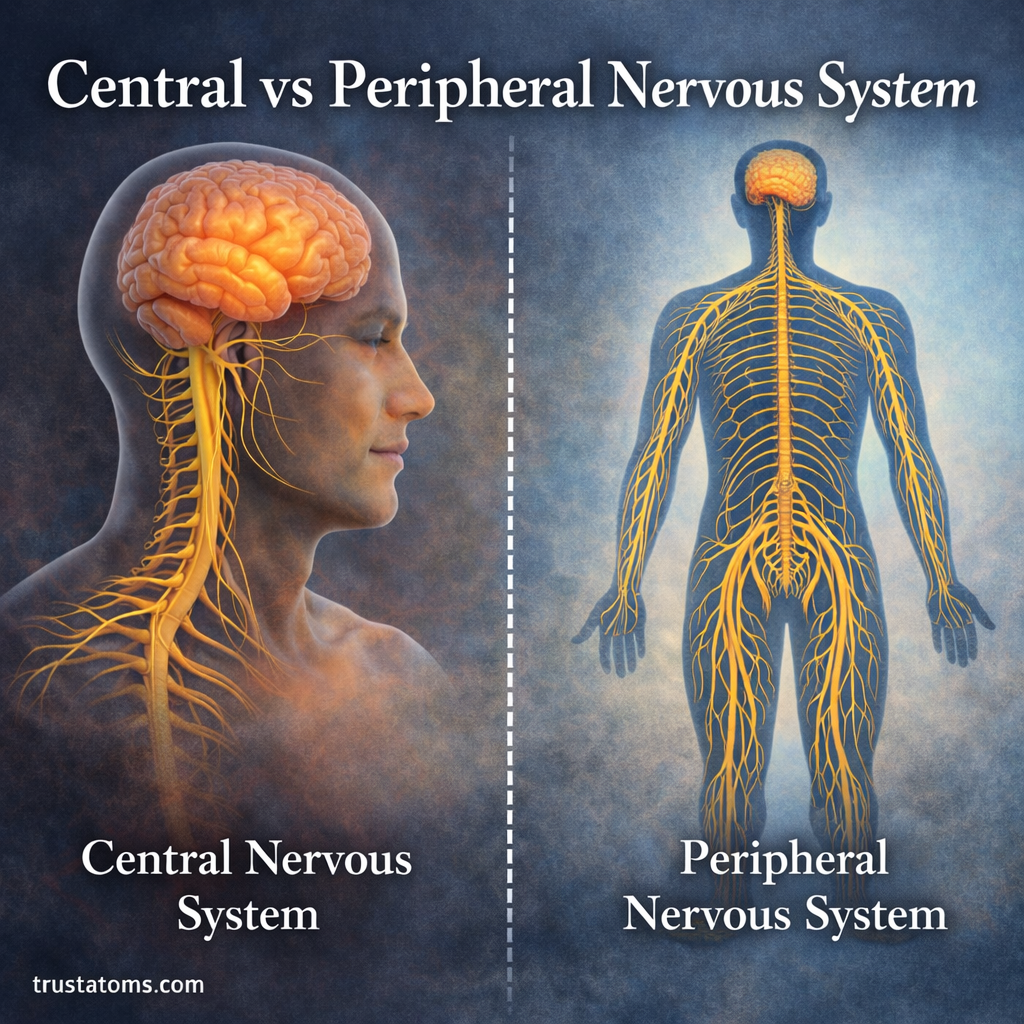
The central nervous system (CNS) is the core processing system of the body. It receives information, interprets it, and determines how the body should respond.
The CNS consists of two main structures:
- The brain
- The spinal cord
Together, these organs process sensory information, coordinate actions, and regulate many automatic functions necessary for survival.
The Brain
The brain is the most complex organ in the human body. It contains billions of specialized nerve cells that process information and control behavior.
Major functions of the brain include:
- Thinking and reasoning
- Memory and learning
- Emotional processing
- Sensory interpretation (sight, sound, taste, smell, touch)
- Voluntary movement
- Regulation of breathing, heart rate, and body temperature
Different regions of the brain specialize in different tasks, but they work together to coordinate the body’s activities.
The Spinal Cord
The spinal cord is a long column of nerve tissue that extends from the base of the brain down the back.
Its main roles include:
- Transmitting signals between the brain and the rest of the body
- Coordinating reflexes that require quick responses
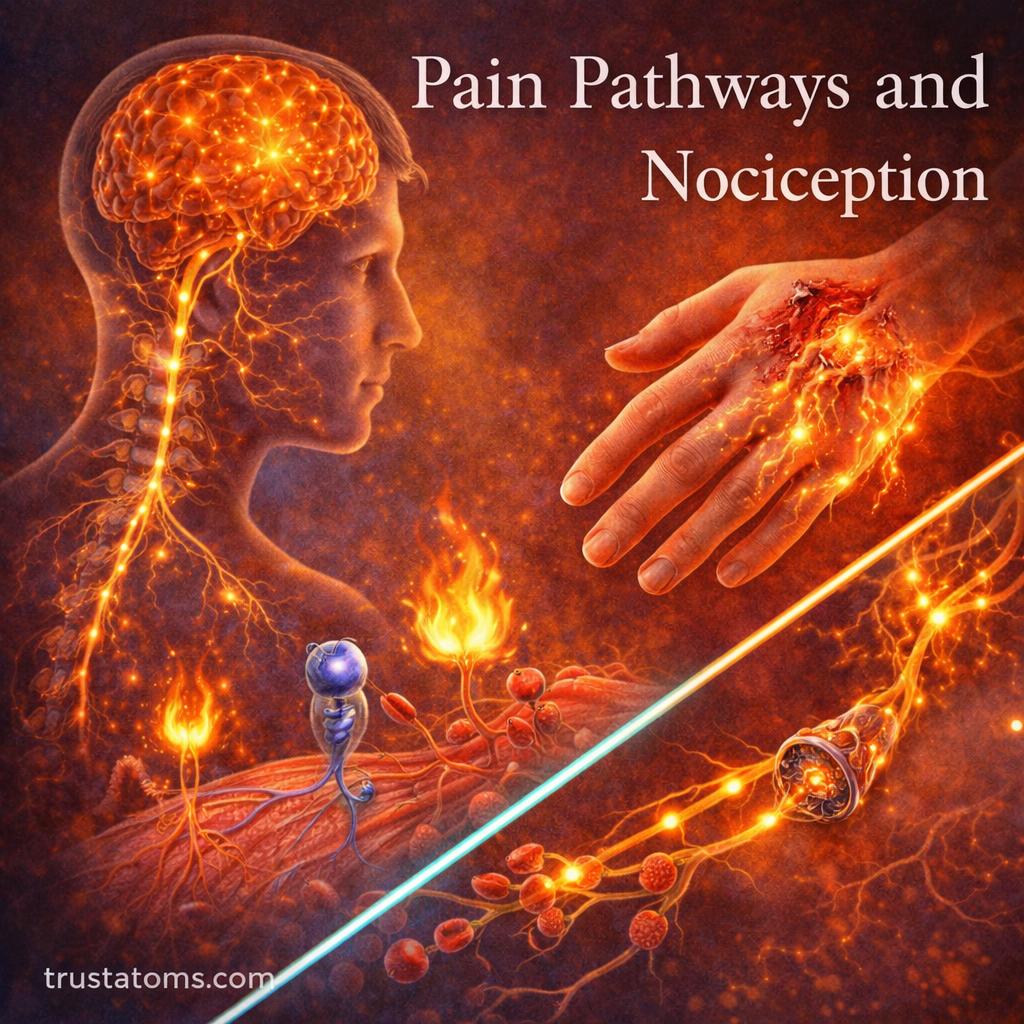
For example, when you touch something hot, your hand may pull away almost instantly. This reflex can occur through the spinal cord before the brain fully processes the event.
What Is the Peripheral Nervous System?
The peripheral nervous system (PNS) includes all the nerves located outside the brain and spinal cord.
These nerves act like communication cables that carry signals between the central nervous system and the rest of the body.
The PNS connects the CNS to:
- Muscles
- Organs
- Skin
- Sensory receptors
- Glands
Without the peripheral nervous system, the brain and spinal cord would not be able to receive information from the body or send commands back to it.
Main Functions of the Peripheral Nervous System
The peripheral nervous system performs two key tasks:
1. Carrying Sensory Information to the CNS
Special sensory nerves detect information such as:
- Temperature changes
- Pain
- Pressure
- Sound
- Light
- Body position
These signals travel from sensory receptors to the brain or spinal cord, where they are interpreted.
2. Delivering Commands from the CNS
After processing information, the CNS sends instructions back through the peripheral nerves.
These commands can:
- Trigger muscle movement
- Activate glands
- Adjust organ activity
This constant communication allows the body to respond quickly to its environment.
Divisions of the Peripheral Nervous System
The peripheral nervous system can be further divided into two functional systems.
Somatic Nervous System
The somatic nervous system controls voluntary actions—movements that you consciously decide to perform.
Examples include:
- Walking
- Typing
- Speaking
- Raising your hand
It also transmits sensory signals from the skin, muscles, and joints to the central nervous system.
Autonomic Nervous System
The autonomic nervous system regulates involuntary body processes that occur automatically.
These functions include:
- Heart rate
- Digestion
- Breathing
- Blood pressure
- Gland secretion
The autonomic system helps maintain the body’s internal balance without conscious effort.
Sympathetic and Parasympathetic Systems
The autonomic nervous system contains two subdivisions that help regulate the body during different situations.
Sympathetic Nervous System
The sympathetic nervous system prepares the body for action during stress or danger.
Common responses include:
- Increased heart rate
- Faster breathing
- Dilated pupils
- Increased blood flow to muscles
This is often referred to as the “fight or flight” response.
Parasympathetic Nervous System
The parasympathetic nervous system promotes relaxation and recovery.
Typical effects include:
- Slowing the heart rate
- Stimulating digestion
- Conserving energy
- Supporting rest and repair
These two systems work together to maintain balance depending on the body’s needs.
Key Differences Between the CNS and PNS
Although both systems are essential, they perform different roles in the body’s communication network.
Structure
Central Nervous System:
- Brain
- Spinal cord
Peripheral Nervous System:
- All nerves outside the CNS
- Sensory nerves
- Motor nerves
Function
Central Nervous System:
- Processes and interprets information
- Makes decisions and coordinates responses
Peripheral Nervous System:
- Carries information to the CNS
- Delivers commands from the CNS to the body
Location
Central Nervous System:
- Located within the skull and spinal column
Peripheral Nervous System:
- Extends throughout the entire body
How the CNS and PNS Work Together
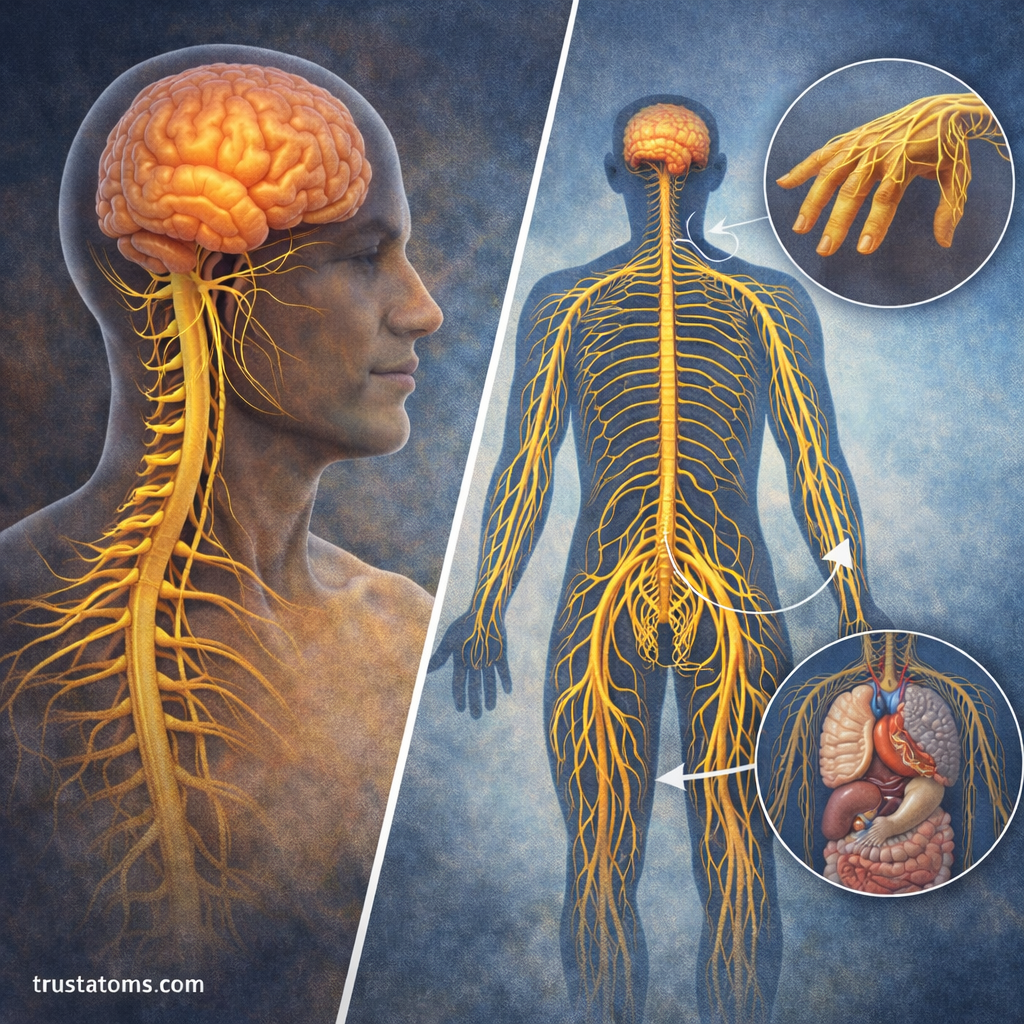
The central and peripheral nervous systems function as a coordinated network.
The process typically follows these steps:
- Sensory receptors detect a stimulus
- Peripheral nerves send signals to the CNS
- The brain or spinal cord processes the information
- Commands are sent back through peripheral nerves
- Muscles or organs carry out the response
For example:
- Touching a hot surface sends pain signals through peripheral nerves
- The spinal cord and brain interpret the danger
- Motor signals instruct muscles to pull the hand away
This communication happens in fractions of a second.
Why This Division Is Important
Separating the nervous system into central and peripheral components allows the body to manage information efficiently.
This organization provides several advantages:
- Faster signal transmission
- Efficient information processing
- Specialized control centers in the brain
- Flexible responses to changing environments
The division also helps doctors understand and diagnose neurological disorders more effectively.
Disorders Affecting the CNS and PNS
Problems can occur in either part of the nervous system, leading to different types of neurological conditions.
Examples affecting the central nervous system include:
- Stroke
- Alzheimer’s disease
- Parkinson’s disease
- Brain injuries
Examples affecting the peripheral nervous system include:
- Peripheral neuropathy
- Carpal tunnel syndrome
- Guillain-Barré syndrome
- Nerve compression injuries
These conditions can affect sensation, movement, memory, and other body functions depending on the nerves involved.
Final Thoughts
The central and peripheral nervous systems work together to form the body’s communication network. The central nervous system acts as the processing and decision-making center, while the peripheral nervous system carries messages between the brain, spinal cord, and the rest of the body.
This partnership allows the body to sense the environment, process information, and respond quickly to changing conditions. From simple reflexes to complex thoughts, the coordination between these two systems makes human movement, perception, and behavior possible.