Breathing may feel automatic, but it is tightly regulated by the body to maintain balance. One of the most important factors controlling breathing is the level of carbon dioxide (CO₂) in the blood. Specialized sensors called chemoreceptors constantly monitor these levels and signal the brain to adjust breathing accordingly.
This system ensures that the body maintains proper oxygen delivery and prevents harmful buildup of carbon dioxide.
What Are Chemoreceptors?
Chemoreceptors are specialized cells that detect chemical changes in the blood and cerebrospinal fluid.
Main Functions
- Monitor CO₂ levels
- Detect oxygen (O₂) levels
- Sense changes in blood pH
- Signal the brainstem to adjust breathing
These receptors play a key role in maintaining homeostasis, especially in the respiratory system.
Types of Chemoreceptors
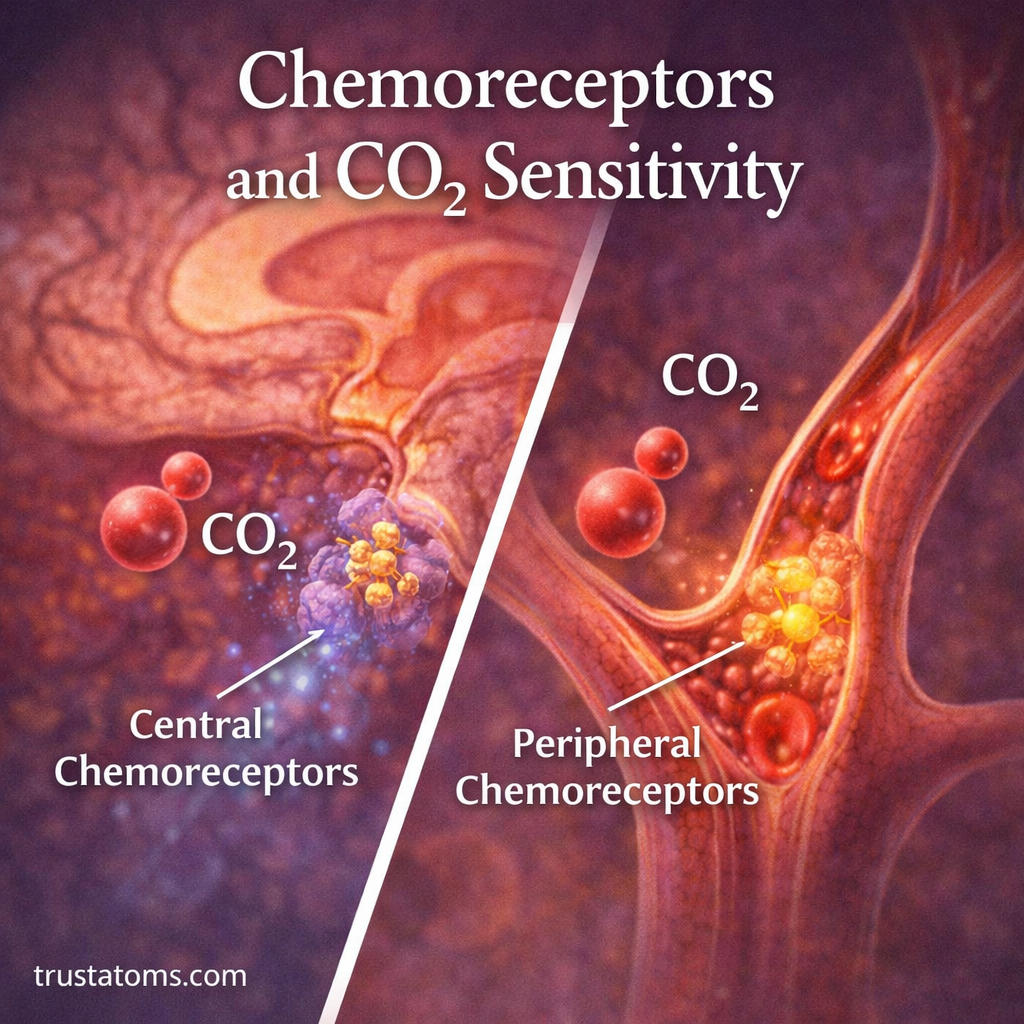
There are two main types of chemoreceptors involved in breathing control.
Central Chemoreceptors
- Located in the brain (medulla oblongata)
- Highly sensitive to CO₂ levels
- Respond to changes in pH of cerebrospinal fluid
Peripheral Chemoreceptors
- Located in:
- Carotid arteries (carotid bodies)
- Aortic arch (aortic bodies)
- Detect oxygen levels as well as CO₂ and pH
Why CO₂ Is the Primary Driver of Breathing
Although oxygen is essential for survival, carbon dioxide is the main regulator of breathing.
How CO₂ Influences Breathing
- CO₂ dissolves in blood to form carbonic acid
- This lowers pH (makes blood more acidic)
- Chemoreceptors detect the drop in pH
- The brainstem increases breathing rate
Key Takeaway
Even small increases in CO₂ can trigger a rapid increase in breathing.
The CO₂–pH Connection
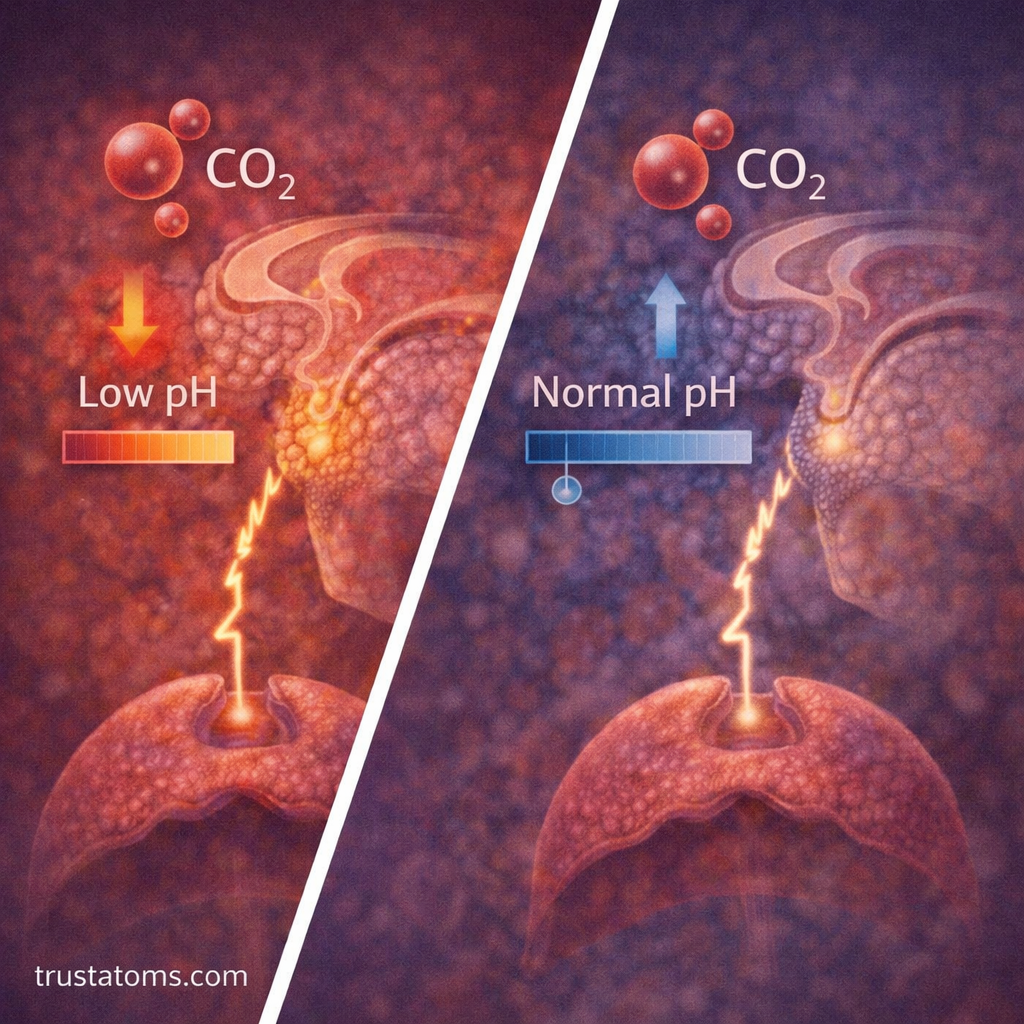
The relationship between CO₂ and pH is central to how chemoreceptors function.
The Process
- CO₂ levels rise in the blood
- CO₂ reacts with water to form carbonic acid
- Carbonic acid releases hydrogen ions
- Blood pH decreases (becomes more acidic)
- Chemoreceptors detect the change
- Breathing rate increases to remove excess CO₂
This feedback loop is fast and highly sensitive.
How Chemoreceptors Adjust Breathing
Once chemoreceptors detect changes, they send signals to the brainstem’s breathing centers.
Response Mechanisms
- Increase breathing rate (faster breaths)
- Increase depth of breathing (deeper breaths)
- Activate respiratory muscles more strongly
These adjustments help restore normal CO₂ and pH levels.
When CO₂ Levels Drop
Low CO₂ levels can also affect breathing.
Effects of Low CO₂
- Reduced stimulation of chemoreceptors
- Slower breathing rate
- Possible lightheadedness or dizziness
This can occur during hyperventilation, when breathing is too rapid.
The Role of Oxygen in Chemoreceptor Activity
While CO₂ is the main driver, oxygen still plays an important role.
When Oxygen Becomes Important
- At very low oxygen levels
- During high altitude exposure
- In certain lung diseases
Peripheral chemoreceptors become more active when oxygen levels drop significantly.
What Happens When Chemoreceptors Malfunction?
Disruption in chemoreceptor function can lead to serious health issues.
Possible Causes
- Neurological disorders
- Chronic lung disease
- Drug effects (especially sedatives or opioids)
Potential Consequences
- Poor breathing regulation
- Abnormal CO₂ levels
- Respiratory distress
Real-World Examples of CO₂ Sensitivity
Chemoreceptor activity can be observed in everyday situations.
Common Scenarios
- Exercise
- Increased CO₂ → faster breathing
- Holding your breath
- Rising CO₂ forces breathing to resume
- High altitude
- Lower oxygen → increased breathing rate
Supporting Healthy Respiratory Control
Maintaining overall respiratory health helps ensure proper chemoreceptor function.
Helpful Practices
- Stay physically active
- Avoid smoking
- Maintain good lung health
- Be mindful of breathing patterns
Final Thoughts
Chemoreceptors and CO₂ sensitivity form a powerful feedback system that keeps breathing balanced and efficient. By constantly monitoring chemical changes in the body, these receptors ensure that carbon dioxide levels stay within a safe range.
This invisible yet essential system highlights how the body automatically maintains stability, allowing you to breathe without conscious effort while adapting to changing conditions.