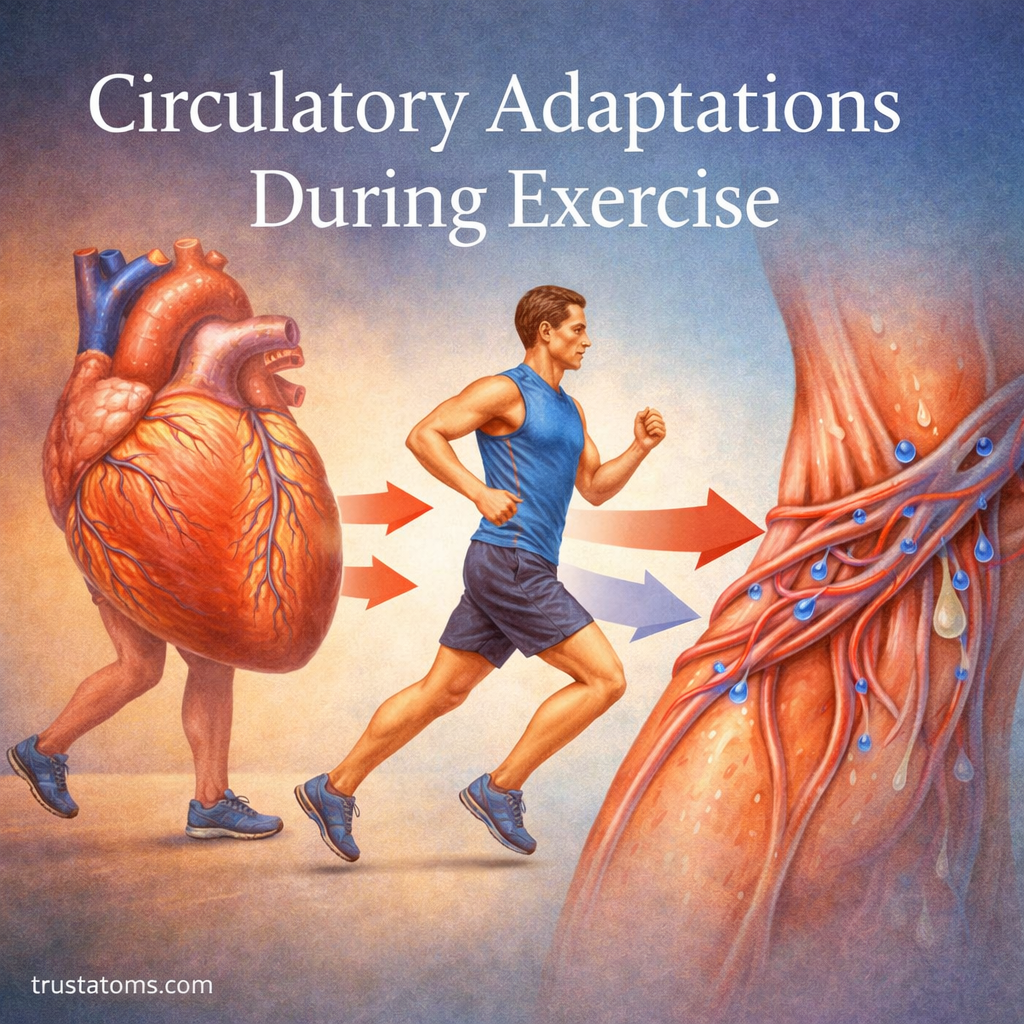
When you exercise, your body undergoes rapid and coordinated changes to meet increased energy demands. One of the most important systems involved is the circulatory system, which adjusts to deliver more oxygen and nutrients to working muscles.
In this guide, you’ll learn how the circulatory system adapts during exercise, why these changes happen, and how they improve performance and overall health.
Why the Circulatory System Matters During Exercise
Muscles require more oxygen and nutrients during physical activity. At the same time, they produce more waste products like carbon dioxide and heat.
The circulatory system responds by:
- Increasing blood flow
- Delivering oxygen more efficiently
- Removing metabolic waste
- Regulating body temperature
Immediate Cardiovascular Responses
As soon as exercise begins, several rapid changes occur.
1. Increased Heart Rate
- The heart beats faster to pump more blood
- Controlled by the nervous system (sympathetic activation)
Effect: More oxygen-rich blood reaches muscles quickly
2. Increased Stroke Volume
Stroke volume is the amount of blood pumped with each heartbeat.
- The heart contracts more forcefully
- More blood is ejected per beat
Effect: Greater overall blood flow
3. Increased Cardiac Output
Cardiac output = heart rate × stroke volume
- Both factors increase during exercise
- Leads to a significant rise in total blood flow
Blood Flow Redistribution
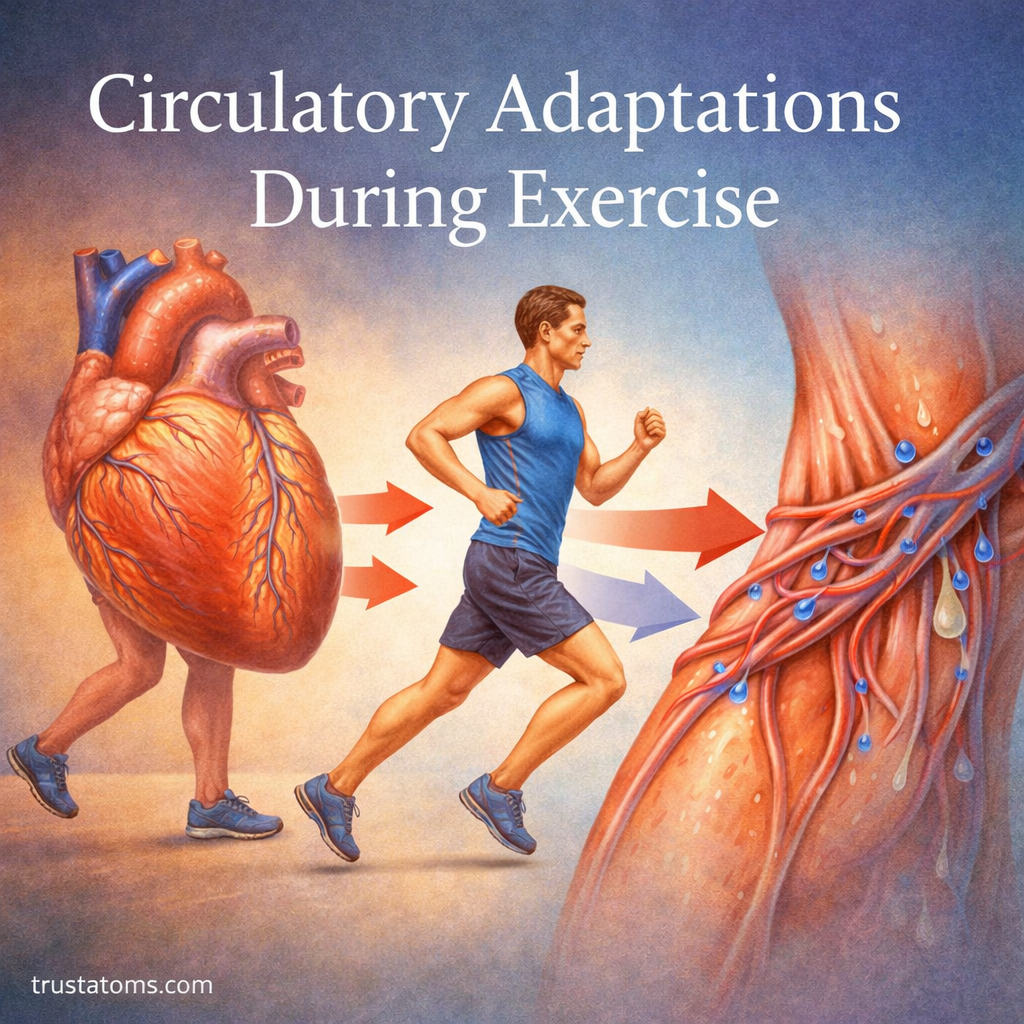
The body prioritizes blood delivery to areas that need it most.
Where Blood Goes During Exercise
- Increased flow to:
- Skeletal muscles
- Heart (coronary circulation)
- Skin (for heat regulation)
- Reduced flow to:
- Digestive system
- Kidneys (temporarily)
This process is called vascular shunting.
Vasodilation and Vasoconstriction
Blood vessels adjust their diameter to control flow.
Vasodilation
- Blood vessels widen
- Occurs in active muscles
Result: Increased blood flow and oxygen delivery
Vasoconstriction
- Blood vessels narrow
- Occurs in less active areas
Result: Redirects blood to where it’s needed most
Oxygen Delivery and Utilization
During exercise, muscles extract more oxygen from the blood.
Key Adaptations
- Increased oxygen extraction by muscle cells
- Greater capillary recruitment (more capillaries open)
- Enhanced diffusion of oxygen into tissues
Temperature Regulation
Exercise generates heat, and the circulatory system helps manage it.
How the Body Cools Down
- Increased blood flow to the skin
- Heat is released through the skin surface
- Sweating enhances cooling
Long-Term Adaptations from Regular Exercise
With consistent training, the circulatory system becomes more efficient.
1. Lower Resting Heart Rate
- The heart becomes stronger
- Pumps more blood per beat
2. Increased Stroke Volume
- More efficient pumping
- Less effort needed at rest
3. Improved Capillary Density
- More capillaries form in muscle tissue
- Better oxygen delivery
4. Enhanced Oxygen Utilization
- Muscles become better at using oxygen
- Improved endurance
5. Reduced Blood Pressure
- Improved vessel elasticity
- Better overall circulation
Differences Between Aerobic and Anaerobic Exercise
Aerobic Exercise (e.g., running, cycling)
- Sustained activity
- Relies on oxygen
- Improves cardiovascular endurance
Anaerobic Exercise (e.g., sprinting, weightlifting)
- Short bursts of activity
- Less reliance on oxygen
- Increases strength and power
Both types of exercise trigger circulatory adaptations, but in different ways.
Why These Adaptations Matter
Circulatory changes during exercise are essential for:
- Supporting muscle performance
- Preventing fatigue
- Maintaining stable body temperature
- Improving overall cardiovascular health
Key Takeaways
- Exercise increases heart rate, stroke volume, and cardiac output
- Blood flow is redirected to active muscles
- Blood vessels adjust through vasodilation and vasoconstriction
- Oxygen delivery and waste removal are enhanced
- Regular exercise leads to long-term cardiovascular improvements
Final Thoughts
The circulatory system is highly adaptable and plays a central role in physical performance. Whether you’re walking, lifting weights, or running long distances, your body continuously adjusts to meet the demands of activity.
Over time, these adaptations not only improve athletic performance but also contribute to better heart health and overall well-being.