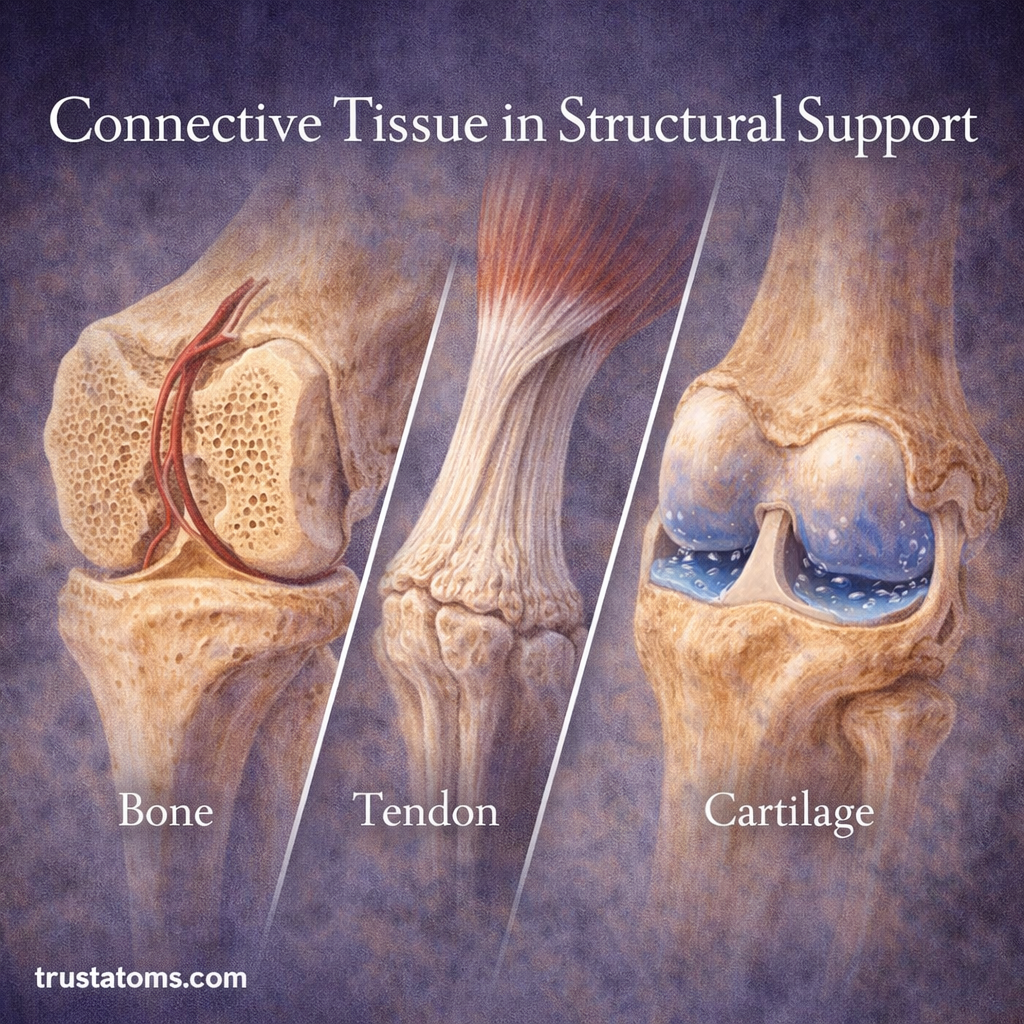
Connective tissue is one of the most important yet often overlooked components of the human body. It forms the framework that holds everything together—supporting organs, connecting structures, and maintaining overall stability.
From bones and cartilage to tendons and ligaments, connective tissue plays a central role in structural support and movement.
What Is Connective Tissue?
Connective tissue is a broad category of tissue that connects, supports, binds, or separates different parts of the body.
Key Functions
- Provides structural support
- Connects tissues and organs
- Protects internal structures
- Stores energy (fat tissue)
- Transports substances (blood)
Unlike other tissue types, connective tissue is defined by its extracellular matrix, which surrounds its cells and gives it strength and flexibility.
Components of Connective Tissue
Connective tissue is made up of three main components:
Cells
Different cell types perform specialized roles, such as:
- Fibroblasts (produce fibers and matrix)
- Adipocytes (store fat)
- Chondrocytes (found in cartilage)
- Osteocytes (found in bone)
Fibers
Fibers provide strength and flexibility.
- Collagen fibers: Strong and resistant to tension
- Elastic fibers: Stretchable and flexible
- Reticular fibers: Form supportive networks
Ground Substance
- Gel-like material surrounding cells and fibers
- Helps transport nutrients and waste
- Provides cushioning and support
Types of Connective Tissue
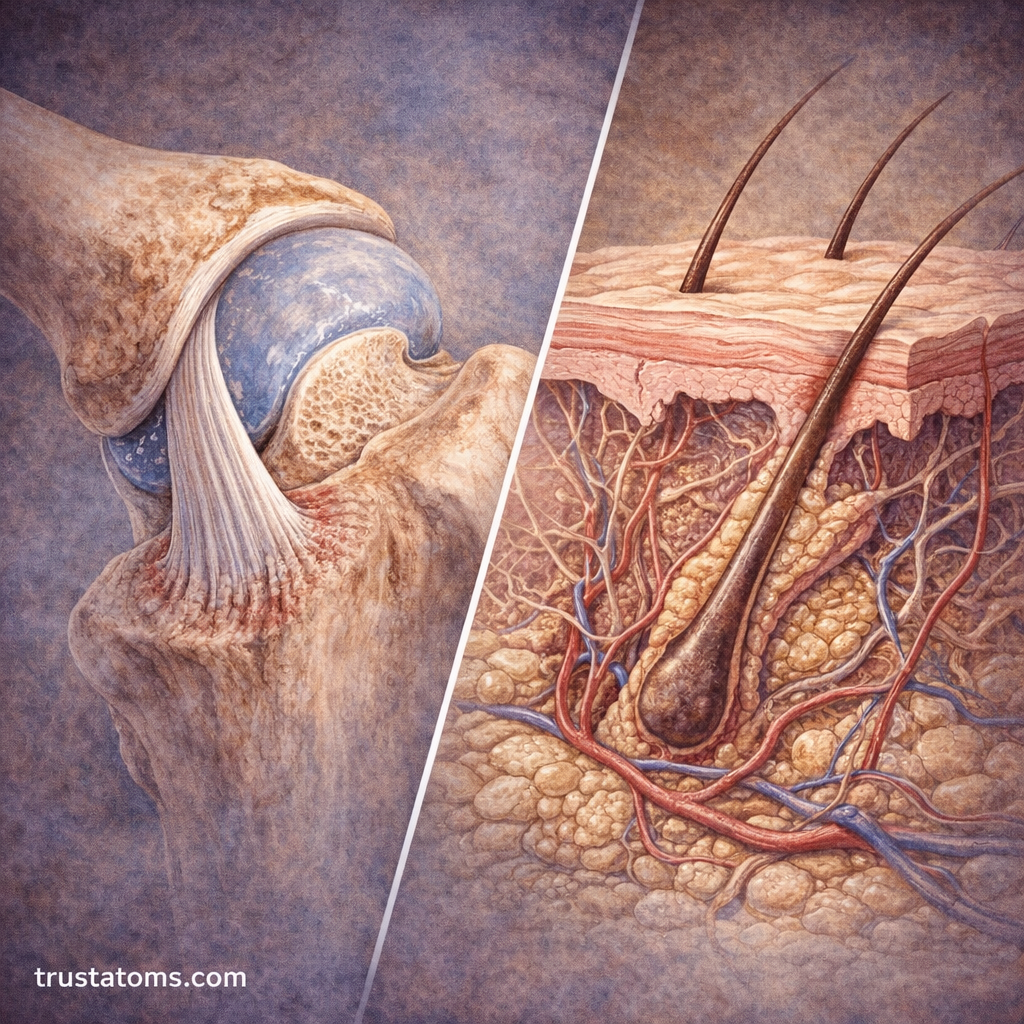
Connective tissue can be classified into several major types based on structure and function.
Loose Connective Tissue
Loose connective tissue provides flexible support and fills spaces between structures.
Characteristics
- Loosely arranged fibers
- Soft and flexible
- Rich in blood supply
Functions
- Supports organs
- Allows movement between tissues
- Stores fluids
Dense Connective Tissue
Dense connective tissue is built for strength and resistance to tension.
Characteristics
- Densely packed collagen fibers
- Strong and durable
- Less flexible than loose tissue
Examples
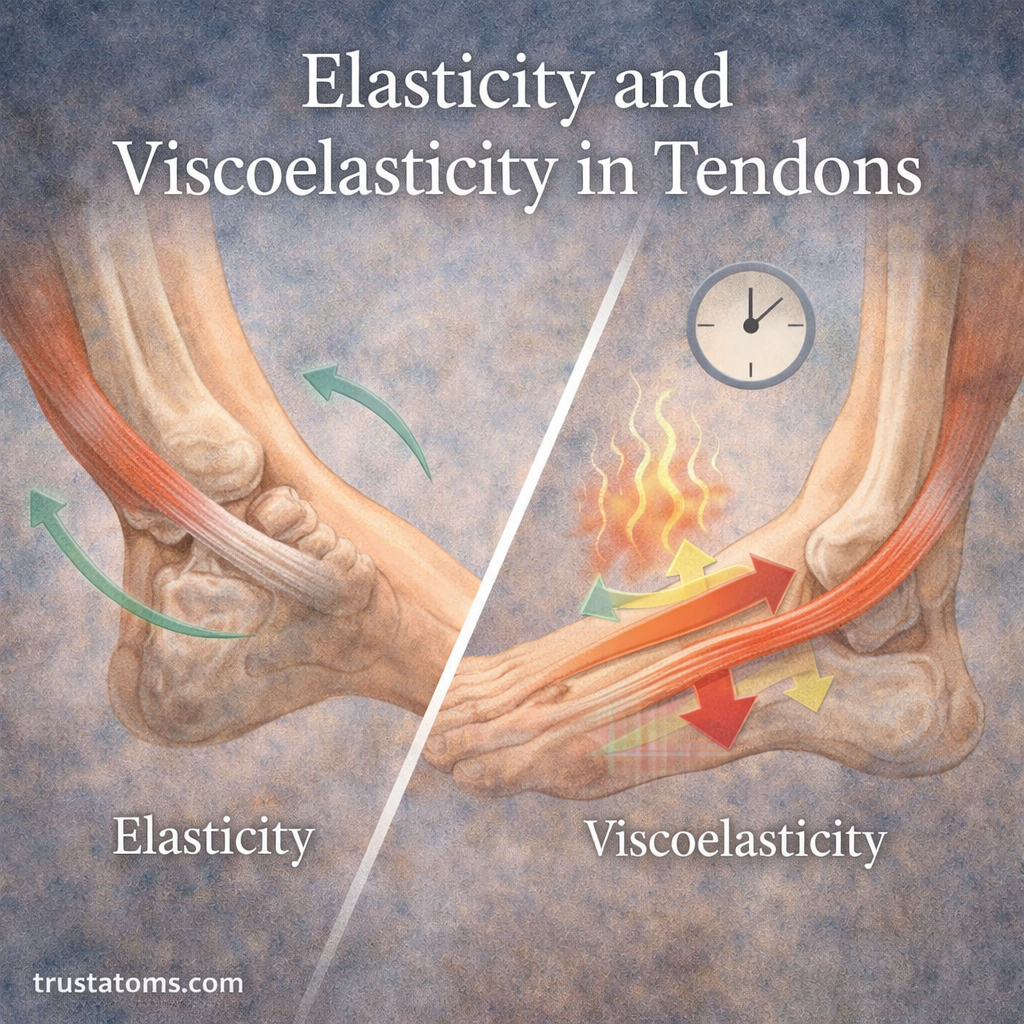
- Tendons (muscle to bone)
- Ligaments (bone to bone)
Cartilage
Cartilage is a semi-rigid connective tissue that provides support and cushioning.
Characteristics
- Smooth and flexible
- Lacks blood vessels
- Resistant to compression
Functions
- Reduces friction in joints
- Absorbs shock
- Maintains structure in areas like the nose and ears
Bone
Bone is a hard connective tissue that forms the skeleton.
Characteristics
- Rigid and strong
- Rich blood supply
- Mineralized matrix
Functions
- Provides structural support
- Protects organs
- Stores minerals (calcium, phosphorus)
- Produces blood cells
Blood (Fluid Connective Tissue)
Blood is a unique connective tissue that circulates throughout the body.
Functions
- Transports oxygen and nutrients
- Removes waste products
- Supports immune defense
How Connective Tissue Provides Structural Support
Connective tissue works as a system to maintain the body’s shape and stability.
Key Roles
- Forms the body’s framework (skeleton)
- Connects muscles, bones, and organs
- Stabilizes joints
- Distributes mechanical forces
Each type contributes differently, but together they create a cohesive support network.
Connective Tissue and Movement
While connective tissue provides stability, it also enables movement.
How It Supports Motion
- Tendons transmit force from muscles to bones
- Ligaments stabilize joints during movement
- Cartilage reduces friction and absorbs impact
This balance between stability and flexibility allows smooth, controlled motion.
Factors That Affect Connective Tissue Health
Connective tissue strength and function can be influenced by various factors.
Biological Factors
- Age (reduced elasticity and repair ability)
- Genetics
- Hormonal changes
Lifestyle Factors
- Physical activity level
- Nutrition (protein and collagen support)
- Hydration
Mechanical Factors
- Repetitive stress
- Injury
- Poor posture
Common Connective Tissue Disorders
Problems with connective tissue can affect mobility and overall health.
Examples
- Tendinitis (inflammation of tendons)
- Ligament sprains or tears
- Osteoarthritis (cartilage breakdown)
- Osteoporosis (bone weakening)
How to Support Healthy Connective Tissue
Maintaining connective tissue health is essential for long-term function.
Practical Tips
- Engage in regular strength and flexibility exercises
- Maintain a balanced diet rich in nutrients
- Stay hydrated
- Avoid excessive repetitive strain
- Use proper body mechanics
Common Misconceptions
- Connective tissue is only for support (it also plays roles in movement and transport)
- It doesn’t change over time (it adapts and can weaken or strengthen)
- Only athletes need to worry about it (everyone relies on connective tissue daily)
Final Thoughts
Connective tissue is the foundation of structural support in the human body. It connects, stabilizes, and protects while also enabling movement and flexibility.
By understanding how connective tissue works and how to maintain its health, you can better support your body’s structure and function over time.