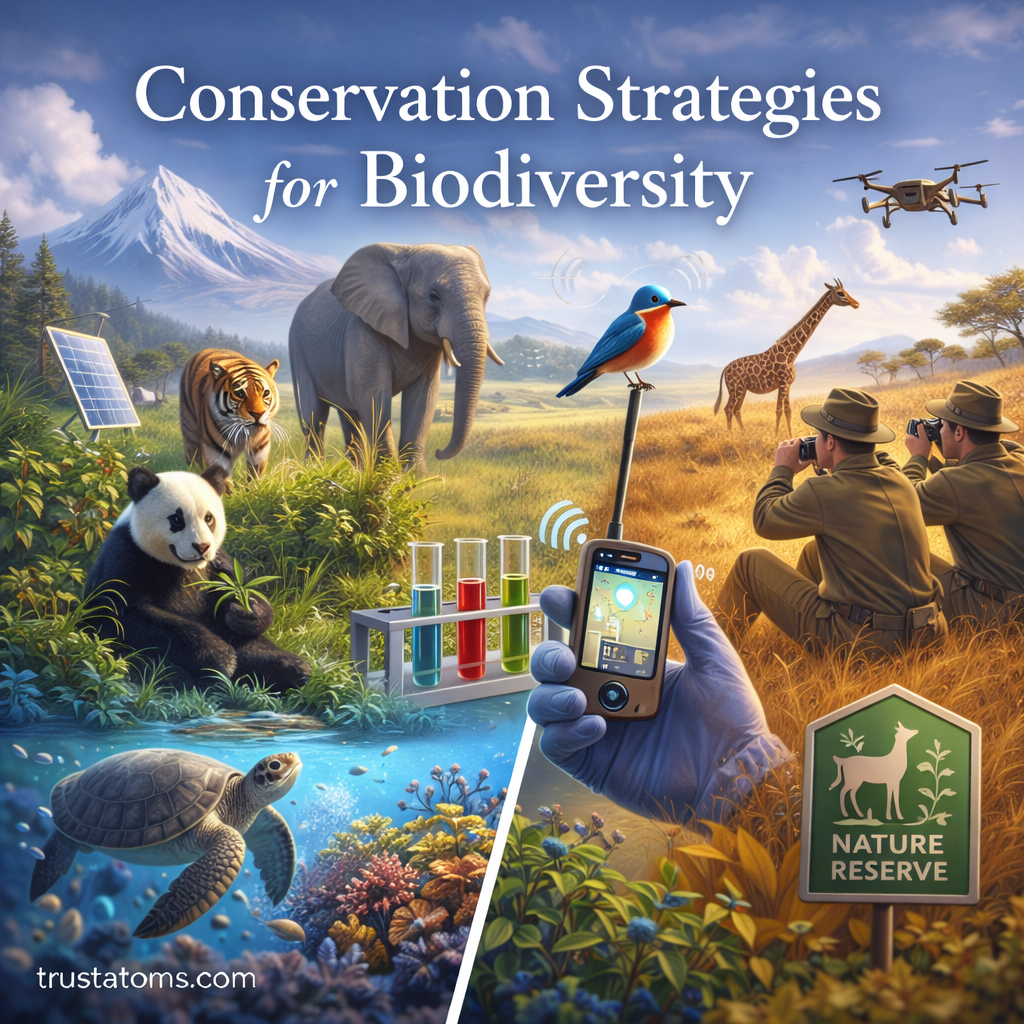
Biodiversity refers to the variety of life on Earth, including plants, animals, microorganisms, and the ecosystems they form. Healthy biodiversity supports essential ecological processes such as nutrient cycling, pollination, climate regulation, and food production. However, human activities—including habitat destruction, pollution, climate change, and overexploitation of natural resources—have significantly threatened global biodiversity.
Conservation strategies aim to protect species, maintain ecosystems, and ensure that natural resources remain available for future generations. By combining scientific research, environmental management, and community involvement, conservation efforts help sustain the balance of life on our planet.
Why Biodiversity Conservation Matters
Biodiversity is critical for both ecological stability and human well-being. Diverse ecosystems are typically more resilient and better able to adapt to environmental changes.
Key benefits of biodiversity include:
- Supporting food systems through agriculture and fisheries
- Maintaining ecosystem services such as clean water and air
- Providing sources for medicines and biotechnology
- Regulating climate and carbon storage
- Supporting cultural and recreational activities
When biodiversity declines, ecosystems become less stable, and essential ecological services may be disrupted.
Major Threats to Biodiversity
Understanding the threats to biodiversity is essential for developing effective conservation strategies.
Habitat Loss
Habitat destruction is one of the leading causes of biodiversity decline. Human activities such as urban expansion, agriculture, logging, and infrastructure development often destroy or fragment natural habitats.
When habitats are lost, species may lose access to:
- Food sources
- Shelter
- Breeding areas
- Migration routes
Habitat fragmentation can also isolate populations, reducing genetic diversity.
Climate Change
Climate change alters environmental conditions such as temperature, rainfall patterns, and ocean chemistry. Many species struggle to adapt to these rapid changes.
Effects of climate change on biodiversity include:
- Shifts in species distribution
- Changes in migration patterns
- Coral reef bleaching
- Increased extinction risk for climate-sensitive species
Some ecosystems may undergo significant transformations if climate changes continue.
Pollution
Pollution from industrial, agricultural, and urban sources harms wildlife and ecosystems.
Common forms of pollution affecting biodiversity include:
- Chemical contamination of soil and water
- Plastic waste in oceans and rivers
- Air pollution affecting plant growth
- Nutrient runoff causing harmful algal blooms
These pollutants can damage habitats and disrupt ecological balance.
Overexploitation
Overexploitation occurs when species are harvested faster than they can reproduce.
Examples include:
- Overfishing in marine ecosystems
- Illegal wildlife trade
- Unsustainable logging
- Excessive hunting
Such practices can drastically reduce population sizes and push species toward extinction.
Key Conservation Strategies
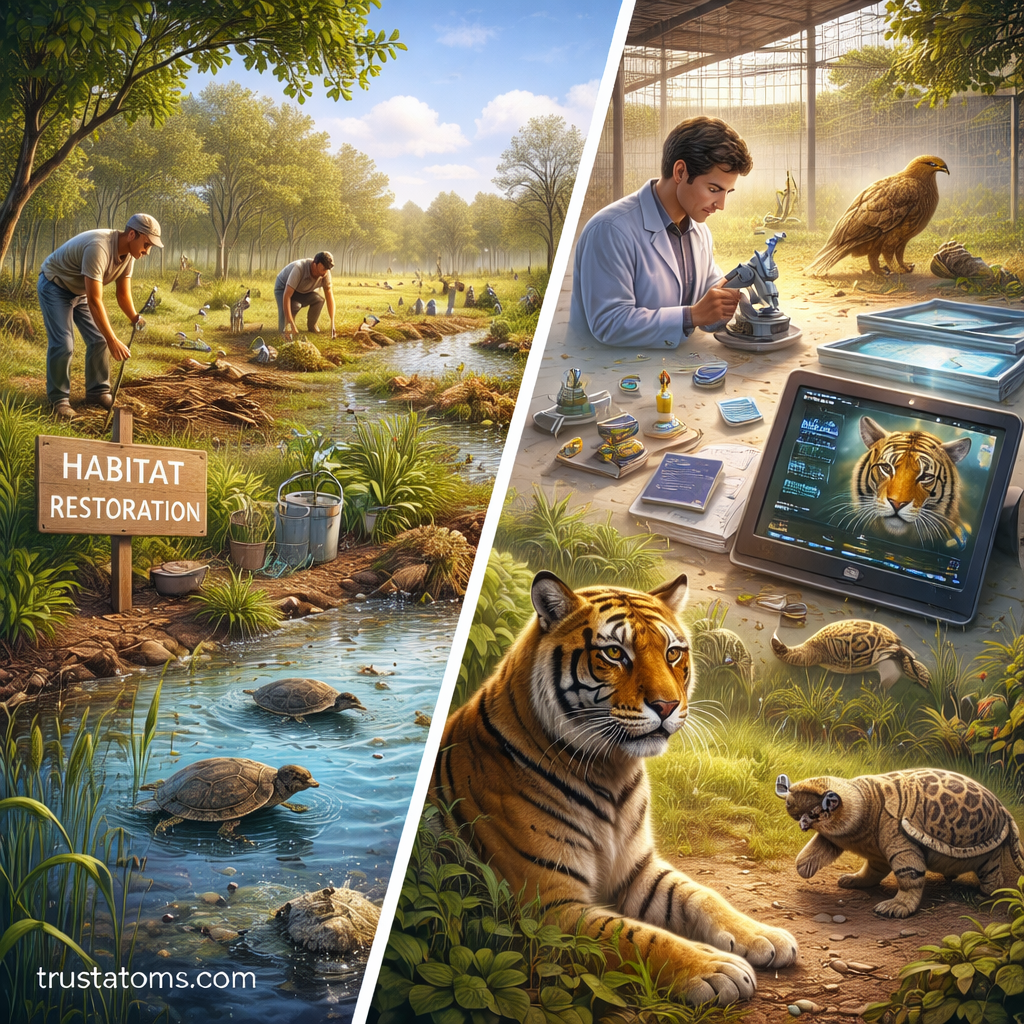
Conservation scientists and policymakers use a variety of strategies to protect biodiversity and restore ecosystems.
Protected Areas and Wildlife Reserves
Protected areas are regions designated for the conservation of natural habitats and wildlife.
Examples include:
- National parks
- Wildlife sanctuaries
- Marine protected areas
- Nature reserves
These protected regions help preserve ecosystems by limiting human activities such as hunting, mining, or deforestation.
Protected areas also provide safe habitats for endangered species and support ecological research.
Habitat Restoration
Habitat restoration involves repairing damaged ecosystems and reestablishing natural habitats.
Restoration projects may include:
- Reforestation and tree planting
- Wetland restoration
- Coral reef rehabilitation
- Removing invasive species
These efforts help rebuild ecosystems and allow native species to recover.
Species Conservation Programs
Some species require targeted conservation efforts to prevent extinction.
Common conservation actions include:
- Captive breeding programs
- Reintroduction of species into natural habitats
- Protection of nesting or breeding sites
- Monitoring population trends
These programs are often used for endangered animals whose populations have fallen to critically low levels.
Sustainable Resource Management
Conservation strategies often focus on ensuring that natural resources are used responsibly.
Sustainable practices include:
- Responsible fishing quotas
- Sustainable forestry management
- Wildlife-friendly agricultural practices
- Ecosystem-based fisheries management
These approaches balance economic needs with environmental protection.
Community-Based Conservation
Local communities often play a critical role in conservation success.
Community-based conservation focuses on involving residents in protecting local ecosystems while also supporting sustainable livelihoods.
Key elements include:
- Environmental education programs
- Community-managed protected areas
- Eco-tourism initiatives
- Sustainable farming and land-use practices
When communities benefit from conservation, they are more likely to support long-term environmental protection.
The Role of Science and Technology in Conservation
Modern conservation strategies increasingly rely on scientific research and advanced technologies.
These tools help researchers monitor ecosystems, track species populations, and evaluate conservation outcomes.
Examples include:
- Satellite imagery for habitat monitoring
- DNA analysis for studying genetic diversity
- Wildlife tracking using GPS technology
- Environmental sensors for ecosystem monitoring
Data-driven approaches allow conservationists to make informed decisions and respond quickly to environmental threats.
International Cooperation for Biodiversity Protection
Biodiversity conservation often requires global collaboration because ecosystems and wildlife do not follow political boundaries.
International agreements and organizations help coordinate conservation efforts worldwide.
Examples of collaborative initiatives include:
- Global biodiversity conventions
- Cross-border wildlife protection programs
- International conservation organizations
- Shared marine resource management
Cooperation between governments, scientists, and communities strengthens global conservation efforts.
Challenges in Biodiversity Conservation
Despite significant progress, conservation efforts face several ongoing challenges.
Limited Funding
Conservation projects often require long-term financial investment for research, habitat protection, and community programs.
Conflicts Between Development and Conservation
Economic development can sometimes conflict with environmental protection goals, especially in regions experiencing rapid population growth.
Climate Uncertainty
Rapid climate changes create new conservation challenges by altering habitats and species distributions.
Enforcement Difficulties
Illegal activities such as wildlife trafficking and illegal logging can undermine conservation efforts if laws are not effectively enforced.
The Future of Biodiversity Conservation
Future conservation strategies will likely combine scientific innovation, policy reforms, and community engagement.
Emerging approaches include:
- Ecosystem-based conservation planning
- Climate-resilient habitat protection
- Genetic conservation techniques
- Global biodiversity monitoring networks
Protecting biodiversity requires coordinated action at local, national, and global levels.
Final Thoughts
Biodiversity is fundamental to the health of our planet and the well-being of all living organisms. Conservation strategies help protect ecosystems, preserve endangered species, and maintain the natural processes that support life on Earth.
Through protected areas, sustainable resource management, habitat restoration, and community engagement, conservation efforts aim to balance human needs with environmental sustainability.
As environmental challenges grow, effective biodiversity conservation will remain one of the most important global priorities for maintaining Earth’s ecological balance.