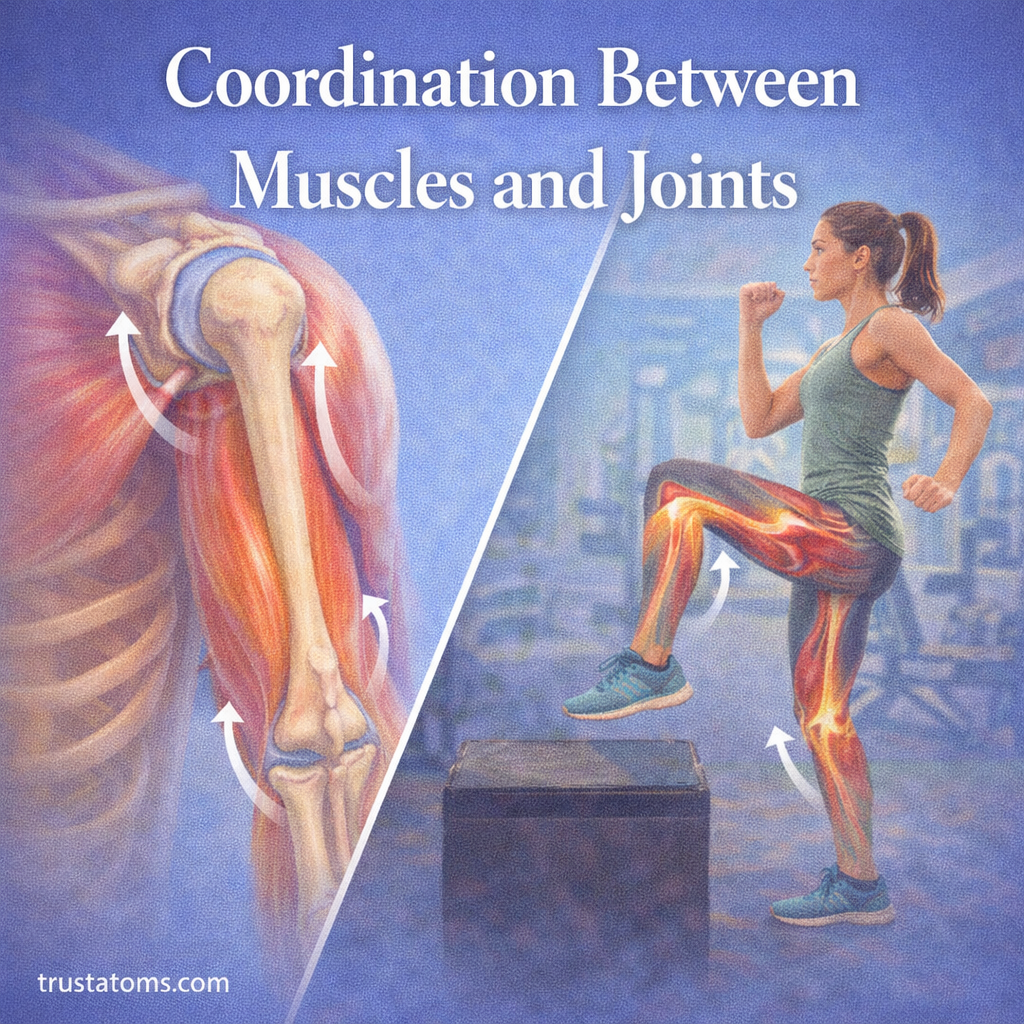
Every movement you make—whether it’s walking, lifting, or typing—relies on precise coordination between muscles and joints. This coordination allows your body to move efficiently, maintain stability, and perform complex actions without conscious effort.
Understanding how muscles and joints work together can help improve movement quality, reduce injury risk, and enhance overall physical performance.
What Is Muscle and Joint Coordination?
Muscle and joint coordination refers to the ability of muscles to work together across joints to produce controlled, efficient movement.
Rather than acting independently, muscles operate in groups to guide joint motion in a balanced and synchronized way.
Key Elements
- Timing of muscle activation
- Strength and control of muscle contractions
- Joint alignment and stability
- Communication with the nervous system
How Muscles and Joints Work Together
Muscles generate force, while joints provide the structure that allows movement.
The Basic Relationship
- Muscles contract → joints move
- Joints guide movement → muscles stabilize and control it
Each movement involves multiple muscles working together across one or more joints.
Types of Muscle Roles in Movement
Muscles take on different roles depending on the action being performed.
1. Agonist (Prime Mover)
- The main muscle responsible for a movement
- Example: Biceps during elbow flexion
2. Antagonist
- Opposes the action of the agonist
- Example: Triceps during elbow flexion
3. Synergists
- Assist the agonist in performing the movement
- Help refine and stabilize motion
4. Stabilizers
- Maintain joint position and prevent unwanted movement
- Provide a stable base for action
The Role of Joints in Movement
Joints determine how and where movement can occur.
Types of Joints and Their Functions
- Hinge joints (e.g., elbow, knee)
- Allow bending and straightening
- Ball-and-socket joints (e.g., shoulder, hip)
- Allow movement in multiple directions
- Pivot joints (e.g., neck)
- Allow rotational movement
Each joint type influences the range and direction of movement.
The Nervous System’s Role in Coordination
Coordination between muscles and joints is controlled by the nervous system.
How It Works
- Sensory receptors detect position and movement
- Signals are sent to the brain and spinal cord
- The brain processes information
- Motor signals are sent back to muscles
This process happens rapidly and continuously during movement.
Proprioception and Movement Control
Proprioception is your body’s ability to sense its position in space.
Why It Matters
- Helps maintain balance
- Improves coordination
- Allows precise movement without looking
Proprioceptors in muscles, tendons, and joints provide constant feedback to the brain.
Types of Coordinated Movement
Different activities require different levels of coordination.
Fine Motor Coordination
- Small, precise movements
- Example: Writing or typing
Gross Motor Coordination
- Larger movements involving multiple muscle groups
- Example: Running or jumping
Why Coordination Is Important
Effective coordination improves both performance and safety.
Benefits
- Smoother, more efficient movement
- Reduced risk of injury
- Better balance and stability
- Improved athletic performance
Poor coordination can lead to compensations and strain on the body.
Factors That Affect Coordination
Several factors influence how well muscles and joints work together.
Internal Factors
- Muscle strength and flexibility
- Joint mobility
- Nervous system efficiency
- Fatigue levels
External Factors
- Environment (surface, obstacles)
- Equipment or footwear
- Type of activity
How to Improve Muscle and Joint Coordination
Coordination can be developed with consistent practice.
Effective Exercises
- Balance training
- Single-leg stands
- Stability exercises
- Functional movements
- Squats, lunges, and reaching patterns
- Agility drills
- Ladder drills
- Direction changes
- Strength training
- Controlled, full-range movements
Common Mistakes to Avoid
Avoid these habits to improve coordination effectively:
- Moving too quickly without control
- Ignoring proper form
- Training only isolated muscles
- Skipping warm-ups
- Not challenging coordination progressively
Coordination in Everyday Life
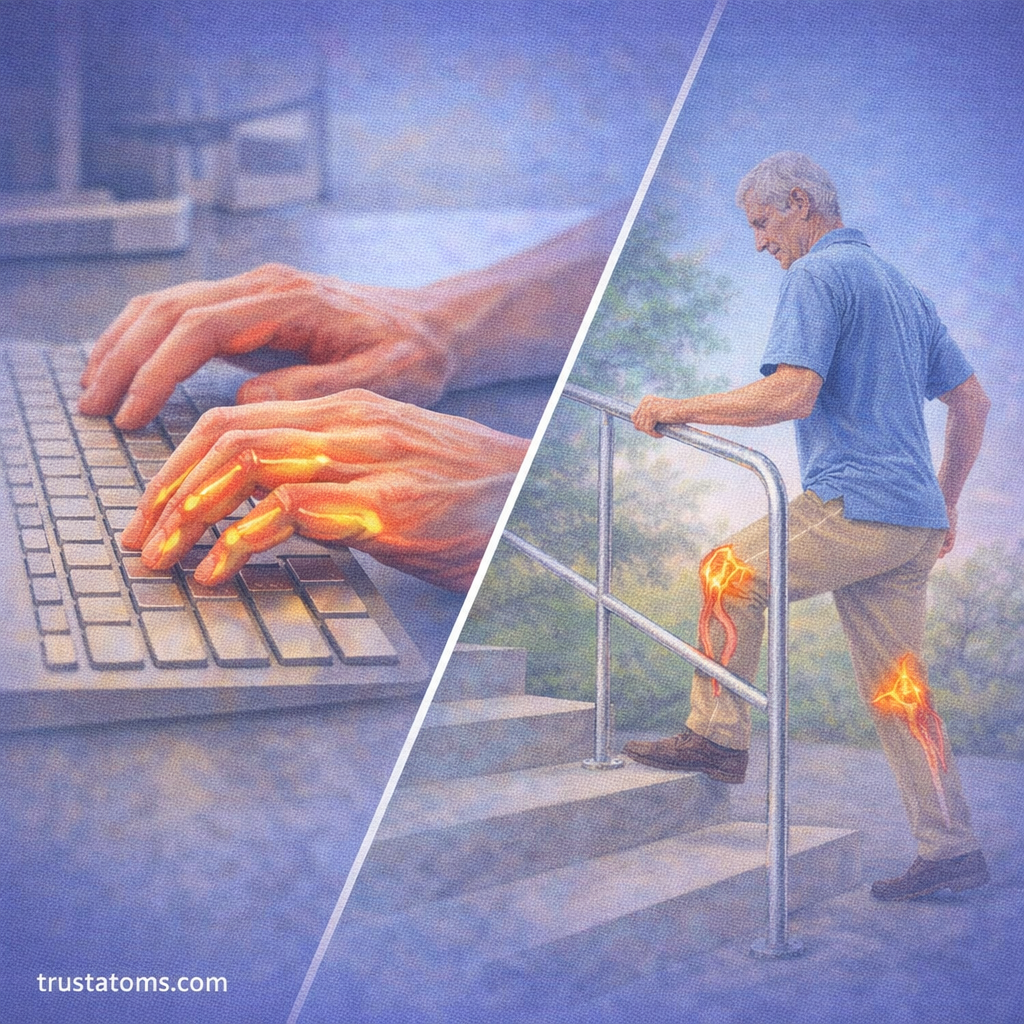
Muscle and joint coordination is used constantly:
- Walking on uneven surfaces
- Carrying objects
- Climbing stairs
- Reaching and bending
Even simple tasks rely on precise coordination between multiple systems.
Final Thoughts
Coordination between muscles and joints is essential for efficient, controlled movement. By working together through the guidance of the nervous system, muscles and joints allow the body to perform both simple and complex actions smoothly.
Improving coordination doesn’t require complicated routines—just consistent, mindful movement. Over time, better coordination leads to stronger performance, improved balance, and reduced risk of injury.