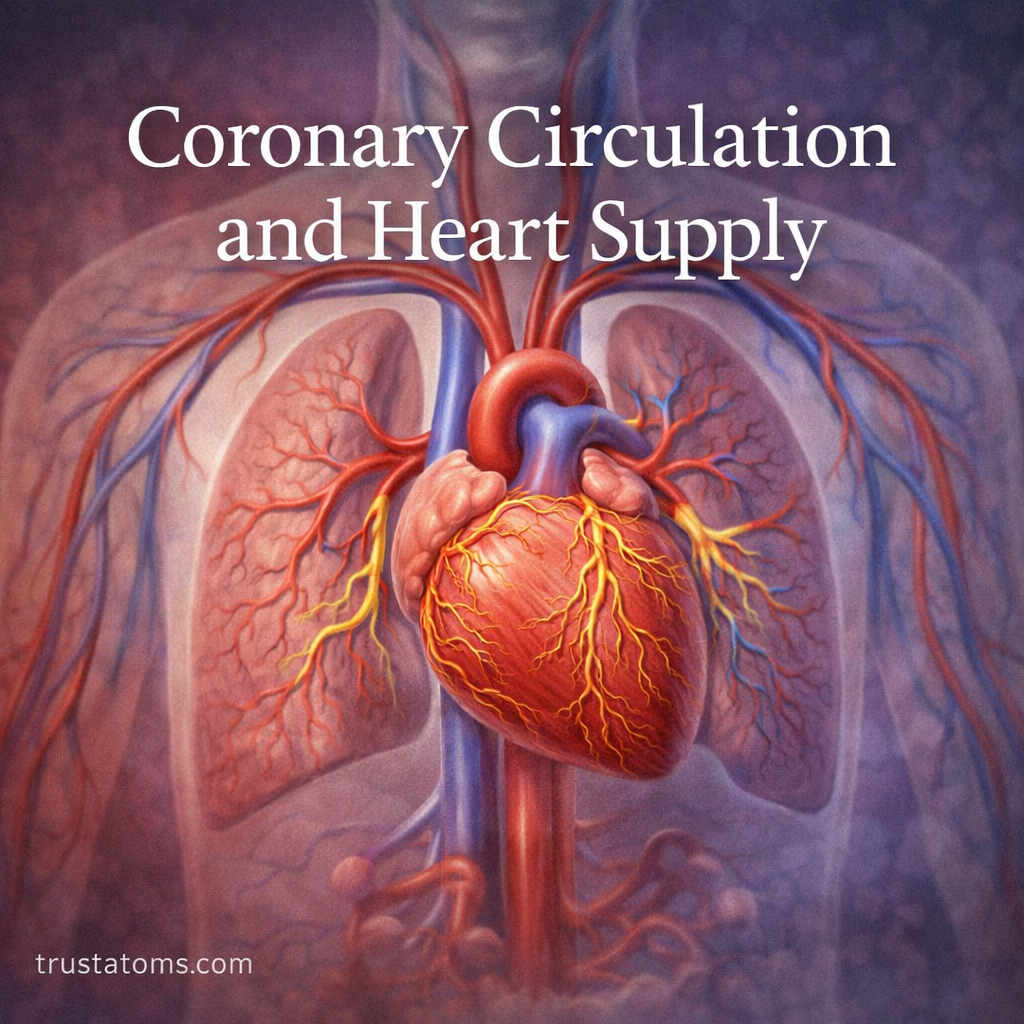
The heart is responsible for pumping blood throughout your body—but it also needs its own dedicated blood supply to function properly. This specialized system is called coronary circulation.
Coronary circulation ensures that the heart muscle (myocardium) receives oxygen and nutrients while removing waste products. Without it, the heart would not be able to sustain its continuous activity.
What Is Coronary Circulation?
Coronary circulation refers to the network of blood vessels that supply the heart itself.
Its primary role is to:
- Deliver oxygen-rich blood to heart muscle tissue
- Remove carbon dioxide and metabolic waste
- Maintain the heart’s ability to contract efficiently
Unlike other organs, the heart cannot rely on the blood inside its chambers—it needs its own separate circulation system.
Why the Heart Needs Its Own Blood Supply
Even though the heart is filled with blood, it cannot absorb enough oxygen directly from it.
Reasons include:
- Heart muscle is thick and requires direct blood vessel delivery
- Oxygen demand is extremely high due to constant activity
- Diffusion alone is not sufficient to meet metabolic needs
This is why coronary arteries are essential for survival.
The Main Coronary Arteries
Coronary arteries branch off from the base of the aorta and wrap around the heart.
The two main coronary arteries are:
Left Coronary Artery (LCA)
- Supplies the left side of the heart
- Branches into:
- Left anterior descending (LAD) artery
- Circumflex artery
Function:
Provides blood to the left ventricle, which pumps blood to the entire body.
Right Coronary Artery (RCA)
- Supplies the right side of the heart
- Often supplies parts of the heart’s electrical conduction system
Function:
Delivers blood to the right ventricle and parts of the atria.
How Blood Flows Through Coronary Circulation
Coronary circulation follows a specific pathway to supply and drain the heart.
Step-by-step process:
- Oxygenated blood leaves the left ventricle
- Blood enters the aorta
- Coronary arteries branch off and deliver blood to the heart muscle
- Oxygen is used by heart cells
- Deoxygenated blood is collected by cardiac veins
- Blood drains into the coronary sinus
- It returns to the right atrium
This continuous cycle supports the heart’s constant workload.
Coronary Veins and Blood Drainage
After oxygen is delivered, waste must be removed efficiently.
Key components of venous drainage:
- Cardiac veins collect deoxygenated blood
- Coronary sinus acts as the main drainage vessel
- Blood returns to the right atrium
This system ensures the heart remains free of metabolic waste buildup.
Unique Features of Coronary Circulation
Coronary circulation has some important characteristics that make it different from other systems.
Notable features:
- Blood flow occurs mainly during heart relaxation (diastole)
- Coronary vessels are highly responsive to oxygen demand
- Small blockages can significantly affect heart function
These features highlight how sensitive and critical this system is.
What Happens When Coronary Circulation Is Blocked?
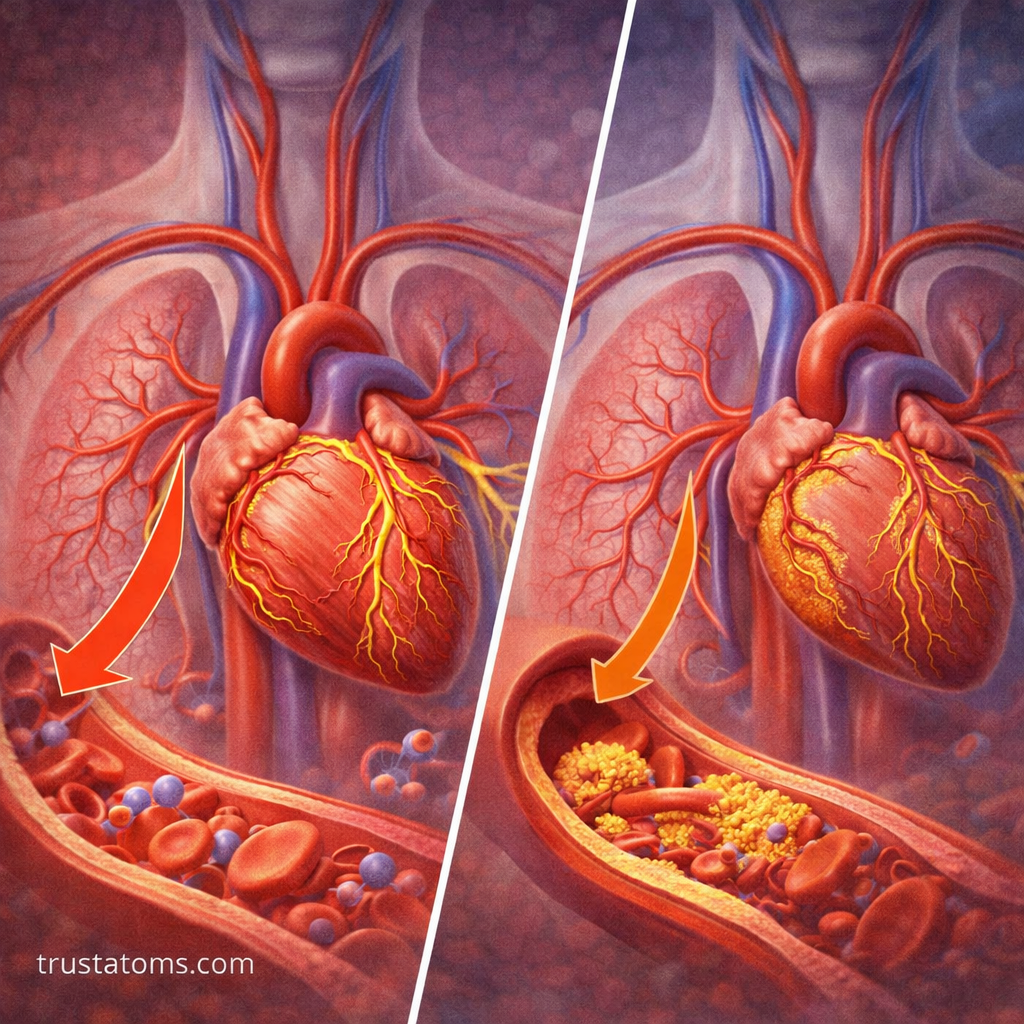
When coronary arteries become narrowed or blocked, the heart muscle is deprived of oxygen.
Common causes:
- Atherosclerosis (plaque buildup in arteries)
- Blood clots
- Inflammation of blood vessels
Possible outcomes:
- Chest pain (angina)
- Heart attack (myocardial infarction)
- Reduced heart function
The severity depends on how much blood flow is restricted.
Coronary Artery Disease (CAD)
Coronary artery disease is one of the most common heart conditions.
Key characteristics:
- Gradual narrowing of coronary arteries
- Reduced oxygen supply to heart muscle
- Increased risk of heart attack
Risk factors include:
- High blood pressure
- High cholesterol
- Smoking
- Diabetes
- Sedentary lifestyle
Early detection and management are essential for preventing complications.
How to Support Healthy Coronary Circulation
Maintaining good heart health helps protect coronary circulation.
Healthy habits include:
- Eating a balanced, heart-healthy diet
- Exercising regularly
- Managing stress levels
- Avoiding smoking
- Monitoring blood pressure and cholesterol
These steps can reduce the risk of coronary artery disease.
Final Thoughts
Coronary circulation is vital for keeping the heart alive and functioning. By delivering oxygen and nutrients directly to the heart muscle, it ensures that the body’s most important organ can continue working without interruption.
Understanding how this system works—and what happens when it fails—provides valuable insight into heart health and the importance of maintaining a healthy lifestyle.