Digestive enzymes are essential for breaking down the food we eat into nutrients the body can absorb and use. Without these specialized proteins, digestion would be incomplete, and the body would struggle to obtain energy and vital building blocks for growth and repair.
These enzymes work at different stages of digestion, each targeting specific nutrients such as carbohydrates, proteins, and fats.
What Are Digestive Enzymes?
Digestive enzymes are biological molecules that speed up chemical reactions in the digestive system. They break large food molecules into smaller, absorbable components.
Key Characteristics:
- Produced by various organs (salivary glands, stomach, pancreas, small intestine)
- Highly specific to certain nutrients
- Function best within certain pH conditions
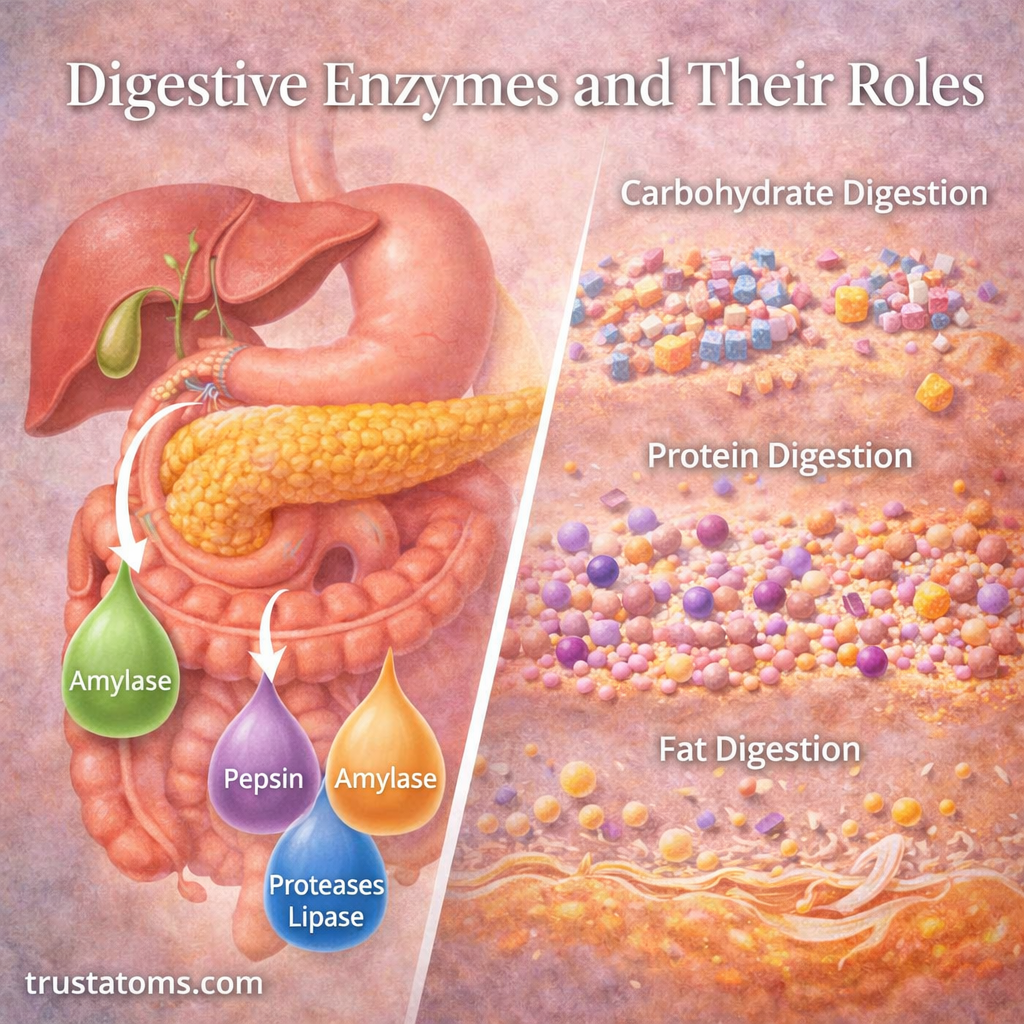
Where Digestive Enzymes Are Produced
Different parts of the digestive system produce different enzymes.
Salivary Glands
- Release enzymes into the mouth
- Begin carbohydrate digestion
Stomach
- Produces enzymes that start protein digestion
Pancreas
- Releases a wide range of enzymes into the small intestine
Small Intestine
- Produces enzymes that complete digestion
Major Types of Digestive Enzymes
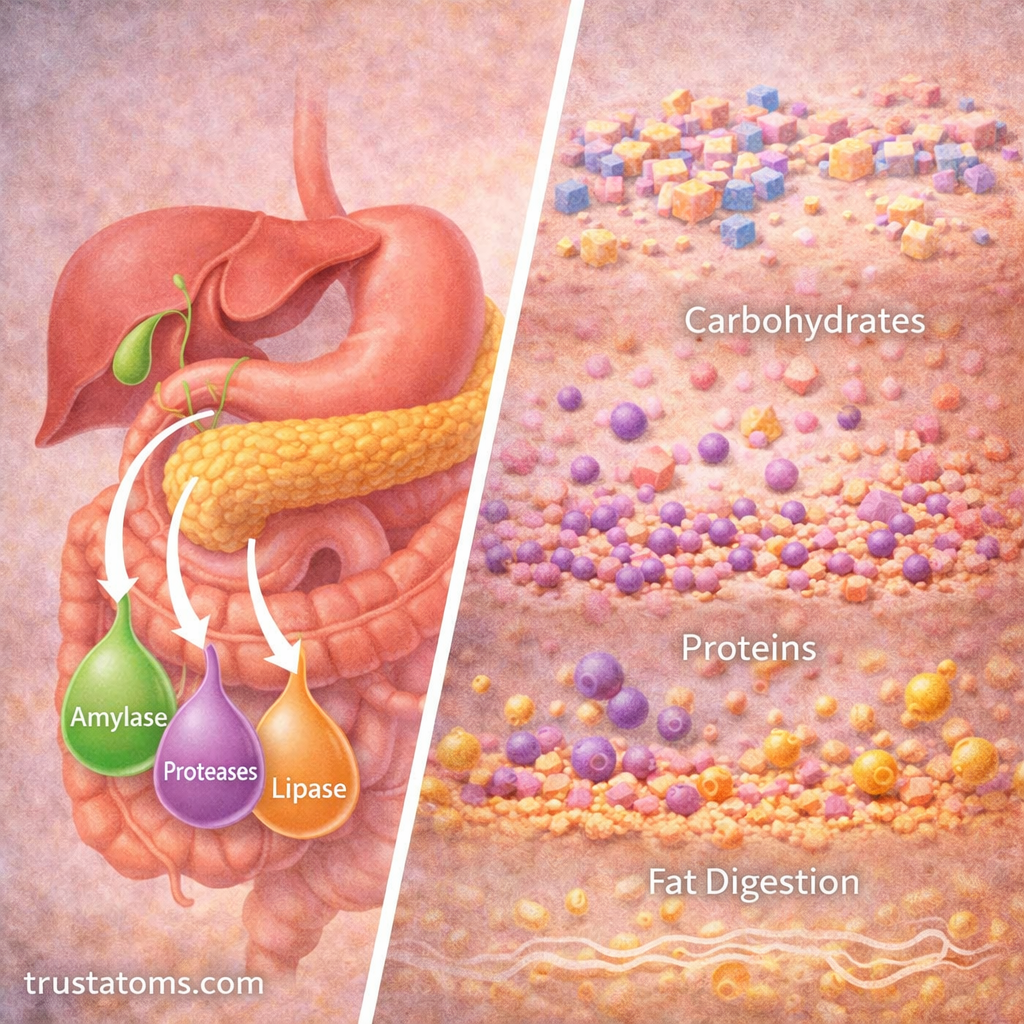
Digestive enzymes are categorized based on the nutrients they break down.
Carbohydrases (Carbohydrate-Digesting Enzymes)
These enzymes break down complex carbohydrates into simple sugars.
Examples:
- Amylase (saliva and pancreas): breaks starch into smaller sugars
- Maltase, lactase, sucrase (small intestine): convert sugars into glucose
Function:
- Convert carbohydrates into simple sugars for absorption
Proteases (Protein-Digesting Enzymes)
Proteases break down proteins into amino acids.
Examples:
- Pepsin (stomach): begins protein digestion
- Trypsin and chymotrypsin (pancreas): continue protein breakdown
Function:
- Reduce proteins into amino acids for tissue repair and growth
Lipases (Fat-Digesting Enzymes)
Lipases are responsible for breaking down fats.
Example:
- Pancreatic lipase: breaks fats into fatty acids and glycerol
Function:
- Enable fat absorption through the lymphatic system
How Digestive Enzymes Work Together
Digestion is a coordinated process where enzymes act in sequence.
Step-by-Step Overview:
- Carbohydrate digestion begins in the mouth with amylase
- Protein digestion starts in the stomach with pepsin
- The pancreas releases enzymes into the small intestine
- Enzymes complete digestion into absorbable molecules
- Nutrients are absorbed through the intestinal lining
Each enzyme plays a specific role, ensuring efficient digestion.
Importance of pH in Enzyme Activity
Digestive enzymes require specific conditions to function properly.
Examples:
- Pepsin works best in acidic conditions (stomach)
- Pancreatic enzymes function best in neutral or slightly alkaline environments (small intestine)
The body carefully regulates pH to optimize enzyme performance.
Role of the Small Intestine in Final Digestion
The small intestine is where digestion is completed.
Key Functions:
- Houses enzymes on the brush border
- Breaks down remaining nutrients
- Facilitates absorption into blood and lymph
Without these final steps, nutrients would remain unusable.
What Happens When Enzymes Are Deficient?
A lack of digestive enzymes can lead to incomplete digestion.
Common Effects:
- Bloating and discomfort
- Nutrient deficiencies
- Malabsorption
Examples:
- Lactase deficiency → lactose intolerance
- Pancreatic insufficiency → poor fat digestion
Why Digestive Enzymes Matter
Digestive enzymes are essential for:
- Converting food into usable nutrients
- Supporting energy production
- Maintaining overall health
- Enabling proper absorption
They ensure that the body can fully benefit from the food consumed.
Key Takeaways
- Digestive enzymes break down carbohydrates, proteins, and fats.
- Different organs produce specific enzymes for each stage of digestion.
- Enzymes work best under specific pH conditions.
- The small intestine is the main site of final digestion and absorption.
- Enzyme deficiencies can lead to digestive issues and nutrient loss.
Understanding digestive enzymes highlights how the body transforms food into fuel and building materials.