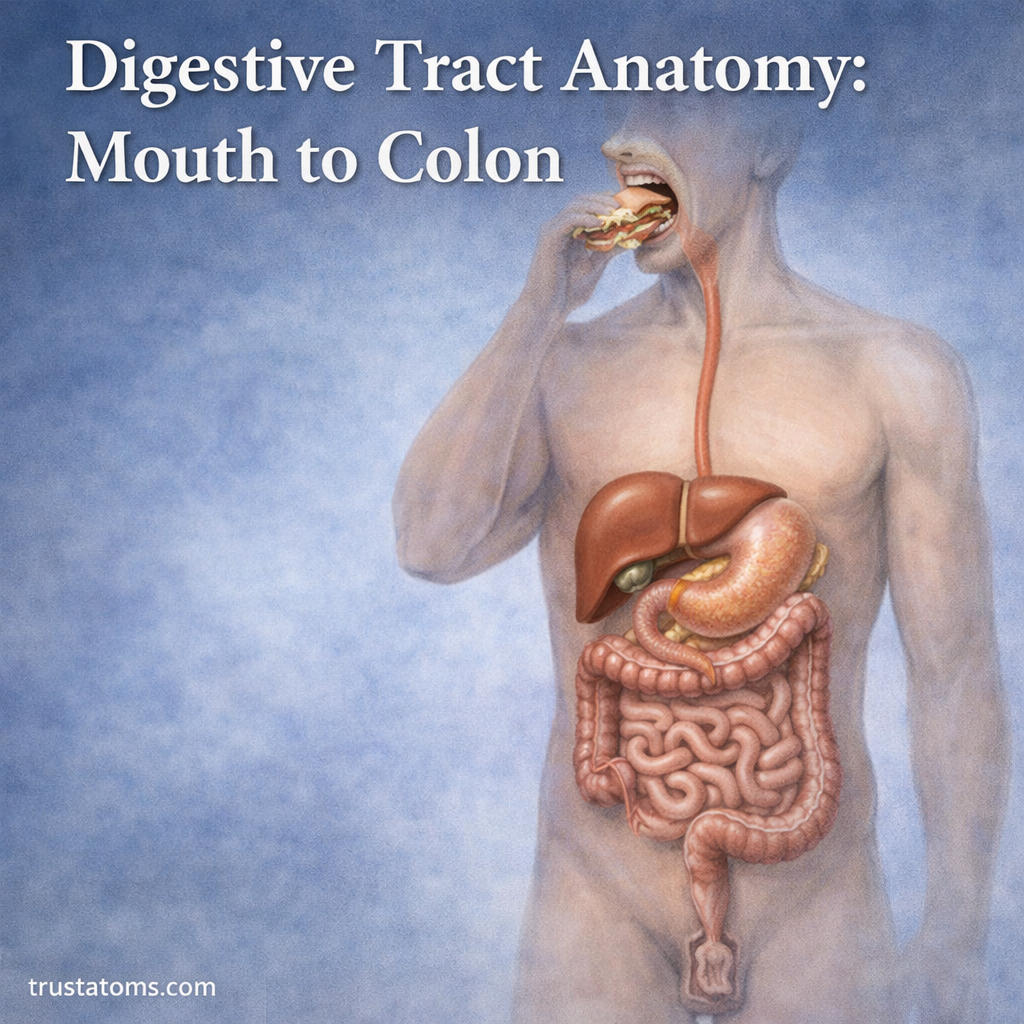
The digestive tract, also known as the gastrointestinal (GI) tract, is a continuous tube that runs from the mouth to the colon. Its primary role is to process food, absorb nutrients, and eliminate waste.
Each section of the digestive tract has a specialized structure and function, working together in a coordinated system that supports overall health and energy production.
Overview of the Digestive Tract
The digestive tract is a long, muscular tube that includes:
- Mouth
- Pharynx (throat)
- Esophagus
- Stomach
- Small intestine
- Large intestine (colon)
Food travels through these organs in a one-way path, undergoing mechanical and chemical changes along the way.
The Mouth: Where Digestion Begins
The digestive process starts in the mouth.
Key Functions
- Chewing (mechanical digestion) breaks food into smaller pieces
- Saliva begins chemical digestion, especially of carbohydrates
- The tongue helps form food into a swallowable mass (bolus)
Important Structures
- Teeth – cut and grind food
- Salivary glands – produce saliva with digestive enzymes
- Tongue – aids in swallowing and taste
Pharynx: The Swallowing Pathway
The pharynx connects the mouth to the esophagus and plays a key role in swallowing.
Key Functions
- Directs food from the mouth into the esophagus
- Prevents food from entering the airway
During swallowing:
- The epiglottis closes over the windpipe
- Food is safely guided into the digestive tract
Esophagus: Moving Food to the Stomach
The esophagus is a muscular tube that transports food to the stomach.
How It Works
- Uses rhythmic contractions called peristalsis
- Moves food downward regardless of body position
Key Feature
- Lower esophageal sphincter (LES)
- Opens to allow food into the stomach
- Prevents stomach acid from flowing back upward
Stomach: Mixing and Breakdown
The stomach is a muscular, expandable organ that continues digestion.
Key Functions
- Stores food temporarily
- Mixes food with gastric juices
- Begins protein digestion
Digestive Components
- Hydrochloric acid (HCl) – breaks down food and kills bacteria
- Enzymes (like pepsin) – digest proteins
The stomach turns food into a semi-liquid mixture called chyme.
Small Intestine: The Main Site of Absorption
The small intestine is the longest part of the digestive tract and the primary site for nutrient absorption.
Sections of the Small Intestine
- Duodenum
- Jejunum
- Ileum
Key Functions
- Continues chemical digestion
- Absorbs nutrients into the bloodstream
Special Features
- Villi and microvilli increase surface area
- Allow efficient absorption of:
- Vitamins
- Minerals
- Amino acids
- Fatty acids
Accessory Contributions to the Small Intestine
Although not part of the tract itself, certain organs support digestion here:
- Liver – produces bile to break down fats
- Gallbladder – stores and releases bile
- Pancreas – produces digestive enzymes
These substances enter the duodenum to assist digestion.
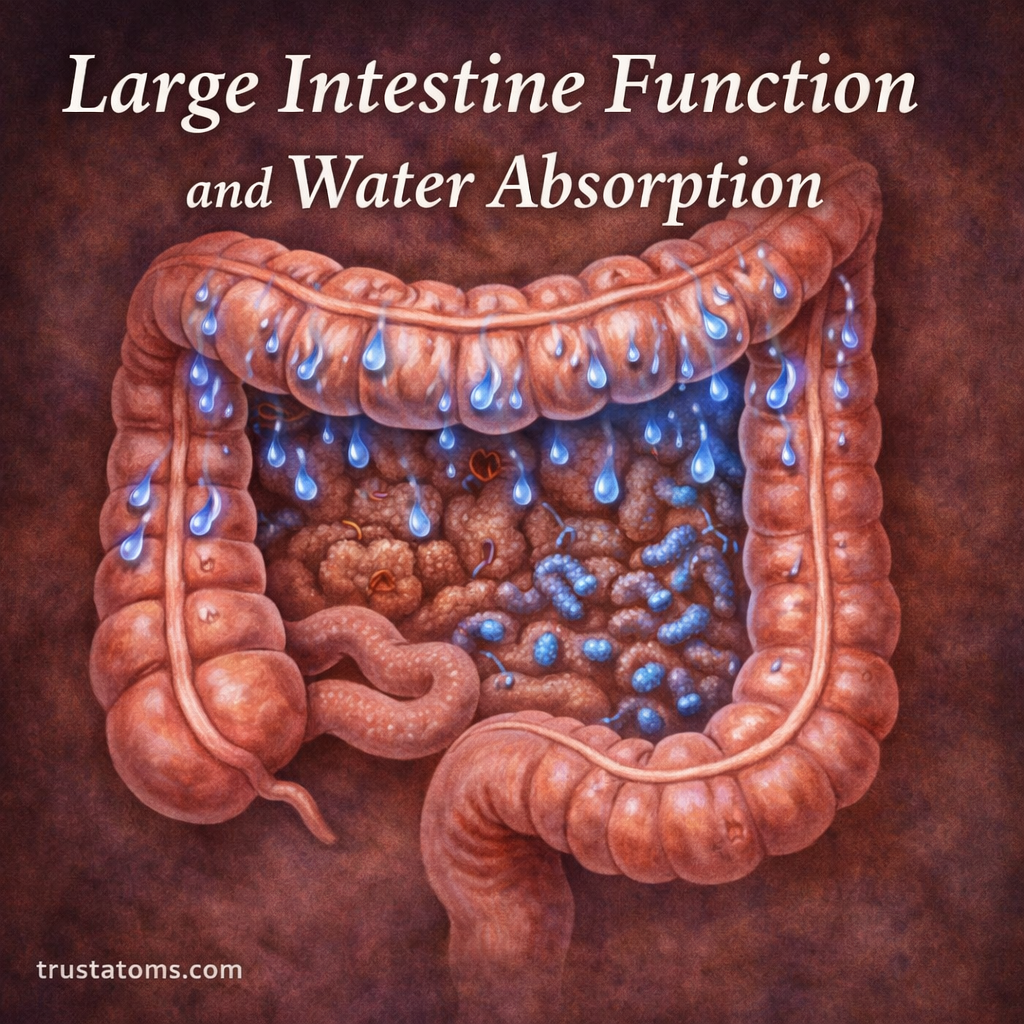
Large Intestine (Colon): Water Absorption and Waste Formation
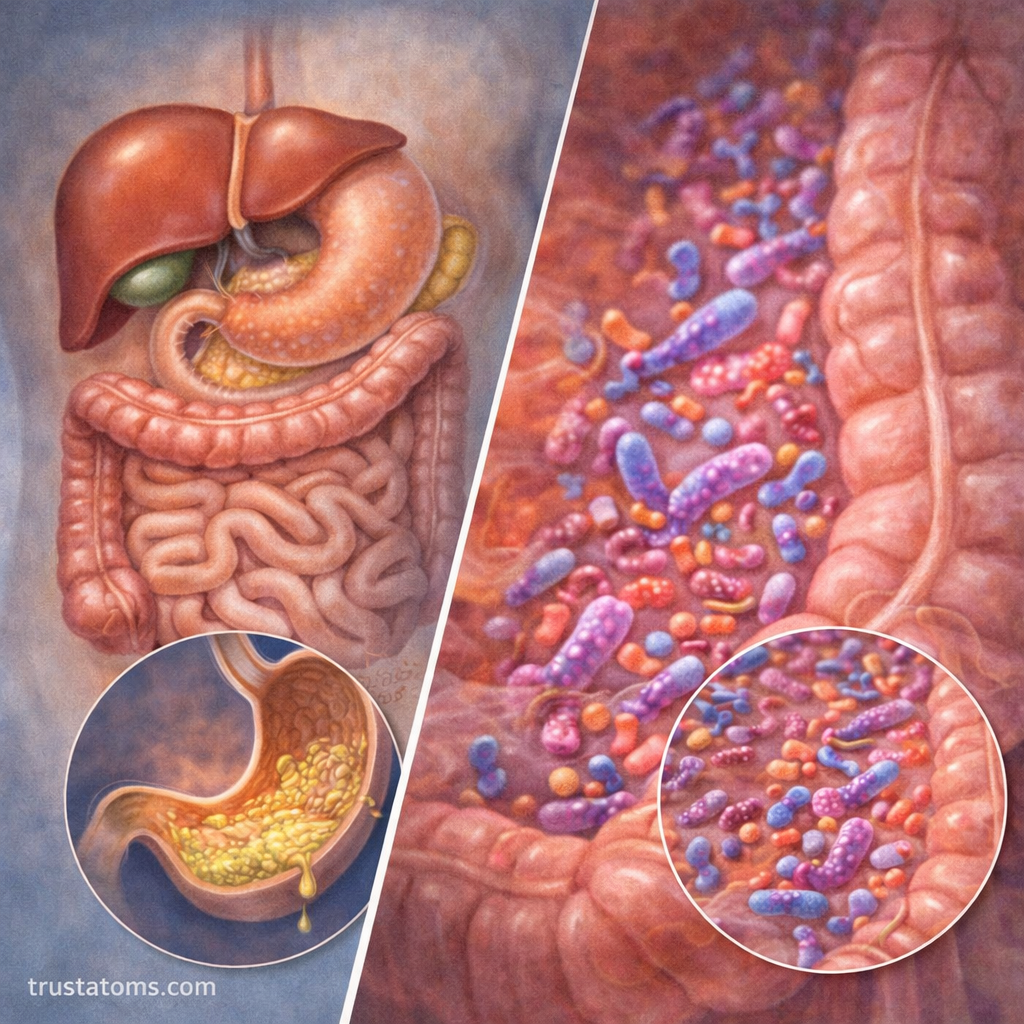
The large intestine absorbs water and prepares waste for elimination.
Main Sections
- Cecum
- Ascending colon
- Transverse colon
- Descending colon
- Sigmoid colon
Key Functions
- Absorbs water and electrolytes
- Forms solid waste (feces)
- Houses beneficial gut bacteria
These bacteria:
- Help break down remaining material
- Produce certain vitamins (like vitamin K)
Rectum and Anus: Elimination
The final stages of digestion involve waste removal.
Rectum
- Stores feces until elimination
Anus
- Controls the release of waste through sphincter muscles
This process is regulated by both voluntary and involuntary control.
How Food Moves Through the Digestive Tract
Movement through the digestive tract is controlled by coordinated muscle activity.
Peristalsis
- Wave-like contractions push food forward
- Occurs throughout the entire GI tract
Segmentation
- Mixing movements in the intestines
- Helps break food down further and improve absorption
Key Structural Features of the Digestive Tract
Several structural characteristics allow the digestive tract to function efficiently:
Layered Wall Structure
Each section of the tract includes:
- Mucosa – inner lining for secretion and absorption
- Submucosa – contains blood vessels and nerves
- Muscular layer – responsible for movement
- Serosa – outer protective layer
Surface Adaptations
- Villi and microvilli (small intestine) increase absorption
- Folds and elasticity allow expansion and movement
Why Digestive Tract Anatomy Matters
Understanding the anatomy of the digestive tract helps explain:
- How nutrients are absorbed
- Why certain digestive disorders occur
- How different organs contribute to overall health
Disruptions in any part of the tract can affect digestion, nutrient absorption, and waste elimination.
Common Issues Along the Digestive Tract
Different sections of the digestive tract are associated with specific conditions:
- Mouth – cavities, gum disease
- Esophagus – acid reflux (GERD)
- Stomach – ulcers, gastritis
- Small intestine – malabsorption disorders
- Colon – constipation, IBS, colon inflammation
Recognizing where problems occur can help guide treatment and prevention.
Final Thoughts
The digestive tract is a continuous, highly specialized system that transforms food into the nutrients your body needs. From the mouth to the colon, each structure plays a distinct and essential role.
By understanding how these parts work together, you gain a clearer picture of how your body processes food and maintains overall health.