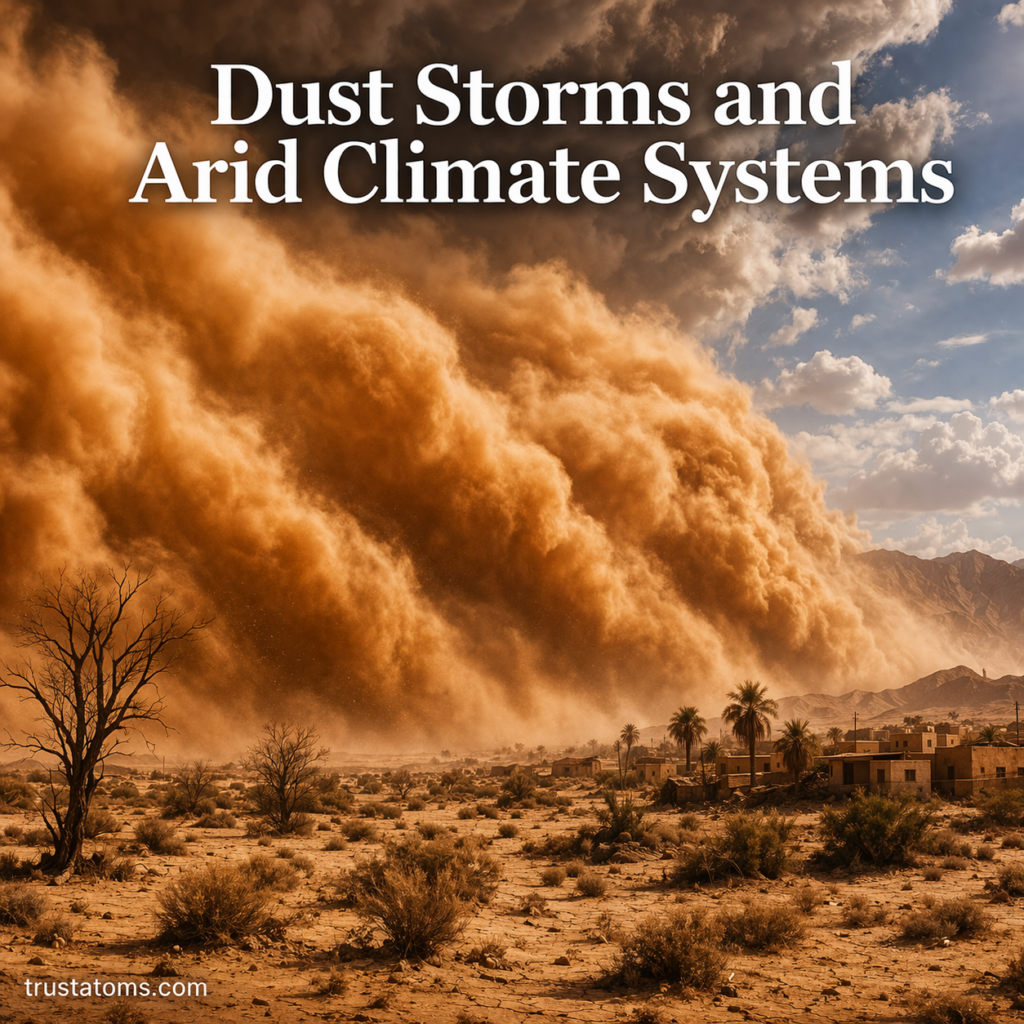
Dust storms are powerful natural events that can transform clear skies into dense clouds of airborne particles within minutes. Common in dry and desert regions, these storms are closely tied to arid climate systems, where limited moisture, loose soil, and strong winds create ideal conditions for dust to be lifted into the atmosphere.
Understanding how dust storms form and why they are so common in arid regions helps explain their environmental impact and global significance.
What Are Dust Storms?
Dust storms are weather events in which strong winds lift large amounts of dust and sand into the air, reducing visibility and affecting air quality.
Key Characteristics
- Occur in dry, loose soil environments
- Driven by strong winds
- Can travel hundreds or even thousands of miles
- Reduce visibility dramatically
Dust storms range from localized events to massive systems that span entire regions.
What Are Arid Climate Systems?
Arid climates are regions that receive very little precipitation throughout the year.
Common Features of Arid Regions
- Low rainfall (often less than 10 inches annually)
- Sparse vegetation
- High evaporation rates
- Large temperature swings between day and night
Examples include deserts such as the Sahara, Arabian, and parts of the southwestern United States.
Why Arid Regions Are Prone to Dust Storms
Arid environments provide the perfect ingredients for dust storms.
Key Factors
- Dry, Loose Soil
- Lack of moisture means soil particles are not bound together
- Sparse Vegetation
- Fewer plants to hold soil in place
- Strong Winds
- Easily lift particles into the air
- High Temperatures
- Increase dryness and evaporation
Together, these factors make dust storms more frequent and intense in desert regions.
How Dust Storms Form
Dust storms typically develop when strong winds interact with dry land surfaces.
Step-by-Step Process
- Wind speeds increase across dry terrain
- Loose particles begin to move along the ground (saltation)
- Smaller particles are lifted into the air
- A dense wall or cloud of dust forms
- The storm spreads and travels with prevailing winds
In some cases, dust can rise thousands of feet into the atmosphere.
Types of Dust Storms
Dust storms can vary in structure and intensity.
Common Types
- Haboobs
- Intense dust walls caused by thunderstorm outflows
- Sudden and dramatic in appearance
- Blowing Dust
- Less intense, but still reduces visibility
- Dust Devils
- Small, rotating columns of dust
- Short-lived and localized
Each type forms under slightly different atmospheric conditions.
The Role of Wind and Pressure Systems
Wind is the primary driver of dust storms, often linked to pressure differences in the atmosphere.
Key Drivers
- Low-pressure systems create strong surface winds
- Thunderstorms produce gust fronts that lift dust
- Temperature differences enhance wind movement
When these forces combine with dry conditions, dust storms can rapidly intensify.
Environmental Impacts of Dust Storms
Dust storms play a complex role in Earth’s environment.
Negative Impacts
- Soil erosion
- Reduced air quality
- Damage to crops and infrastructure
- Disruption of ecosystems
Positive Impacts
- Transport of nutrients across continents
- Fertilization of ocean and rainforest ecosystems
For example, dust from the Sahara helps fertilize the Amazon rainforest.
Effects on Human Health and Society
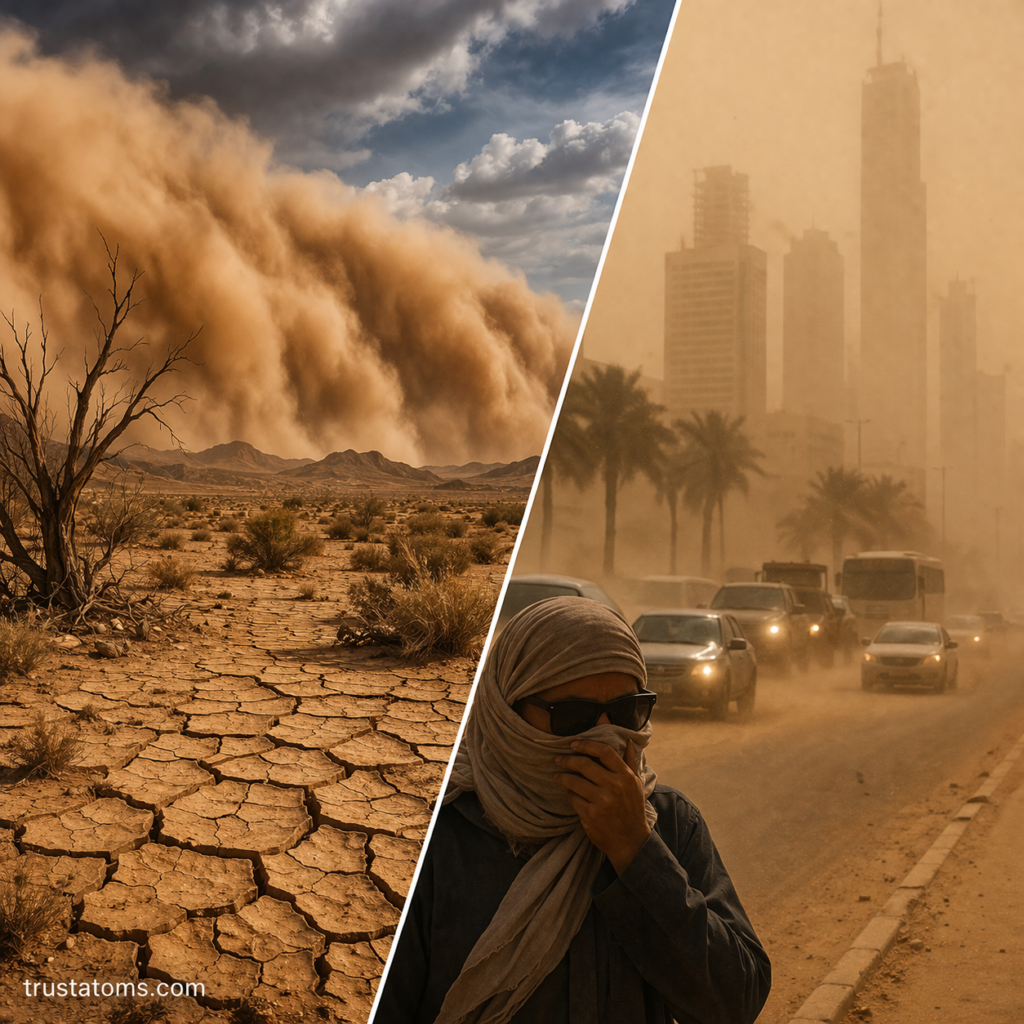
Dust storms can pose serious risks to people and communities.
Health Risks
- Respiratory problems
- Eye irritation
- Increased risk for asthma sufferers
Societal Impacts
- Transportation disruptions (roads, airports)
- Reduced visibility leading to accidents
- Economic losses in agriculture
Dust Storms and Climate Interactions
Dust storms are both influenced by and influence climate systems.
Climate Connections
- Drought increases dust storm frequency
- Land degradation contributes to dust sources
- Atmospheric dust affects sunlight and temperature
Dust particles can reflect or absorb sunlight, impacting regional and global climate patterns.
Preventing and Reducing Dust Storm Impacts
While dust storms cannot be completely prevented, their effects can be reduced.
Mitigation Strategies
- Planting vegetation to stabilize soil
- Sustainable land management
- Reducing overgrazing
- Monitoring and early warning systems
These efforts help limit soil erosion and reduce storm intensity.
Key Takeaways
- Dust storms occur when strong winds lift dry, loose soil into the air
- Arid climates provide ideal conditions due to low moisture and sparse vegetation
- Wind and pressure systems drive storm formation
- Dust storms can have both harmful and beneficial environmental effects
- Human activities can influence dust storm frequency and intensity
Final Thoughts
Dust storms and arid climate systems are deeply interconnected, highlighting how environmental conditions shape weather events. While often destructive, dust storms also play a role in Earth’s natural processes, including nutrient distribution and climate interactions.
Understanding these dynamics is essential for managing their impacts and adapting to changing environmental conditions in dry regions.