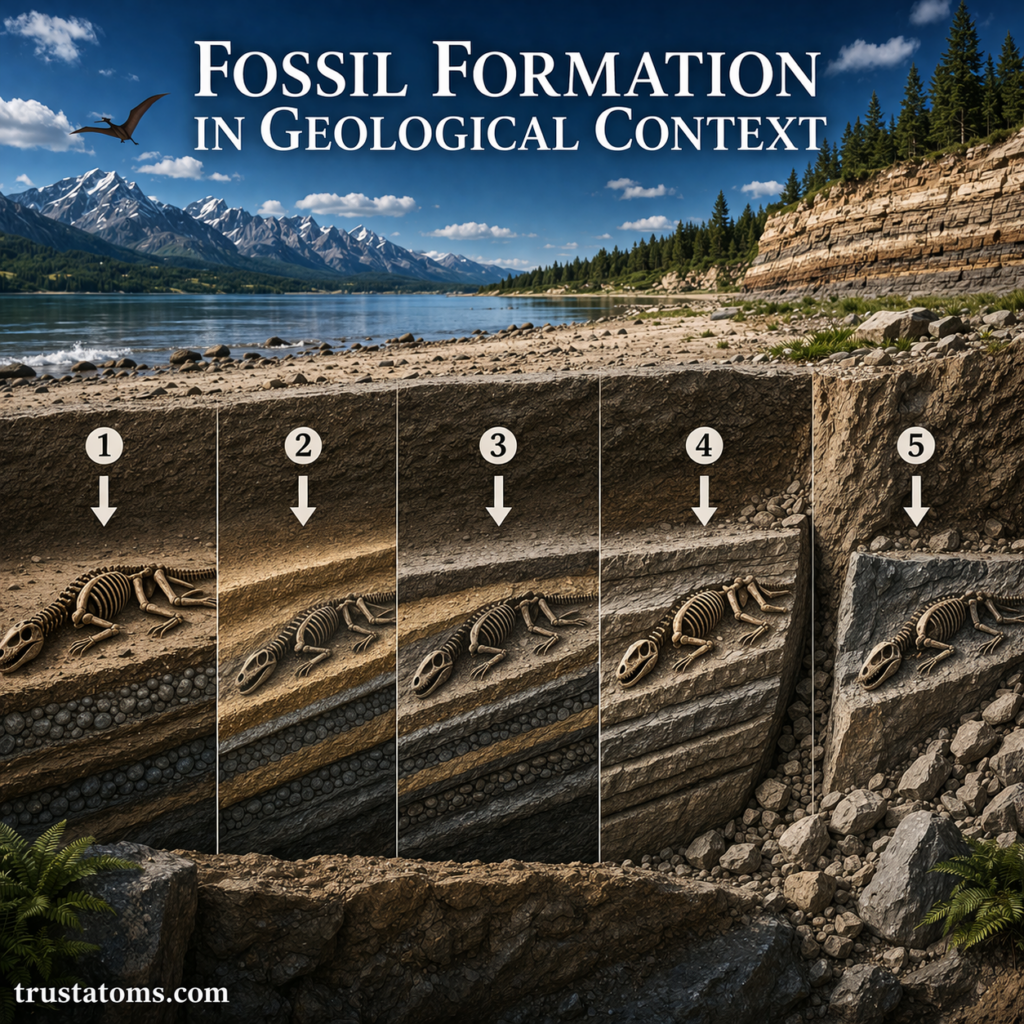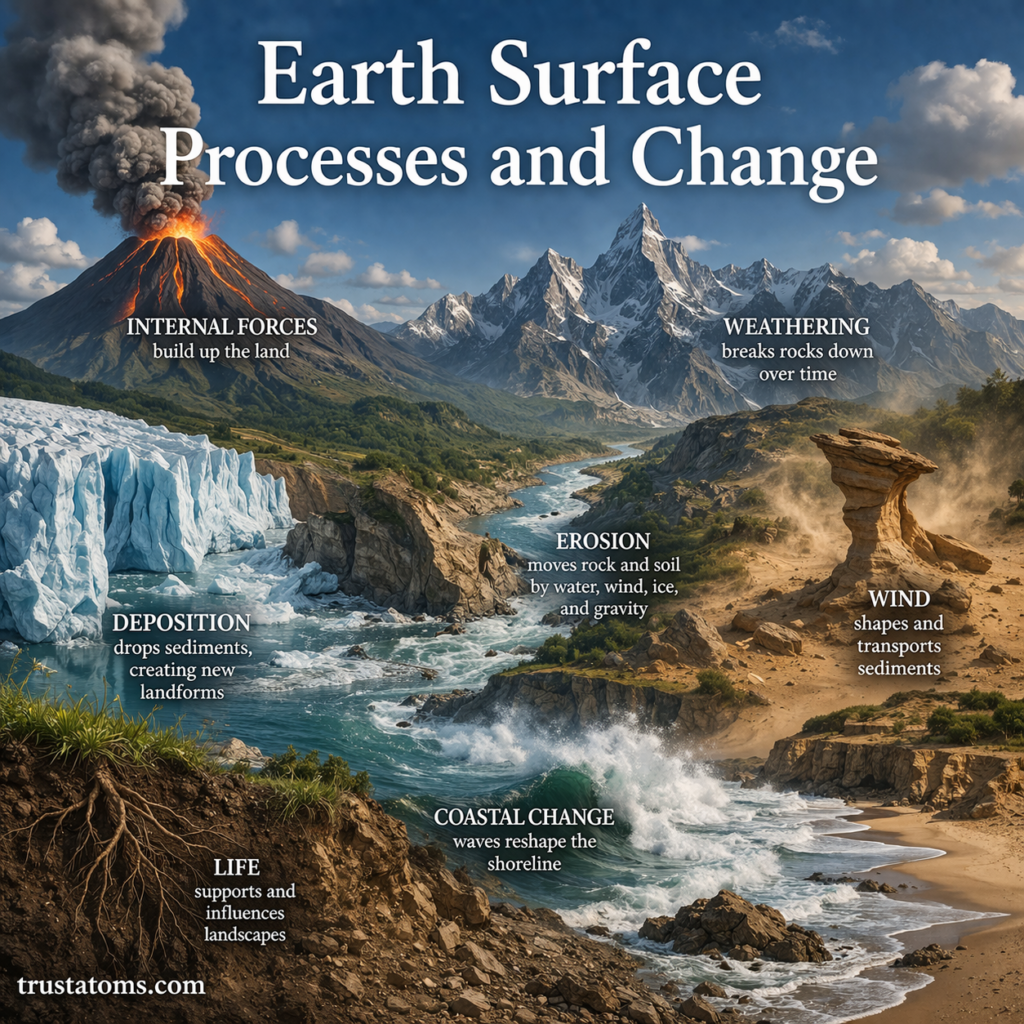
Earth’s surface is constantly changing. Mountains rise, rivers carve valleys, coastlines shift, and landscapes evolve over time. These transformations are driven by a combination of internal forces from within the planet and external forces acting on the surface.
Understanding Earth surface processes helps explain how landforms develop, how natural hazards occur, and how our environment changes over time.
What Are Earth Surface Processes?
Earth surface processes are natural activities that shape and modify the planet’s outer layer (the crust). These processes operate over different time scales — from sudden events like earthquakes to slow changes over millions of years.
Two Main Categories
- Endogenic Processes (Internal Forces)
- Originate inside Earth
- Build up landforms
- Exogenic Processes (External Forces)
- Act on Earth’s surface
- Wear down and reshape landforms
Endogenic Processes: Building the Landscape
Endogenic processes are powered by heat from Earth’s interior. They create and elevate major landforms.
Key Types
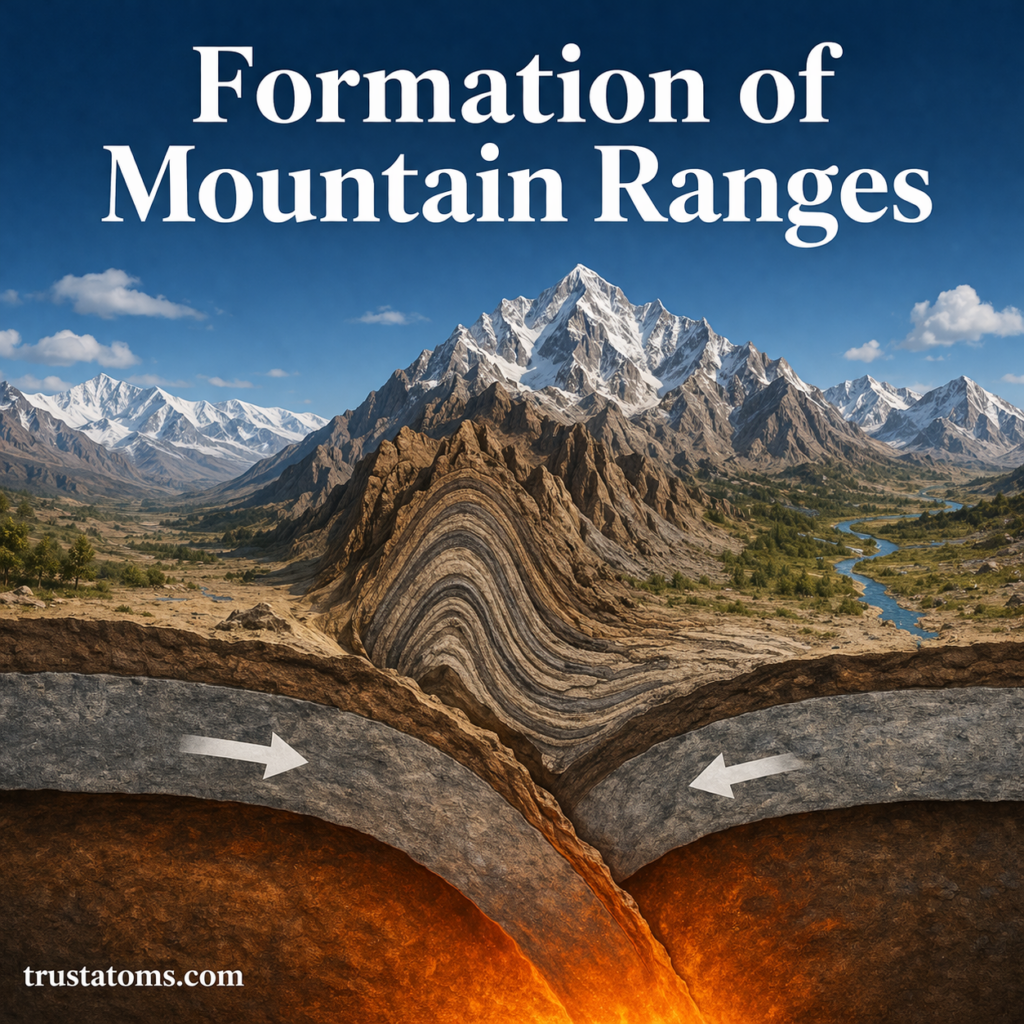
Plate Tectonics
- Movement of Earth’s tectonic plates
- Causes mountain formation, earthquakes, and volcanic activity
Example: The Himalayas formed from continental plate collision.
Volcanism
- Magma rises and erupts onto the surface
- Builds volcanic mountains and islands
Crustal Deformation
- Folding and faulting of rock layers
- Creates ridges, valleys, and fault lines
Exogenic Processes: Shaping and Wearing Down
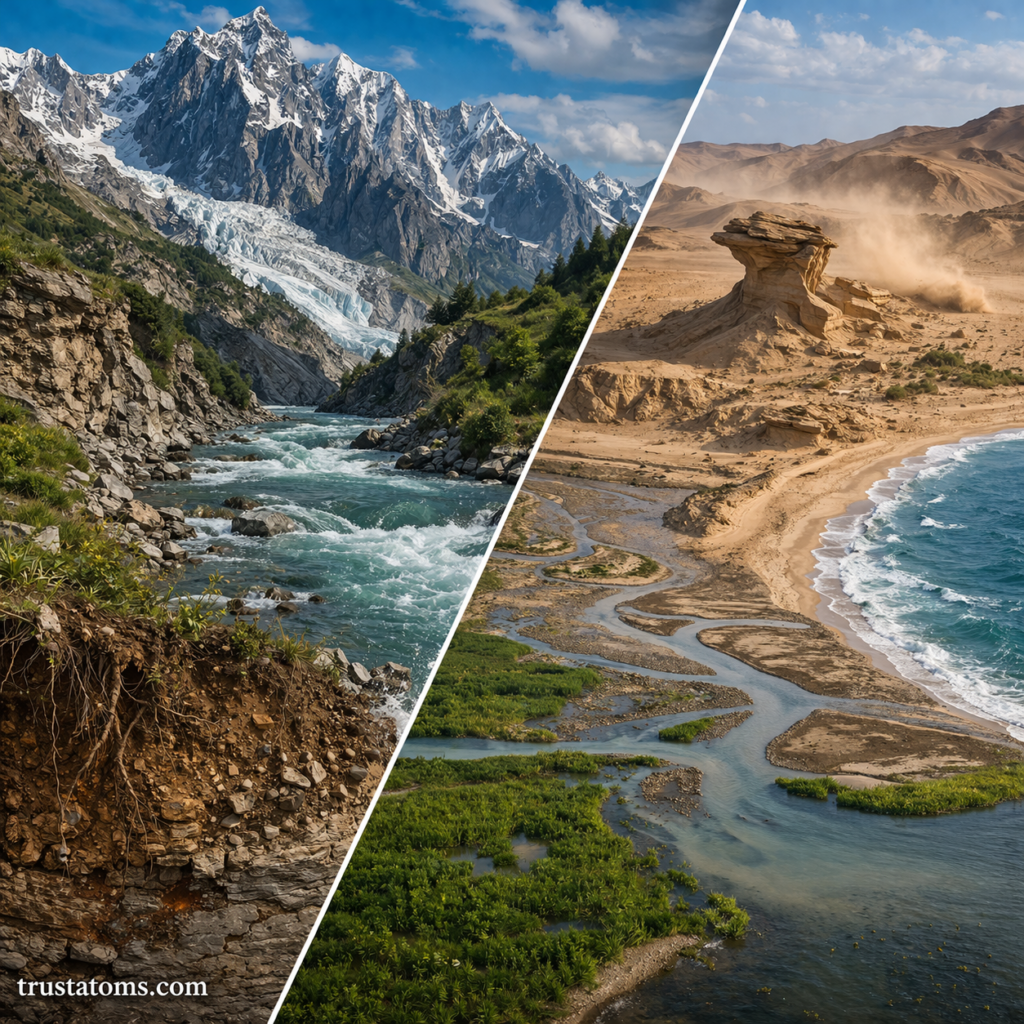
Exogenic processes break down and transport materials across Earth’s surface.
Main Processes
Weathering
Weathering breaks rocks into smaller pieces without moving them.
Types include:
- Mechanical Weathering (physical breakdown)
- Chemical Weathering (rock composition changes)
- Biological Weathering (caused by plants and organisms)
Erosion
Erosion removes and transports material.
Agents of erosion:
- Water (rivers, rainfall)
- Wind
- Ice (glaciers)
- Gravity
Deposition
- Sediments are dropped in new locations
- Forms features like deltas, floodplains, and sand dunes
The Continuous Cycle of Change
Earth’s surface is shaped by a cycle of construction and destruction.
How the Cycle Works
- Uplift creates new landforms
- Weathering breaks them down
- Erosion transports materials
- Deposition builds new features elsewhere
This cycle repeats continuously, reshaping the planet over time.
Landforms Created by Surface Processes
Different processes create distinct landforms.
River Landforms
- Valleys
- Meanders
- Deltas
Example: The Mississippi River forms extensive floodplains and deltas.
Glacial Landforms
- U-shaped valleys
- Moraines
- Fjords
Coastal Landforms
- Cliffs
- Beaches
- Sandbars
Desert Landforms
- Sand dunes
- Rock formations shaped by wind
Factors That Influence Surface Change
Several factors determine how quickly and dramatically landscapes change.
Climate
- Heavy rainfall increases erosion
- Cold climates promote glacial activity
Rock Type
- Hard rocks resist erosion
- Softer rocks break down more easily
Vegetation
- Stabilizes soil and reduces erosion
- Lack of vegetation speeds up land loss
Human Activity
- Deforestation increases erosion
- Urbanization alters drainage patterns
- Mining reshapes landscapes
Rapid vs Slow Changes
Not all surface changes happen at the same speed.
Slow Changes (Gradual Processes)
- Mountain building
- River erosion
- Soil formation
These occur over thousands to millions of years.
Rapid Changes (Sudden Events)
- Earthquakes
- Landslides
- Volcanic eruptions
These can reshape landscapes in minutes or hours.
Why Earth Surface Processes Matter
Understanding these processes is important for both science and everyday life.
Practical Impacts
- Natural Hazard Prediction
Helps identify risks like floods, landslides, and earthquakes - Environmental Management
Guides conservation and land-use planning - Resource Distribution
Explains where soils, minerals, and water resources are found
Final Thoughts
Earth surface processes are constantly shaping the world around us. From towering mountains to winding rivers and shifting coastlines, every landscape is the result of ongoing change.
By understanding how internal and external forces interact, we gain insight into Earth’s past, present, and future — and how to better live within this dynamic environment.