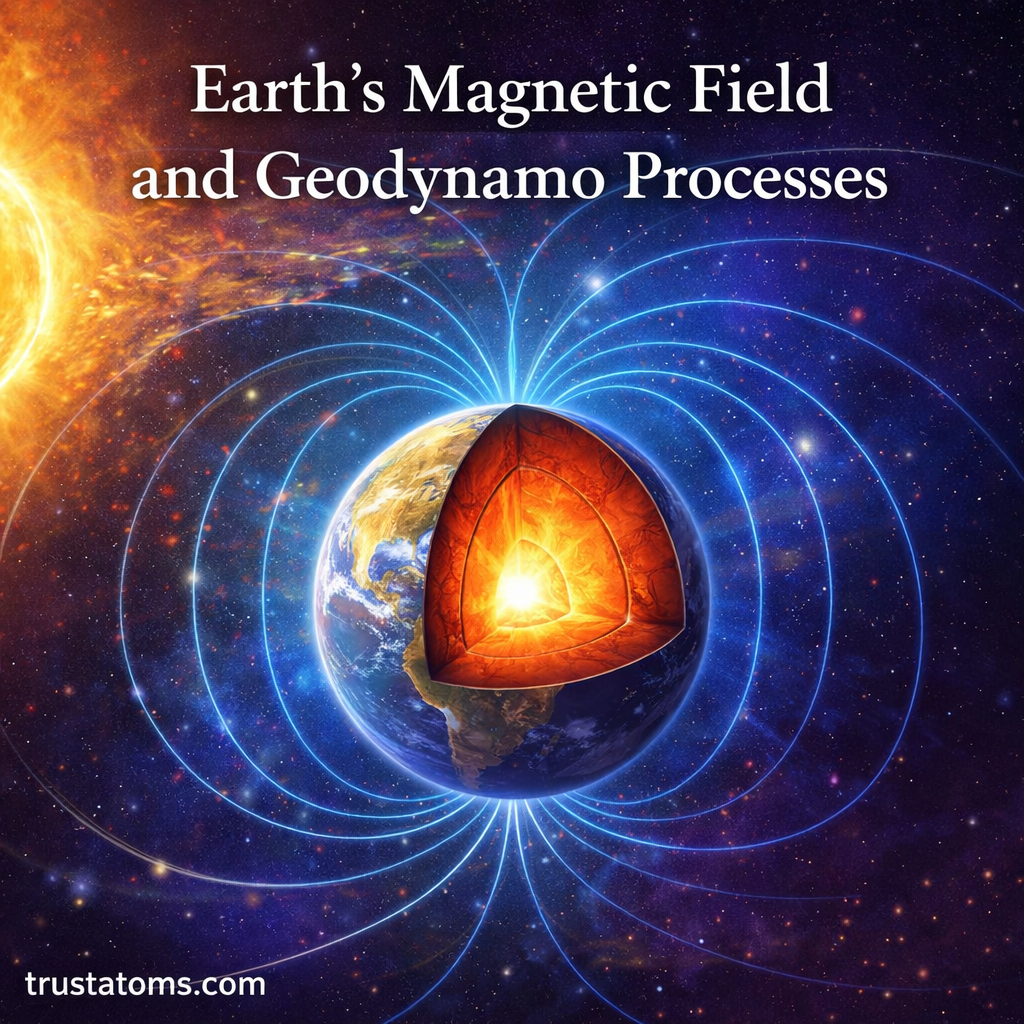
Earth’s magnetic field is an invisible force that surrounds the planet, protecting life from harmful solar radiation and helping guide navigation systems. This magnetic field is generated deep within Earth through a process known as the geodynamo.
Understanding how the magnetic field works—and how it is created—reveals important insights about Earth’s interior and its interaction with space.
What Is Earth’s Magnetic Field?
Earth’s magnetic field is a region around the planet where magnetic forces can be detected. It behaves like a giant bar magnet, with a north and south magnetic pole.
Key Features
- Extends thousands of kilometers into space
- Forms a protective bubble called the magnetosphere
- Deflects charged particles from the Sun
- Aligns compass needles for navigation
Without this field, Earth would be far more vulnerable to solar radiation.
The Structure of the Magnetosphere
The magnetosphere is the area of space influenced by Earth’s magnetic field.
Main Components
- Bow shock – where solar wind slows down upon hitting the magnetosphere
- Magnetopause – the boundary between solar wind and Earth’s magnetic field
- Magnetotail – a long extension of the field on the side opposite the Sun
This structure constantly changes in response to solar activity.
What Is the Geodynamo?
The geodynamo is the process that generates Earth’s magnetic field. It occurs in the outer core, where molten metals are in constant motion.
Key Elements of the Geodynamo
- Liquid iron and nickel in the outer core
- Heat from the inner core
- Convection currents (movement caused by temperature differences)
- Earth’s rotation, which influences flow patterns
These factors combine to produce electric currents, which in turn create a magnetic field.
How the Geodynamo Works
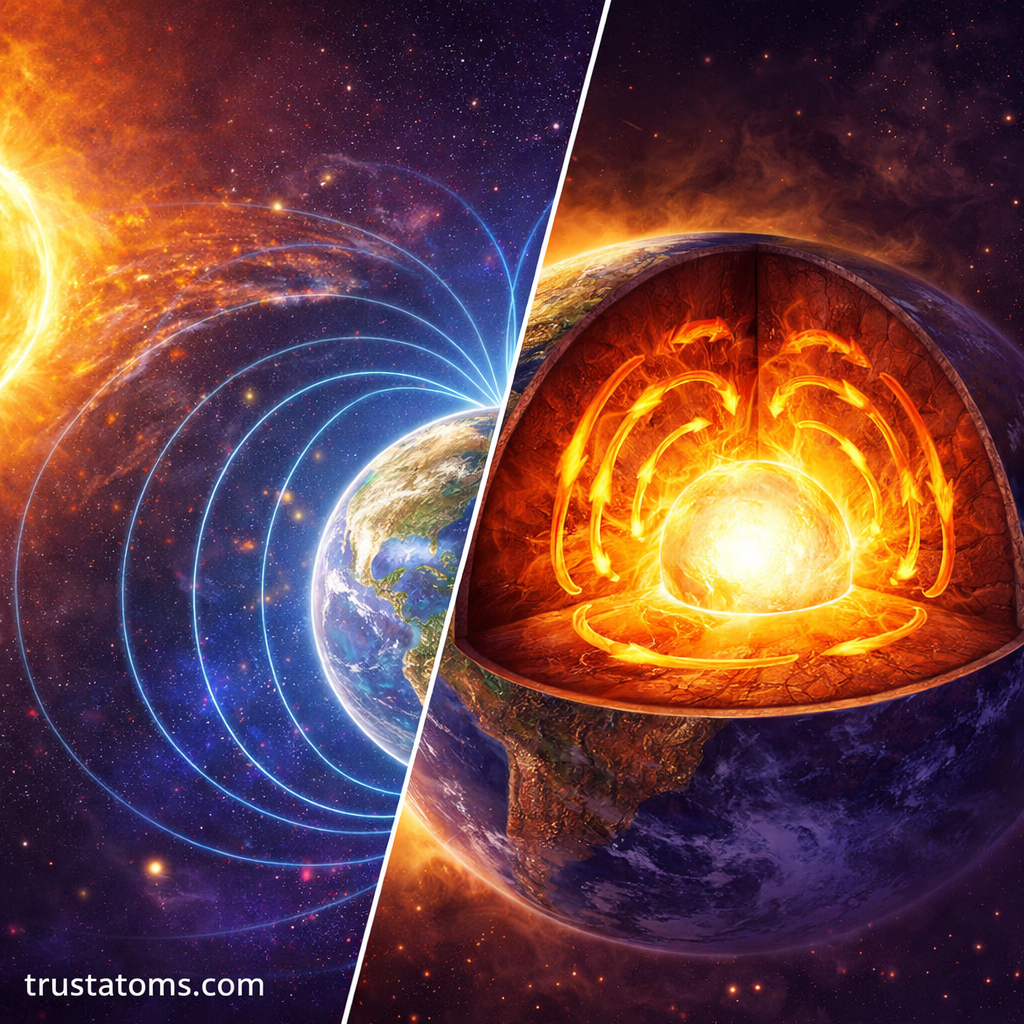
The geodynamo is powered by movement within Earth’s outer core.
Step-by-Step Process
- Heat from the inner core causes molten metal to rise
- Cooler material sinks, creating convection currents
- Earth’s rotation organizes this movement into spiraling patterns
- Moving metal generates electric currents
- These currents produce a magnetic field
This continuous motion keeps Earth’s magnetic field active.
Why the Magnetic Field Is Important
Earth’s magnetic field plays a crucial role in protecting and sustaining life.
Key Benefits
- Shields Earth from harmful solar radiation
- Prevents atmospheric loss into space
- Enables navigation using compasses
- Protects satellites and communication systems
Without the magnetic field, life on Earth would face serious challenges.
Magnetic Poles and Pole Reversals
Earth’s magnetic field is not fixed—it changes over time.
Magnetic Poles
- The magnetic north and south poles are not aligned exactly with geographic poles
- They slowly move due to changes in the outer core
Pole Reversals
- Over long periods, the magnetic poles can flip
- This means north becomes south and vice versa
- Reversals have occurred many times in Earth’s history
These changes happen gradually over thousands of years.
Evidence of Earth’s Magnetic History
Scientists study past magnetic activity using rocks.
Paleomagnetism
- Certain rocks record the direction of Earth’s magnetic field when they form
- This helps scientists track plate movement and magnetic reversals
Seafloor Spreading
- Magnetic patterns on the ocean floor show symmetrical stripes
- These patterns provide evidence for plate tectonics
This evidence helps reconstruct Earth’s geological history.
How Scientists Study the Magnetic Field
Modern technology allows scientists to monitor Earth’s magnetic field in real time.
Tools and Methods
- Satellites measure magnetic field strength and direction
- Ground-based observatories track changes
- Computer models simulate core dynamics
These tools help predict changes and understand long-term behavior.
Real-World Effects of Magnetic Changes
Changes in Earth’s magnetic field can have noticeable impacts.
Examples
- Disruptions to GPS and communication systems
- Increased exposure to solar radiation during solar storms
- Shifts in animal migration patterns (some species use magnetic cues)
Monitoring these changes is important for both technology and ecosystems.
Final Thoughts
Earth’s magnetic field is a powerful and essential feature of our planet, generated by the dynamic processes of the geodynamo deep within the core. It protects life, supports navigation, and provides valuable insight into Earth’s interior.
By studying the magnetic field and its behavior, scientists continue to uncover the complex forces shaping our planet from the inside out.