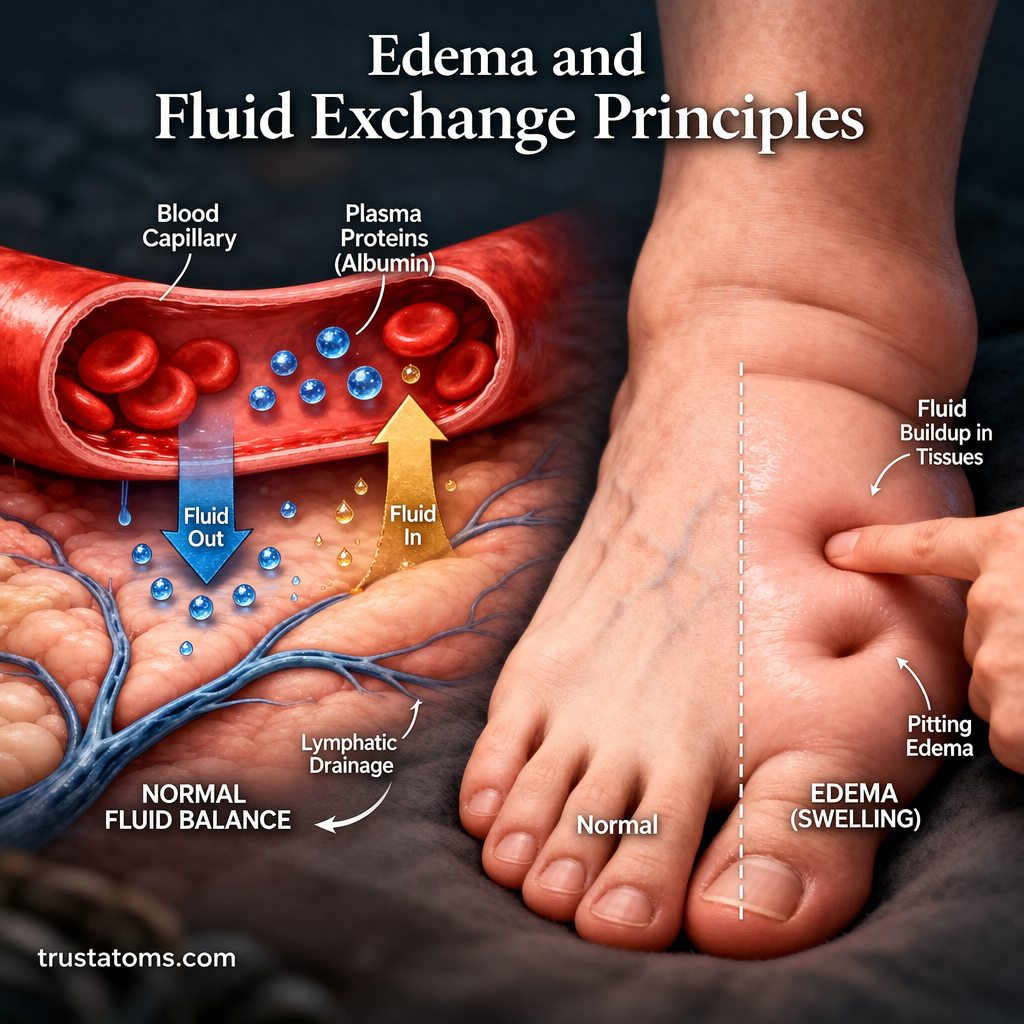
Fluid constantly moves between blood vessels and surrounding tissues. This exchange is essential for delivering nutrients, removing waste, and maintaining healthy cells. However, when this balance is disrupted, it can lead to edema, or swelling caused by excess fluid buildup.
In this guide, you’ll learn how fluid exchange works, what causes edema, and why maintaining this balance is critical for overall health.
What Is Edema?
Edema is the accumulation of excess fluid in body tissues, most commonly seen in:
- Legs and ankles
- Feet
- Hands
- Face
It occurs when fluid leaves blood vessels and is not properly returned or drained.
How Fluid Exchange Works
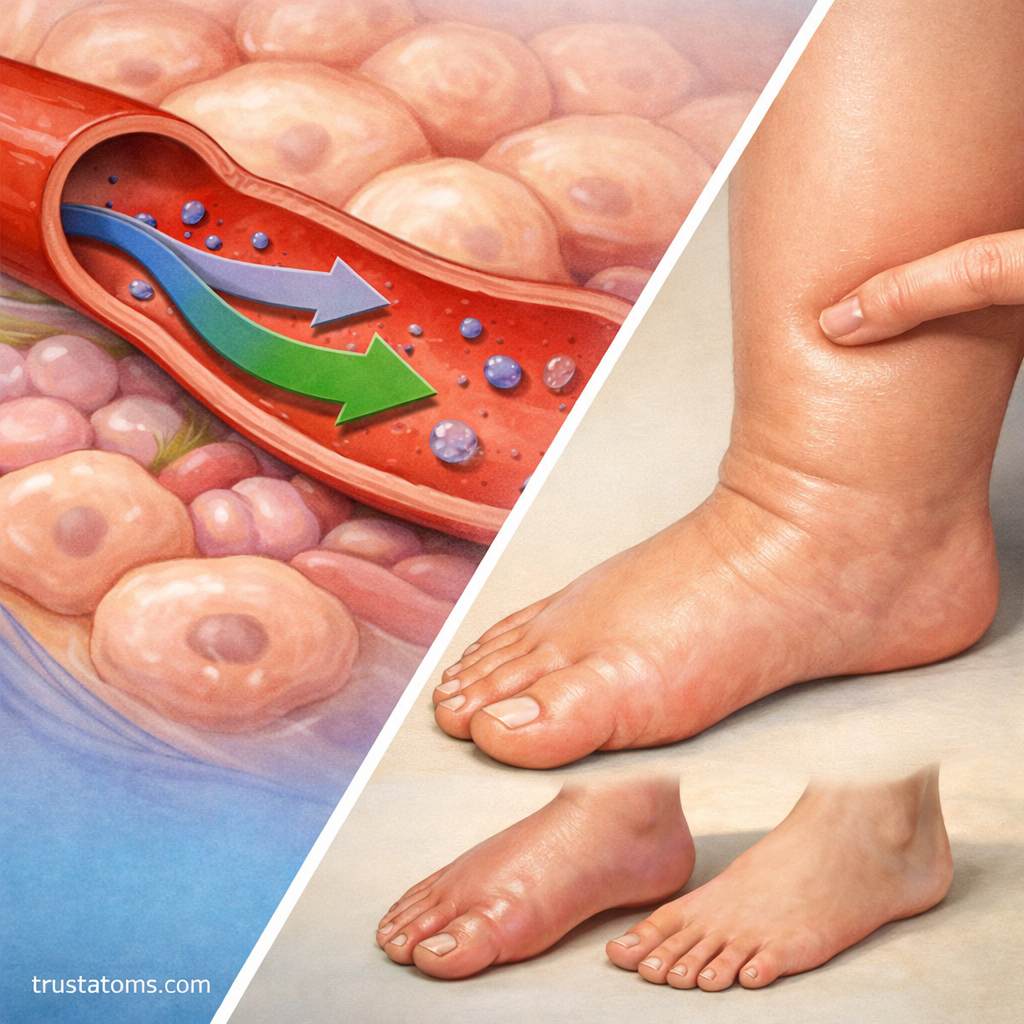
Fluid exchange occurs at the level of capillaries, the smallest blood vessels in the body.
Two main forces control this movement:
1. Hydrostatic Pressure
- Pushes fluid out of capillaries
- Generated by blood pressure
2. Osmotic (Oncotic) Pressure
- Pulls fluid into capillaries
- Created mainly by plasma proteins like albumin
Normal Fluid Movement
- At the arterial end of capillaries:
- Hydrostatic pressure is stronger
- Fluid moves into surrounding tissues
- At the venous end:
- Osmotic pressure dominates
- Fluid is pulled back into the bloodstream
The Role of the Lymphatic System
Not all fluid returns directly to the bloodstream.
The lymphatic system helps remove excess fluid and return it to circulation.
Functions of the Lymphatic System
- Drains excess interstitial fluid
- Transports immune cells
- Maintains fluid balance
If this system fails, fluid can accumulate and cause swelling.
What Causes Edema?
Edema occurs when the balance between fluid leaving and returning to capillaries is disrupted.
Major Causes
1. Increased Hydrostatic Pressure
- High blood pressure
- Heart failure
- Venous obstruction
Effect: More fluid is pushed out of capillaries
2. Decreased Osmotic Pressure
- Low plasma protein levels (especially albumin)
- Liver disease
- Malnutrition
Effect: Less fluid is pulled back into blood vessels
3. Increased Capillary Permeability
- Inflammation
- Infection
- Injury
Effect: Capillaries become “leaky,” allowing more fluid to escape
4. Lymphatic Obstruction
- Cancer
- Surgery (e.g., lymph node removal)
- Infections
Effect: Fluid cannot be drained properly
Types of Edema
Edema can present in different forms depending on the underlying cause.
Common Types
- Peripheral edema
- Affects limbs (legs, feet, hands)
- Pulmonary edema
- Fluid in the lungs
- Can impair breathing
- Cerebral edema
- Fluid in the brain
- Can increase pressure inside the skull
Signs and Symptoms of Edema
Physical Signs
- Swelling or puffiness
- Skin that looks stretched or shiny
- Indentation when pressed (pitting edema)
Associated Symptoms
- Heaviness in limbs
- Reduced mobility
- Shortness of breath (in severe cases)
Why Fluid Balance Is Important
Proper fluid exchange is essential for:
- Delivering oxygen and nutrients
- Removing metabolic waste
- Maintaining stable blood volume
- Supporting organ function
When this balance is disrupted, it can affect multiple systems in the body.
How the Body Regulates Fluid Balance
The body uses several mechanisms to maintain fluid equilibrium.
Key Systems Involved
- Kidneys
- Regulate fluid and electrolyte levels
- Hormones
- Antidiuretic hormone (ADH) controls water retention
- Aldosterone regulates sodium and fluid balance
- Blood Vessels
- Adjust pressure and permeability
- Lymphatic System
- Removes excess interstitial fluid
Managing and Treating Edema
Treatment depends on the underlying cause.
Common Approaches
- Reducing salt intake
- Diuretics (to remove excess fluid)
- Compression garments
- Elevating affected limbs
- Treating underlying conditions (heart, liver, or kidney disease)
Key Takeaways
- Fluid exchange is controlled by hydrostatic and osmotic pressures
- The lymphatic system helps remove excess fluid
- Edema occurs when fluid balance is disrupted
- Common causes include pressure changes, low protein levels, and inflammation
- Maintaining proper fluid balance is essential for overall health
Final Thoughts
Edema is more than just swelling—it’s a sign that the body’s fluid regulation system is out of balance. By understanding how fluid exchange works, you can better recognize the causes of edema and appreciate the complex systems that keep your body functioning smoothly.
From capillaries to lymphatic vessels, every part of the system plays a role in maintaining equilibrium and preventing fluid buildup.