Tendons are strong, flexible tissues that connect muscles to bones, enabling movement and force transmission throughout the body. While they may appear simple, tendons have complex mechanical properties that allow them to stretch, store energy, and adapt to repeated loading.
Two key properties that define tendon behavior are elasticity and viscoelasticity. These concepts explain how tendons respond to force, recover their shape, and perform efficiently during everyday movement and athletic activity.
What Are Tendons?
Tendons are dense connective tissues made primarily of collagen fibers.
Their main functions include:
- Transmitting force from muscle to bone
- Stabilizing joints during movement
- Storing and releasing energy
Because tendons must handle repeated mechanical stress, their structure is designed for both strength and controlled flexibility.
Understanding Elasticity in Tendons
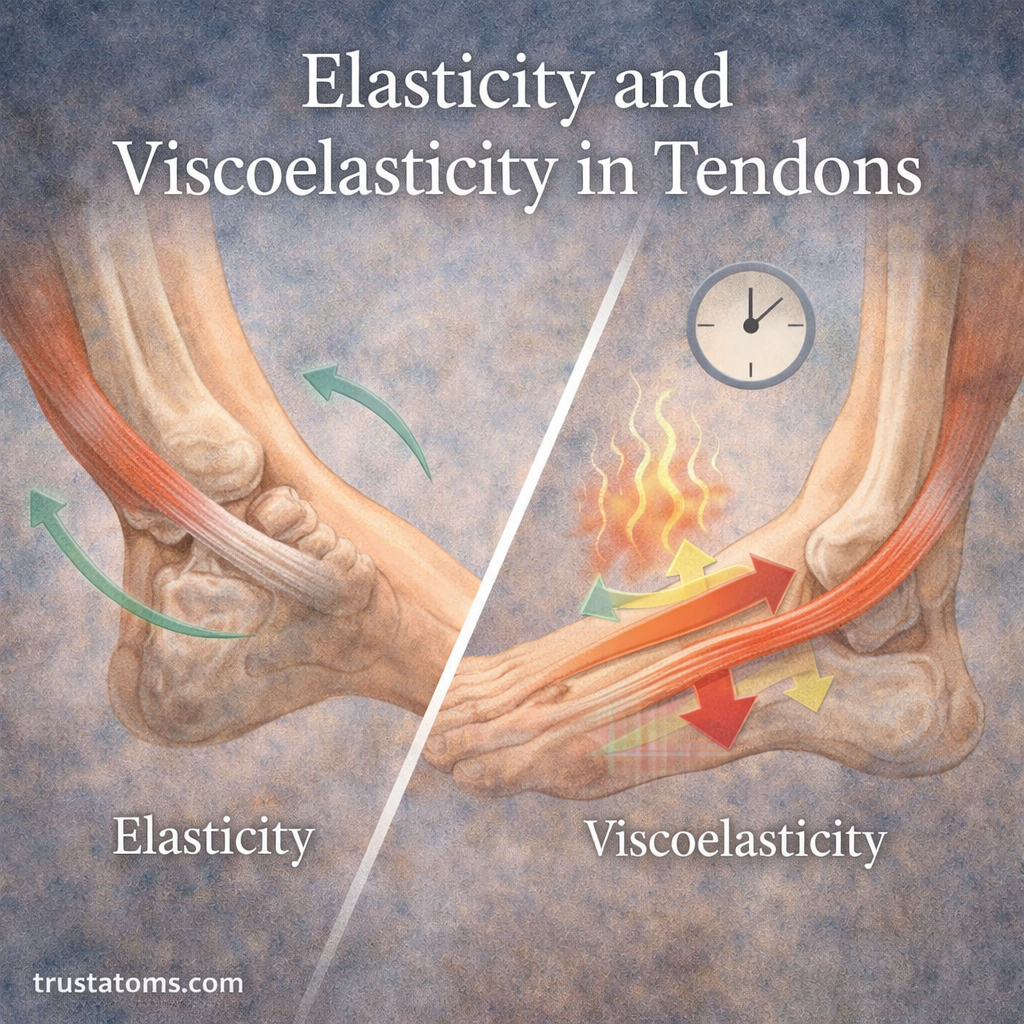
Elasticity refers to a tendon’s ability to stretch under force and return to its original shape once the force is removed.
Key Features of Elasticity
- Temporary deformation
- Full recovery after unloading
- Efficient energy return
For example, when you run or jump, tendons stretch slightly and then recoil, helping to propel your body forward.
Why Elasticity Matters
Elastic tendons improve movement efficiency by:
- Reducing energy loss
- Enhancing performance in activities like running and jumping
- Minimizing strain on muscles
This property allows tendons to act like biological springs.
What Is Viscoelasticity?
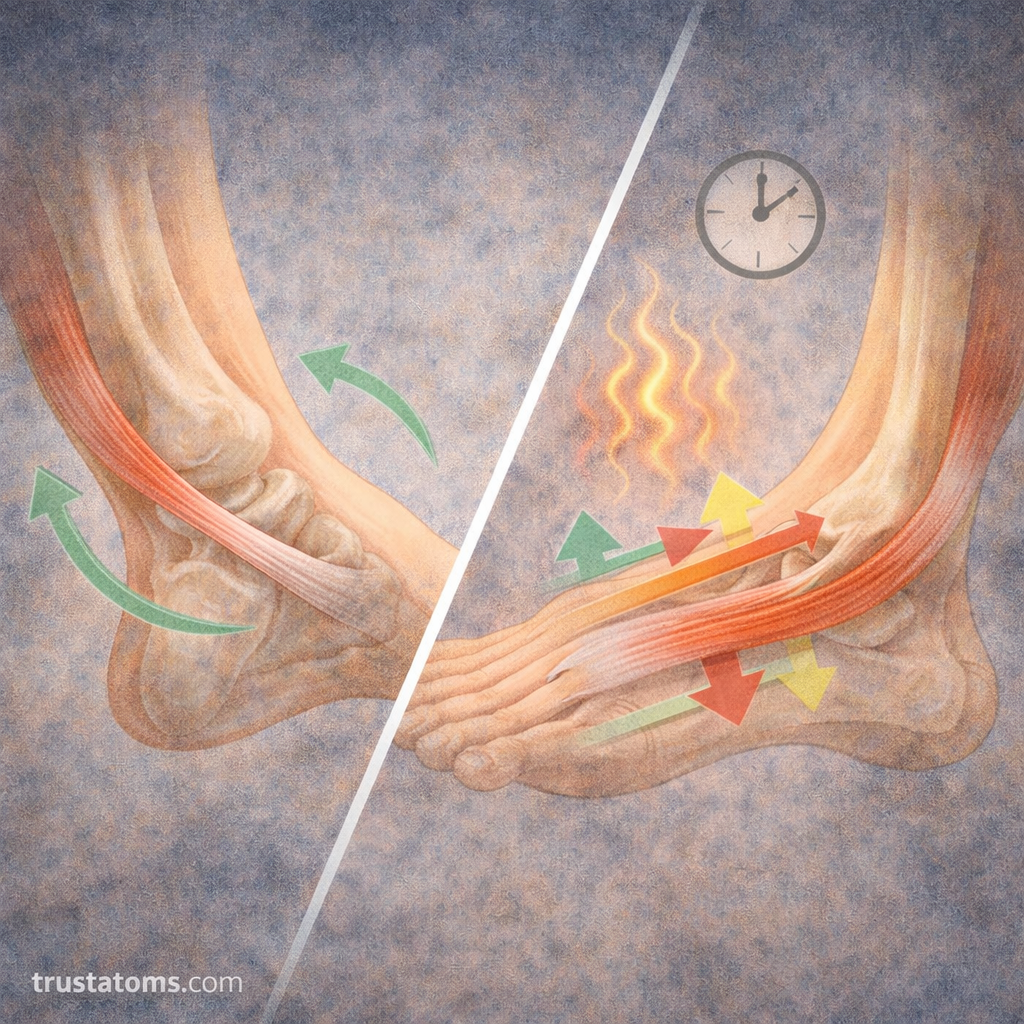
Viscoelasticity is a more complex property that combines both elastic and time-dependent (viscous) behavior.
In simple terms, tendons do not respond to force instantly or uniformly—they change based on how quickly and how long the force is applied.
Key Characteristics of Viscoelasticity
- Time-dependent deformation
- Gradual recovery rather than immediate return
- Energy dissipation (some energy is lost as heat)
This means tendon behavior varies depending on movement speed and duration.
Key Viscoelastic Properties of Tendons
Tendons exhibit several important viscoelastic behaviors:
Creep
- Gradual elongation under a constant load
- Tendon continues to stretch over time
Example: Holding a stretch for an extended period causes tissues to lengthen gradually.
Stress Relaxation
- Decrease in internal stress under constant deformation
- Less force is required to maintain a stretched position over time
This is why a stretch may feel easier after holding it for several seconds.
Hysteresis
- Energy loss during loading and unloading
- Not all stored energy is returned
This helps protect tissues but reduces mechanical efficiency slightly.
Strain Rate Sensitivity
- Tendons become stiffer when stretched quickly
- More flexible when stretched slowly
This property helps prevent injury during rapid movements.
Tendon Structure and Mechanical Behavior
The unique properties of tendons come from their hierarchical structure.
Collagen Fiber Alignment
- Collagen fibers are arranged in parallel
- Provides high tensile strength
- Allows controlled stretching
Crimp Pattern
- Fibers have a wavy (crimped) structure at rest
- Straighten when stretched
- Contributes to elasticity at low strain levels
Water Content and Ground Substance
- Helps distribute forces
- Contributes to viscoelastic behavior
- Affects how tendons respond to prolonged loading
How Tendons Adapt to Stress
Tendons are dynamic tissues that respond to mechanical loading over time.
Positive Adaptations
- Increased collagen production
- Improved tensile strength
- Enhanced stiffness for better force transfer
These changes occur with consistent, progressive loading such as resistance training.
Negative Adaptations
- Reduced strength with inactivity
- Increased injury risk
- Slower recovery capacity
Lack of movement can weaken tendon structure.
Elasticity vs. Viscoelasticity: Key Differences
While related, these properties serve different roles:
Elasticity
- Immediate response to force
- Full energy return
- No time-dependent effects
Viscoelasticity
- Time-dependent response
- Partial energy loss
- Behavior changes with speed and duration of force
Both properties work together to allow tendons to function efficiently and safely.
Role in Movement and Performance
Elasticity and viscoelasticity are essential for efficient movement.
During Physical Activity
- Tendons store energy during muscle contraction
- Release energy during movement (e.g., running, jumping)
- Reduce metabolic cost of movement
Injury Prevention
- Viscoelastic properties help absorb shock
- Reduce sudden force impact
- Protect muscles and joints
Athletic Performance
- Efficient energy transfer improves speed and power
- Stiffer tendons can enhance explosive performance
- Balanced flexibility reduces injury risk
Factors That Affect Tendon Properties
Several factors influence tendon elasticity and viscoelasticity:
Age
- Tendons become less elastic over time
- Increased stiffness and reduced recovery
Activity Level
- Regular loading improves tendon strength
- Sedentary behavior weakens tendons
Temperature
- Warm tendons are more flexible
- Cold tendons are stiffer and more injury-prone
Hydration and Nutrition
- Proper hydration supports tissue function
- Nutrients aid collagen production and repair
Key Takeaways
- Tendons connect muscles to bones and transmit force for movement
- Elasticity allows tendons to stretch and return to their original shape
- Viscoelasticity introduces time-dependent behavior and energy loss
- Key properties include creep, stress relaxation, hysteresis, and strain rate sensitivity
- Tendon structure, especially collagen alignment, supports these properties
- Regular activity strengthens tendons, while inactivity weakens them
Final Thoughts
Elasticity and viscoelasticity are fundamental to how tendons function in the human body. These properties allow tendons to act as both efficient energy transmitters and protective shock absorbers.
By understanding how tendons respond to different types of forces, you can better appreciate their role in movement, performance, and injury prevention. Whether in everyday activities or athletic performance, healthy tendon function is essential for maintaining strength, flexibility, and long-term mobility.