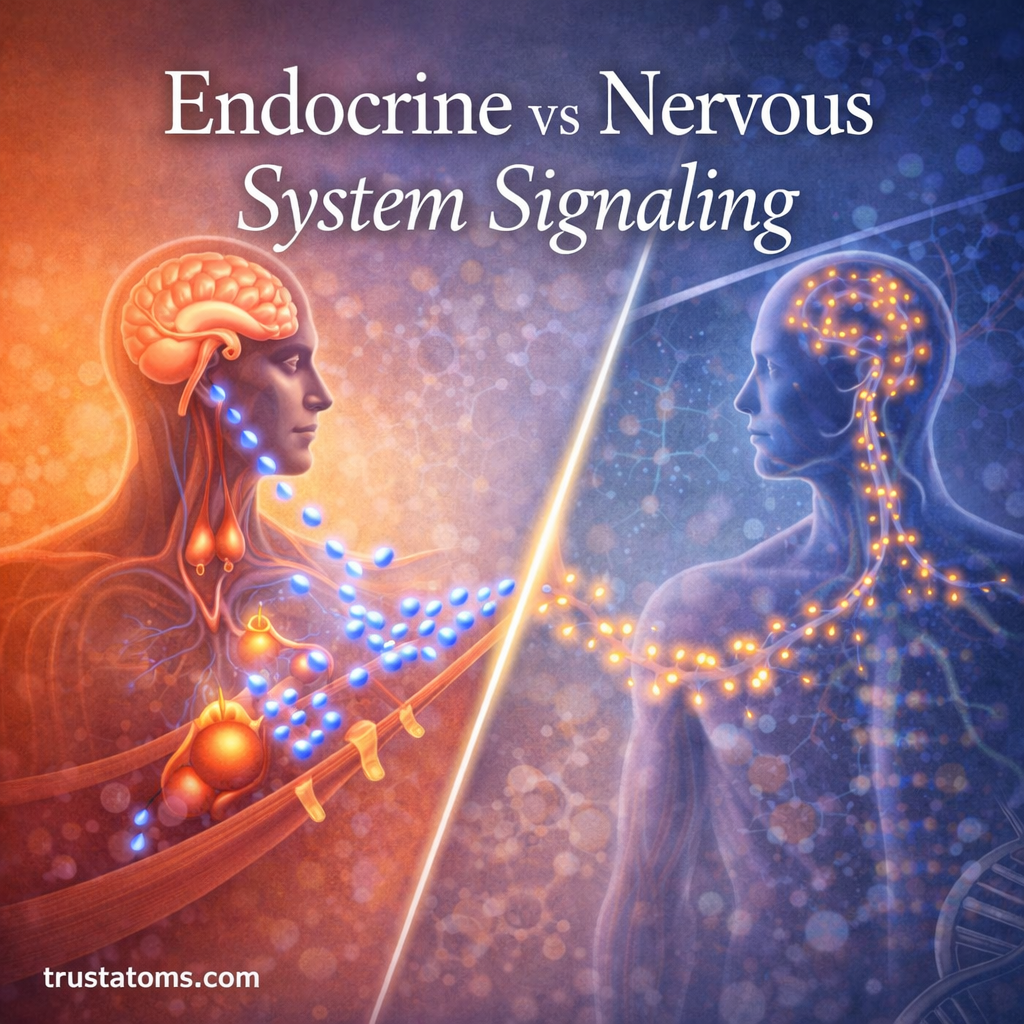
The human body relies on two major communication systems to function effectively: the endocrine system and the nervous system. Both systems send signals that regulate processes like movement, mood, growth, and internal balance—but they do so in very different ways.
Understanding how these systems compare helps explain how the body responds quickly to immediate changes while also maintaining long-term stability.
Overview of Body Signaling Systems
The endocrine and nervous systems work together to coordinate body functions. While they often overlap in purpose, their methods of communication are distinct.
- The endocrine system uses hormones carried through the bloodstream
- The nervous system uses electrical impulses and neurotransmitters
These differences affect how fast signals travel, how long they last, and how targeted they are.
How the Endocrine System Signals
The endocrine system communicates using hormones released by glands such as the pituitary, thyroid, and adrenal glands.
Key Features of Endocrine Signaling
- Hormones travel through the bloodstream
- Signals can reach distant organs and tissues
- Effects are slower to begin but longer-lasting
- Responses can affect many cells at once
Example
When blood sugar rises, the pancreas releases insulin into the bloodstream. This hormone signals cells throughout the body to absorb glucose, helping restore balance.
How the Nervous System Signals
The nervous system communicates using electrical impulses that travel along neurons, followed by chemical signals (neurotransmitters) at synapses.
Key Features of Nervous Signaling
- Signals travel through nerve cells (neurons)
- Communication is extremely fast (milliseconds)
- Effects are short-lived
- Signals are highly specific and targeted
Example
Touching a hot surface triggers an immediate reflex. Nerve signals travel rapidly to the brain and spinal cord, causing muscles to react almost instantly.
Key Differences Between Endocrine and Nervous Signaling
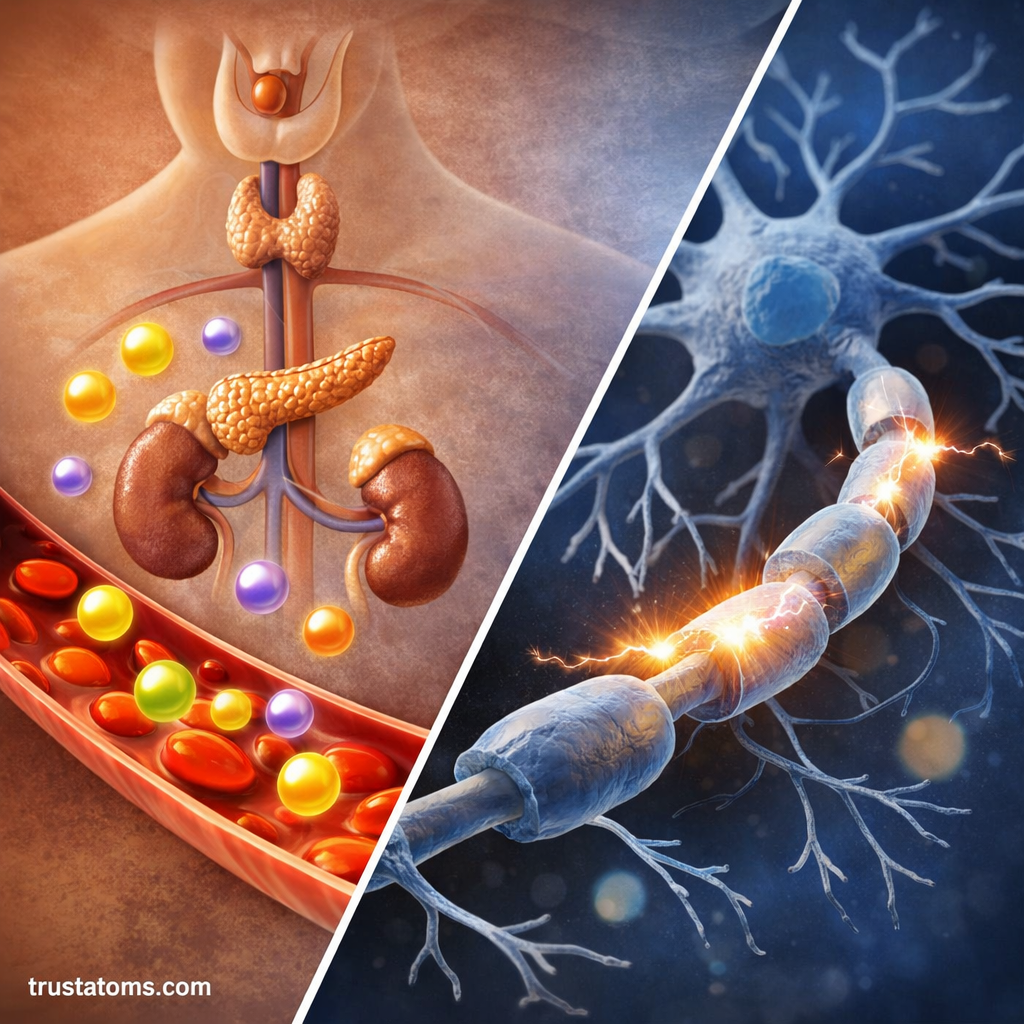
Although both systems regulate the body, their signaling styles differ significantly.
Speed
- Nervous system: Very fast (milliseconds)
- Endocrine system: Slower (seconds to hours or longer)
Duration of Effects
- Nervous system: Short-term effects
- Endocrine system: Long-lasting effects
Method of Communication
- Nervous system: Electrical impulses + neurotransmitters
- Endocrine system: Hormones in the bloodstream
Target Specificity
- Nervous system: Precise, specific target cells
- Endocrine system: Broad, widespread targets
How the Two Systems Work Together
The endocrine and nervous systems are not separate—they are deeply connected and often coordinate responses.
Neuroendocrine Integration
The hypothalamus plays a key role in linking the two systems. It receives signals from the nervous system and directs the endocrine system by controlling the pituitary gland.
Coordinated Response Example
During stress:
- The nervous system triggers an immediate “fight-or-flight” response
- The adrenal glands release hormones like adrenaline and cortisol
- These hormones sustain the response over a longer period
This combination allows the body to react quickly and maintain the response as needed.
Advantages of Each System
Each system is specialized for certain types of tasks.
Nervous System Strengths
- Rapid response time
- Precise control of specific actions
- Ideal for reflexes and immediate reactions
Endocrine System Strengths
- Long-lasting effects
- Ability to regulate widespread processes
- Essential for growth, metabolism, and reproduction
Why Both Systems Are Essential
The body depends on both systems to maintain balance and respond to internal and external changes.
Without the nervous system:
- You couldn’t react quickly to danger
- Movement and coordination would be impaired
Without the endocrine system:
- Long-term regulation of body functions would fail
- Growth, metabolism, and reproduction would be disrupted
Together, they ensure the body can adapt, survive, and function efficiently.
Everyday Examples of Combined Signaling
Many daily experiences involve both systems working together:
- Stress response (nervous + endocrine hormones)
- Sleep regulation (brain signals + melatonin release)
- Hunger and digestion (nerve signals + hormones like ghrelin)
- Exercise response (rapid nerve activation + hormonal support)
These examples highlight how integrated and essential these systems are.
Final Thoughts
The endocrine and nervous systems are two powerful communication networks that keep the body functioning smoothly. While the nervous system provides fast, precise signals, the endocrine system delivers slower, longer-lasting effects through hormones.
By working together, they allow the body to respond immediately to changes while maintaining long-term stability and balance.