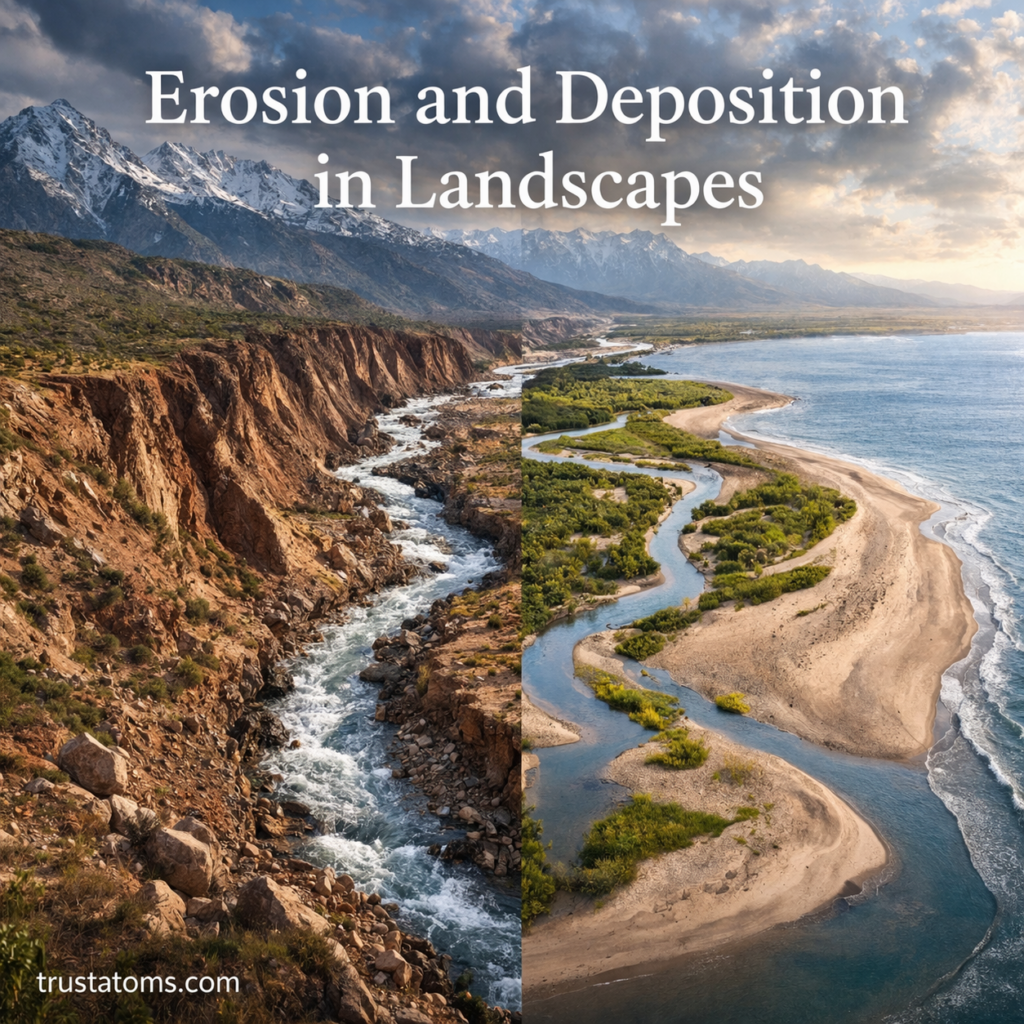
Earth’s surface is constantly changing. Wind, water, ice, and gravity are always at work reshaping landforms through the processes of erosion and deposition. These natural forces break down materials in one place and move them to another, gradually transforming landscapes over time.
Understanding erosion and deposition helps explain how mountains wear down, rivers carve valleys, and new landforms like deltas and beaches are created.
What Is Erosion?
Erosion is the process by which rock, soil, and sediment are worn away and transported from one location to another.
It involves two key steps:
- Breaking down material (often through weathering)
- Moving that material by natural forces
Erosion is a major force in shaping Earth’s surface.
Main Agents of Erosion
Different natural forces act as agents of erosion, each shaping the landscape in unique ways.
Water
- The most powerful and widespread agent
- Includes rivers, rainfall, and ocean waves
- Can carve valleys, canyons, and coastlines
Wind
- Moves fine particles like sand and dust
- Common in dry or desert environments
- Creates features like sand dunes and rock formations
Ice (Glaciers)
- Slow-moving ice masses that erode land beneath them
- Can carve deep valleys and fjords
- Transport large amounts of sediment
Gravity
- Moves material downhill
- Includes landslides, rockfalls, and soil creep
- Often works alongside other erosion agents
What Is Deposition?
Deposition is the process by which transported material is dropped or settled in a new location.
It occurs when:
- The energy of the transporting agent decreases
- Materials can no longer be carried
Deposition builds up landforms and contributes to the creation of new landscapes.
Common Depositional Landforms
Different environments create different depositional features.
River Deposits
- Deltas form where rivers meet larger bodies of water
- Floodplains develop from repeated sediment buildup
Coastal Deposits
- Beaches form from sand and sediment carried by waves
- Sandbars and spits develop along coastlines
Glacial Deposits
- Moraines are piles of debris left by glaciers
- Till consists of mixed sediment deposited by ice
Wind Deposits
- Sand dunes form in deserts and coastal areas
- Loess deposits create fertile soils in some regions
How Erosion and Deposition Work Together
Erosion and deposition are closely connected processes.
The cycle works like this:
- Rock and soil are broken down (weathering)
- Materials are transported (erosion)
- Materials are deposited in new locations (deposition)
This continuous cycle reshapes Earth’s surface over time.
Factors That Influence Erosion and Deposition
Several factors affect how quickly and intensely these processes occur.
Climate
- Heavy rainfall increases water erosion
- Wind erosion is stronger in dry, barren areas
Vegetation
- Plants help hold soil in place
- Areas with little vegetation are more prone to erosion
Slope
- Steeper slopes increase the speed of erosion
- Gentle slopes encourage deposition
Human Activity
- Construction, farming, and deforestation can accelerate erosion
- Poor land management can lead to soil loss and landscape changes
Why Erosion and Deposition Matter
These processes play a vital role in shaping Earth and supporting ecosystems.
They help:
- Form fertile soils for agriculture
- Create diverse landforms and habitats
- Recycle Earth materials
- Influence water systems and drainage patterns
However, excessive erosion can lead to problems such as land degradation and loss of valuable soil.
Real-World Examples
- Rivers carving canyons over millions of years
- Coastal waves reshaping shorelines
- Glaciers forming U-shaped valleys
- Wind shaping desert landscapes
These examples show how powerful and continuous these processes are.
Key Takeaways
- Erosion removes and transports material from Earth’s surface
- Deposition drops and accumulates that material in new locations
- Water, wind, ice, and gravity are the main agents of erosion
- These processes work together to shape landscapes
- Environmental factors and human activity influence their intensity
Final Thoughts
Erosion and deposition are essential forces that continuously reshape Earth’s surface. From towering mountains to sandy beaches, nearly every landscape is influenced by these processes.
By understanding how materials are moved and deposited, we gain insight into the dynamic nature of our planet and the natural systems that shape the world around us.