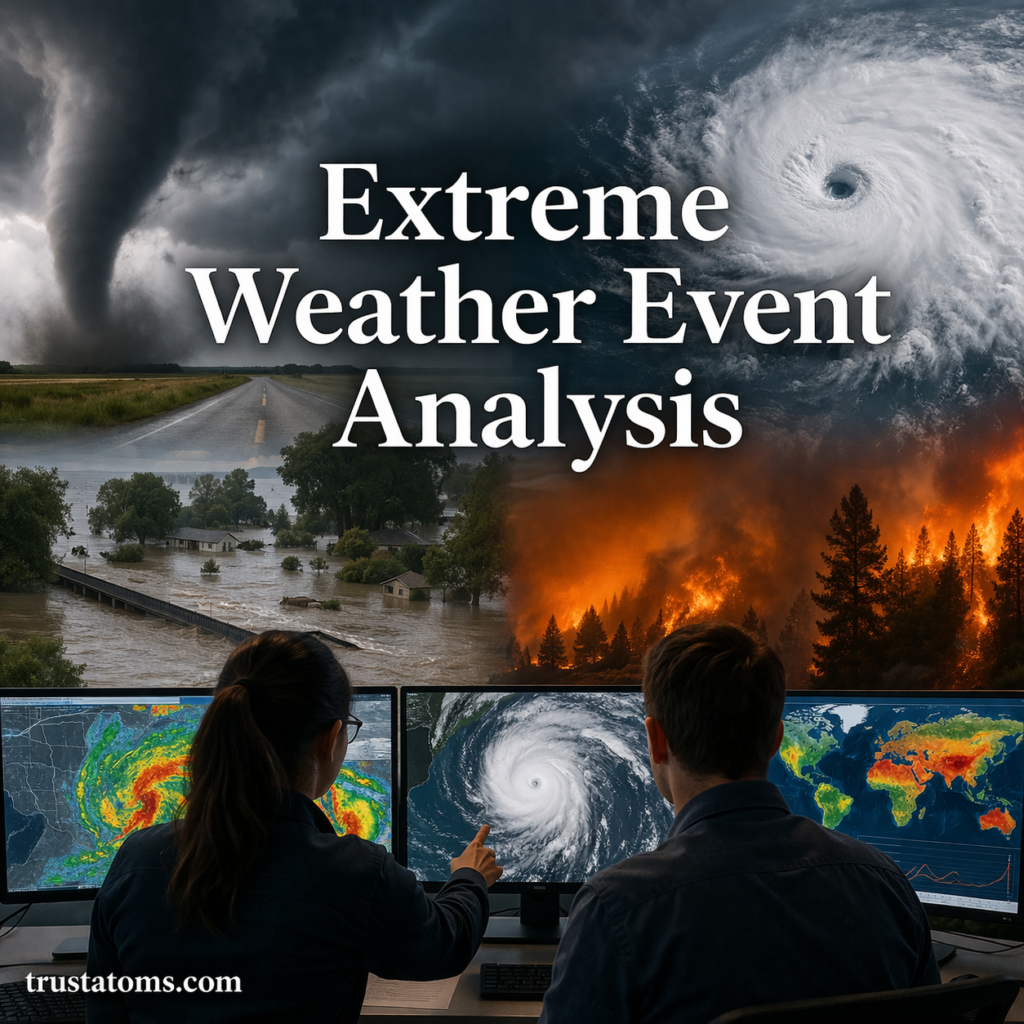
Extreme weather events are becoming more frequent, intense, and costly across the globe. From hurricanes and heatwaves to floods and droughts, these events impact ecosystems, economies, and human lives on a massive scale.
Understanding how extreme weather forms, how it is analyzed, and what it means for the future is essential for both scientific awareness and practical preparedness.
What Are Extreme Weather Events?
Extreme weather events are unusual or severe weather conditions that fall outside typical climate patterns for a specific region.
Common types include:
- Hurricanes and tropical storms
- Tornadoes
- Heatwaves
- Cold waves
- Floods
- Droughts
- Wildfires (often weather-driven)
These events are defined not just by intensity, but also by their impact on people and infrastructure.
Key Factors Behind Extreme Weather
Extreme weather does not happen randomly. It is driven by a combination of atmospheric and environmental conditions.
Atmospheric Instability
When warm, moist air rises rapidly and interacts with cooler air, it can create:
- Thunderstorms
- Tornadoes
- Severe rainfall events
Ocean Temperature
Warmer ocean waters provide more energy for storms, especially hurricanes.
- Higher sea surface temperatures = stronger storms
- Increased evaporation fuels heavier rainfall
Jet Stream Patterns
The jet stream controls large-scale weather movement.
- Weak or shifting jet streams can trap weather systems
- Leads to prolonged heatwaves, cold spells, or storms
Topography
Geographic features influence weather intensity:
- Mountains can enhance rainfall (orographic lift)
- Coastal areas are more vulnerable to storms and flooding
How Scientists Analyze Extreme Weather
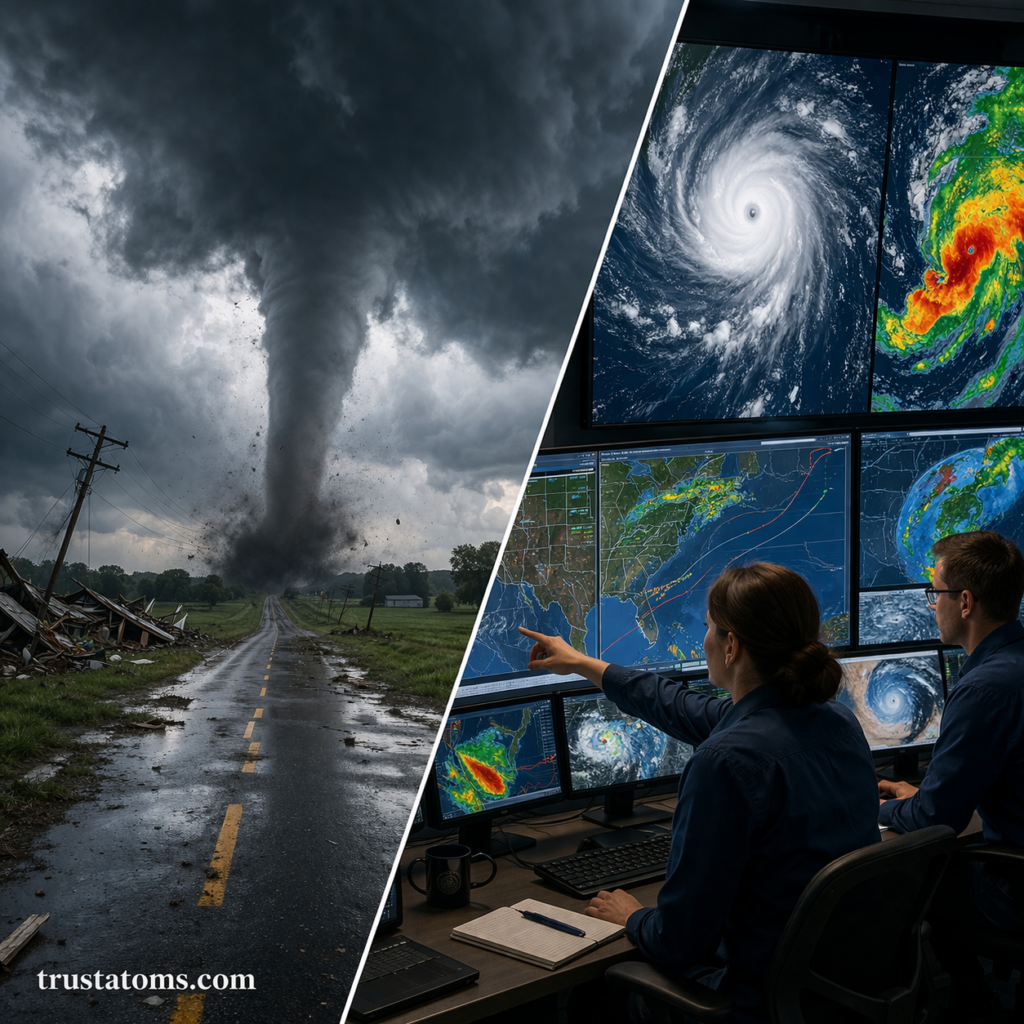
Analyzing extreme weather involves multiple tools, data sources, and models.
1. Historical Data Analysis
Scientists examine past weather records to identify trends:
- Temperature records
- Rainfall patterns
- Storm frequency
This helps determine whether events are becoming more extreme over time.
2. Satellite Observations
Satellites provide real-time global data, including:
- Cloud formation
- Storm development
- Ocean temperatures
They are essential for tracking hurricanes and large-scale systems.
3. Climate Models
Climate models simulate Earth’s atmosphere and oceans to predict future conditions.
They help answer questions like:
- How often will extreme events occur?
- How intense will they become?
- Which regions are most at risk?
4. Event Attribution Science
Event attribution determines how much human activity influences specific events.
For example:
- Was a heatwave more likely due to global warming?
- Did climate change increase storm intensity?
This field combines data, models, and statistical analysis.
Trends in Extreme Weather
Recent decades show clear patterns in many regions.
Increasing Frequency
- More frequent heatwaves
- More intense rainfall events
- Longer wildfire seasons
Greater Intensity
- Stronger hurricanes
- Higher peak temperatures
- More severe drought conditions
Changing Locations
Some regions are experiencing extreme weather that was previously rare.
- Flooding in dry regions
- Heatwaves in cooler climates
The Role of Climate Change
Climate change is a major driver of modern extreme weather trends.
Key Impacts
- Warmer air holds more moisture → heavier rainfall
- Higher temperatures → more intense heatwaves
- Warmer oceans → stronger storms
- Altered wind patterns → prolonged weather events
While not every event is caused by climate change, many are amplified by it.
Impacts of Extreme Weather
Extreme weather affects multiple systems at once.
Environmental Impacts
- Habitat destruction
- Soil erosion
- Water contamination
Economic Impacts
- Infrastructure damage
- Agricultural losses
- Increased insurance costs
Human Impacts
- Injury and loss of life
- Displacement of communities
- Health risks (heat stress, respiratory issues)
How Risk Is Measured
Scientists and governments assess risk using several factors:
- Probability – How likely an event is
- Exposure – How many people or assets are affected
- Vulnerability – How susceptible a population is
These factors help guide disaster planning and response.
Forecasting and Early Warning Systems
Modern forecasting has significantly improved preparedness.
Tools Used
- Weather radar
- Satellite imaging
- Computer simulations
Benefits
- Early evacuation warnings
- Disaster response planning
- Reduced loss of life
However, forecasting limitations still exist, especially for sudden events like tornadoes.
Strategies for Mitigation and Adaptation
Reducing the impact of extreme weather requires both prevention and preparation.
Mitigation (Reducing Causes)
- Lower greenhouse gas emissions
- Transition to renewable energy
- Protect natural ecosystems
Adaptation (Managing Impacts)
- Building flood defenses
- Improving infrastructure resilience
- Developing emergency response systems
Common Misconceptions
“Extreme weather is new”
Extreme weather has always existed, but its frequency and intensity are increasing.
“One storm proves climate change”
Individual events don’t prove trends—long-term data does.
“We can predict everything”
Forecasting has improved, but uncertainty still exists, especially for rapidly developing events.
Why Extreme Weather Analysis Matters
Understanding extreme weather helps:
- Protect lives and communities
- Improve infrastructure planning
- Guide policy decisions
- Increase public awareness
It bridges science and real-world impact, making it one of the most important areas of Earth science today.
Final Thoughts
Extreme weather is a powerful reminder of how dynamic and interconnected Earth’s systems are. As global conditions continue to shift, analyzing these events becomes critical for building a safer, more resilient future.
By combining data, technology, and scientific understanding, we can better predict, prepare for, and respond to the challenges posed by extreme weather.