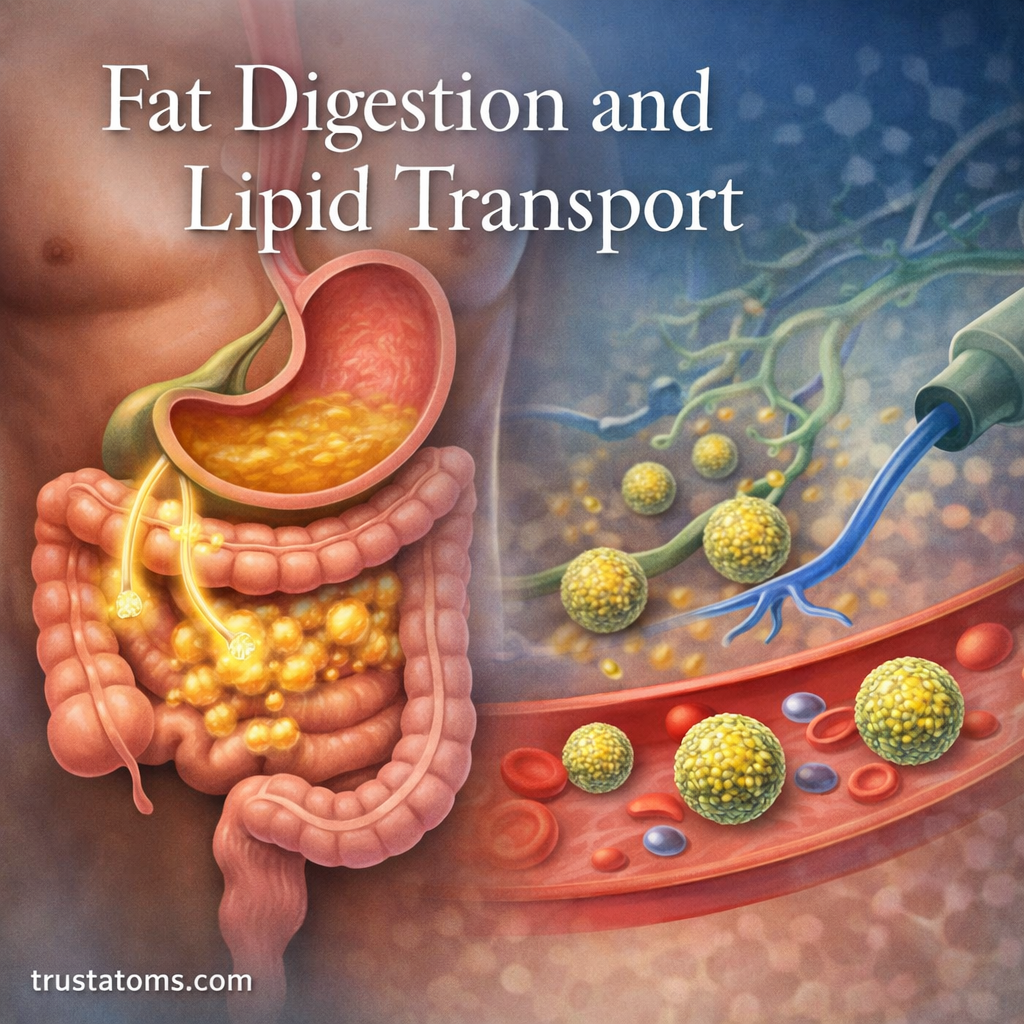
Fats are a vital part of the human diet, providing a concentrated source of energy, supporting cell structure, and aiding in the absorption of fat-soluble vitamins. However, before the body can use dietary fats, they must undergo a specialized digestion process and be transported efficiently through the body.
Fat digestion and lipid transport involve multiple organs, enzymes, and unique pathways that differ significantly from how carbohydrates and proteins are processed.
What Are Dietary Fats?
Dietary fats, also known as lipids, include several types of molecules that serve different functions in the body.
Main Types of Lipids
- Triglycerides – The most common dietary fat, made of glycerol and three fatty acids
- Phospholipids – Essential for building cell membranes
- Sterols (e.g., cholesterol) – Important for hormone production and cell structure
Because fats are not water-soluble, the body must use special mechanisms to digest and transport them.
The Stages of Fat Digestion
Fat digestion occurs across several parts of the digestive system, beginning in a limited way in the mouth and stomach, but primarily taking place in the small intestine.
1. Initial Digestion in the Mouth and Stomach
Fat digestion begins with mechanical and enzymatic processes.
- Chewing breaks fat into smaller droplets
- Lingual lipase (from the mouth) starts breaking down triglycerides
- Gastric lipase in the stomach continues limited fat digestion
However, only a small portion of fat is digested at this stage.
2. Emulsification in the Small Intestine
The most critical step in fat digestion is emulsification, which occurs in the small intestine.
Bile, produced by the liver and stored in the gallbladder, is released into the small intestine.
Key functions of bile:
- Breaks large fat droplets into smaller ones
- Increases surface area for enzyme action
- Allows lipase enzymes to work more effectively
This process transforms fat into tiny droplets that can be more easily digested.
3. Enzymatic Breakdown by Pancreatic Lipase
Once fats are emulsified, pancreatic enzymes take over.
- Pancreatic lipase breaks triglycerides into:
- Free fatty acids
- Monoglycerides
These smaller molecules are now ready for absorption.
Formation of Micelles
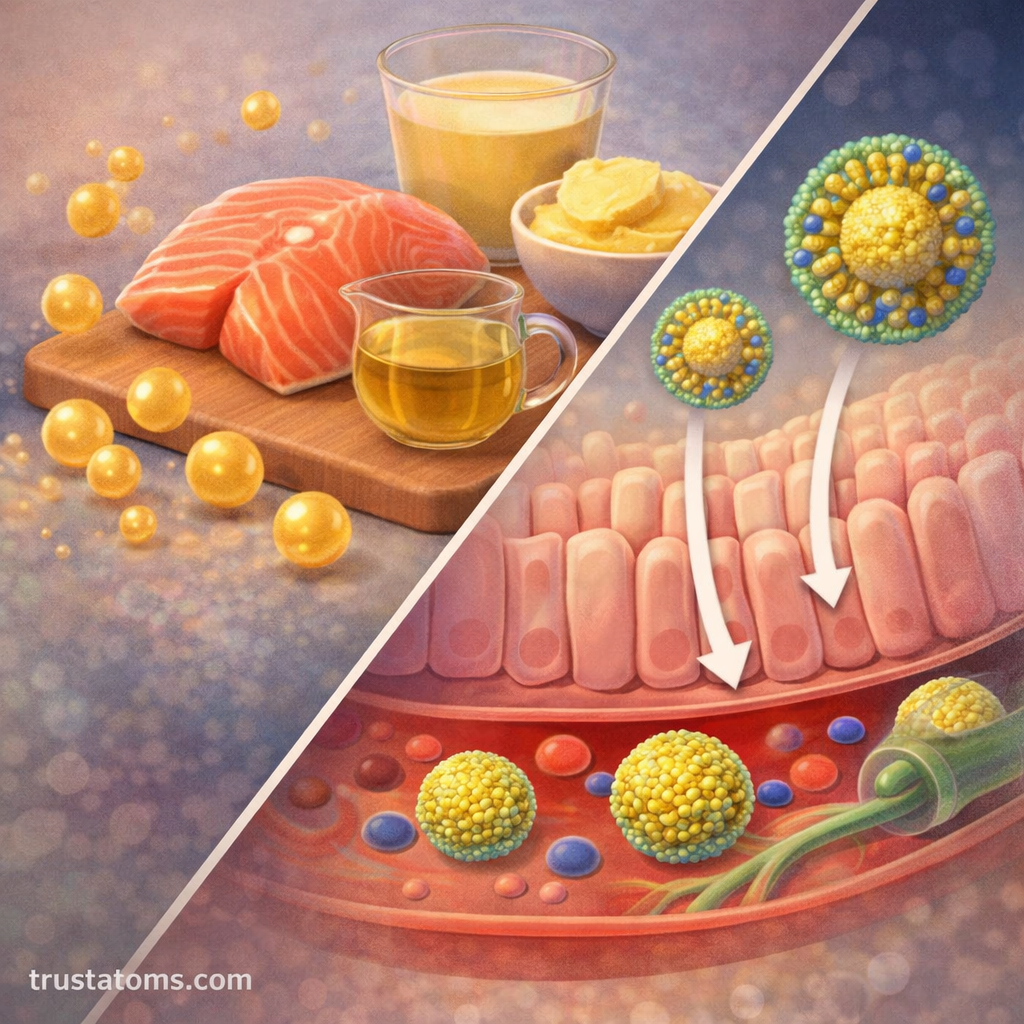
After digestion, fatty acids and monoglycerides combine with bile salts to form structures called micelles.
Why Micelles Are Important
- They transport lipids through the watery environment of the intestine
- They deliver fatty acids to the surface of intestinal cells
- They enhance absorption efficiency
Without micelles, fat absorption would be extremely limited.
Absorption of Lipids in the Small Intestine
Fat absorption occurs in the epithelial cells of the small intestine.
Inside the Intestinal Cells
Once inside the cells:
- Fatty acids and monoglycerides are reassembled into triglycerides
- These triglycerides combine with proteins and cholesterol
- They form lipoprotein particles called chylomicrons
Lipid Transport Through the Body
Unlike amino acids and glucose, fats do not enter the bloodstream directly.
1. Transport via the Lymphatic System
Chylomicrons are too large to enter blood capillaries directly.
- They enter lymphatic vessels called lacteals
- Travel through the lymphatic system
- Eventually enter the bloodstream via the thoracic duct
2. Circulation in the Bloodstream
Once in the bloodstream, chylomicrons deliver lipids to tissues.
Key destinations include:
- Muscle cells for energy
- Adipose tissue for fat storage
- The liver for processing and distribution
3. Role of Lipoproteins
The body uses different lipoproteins to transport fats.
- Chylomicrons – Carry dietary fats from the intestine
- Low-density lipoproteins (LDL) – Deliver cholesterol to tissues
- High-density lipoproteins (HDL) – Help remove excess cholesterol
These transport systems maintain lipid balance in the body.
Factors That Affect Fat Digestion and Absorption
Several factors influence how efficiently fats are digested and transported.
1. Bile Production
- Insufficient bile can impair fat emulsification
- Gallbladder or liver issues may reduce fat digestion efficiency
2. Pancreatic Function
- Low pancreatic enzyme production reduces fat breakdown
- Conditions like pancreatitis can interfere with digestion
3. Intestinal Health
- Damage to the intestinal lining can impair absorption
- Inflammation or disease may reduce nutrient uptake
4. Type of Fat Consumed
- Short- and medium-chain fatty acids are absorbed more easily
- Long-chain fatty acids require full digestion and micelle formation
Common Issues with Fat Digestion
When fat digestion is impaired, it can lead to noticeable symptoms.
Signs of Poor Fat Absorption
- Greasy or oily stools (steatorrhea)
- Bloating or digestive discomfort
- Deficiencies in fat-soluble vitamins (A, D, E, K)
- Unintended weight loss
Proper fat digestion is essential for overall health and nutrient balance.
Tips to Support Healthy Fat Digestion
Supporting fat digestion can improve energy levels and nutrient absorption.
Practical Strategies
- Include healthy fats such as olive oil, nuts, and fatty fish
- Eat balanced meals that include fiber and protein
- Stay hydrated to support digestive processes
- Avoid excessive intake of highly processed fats
- Maintain liver and gallbladder health through a balanced diet
Final Thoughts
Fat digestion and lipid transport are complex but essential processes that allow the body to utilize one of its most energy-rich nutrients. From bile-driven emulsification to chylomicron transport through the lymphatic system, each step is finely tuned for efficiency.
Understanding how fats are digested and transported can help you make smarter dietary choices and support long-term health.