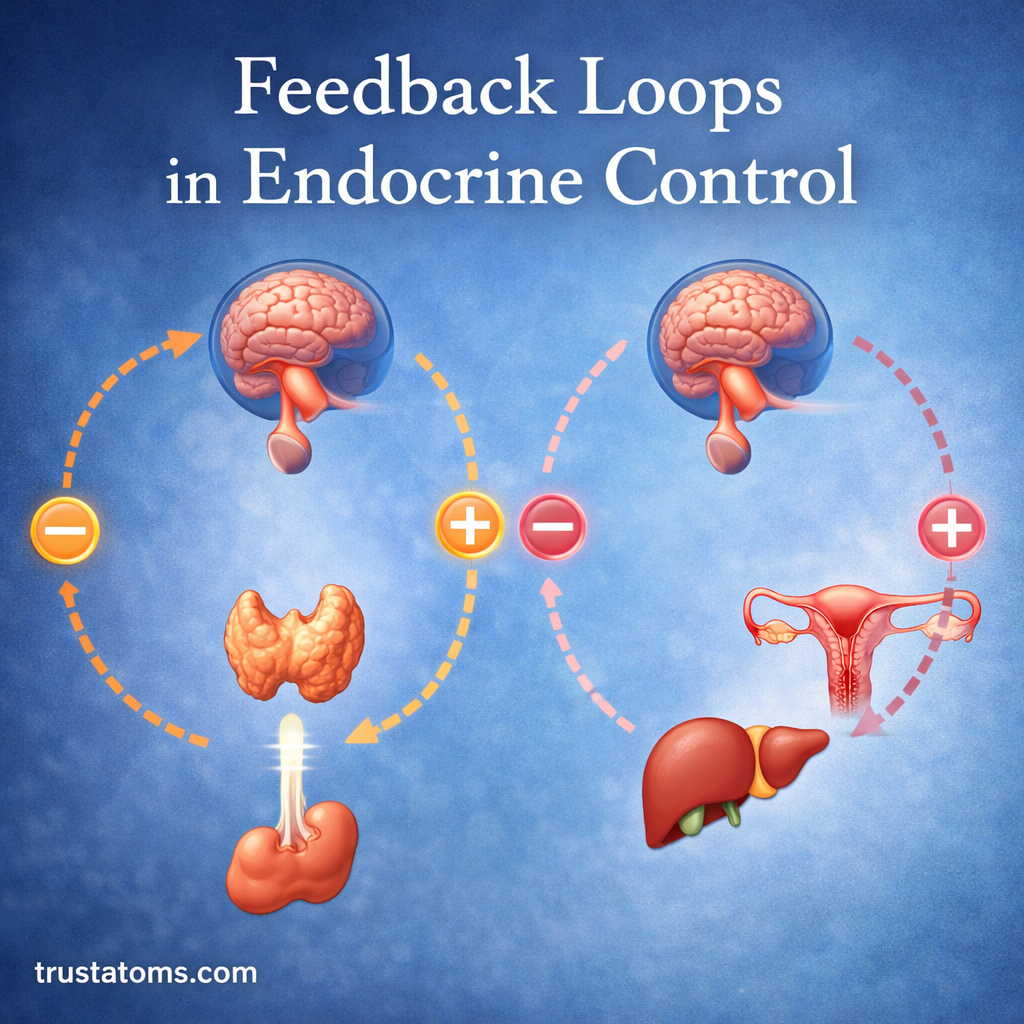
The human body maintains balance through a complex communication network known as the endocrine system. At the heart of this system are feedback loops—self-regulating mechanisms that control hormone levels and keep internal conditions stable.
From body temperature to growth and metabolism, feedback loops ensure that hormones are released in the right amounts at the right time.
What Are Feedback Loops in the Endocrine System?
A feedback loop is a biological process where the output of a system influences its own activity. In the endocrine system, this means hormone levels can either increase or decrease further hormone production.
There are two main types of feedback loops:
- Negative feedback loops
- Positive feedback loops
Each plays a distinct role in maintaining homeostasis (internal balance).
Negative Feedback Loops
Negative feedback loops are the most common type in the endocrine system. They work to reverse a change and bring the body back to its normal state.
How Negative Feedback Works
- A change occurs in the body (e.g., low hormone levels)
- The endocrine gland releases a hormone
- The hormone produces a specific effect
- Once the desired level is reached, the system reduces or stops hormone production
This prevents overproduction and maintains balance.
Example: Thyroid Hormone Regulation
The regulation of thyroid hormones is a classic example of a negative feedback loop.
- The hypothalamus releases TRH (thyrotropin-releasing hormone)
- The pituitary gland releases TSH (thyroid-stimulating hormone)
- The thyroid gland produces T3 and T4 hormones
When T3 and T4 levels rise:
- They signal the hypothalamus and pituitary to reduce TRH and TSH production
- This slows down further hormone release
This loop keeps metabolism stable.
Example: Blood Glucose Regulation
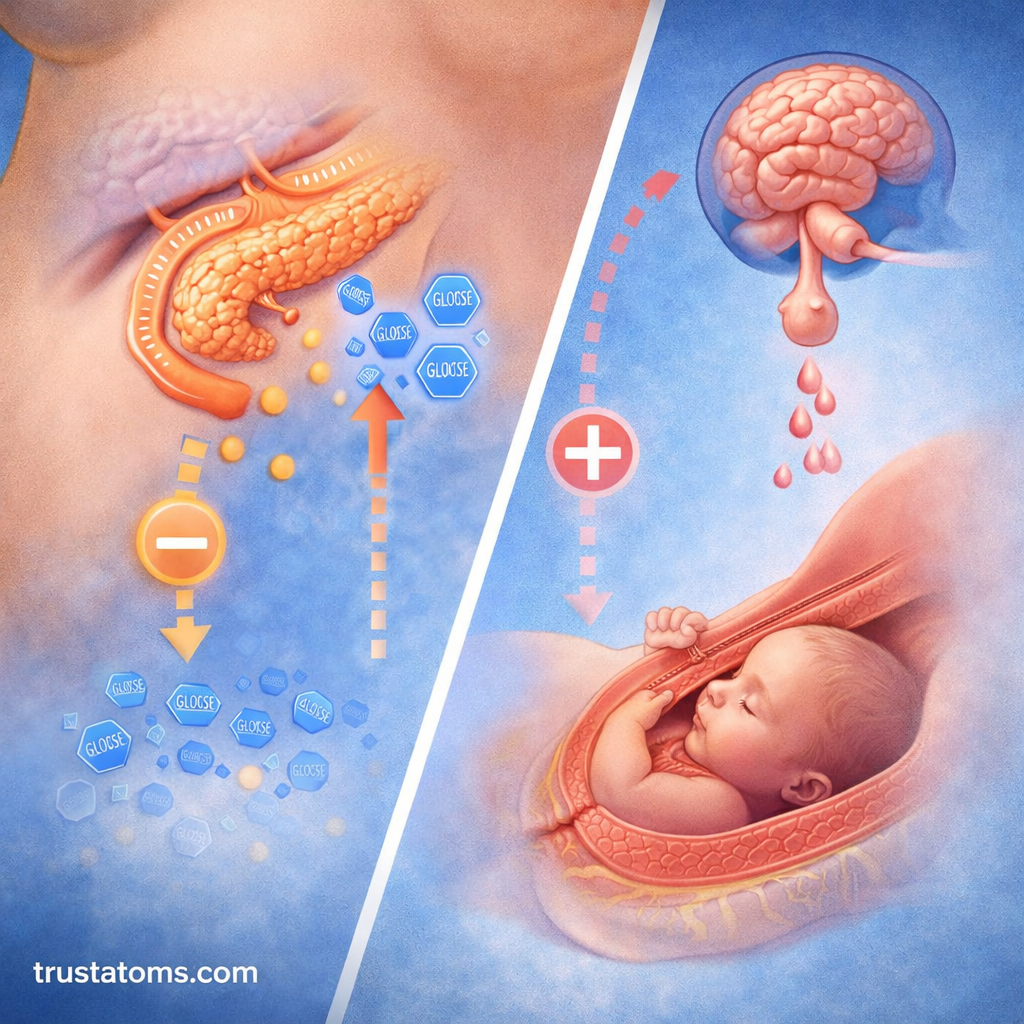
Blood sugar levels are tightly controlled through a negative feedback system involving insulin and glucagon.
- High blood glucose → pancreas releases insulin → glucose levels decrease
- Low blood glucose → pancreas releases glucagon → glucose levels increase
This continuous adjustment keeps energy levels steady.
Positive Feedback Loops
Positive feedback loops amplify a response instead of reducing it. They are less common and usually occur in specific, time-limited situations.
How Positive Feedback Works
- A stimulus triggers hormone release
- The hormone enhances the original stimulus
- This leads to even more hormone release
- The cycle continues until a specific event ends it
Example: Childbirth and Oxytocin
One of the best-known positive feedback loops occurs during labor.
- The baby’s head presses against the cervix
- The body releases oxytocin
- Oxytocin increases uterine contractions
- Stronger contractions push the baby further down
This creates a cycle:
- More pressure → more oxytocin → stronger contractions
The loop continues until childbirth is complete.
Example: Blood Clotting
Blood clotting also involves a positive feedback mechanism.
- Platelets gather at a site of injury
- They release chemicals that attract more platelets
- The clot grows rapidly until the bleeding stops
Once the wound is sealed, the process ends.
Key Differences Between Negative and Positive Feedback
Understanding the differences helps clarify how the body maintains control.
Negative feedback:
- Maintains stability
- Reduces or stops hormone production
- Common in everyday physiological processes
Positive feedback:
- Amplifies a response
- Continues until a specific outcome is reached
- Used in special situations like childbirth
Why Feedback Loops Are Essential
Feedback loops are critical for maintaining homeostasis and preventing imbalances.
They help:
- Regulate hormone levels precisely
- Prevent excessive or insufficient hormone production
- Coordinate communication between glands
- Adapt to internal and external changes
Without these loops, the body would struggle to maintain stable conditions.
What Happens When Feedback Loops Fail?
Disruptions in feedback systems can lead to hormonal disorders and health issues.
Examples include:
- Hypothyroidism or hyperthyroidism (thyroid imbalance)
- Diabetes (glucose regulation issues)
- Hormonal imbalances affecting growth or reproduction
These conditions often result from the body’s inability to properly regulate hormone signals.
Final Thoughts
Feedback loops are the foundation of endocrine control, ensuring that hormones are released in balanced, appropriate amounts. Negative feedback loops maintain stability, while positive feedback loops drive important processes to completion.
Together, they allow the body to function efficiently, adapt to change, and maintain internal balance in a constantly shifting environment.