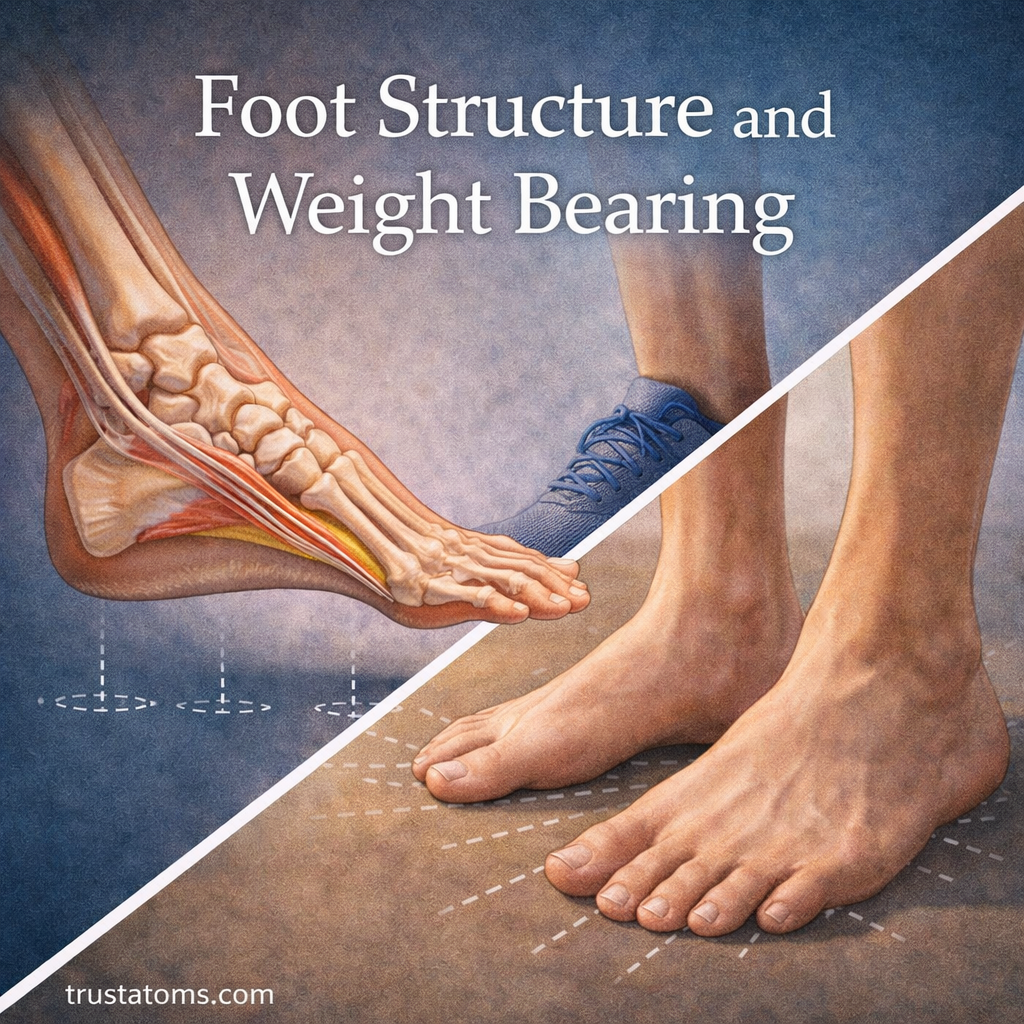
The human foot is a highly specialized structure designed to support body weight, absorb shock, and enable movement. Whether standing still or walking, the foot plays a crucial role in maintaining balance and distributing forces throughout the body.
Understanding foot structure and weight bearing helps explain how the body stays stable, moves efficiently, and prevents injury during everyday activities.
Overview of Foot Anatomy
The foot is composed of multiple bones, joints, muscles, and connective tissues that work together to provide both strength and flexibility.
Bones of the Foot
Each foot contains 26 bones, grouped into three main sections:
- Tarsals (7 bones): form the rear and midfoot, including the heel
- Metatarsals (5 bones): form the middle of the foot
- Phalanges (14 bones): form the toes
These bones create a stable yet adaptable structure for weight support.
Joints and Ligaments
- Joints allow movement and flexibility
- Ligaments connect bones and provide stability
- The foot contains numerous small joints that enable fine adjustments during movement
The Arches of the Foot
One of the most important features of the foot is its arch system, which helps distribute weight and absorb impact.
Types of Arches
- Medial longitudinal arch: the main arch along the inside of the foot
- Lateral longitudinal arch: along the outer side of the foot
- Transverse arch: runs across the midfoot
Functions of the Arches
- Distribute body weight evenly
- Absorb shock during movement
- Store and release energy
- Maintain balance and stability
How Weight Bearing Works
Weight bearing refers to how the body’s weight is supported and distributed through the feet.
Standing
When standing:
- Weight is distributed between both feet
- The heel and forefoot bear most of the load
- Arches help spread forces across the foot
Walking and Movement
During movement:
- Weight shifts from heel to toe
- The foot acts as both a shock absorber and a lever
- Forces increase compared to standing
Pressure Distribution in the Foot
The foot does not bear weight evenly across all areas.
Key Pressure Points
- Heel (calcaneus): absorbs initial impact
- Ball of the foot (metatarsal heads): supports push-off
- Toes: assist with balance and propulsion
Dynamic Changes
Pressure changes as you move:
- Heel strike during walking
- Midfoot support during stance
- Forefoot push-off during movement
Role of Muscles and Tendons
Muscles and tendons support the foot and help manage weight-bearing forces.
Intrinsic Muscles
- Located within the foot
- Help maintain arch stability
- Assist with fine movements
Extrinsic Muscles
- Located in the lower leg
- Control larger foot movements
- Provide strength for walking and running
Key Tendons
- Achilles tendon: connects calf muscles to the heel
- Plantar fascia: supports the arch and absorbs shock
Shock Absorption and Energy Transfer
The foot acts as a natural shock absorber.
Shock Absorption
- Arches compress under load
- Soft tissues cushion impact
- Joints adjust to uneven surfaces
Energy Return
- Stored energy in tendons is released during push-off
- Improves efficiency in walking and running
Factors That Affect Weight Bearing
Several factors influence how weight is distributed through the feet.
Structural Factors
- Arch height (high, normal, flat)
- Foot alignment
- Bone structure
External Factors
- Footwear
- Surface type
- Activity level
Biomechanical Factors
- Gait pattern
- Posture
- Muscle strength
Common Foot Issues Related to Weight Bearing
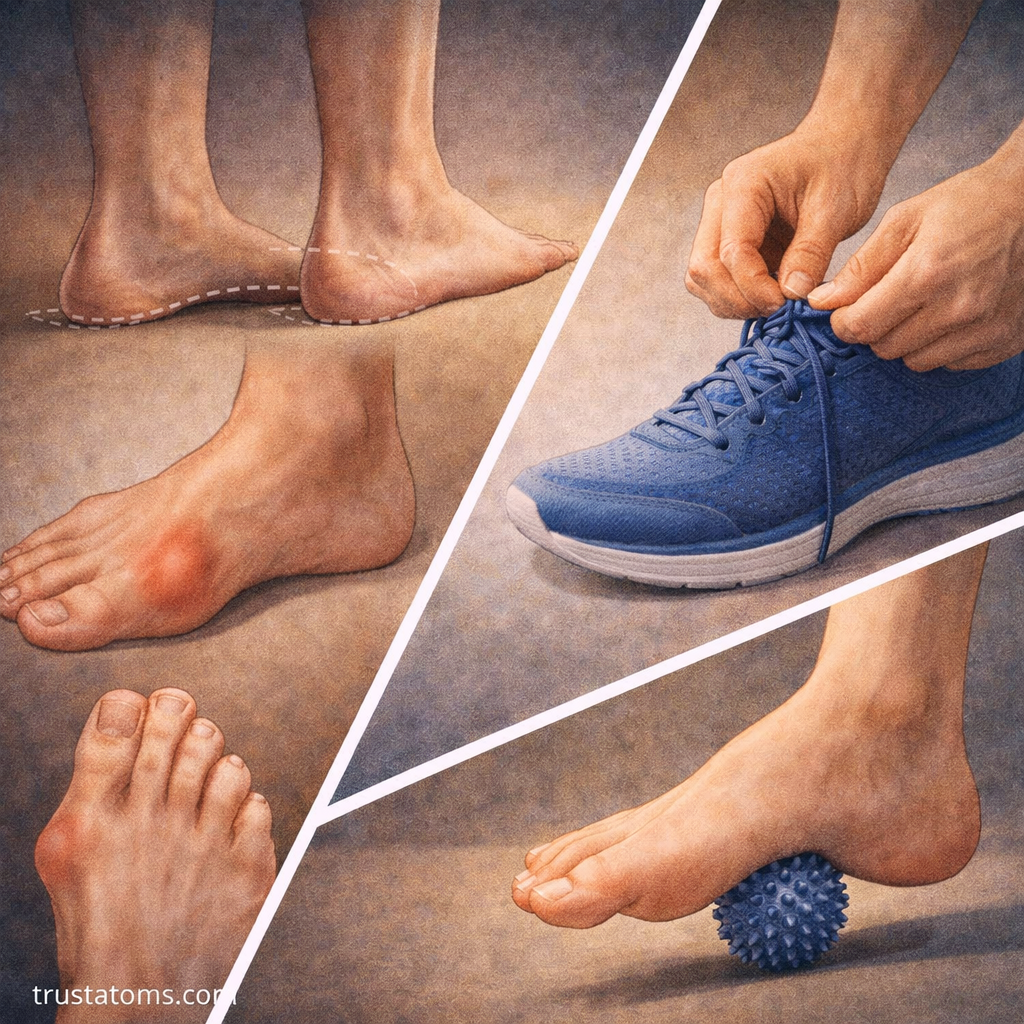
Improper weight distribution can lead to discomfort and injury.
Common Conditions
- Flat feet (collapsed arches)
- Plantar fasciitis
- Heel pain
- Bunions
Causes
- Poor alignment
- Weak muscles
- Overuse or repetitive stress
Improving Foot Function and Support
Maintaining healthy foot mechanics is essential for overall mobility.
Practical Tips
- Wear supportive footwear
- Strengthen foot and lower leg muscles
- Stretch regularly to maintain flexibility
- Avoid prolonged standing without breaks
Exercises
- Toe curls and foot strengthening drills
- Calf stretches
- Balance exercises
Why Foot Structure Matters
The foot is the foundation of the body. Its ability to support weight and adapt to movement affects posture, balance, and overall biomechanics.
Healthy foot structure helps:
- Prevent injuries
- Improve movement efficiency
- Support long-term joint health
- Maintain stability in daily activities
Final Thoughts
Foot structure and weight bearing highlight the complexity and importance of this often-overlooked part of the body. From supporting body weight to enabling movement, the foot plays a vital role in everyday function.
By understanding how the foot distributes forces and maintains balance, individuals can take better care of their feet and improve overall mobility and comfort.