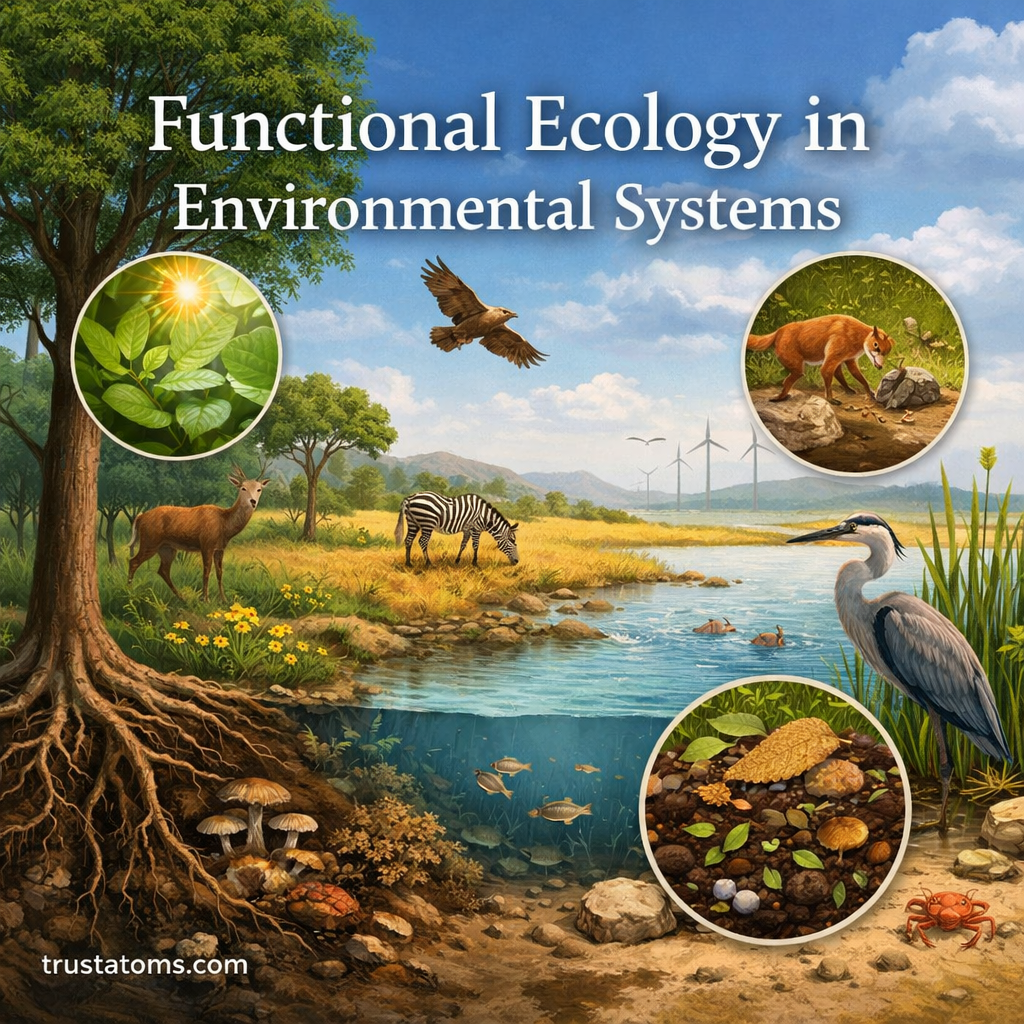
Functional ecology is a branch of biology that focuses on how organisms interact with their environment through their biological traits and functions. Rather than simply identifying species, functional ecology examines what organisms do in ecosystems—how they acquire energy, recycle nutrients, respond to environmental stress, and influence ecological processes.
Understanding functional ecology is essential for explaining how ecosystems operate, how they respond to environmental change, and how biodiversity supports ecosystem stability.
What Is Functional Ecology?
Functional ecology studies the roles and biological traits of organisms that influence ecosystem processes. These traits determine how organisms interact with the environment and with each other.
Examples of functional traits include:
- Leaf size and structure in plants
- Root depth and nutrient uptake efficiency
- Metabolic rate in animals
- Feeding strategies (herbivore, predator, decomposer)
- Reproductive strategies
- Water-use efficiency
Rather than focusing solely on species identity, functional ecology examines how similar traits across different species influence ecosystem behavior.
For example:
- Different plant species may perform similar roles in nutrient cycling.
- Various predators may regulate prey populations in comparable ways.
- Multiple decomposers can contribute to organic matter breakdown.
This approach helps scientists understand ecosystems even when species compositions change.
Functional Traits and Their Ecological Importance
Functional traits are measurable characteristics of organisms that affect their performance and survival.
Categories of Functional Traits
Functional traits typically fall into several major groups:
Morphological Traits
Physical characteristics that influence survival.
Examples include:
- Leaf thickness
- Body size
- Root architecture
- Beak shape in birds
These traits often determine how efficiently organisms gather resources.
Physiological Traits
Traits related to biological processes.
Examples include:
- Photosynthetic rate
- Water retention
- Temperature tolerance
- Metabolic efficiency
Physiological traits influence how organisms respond to environmental stress.
Behavioral Traits
Behavior patterns that affect ecological roles.
Examples include:
- Feeding behavior
- Migration patterns
- Territorial behavior
- Foraging strategies
These behaviors influence resource distribution within ecosystems.
Functional Diversity in Ecosystems
Functional diversity refers to the variety of functional traits within an ecosystem. This diversity plays a critical role in ecosystem stability and resilience.
Why Functional Diversity Matters
Ecosystems with high functional diversity often show:
- Greater stability during environmental disturbances
- Improved nutrient cycling
- More efficient energy transfer
- Higher productivity
When different organisms perform similar ecological roles, ecosystems gain functional redundancy, which acts as a biological safety net.
For example:
If one pollinator species declines, others with similar feeding behaviors may continue pollination services.
Key Roles of Organisms in Functional Ecology
Functional ecology groups organisms based on the roles they perform within ecosystems.
Primary Producers
Primary producers convert sunlight or chemical energy into organic material.
Examples include:
- Plants
- Algae
- Photosynthetic bacteria
Their functional traits determine:
- Growth rate
- Carbon fixation
- Water usage
- Nutrient uptake
These traits directly influence ecosystem productivity.
Consumers
Consumers obtain energy by feeding on other organisms.
Major consumer groups include:
- Herbivores
- Carnivores
- Omnivores
Their feeding strategies regulate population sizes and energy flow.
Examples of functional roles:
- Herbivores control plant growth
- Predators regulate herbivore populations
- Omnivores connect multiple trophic levels
Decomposers
Decomposers break down organic matter and recycle nutrients.
Examples include:
- Fungi
- Bacteria
- Detritivores like earthworms
Their activity is essential for:
- Soil fertility
- Nutrient recycling
- Carbon cycling
Without decomposers, ecosystems would accumulate dead material and lose nutrient availability.
Functional Ecology and Ecosystem Processes
Functional ecology helps explain several major ecological processes.
Nutrient Cycling
Organisms influence how nutrients move through ecosystems.
Examples include:
- Nitrogen fixation by bacteria
- Decomposition by fungi
- Plant nutrient uptake through roots
Functional traits determine how efficiently these processes occur.
Energy Flow
Energy moves through ecosystems via feeding relationships.
Functional traits such as metabolic rate and feeding efficiency influence:
- Energy transfer between trophic levels
- Ecosystem productivity
- Food web structure
Carbon Storage
Plants, soils, and microbes influence carbon storage.
Functional traits such as:
- Leaf longevity
- Root biomass
- Decomposition rate
affect how much carbon ecosystems retain or release.
This process is especially important for climate regulation.
Functional Ecology and Environmental Change
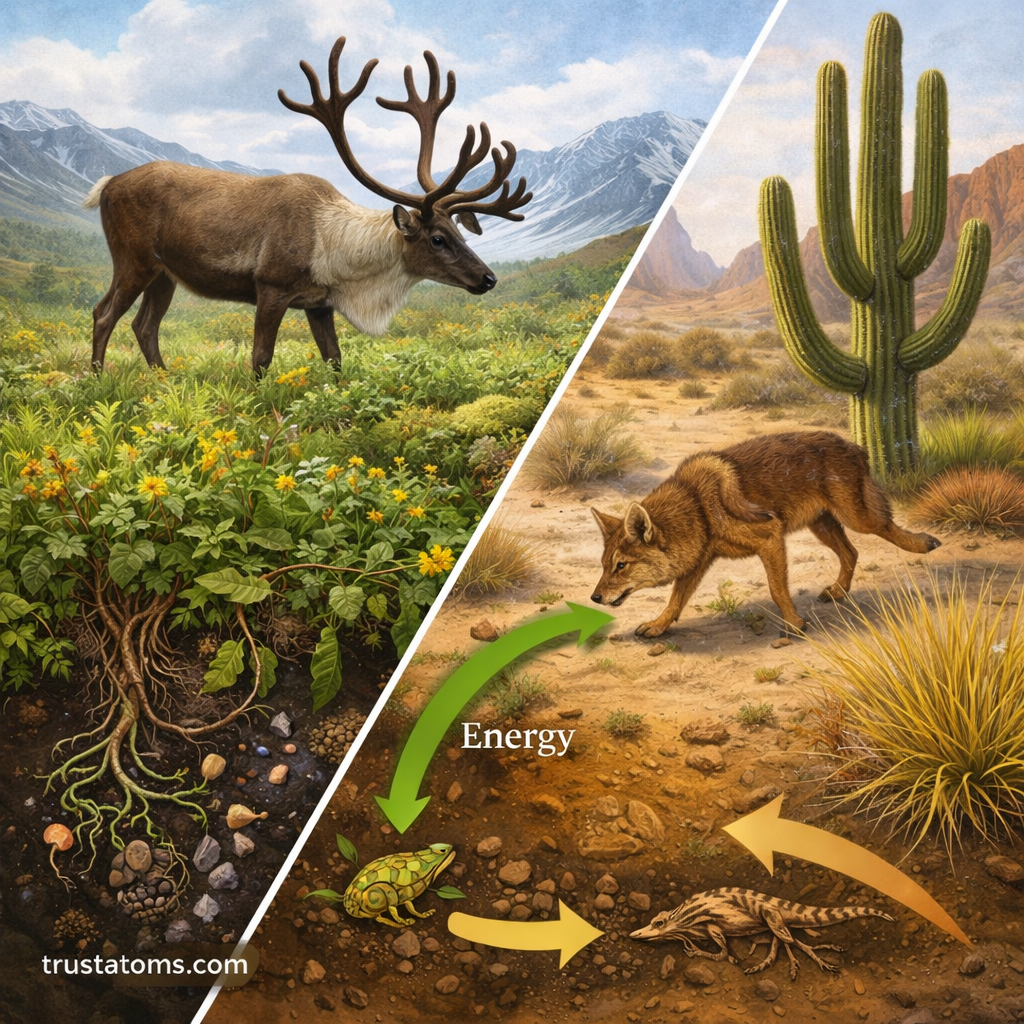
One of the most valuable uses of functional ecology is predicting how ecosystems respond to environmental change.
Climate Change
Climate shifts affect organisms differently depending on their traits.
Examples:
- Drought-resistant plants may dominate dry environments
- Cold-sensitive species may decline in warming climates
- Species with flexible diets may adapt more easily
Functional ecology allows scientists to predict which organisms will persist or decline.
Habitat Loss
Habitat fragmentation often removes species with specialized traits.
For example:
- Large predators may disappear first
- Specialized pollinators may decline
- Species with narrow habitat requirements may vanish
Loss of functional traits can disrupt ecosystem processes.
Invasive Species
Invasive species often succeed because their traits provide competitive advantages.
Examples include:
- Rapid growth rates
- High reproductive output
- Broad diet preferences
Functional ecology helps explain why some invasions dramatically alter ecosystems.
Functional Redundancy and Ecosystem Resilience
Functional redundancy occurs when multiple species perform similar ecological roles.
This redundancy improves ecosystem resilience.
Benefits of Functional Redundancy
- Maintains ecosystem functions if species disappear
- Stabilizes food webs
- Supports recovery after disturbances
For example:
Several decomposer species may break down leaf litter. If one species declines, others can maintain nutrient recycling.
However, ecosystems with low redundancy may collapse if key functional species disappear.
Functional Ecology in Conservation Biology
Functional ecology is increasingly used in conservation planning.
Instead of focusing only on species counts, conservationists evaluate functional roles within ecosystems.
Conservation Applications
Functional ecology helps identify:
- Keystone species that perform critical ecological functions
- Ecosystem engineers that shape habitats
- Species essential for nutrient cycling or pollination
Protecting these organisms preserves ecosystem processes, not just biodiversity.
Examples include:
- Protecting coral species that build reef structures
- Conserving pollinators that support plant reproduction
- Preserving predators that regulate food webs
Measuring Functional Ecology in Research
Scientists use several methods to study functional ecology.
Trait-Based Analysis
Researchers measure biological traits across species.
Common trait measurements include:
- Leaf area
- Root depth
- Body mass
- Growth rate
- Feeding behavior
These traits are then compared across ecosystems.
Functional Groups
Species are often classified into functional groups.
Examples include:
- Nitrogen-fixing plants
- Grazing herbivores
- Apex predators
- Detritivores
This grouping simplifies complex ecosystems.
Ecosystem Modeling
Computer models simulate ecosystem processes using trait data.
These models help predict:
- Ecosystem responses to climate change
- Impacts of species loss
- Changes in nutrient cycling
Functional ecology provides the biological data needed for these predictions.
Examples of Functional Ecology in Real Ecosystems
Functional ecology can be observed in many natural systems.
Forest Ecosystems
Trees with different leaf and root traits influence:
- Carbon storage
- Water cycling
- Soil nutrient availability
Deep-rooted species may access groundwater, while shallow-rooted plants use surface nutrients.
Grasslands
Grass species vary in:
- Growth rate
- Drought tolerance
- Nutrient uptake
These differences influence productivity and resilience to drought.
Marine Ecosystems
Marine organisms perform essential functional roles.
Examples include:
- Coral reefs building habitat structures
- Phytoplankton producing oxygen
- Filter feeders improving water clarity
These functional contributions support entire ocean ecosystems.
Why Functional Ecology Matters for the Future
Functional ecology provides a powerful framework for understanding how ecosystems work.
As environmental pressures increase—from climate change to habitat loss—functional ecology helps scientists answer critical questions:
- Which ecosystems are most resilient?
- Which species are essential for ecosystem stability?
- How will environmental changes reshape biological communities?
By focusing on biological roles and ecological functions, functional ecology allows researchers to better protect and manage the natural systems that support life on Earth.
Final Thoughts
Functional ecology shifts ecological research from simply identifying species to understanding how organisms contribute to ecosystem processes.
Through the study of functional traits, ecological roles, and environmental interactions, scientists gain deeper insights into:
- Ecosystem stability
- Biodiversity resilience
- Environmental change responses
As ecosystems face increasing global pressures, functional ecology is becoming one of the most important tools for predicting and protecting the future of Earth’s biological systems.