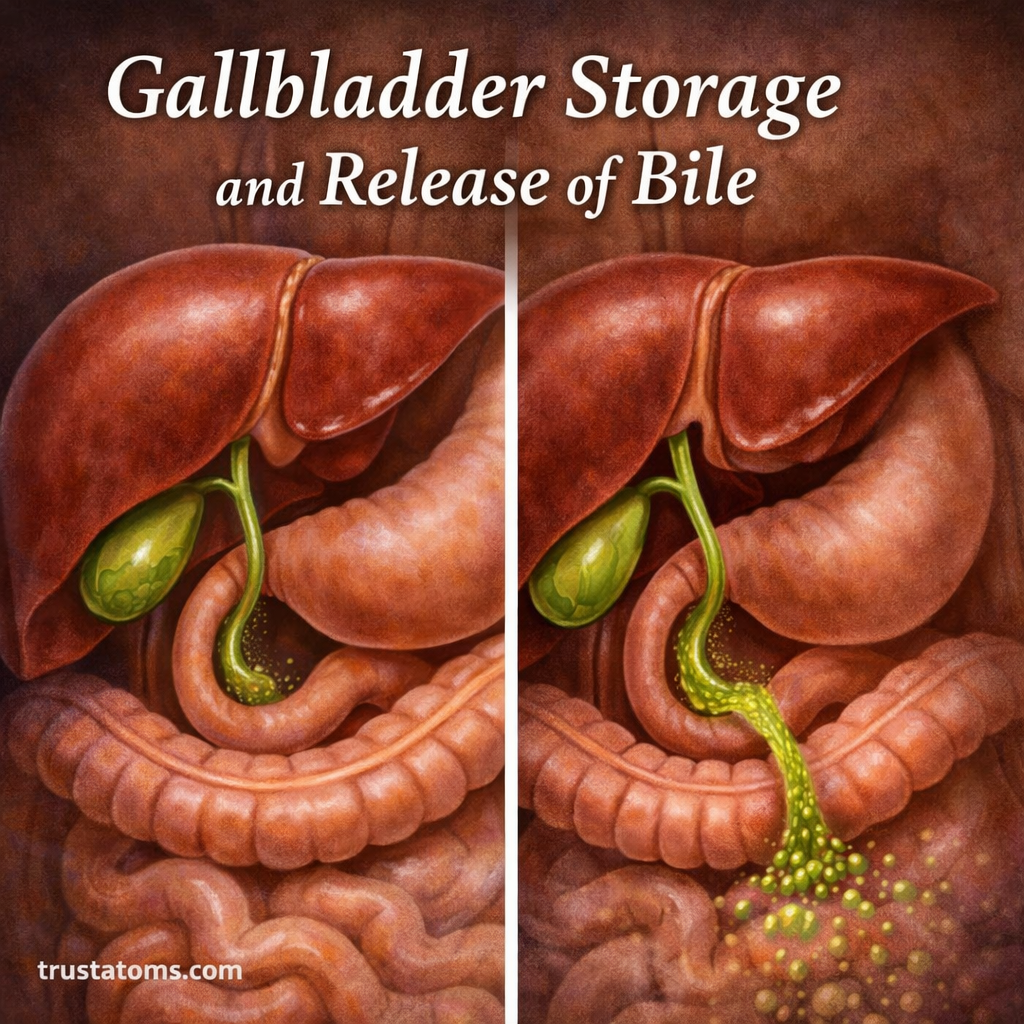
The gallbladder may be small, but it plays a powerful role in digestion. Its main function is to store and release bile—a substance essential for breaking down fats.
In this guide, you’ll learn how the gallbladder works, how bile is stored and released, and why this process is crucial for efficient digestion.
What Is the Gallbladder?
The gallbladder is a small, pear-shaped organ located just beneath the liver on the right side of your abdomen.
Key facts about the gallbladder:
- Part of the digestive system
- Stores bile produced by the liver
- Concentrates bile for stronger digestive action
- Releases bile into the small intestine
Although it’s not essential for survival, the gallbladder significantly improves how your body digests fats.
Where Does Bile Come From?
Bile is produced continuously by the liver, even when you’re not eating.
How bile reaches the gallbladder:
- The liver produces bile using cholesterol and other compounds
- Bile travels through small ducts within the liver
- It enters the common hepatic duct
- It is diverted into the gallbladder for storage
This constant production ensures that bile is always available when needed.
How the Gallbladder Stores Bile
The gallbladder acts as a reservoir, holding bile between meals.
What happens during storage:
- Bile is concentrated by removing excess water
- Electrolytes are absorbed, making bile more potent
- Bile salts become more effective for fat digestion
Why concentration matters:
Concentrated bile is much more efficient at emulsifying fats than diluted bile from the liver alone.
What Triggers Bile Release?
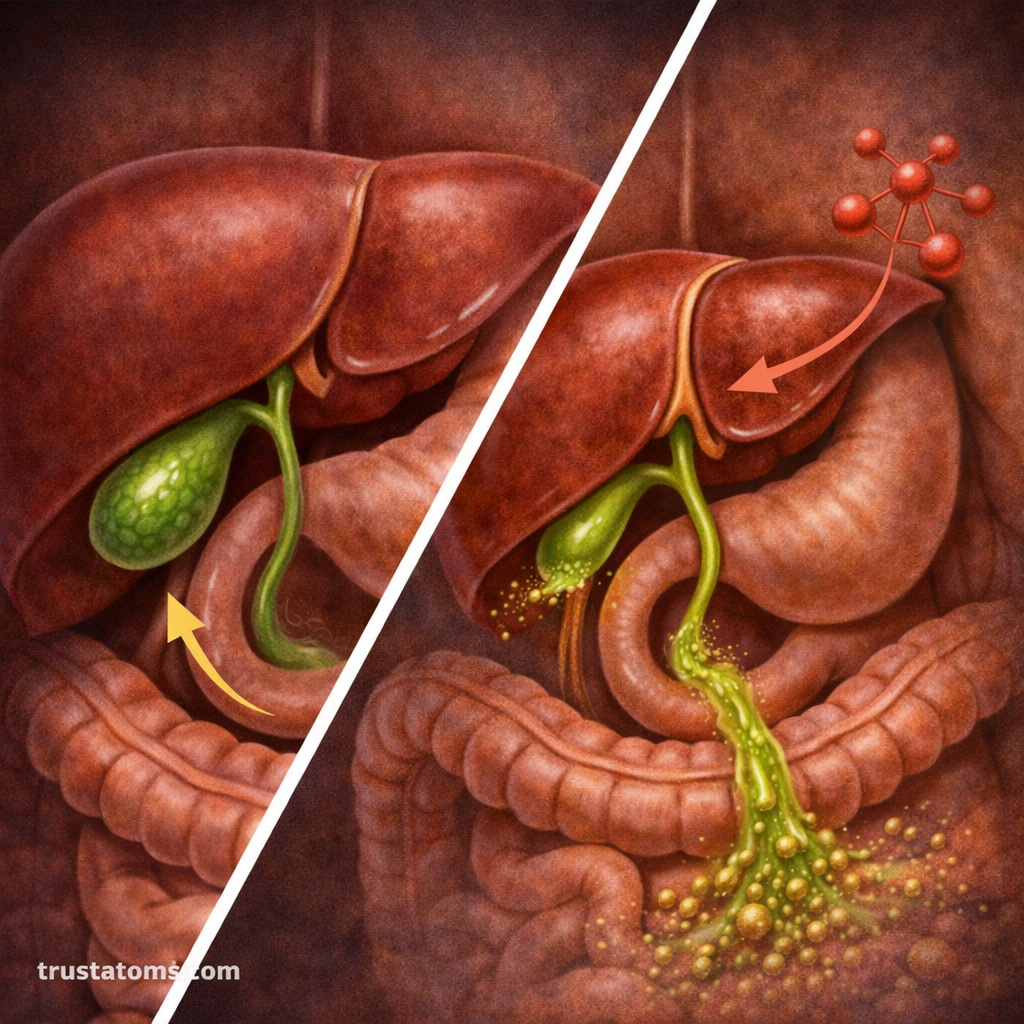
Bile release is triggered when you eat—especially foods that contain fat.
The release process:
- Food enters the small intestine (duodenum)
- The intestine releases a hormone called cholecystokinin (CCK)
- CCK signals the gallbladder to contract
- The sphincter of Oddi relaxes
- Bile flows into the small intestine
This coordinated response ensures bile is released exactly when it’s needed.
The Role of Bile in Digestion
Once released, bile plays a key role in preparing fats for digestion.
Functions of bile:
- Breaks large fat globules into smaller droplets (emulsification)
- Increases surface area for digestive enzymes
- Helps lipase enzymes break down fats efficiently
- Supports absorption of fat-soluble vitamins (A, D, E, K)
Without bile, fat digestion would be slow and inefficient.
What Happens After Bile Is Released?
After bile enters the small intestine, it begins working immediately.
Step-by-step:
- Bile mixes with dietary fats
- Fat droplets are emulsified
- Lipase breaks fats into fatty acids and monoglycerides
- These molecules form micelles
- Nutrients are absorbed through the intestinal wall
Most bile salts are later reabsorbed and returned to the liver for reuse in a process called enterohepatic circulation.
What Happens If the Gallbladder Is Removed?
Some people undergo gallbladder removal (cholecystectomy), often due to gallstones.
How digestion changes:
- Bile flows directly from the liver to the small intestine
- No storage or concentration occurs
- Fat digestion may be less efficient, especially after large meals
Common adjustments:
- Eating smaller, more frequent meals
- Reducing high-fat food intake
- Allowing the body time to adapt
Most people can live normally without a gallbladder, though digestion may require some adjustments.
Common Gallbladder Problems
The gallbladder can develop issues that affect bile storage and release.
Common conditions:
- Gallstones (hardened bile deposits)
- Cholecystitis (inflammation of the gallbladder)
- Blocked bile ducts
- Biliary dyskinesia (impaired movement)
Symptoms to watch for:
- Pain in the upper right abdomen
- Nausea after fatty meals
- Bloating or indigestion
- Yellowing of the skin (in severe cases)
Why Gallbladder Function Matters
Efficient bile storage and release allow your body to digest fats properly and absorb essential nutrients.
Key benefits:
- Improved fat digestion
- Better nutrient absorption
- Reduced digestive discomfort
- Balanced cholesterol processing
Even though it’s often overlooked, the gallbladder plays a vital role in maintaining digestive efficiency.
Final Thoughts
The gallbladder is a small but essential organ that enhances your body’s ability to digest fats. By storing and concentrating bile, and releasing it at the right time, it ensures your digestive system works smoothly.
Understanding how the gallbladder functions can help you make better dietary choices and recognize signs of potential digestive issues early.