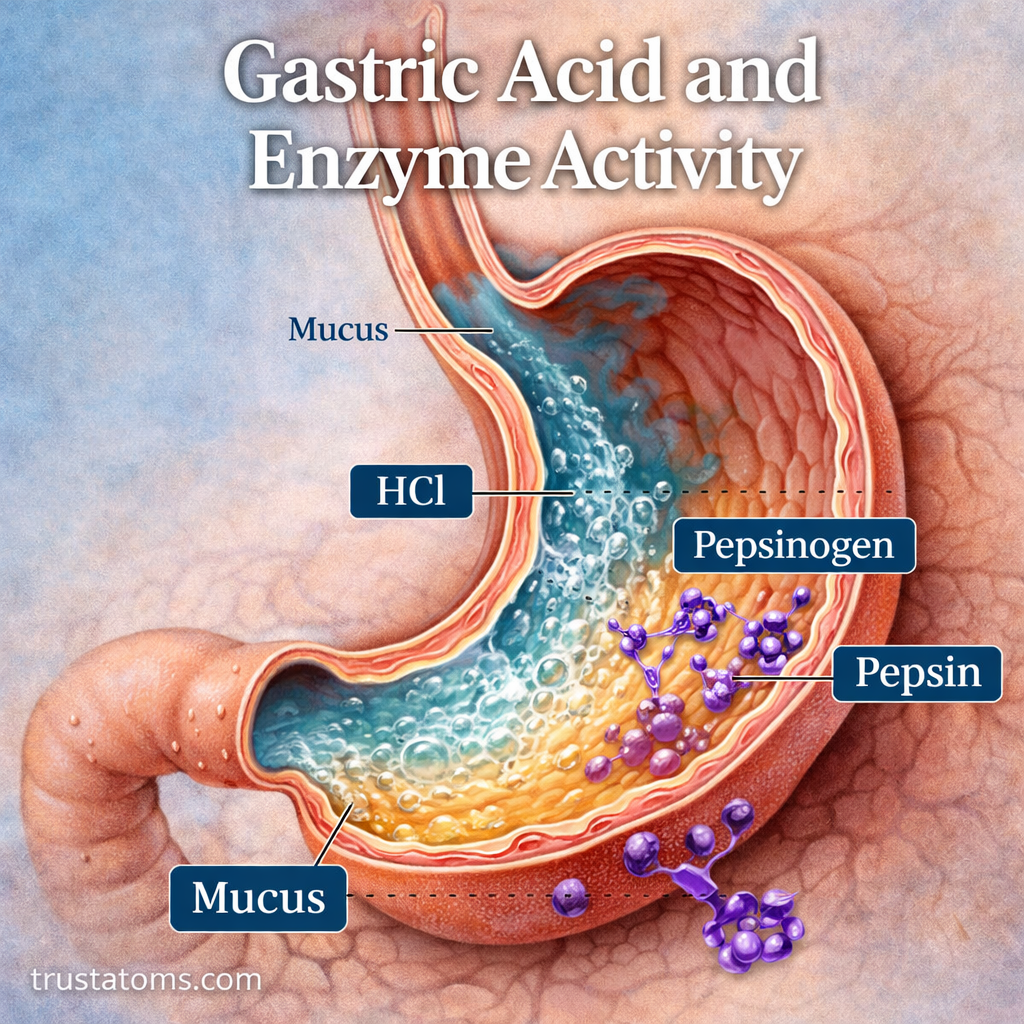
The stomach is not only a muscular organ for mixing food—it is also a powerful chemical environment where digestion truly begins. Central to this process are gastric acid and digestive enzymes, which work together to break down food, especially proteins, into forms the body can absorb.
Understanding how gastric acid and enzymes function provides insight into one of the most important stages of digestion.
What Is Gastric Acid?
Gastric acid is a strong digestive fluid produced by specialized cells in the stomach lining. Its main component is hydrochloric acid (HCl).
Key Characteristics of Gastric Acid
- Highly acidic (pH between 1.5 and 3.5)
- Secreted by parietal cells in the stomach
- Essential for activating digestive enzymes
This acidic environment is necessary for proper digestion and protection against harmful microbes.
Functions of Gastric Acid
Gastric acid serves multiple important roles beyond simply breaking down food.
1. Protein Denaturation
- Unfolds complex protein structures
- Makes proteins easier for enzymes to break down
2. Enzyme Activation
- Converts inactive pepsinogen into active pepsin
- Creates optimal conditions for enzyme activity
3. Microbial Defense
- Destroys many bacteria and pathogens in food
- Helps protect the digestive system from infection
4. Nutrient Preparation
- Aids in the absorption of certain nutrients, such as iron and vitamin B12
Key Digestive Enzymes in the Stomach
While gastric acid sets the stage, enzymes perform the actual chemical breakdown of nutrients.
Pepsin
Pepsin is the primary enzyme responsible for protein digestion in the stomach.
- Secreted as pepsinogen (inactive form)
- Activated by gastric acid
- Breaks proteins into smaller peptides
Gastric Lipase
Although most fat digestion occurs later, the stomach begins the process with gastric lipase.
- Breaks down small amounts of dietary fats
- More active in infants than adults
How Gastric Acid and Enzymes Work Together
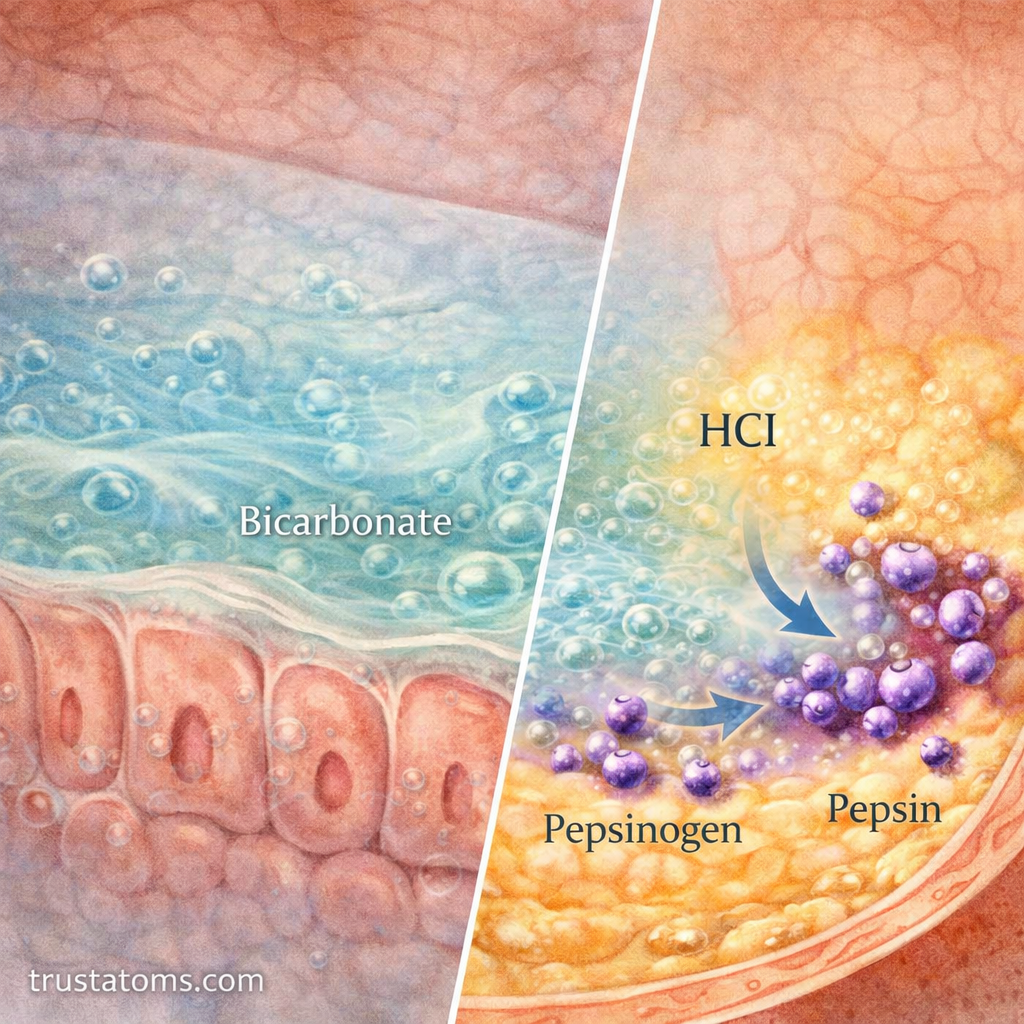
Gastric acid and enzymes function as a coordinated system rather than separate processes.
Step-by-Step Process
- Food enters the stomach and stimulates acid secretion
- Parietal cells release hydrochloric acid
- Chief cells release pepsinogen
- Acid converts pepsinogen into pepsin
- Pepsin begins breaking down proteins
- Mixing movements ensure even exposure to acid and enzymes
This coordination ensures efficient and continuous digestion.
Regulation of Acid Secretion
The body carefully controls how much gastric acid is produced to balance digestion and safety.
Phases of Gastric Secretion
Cephalic Phase
- Triggered by sight, smell, or thought of food
- Prepares the stomach for digestion
Gastric Phase
- Begins when food enters the stomach
- Stretch receptors and hormones increase acid production
Intestinal Phase
- Occurs as food enters the small intestine
- Signals reduce acid secretion to prevent overload
Protective Mechanisms of the Stomach
Given the strength of gastric acid, the stomach must protect itself from damage.
Key Defenses
- Mucus layer: Forms a protective barrier over the stomach lining
- Bicarbonate secretion: Neutralizes acid near the surface
- Rapid cell turnover: Repairs damaged cells quickly
Without these protections, the stomach could be harmed by its own acid.
Importance of pH in Enzyme Activity
The effectiveness of digestive enzymes depends heavily on the acidity level.
- Pepsin works best in highly acidic conditions
- If pH rises (becomes less acidic), enzyme activity decreases
- Proper acid levels ensure optimal digestion efficiency
This highlights why maintaining the right stomach environment is critical.
Common Issues Related to Gastric Acid
Imbalances in acid production can lead to digestive problems.
Low Stomach Acid (Hypochlorhydria)
- Reduced protein digestion
- Possible nutrient deficiencies
- Increased risk of infection
Excess Stomach Acid
- Acid reflux or heartburn
- Irritation of the esophagus
Ulcers
- Damage to the stomach lining
- Often linked to bacterial infection or weakened defenses
Why Gastric Acid and Enzymes Matter
Efficient digestion depends on both chemical breakdown and proper enzyme activity.
They are essential for:
- Breaking down proteins into absorbable units
- Killing harmful microorganisms
- Supporting nutrient absorption
- Preparing food for further digestion in the small intestine
Key Takeaways
- Gastric acid creates a highly acidic environment necessary for digestion
- Hydrochloric acid activates enzymes like pepsin
- Enzymes carry out the breakdown of nutrients, especially proteins
- Acid secretion is tightly regulated by the body
- Protective mechanisms prevent damage to the stomach lining
Together, gastric acid and enzymes form a powerful system that initiates chemical digestion and prepares nutrients for absorption.