Global climate monitoring systems are essential tools for understanding how Earth’s climate is changing over time. These systems collect, analyze, and interpret data from across the planet—helping scientists track temperature trends, atmospheric changes, ocean conditions, and more.
As climate change becomes a growing global concern, accurate and continuous monitoring is critical for informed decision-making, environmental protection, and long-term planning.
What Are Global Climate Monitoring Systems?
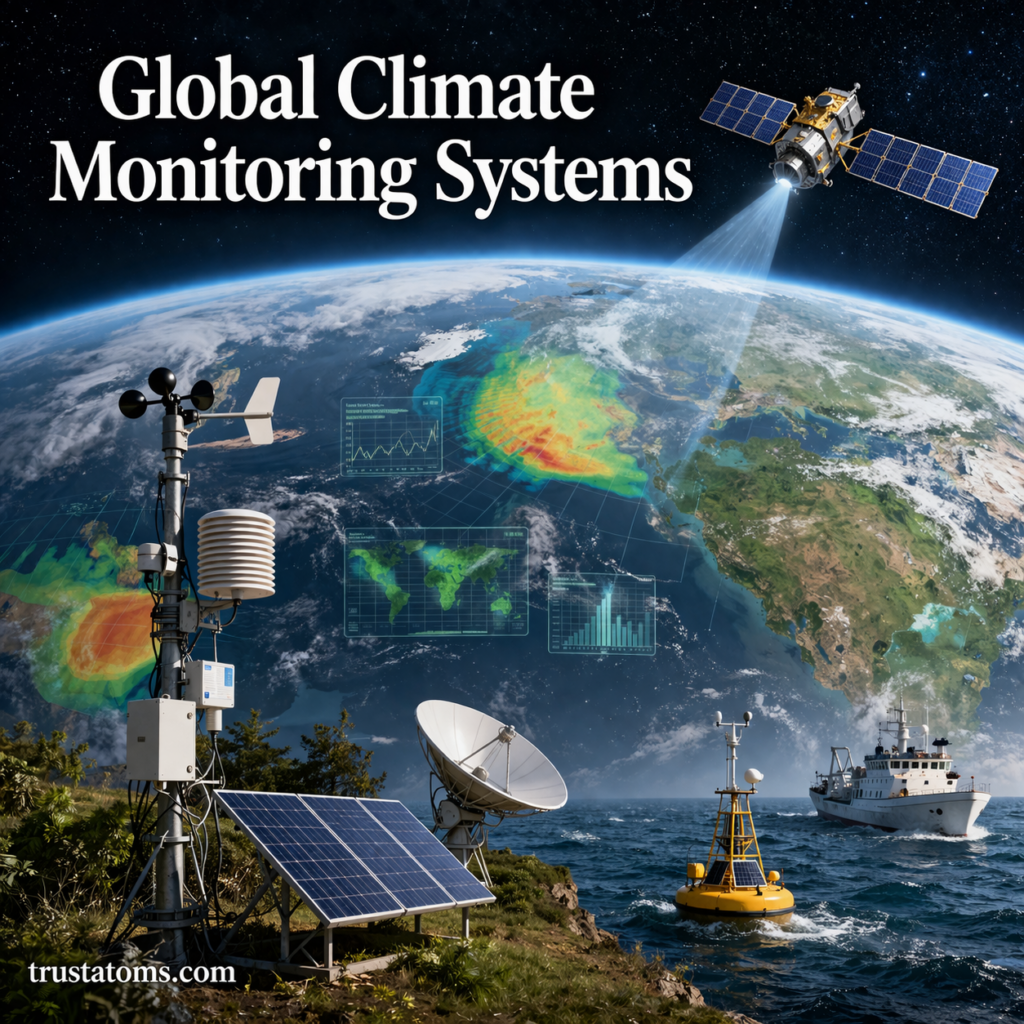
Global climate monitoring systems are networks of instruments, satellites, and data-processing centers that observe and record Earth’s climate.
Key Functions
- Measure atmospheric conditions (temperature, humidity, gases)
- Track ocean behavior (sea surface temperature, currents, sea level)
- Monitor land surface changes (vegetation, ice cover, soil moisture)
- Detect long-term climate trends and variability
These systems provide the data needed to understand both short-term weather and long-term climate patterns.
Major Components of Climate Monitoring Systems
Climate monitoring relies on a combination of technologies working together.
Satellites
Satellites provide a global view of Earth from space.
- Measure cloud cover and atmospheric gases
- Track sea surface temperatures and ice sheets
- Monitor deforestation and land use changes
They are especially valuable for remote or hard-to-reach regions.
Ground-Based Stations
Weather stations on land collect detailed local data:
- Temperature
- Rainfall
- Wind speed and direction
- Atmospheric pressure
These stations form the backbone of long-term climate records.
Ocean Monitoring Systems
Oceans play a major role in regulating climate.
- Buoys measure temperature and salinity
- Argo floats collect data from deep ocean layers
- Tide gauges track sea level changes
Together, these tools help scientists understand ocean-climate interactions.
Key Variables Monitored
Climate systems track a wide range of environmental indicators.
Atmospheric Variables
- Air temperature
- Greenhouse gas concentrations (CO₂, methane)
- Humidity levels
- Aerosols and pollutants
Oceanic Variables
- Sea surface temperature
- Ocean heat content
- Salinity
- Ocean currents
Land and Cryosphere Variables
- Snow and ice cover
- Glacier movement
- Soil moisture
- Vegetation health
Monitoring these variables helps build a complete picture of Earth’s climate system.
Role of International Organizations
Global climate monitoring is a collaborative effort involving multiple organizations.
World Meteorological Organization (WMO)
The World Meteorological Organization coordinates international data collection and standardization.
- Ensures consistency in measurements
- Supports global observation networks
- Shares climate data among countries
NASA and NOAA
Agencies like NASA and NOAA play major roles:
- Launch and manage satellites
- Conduct climate research
- Provide public access to climate data
Intergovernmental Panel on Climate Change (IPCC)
The Intergovernmental Panel on Climate Change uses monitoring data to assess climate change.
- Publishes global climate reports
- Synthesizes scientific findings
- Informs policymakers worldwide
How Data Is Collected and Processed
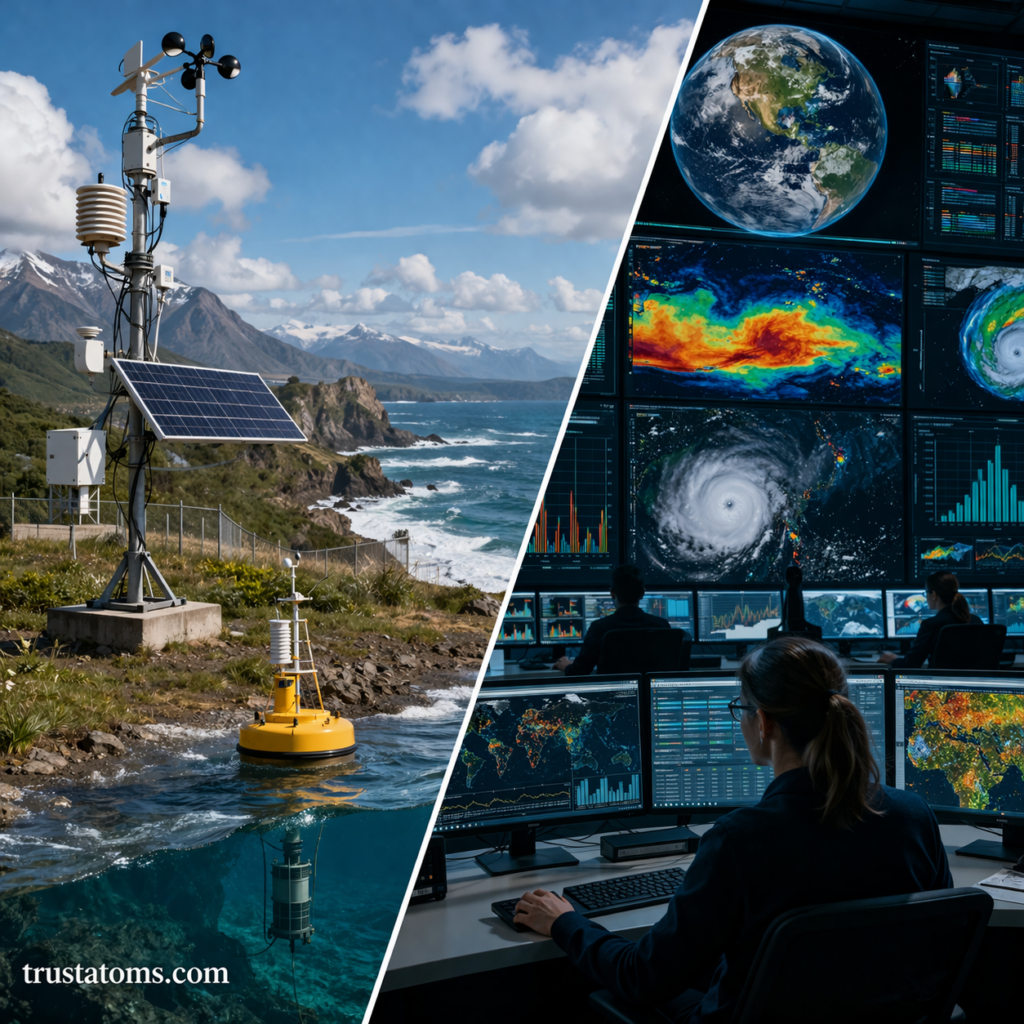
Climate monitoring involves multiple stages.
Data Collection
Information is gathered from:
- Satellites orbiting Earth
- Ground-based weather stations
- Ocean sensors and buoys
Data Integration
Collected data is combined into global datasets:
- Standardized formats ensure consistency
- Multiple sources improve accuracy
- Long-term records enable trend analysis
Modeling and Analysis
Climate models use this data to:
- Simulate future climate scenarios
- Identify patterns and anomalies
- Predict extreme events
Importance of Climate Monitoring
Accurate climate data supports a wide range of applications.
Weather Forecasting
- Improves short-term weather predictions
- Enhances early warning systems for storms and disasters
Climate Change Research
- Tracks global warming trends
- Identifies changes in extreme weather patterns
- Supports scientific understanding of climate systems
Environmental Management
- Guides conservation efforts
- Helps manage water and agricultural resources
- Supports sustainable development planning
Challenges in Climate Monitoring
Despite advancements, several challenges remain.
Data Gaps
- Limited coverage in remote regions (e.g., polar areas, deep oceans)
- Inconsistent historical records in some regions
Technical Limitations
- Instrument calibration issues
- Satellite lifespan and maintenance
Data Integration Complexity
- Combining data from different sources can be difficult
- Requires advanced computing and modeling systems
Future of Climate Monitoring Systems
Climate monitoring continues to evolve with new technologies.
Advancements in Satellite Technology
- Higher-resolution imaging
- Improved detection of atmospheric gases
- More frequent global coverage
Artificial Intelligence and Big Data
- Faster data processing
- Improved pattern recognition
- Enhanced climate modeling accuracy
Expanded Global Collaboration
- Increased data sharing between countries
- More coordinated global monitoring networks
Why Global Climate Monitoring Matters
Climate monitoring systems provide the foundation for understanding Earth’s changing environment.
They help:
- Detect early signs of climate change
- Improve disaster preparedness
- Support policy decisions
- Protect ecosystems and communities
Without reliable data, responding to climate challenges would be far more difficult.
Final Thoughts
Global climate monitoring systems are essential for tracking and understanding the complex processes that shape Earth’s climate.
By combining satellite observations, ground measurements, and advanced modeling, these systems offer valuable insights into both current conditions and future trends.
As climate change continues to impact the planet, the role of monitoring systems will only become more important in guiding global responses and ensuring a sustainable future.