The human body relies on a constant supply of energy to function properly, even between meals or during physical activity. When blood sugar levels drop, the body activates mechanisms to restore balance—and one of the key players in this process is glucagon.
Glucagon is a hormone that works in opposition to insulin. While insulin lowers blood glucose, glucagon raises it by mobilizing stored energy. This balance ensures that the body always has enough fuel to maintain normal function.
What Is Glucagon?
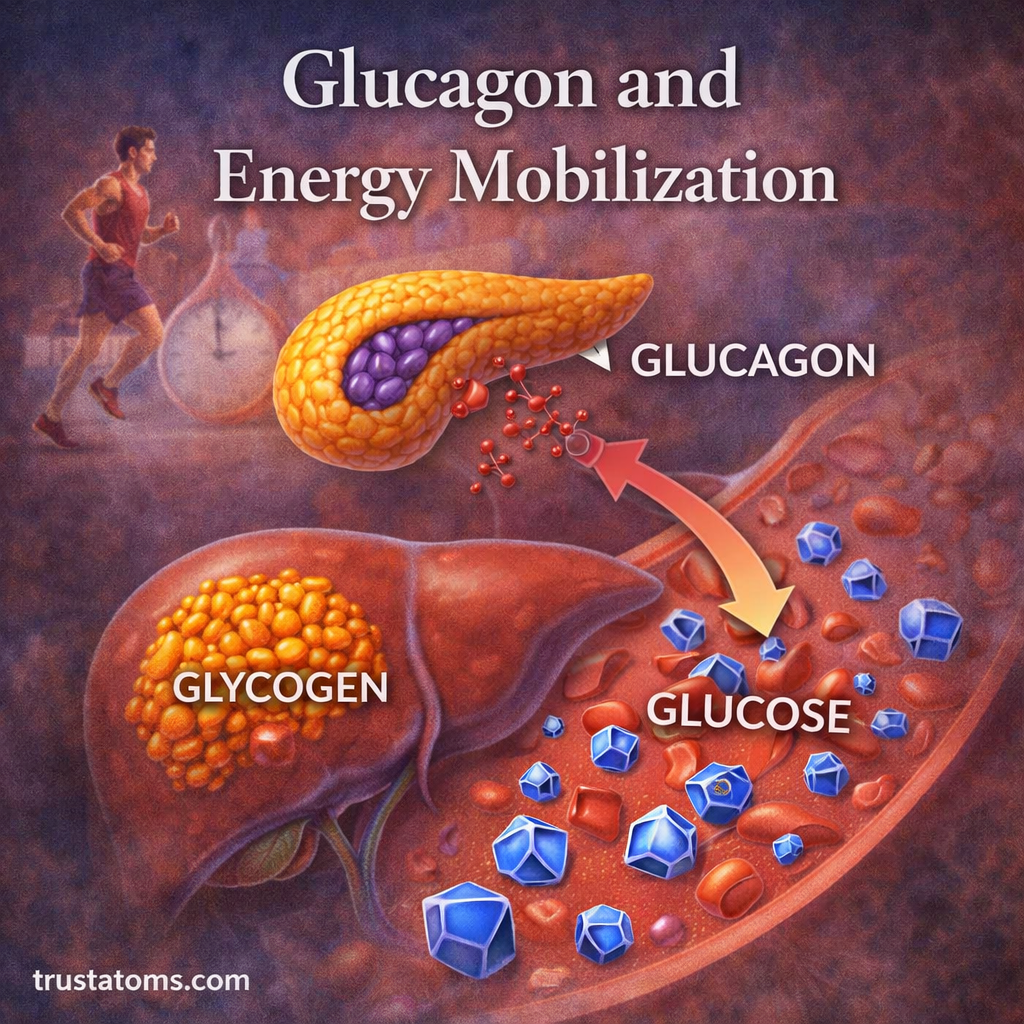
Glucagon is a hormone produced by the alpha cells of the pancreas, specifically within the islets of Langerhans.
Primary Function
The main role of glucagon is to increase blood glucose levels when they fall too low.
Why Energy Mobilization Matters
The body cannot rely solely on incoming food for energy. During fasting, exercise, or between meals, it must tap into stored energy reserves.
Key Reasons
- Maintains stable blood glucose levels
- Ensures continuous energy supply to the brain
- Prevents hypoglycemia (low blood sugar)
- Supports physical activity and endurance
Without glucagon, the body would struggle to maintain energy during periods without food.
How Glucagon Raises Blood Glucose
Glucagon acts primarily on the liver to release stored energy into the bloodstream.
Main Mechanisms
1. Glycogen Breakdown (Glycogenolysis)
- The liver stores glucose in the form of glycogen
- Glucagon stimulates the breakdown of glycogen
- Glucose is released into the bloodstream
2. Glucose Production (Gluconeogenesis)
- The liver produces new glucose from non-carbohydrate sources
- Sources include amino acids and lactate
- Helps maintain blood sugar during prolonged fasting
Glucagon During Fasting and Exercise
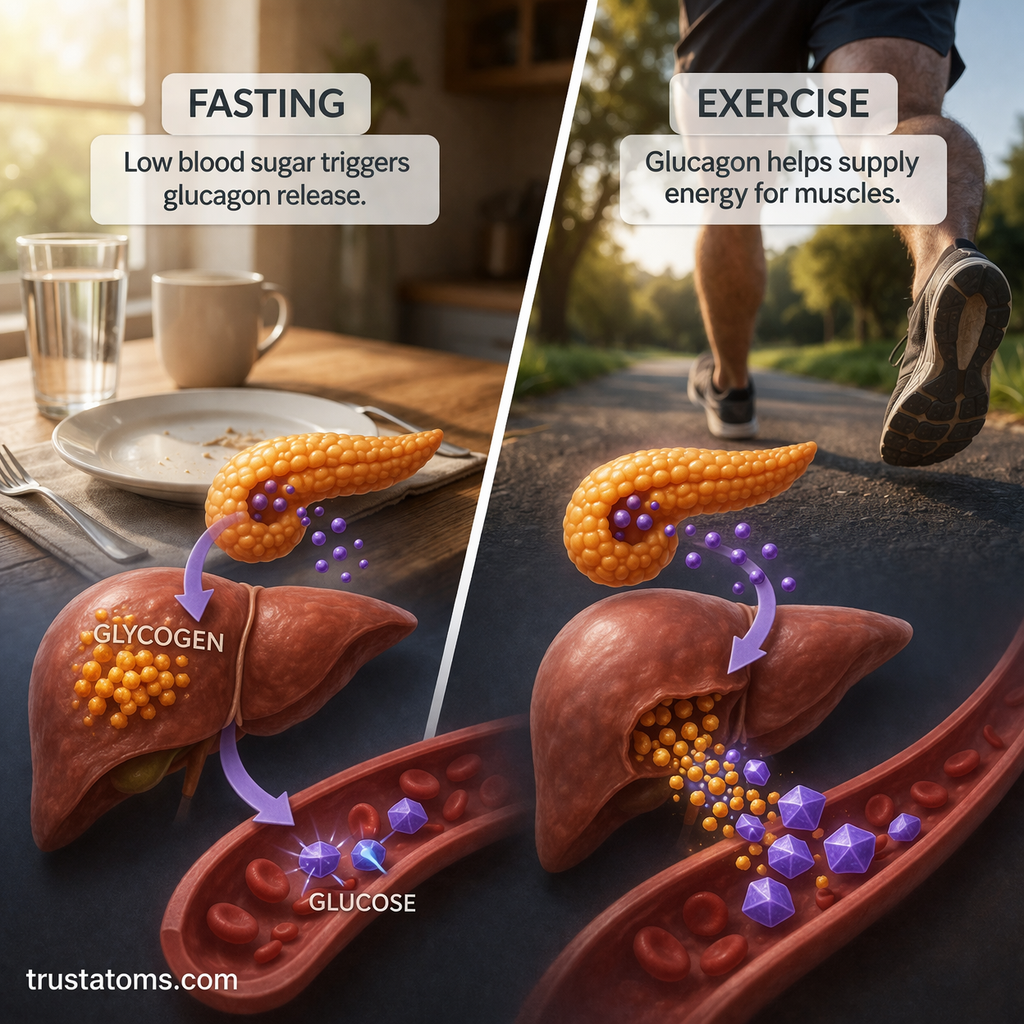
Glucagon becomes especially important when the body is low on immediate energy.
During Fasting
- Blood glucose levels drop
- Glucagon release increases
- Stored glucose is released to maintain balance
During Exercise
- Muscles use glucose for energy
- Glucagon ensures a steady supply from the liver
- Helps sustain performance and endurance
The Balance Between Glucagon and Insulin
Glucagon and insulin work together to maintain blood sugar balance.
Opposing Roles
- Insulin: lowers blood glucose by promoting storage
- Glucagon: raises blood glucose by promoting release
Coordinated Regulation
- After eating → insulin increases, glucagon decreases
- Between meals → glucagon increases, insulin decreases
- Blood sugar remains stable through this balance
This dynamic relationship is essential for metabolic stability.
The Feedback System of Blood Glucose Control
Glucagon operates within a negative feedback loop similar to insulin.
How It Works
- Blood glucose levels drop
- The pancreas releases glucagon
- The liver releases glucose into the bloodstream
- Blood glucose rises
- Glucagon secretion decreases
This system ensures quick correction of low blood sugar levels.
Effects of Excess or Deficient Glucagon
Imbalances in glucagon levels can disrupt energy regulation.
Too Much Glucagon
- Elevated blood glucose levels
- Can contribute to hyperglycemia
- Often seen in uncontrolled diabetes
Too Little Glucagon
- Increased risk of hypoglycemia
- Inadequate energy mobilization
- Can be dangerous during fasting or illness
Glucagon and Metabolic Health
Glucagon plays a key role in overall metabolic function.
Important Contributions
- Supports energy availability during fasting
- Helps regulate blood sugar stability
- Works with other hormones to maintain balance
- Prevents dangerous drops in blood glucose
Supporting Healthy Glucose Regulation
Maintaining proper hormone balance is essential for metabolic health.
Practical Tips
- Eat balanced meals with consistent nutrient intake
- Avoid long periods of extreme fasting without guidance
- Exercise regularly
- Monitor blood sugar if at risk for metabolic conditions
- Maintain a healthy lifestyle overall
These habits help support the natural balance between insulin and glucagon.
Key Takeaways
- Glucagon is essential for raising blood glucose levels.
- It works by breaking down glycogen and producing new glucose in the liver.
- It plays a crucial role during fasting and exercise.
- Glucagon and insulin work together to maintain blood sugar balance.
- Proper regulation of glucagon is vital for metabolic health.
Final Thoughts
Glucagon is a critical hormone that ensures the body has access to energy when it’s needed most. By mobilizing stored glucose and supporting energy production, it acts as a safeguard against low blood sugar and energy shortages.
Understanding how glucagon works alongside insulin provides a clearer picture of how the body maintains balance—and why this system is essential for both daily function and long-term health.